Don’t ask me why this is one of my favorite songs of all time, it just is.
The video below was created by the youtube user known as ElviraDeMonica.
Don’t ask me why this is one of my favorite songs of all time, it just is.
The video below was created by the youtube user known as ElviraDeMonica.
Some day, I’m going to make and publish a list that will entitled “Top Ten Songs To Dance To While Wasted.” Until I get around to that, I’ll just take a few minutes to highlight the song that would probably come in at number 3 — Hey Boy Hey Girl by the Chemical Brothers.
I really wanted to put up the music video that features the kids in the museum and the skeletons having sex in the public restroom. However, every version of that to be found on YouTube comes with one of those really annoying “embedding disabled by request” tags. Bleh on that.
So, I’m including two videos. The first one is simply the song as it appears on 1999’s Surrender. The second is a clip of the Chemical Brothers doing the song live at Glastonbury in 2007. Personally, I love the 2nd clip. If you ever get a chance to see the Chemical Brothers live, you must take it as surely as you must breathe oxygen to live.
One of my favorite movies of all time is Joe D’Amato’s haunting 1979 romance Beyond The Darkness. Not only is it one of the best Italian films ever (and the best film ever directed by D’Amato) but I think it’s also one of the best films ever made.
One reason the film is so effective is because of its soundtrack, which was composed and performed by (who else?) Goblin. The music will be familiar to any Italian horror fan, largely because it was reused by about a thousand other movies that came out in the years after Beyond The Darkness. (Director Bruno Mattei, in particular, was fond of it.)
Today is November 9th. I’m 25 years old today and I don’t want to talk about it. Bleh. Instead, let’s just play one of the greatest songs ever written, Gimme Shelter.
Gimme Shelter is one of those songs that seems to turn up in every fourth movie that I watch and it’s easy to tell why. It’s a great song. Despite the apocalyptic subject matter, this is an undeniably exhilirating song. This is a song that makes my heart beat faster every time I hear it. If I ever happen to total my car again, it’ll probably be because I was listening to this song while driving. If I ever make out my list of top ten songs to fuck make love fuck to, Gimme Shelter will be at the top of the list along with Blondie’s Atomic, Siouxsie and the Banshee’s Kiss Them For Me, and every song on Moby’s Play CD.
Is it possible that Gimme Shelter is the greatest song of all time?
Yes.
Four years ago, I was in Recycle Books in Denton, Texas and I came across a book called something like “Unknown Legends of Rock and Roll.” The book came with a CD that featured music by some of the bands featured in that book. The first song on that CD (and my personal favorite) was Smashed Blocked, a song from a band called John’s Children.
(It’s a good book, too.)
When the infamous epic Caligula was first released back in 1979, a disco version of Caligula’s love theme — We Are One — was also released as a promotional gimmick. If you’ve sat through the behind-the-scenes footage on the Caligula Imperial Edition DVD, this song has probably been forever branded on your brain.
And that’s not necessarily a bad thing.
This song is so over-the-top, so blatantly exploitive, so insidiously catchy, and so totally inappropriate for the film it was written for that it simply cannot be ignored. To me, this song represents everything that makes the Grindhouse great.
(As well, I hope whoever was playing bass got paid extra…)
While we’re on the subject, I’m also going to include the opening credits of Caligula because I’ve always liked the use of Profokiev’s Romeo and Juliet.
(I also love the fact that the screenplay is credited as being adapted from a script by Gore Vidal yet no one is given credit for doing the adapting, the editing is credited to “the production,” and director Tinto Brass is credited with “principal photography.”)
Recently, I’ve been reading Clinton Heylin’s history of punk rock, Babylon’s Burning: From Punk To Grunge. Not surprisingly, one of the main characters in this book is John Lydon (a.k.a. Johnny Rotten). Along with detailing Lydon’s time as the lead singer for the Sex Pistols, the book also examines Lydon’s subsequent career as the frontman for Public Image, Ltd. The book also inspired me to track down and listen to one of PIL’s earliest efforts, a song that was originally called Death Disco (though it was also released under the name Swan Lake for reasons that become obvious once you listen to the song).
Death Disco was written after and in response to the death of Lydon’s mother. Though the song is now over 30 years old, it remains a powerful and cathartic cry of pain and loss.
As an added bonus, here’s two interviews with Lydon, one from the late 70s that was recorded shortly before he formed Public Image, Ltd. (and in which he looks so incredibly young and, dare I say it, rather adorable in his bratty way) and one from 2007 in which he discusses the meaning of life.
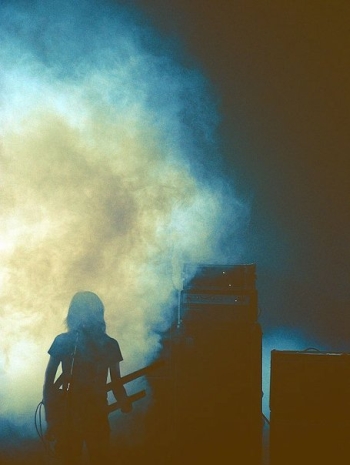
I got pretty excited when asked to write an article on Boris. After all, 2009 was their best year since Flood. I’m not kidding. In fact, it wouldn’t even be fair for me to describe their new material. I’d just be spoiling it. Instead let me help you piece it all together. Boris revealed 10 new songs last year, totaling 62 minutes and spread out over six different releases. Four of them were to some extent intended to be pieced together into one. The other two are just too good to exclude. Here’s what to look for:
split w/9dw – Golden Dance Classics (2009 Catune)
split w/Torche – Chapter Ahead Being Fake (2009 Daymare)
Japanese Heavy Rock Hits v1 7″ (2009 Southern Lord Records)
Japanese Heavy Rock Hits v2 7″ (2009 Southern Lord Records)
Japanese Heavy Rock Hits v3 7″ (2009 Southern Lord Records)
Japanese Heavy Rock Hits v4 7″ (2009 Southern Lord Records)
The first two are available on cd, but don’t ask me where. The Heavy Rock collection has to the best of my knowledge only been marketed on vinyl. Volume 4 is only available in a limited edition when you order 1-3 as a package from Southern Lord, and consists of a cover of some 1970 single by a band called Earth & Fire. Volume 4 and Chapter Ahead Being Fake both contain one Boris song, and the rest have two. Now go get all of them. If you’re downloading, note that Luna ends abruptly and Tokyo Wonder Land begins abruptly. While I’m not convinced that the former is by design, I have yet to hear of a version that contains the last few seconds of the song.
As for the order you should experience them in, the Heavy Rock Hits follow a logical progression (with the last track of 1 and the first of 2 being the only real downers out of all 10.) The 9dw split was released first, but Tokyo Wonder Land is definitely not an intro track. The abrupt ending and beginning I mentioned make for a logical transition between the very different styles of the two splits, and the monolithic mindfuck that is Luna would make Golden Dance Classics a downer of an outro, so I suggest Chapter Ahead Being Fake – Golden Dance Classics – Heavy Rock Hits as the most logical order to listen in. At least that’s how I queue them up.
Like I said, I don’t want to go into detail about the songs, because they’re really something to experience, not describe. Suffice to say I consider Boris’s 2009 collection as a whole second only to Flood as the best hour of music they’ve yet recorded. Expect to be blown away, beaten into a pulp, chilled back out, then taken on a roller coaster through the extremities of Boris’s present potential, all the while wondering if it’s one big joke. Enjoy what would have easily topped my year-end list could I call it a singular album. And check out the rest of the splits eventually. 9dw and Torche contribute some nice tunes.
For whatever it’s worth, my favorite tracks are Luna, 8, and Black Original. Tokyo Wonder Land comes close.
Necrosomethingorother here, I’m going to be doing periodic album reviews for a while. My first one involves some rather controversial material, but hey, it’s what’s new in the metal world.
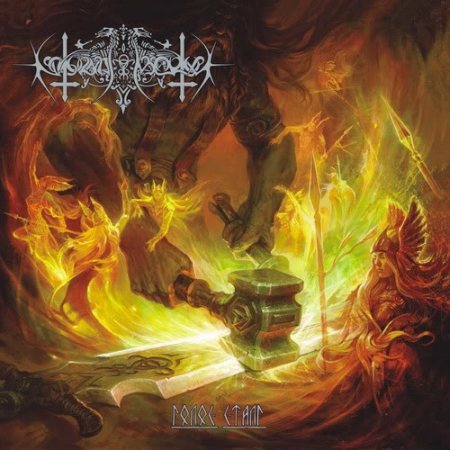
As I write I am acquainting myself with Nokturnal Mortum‘s sixth studio album, leaked Christmas day when I was too busy to notice. The Voice of Steel starts off where the Eastern Hammer EP ended, hurdy gurdies blazing in a mind-blowing intro, and then slowly transitions into some weird amalgamation of pagan nsbm and spacey Pink Floyd guitar solos. It’s still got some battlecry sopilka breakdowns of classic Nokturnal Mortum, the intense tribal drumming that first greeted us on To the Gates of Blasphemous Fire’s Cheremosh, the violin over epic synth that characterized Weltanschauung…
But it also has clean vocals and Pink Floyd guitar solos, and I’m just not sold on them yet. The Voice of Steel is in some ways amazing, in others irritating. It’s a decent album, no doubt about it, but it sure wasn’t what I was hoping for. Nothing would have made me happier than a whole album of the Eastern Hammer remake of Kolyada, and that The Voice of Steel is certainly not.
The album has some real gems, notably Shlyakhom Sontsya. It also has tracks like Moei Mrii Ostrovi that would fit in a lot better on an Amorphis album and just clash entirely with the group’s extremist views. They’re trying to mature musically, but they have to mature mentally first to really pull it off.
Extremism has produced some amazing music over the years. Wrath of the Tyrant, Det Som Engang Var, NeChrist, they all share in common a level of passionate convictions taken so far as murder, arson, or white supremacy. Obviously I don’t have to condone these acts to appreciate their origins, but the musicians have to come to terms with them eventually. Ihsahn seems to recognize his youthful escapades as a childish outlet for his anti-Christian views and now writes more mature music effectively. His album After, another new release, is pretty damn impressive. He can still frown on the Christian culture of servitude without letting it consume him and his innate musical talents. Meanwhile you’ve got Varg writing dissertations on the likelihood of Aryans being an advanced race from outerspace, and I have pretty low expectations of his forthcoming album.
I hear in Knjaz Varggoth’s new music a reflection of this Vargian state of depravity. Their old songs embodied folk, and they believed in it so thoroughly that they took on extremist views, but that was only the lyrical focus. NeChrist was packed with anthems to what the band barely understood, aggression married to mysticism, white supremacy only a catalyst. The aggressive desperation with which they summoned a bygone era made their music a mirror into the past. It was as though the songs they played were ancient melodies shouting, screaming to be heard once again over the clamor of modern rock by any means necessary. I can’t expect another masterpiece like NeChrist, maybe not even something as good as Weltanschauung, but a stylistic evolution means a mental one too, and I hear in songs that combine clean vocals and Gilmour guitars with cries for the motherland the path of Varg, not Ihsahn. It’s hard to appreciate music that’s neither passionate nor mature. The Voice of Steel is not culture triumphant, it’s more like a methodic racial manifesto. Come on Knjaz, either sustain your fire or light a new match, don’t slump into dogma.
For a far more heartfelt nsbm album, check out Temnozor’s 2010 offering, Haunted Dreamscapes.
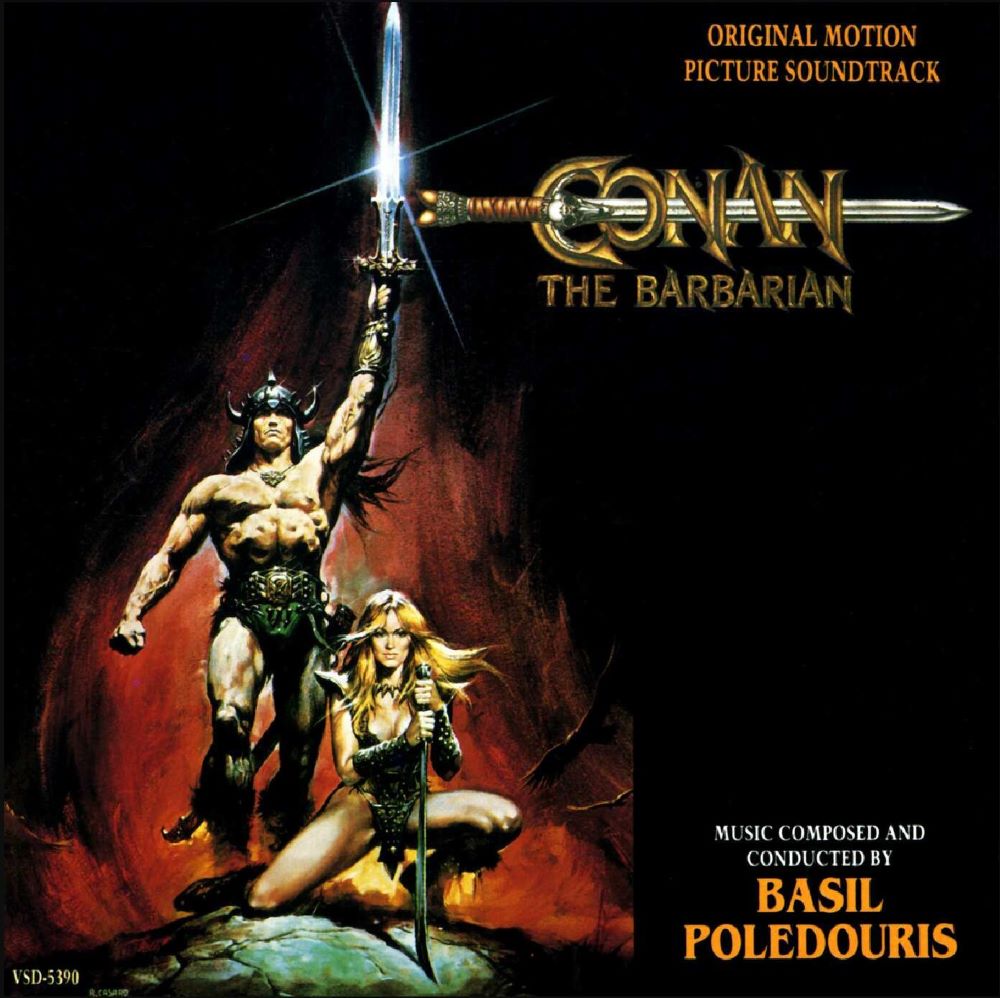
In 1982, maverick director John Milius wrote and directed a sword-and-sorcery epic based on Robert E. Howard’s pulp hero, Conan the Cimmerian. While Milius made several changes to the original character and his adventures to create a more accessible fantasy experience, Conan the Barbarian became a tremendous success and ushered in the Age of Schwarzenegger. With his charismatic leading man and a script filled with action and exotic locales, Milius now needed someone to compose a score worthy of the film’s mythic scale. His ultimate choice—composer Basil Poledouris—proved inspired.
Poledouris took an unconventional approach to scoring Conan the Barbarian. Rather than merely providing musical background to accompany scenes, he treated the score like an opera. Drawing from the influence of Richard Wagner and Carl Orff—particularly Orff’s Carmina Burana, which heavily inspired tracks like “Riddle of Steel/Riders of Doom” and “Battle of the Mounds”—Poledouris crafted a composition that could stand on its own as an operatic masterpiece. His use of leitmotifs to introduce and define characters echoed Wagner’s Ring Cycle. In “Riddle of Steel/Riders of Doom”, the intertwining themes of Conan and his nemesis Thulsa Doom are marked by pounding drums, crashing brass, and triumphant horns—a motif that returns with heightened intensity in “Battle of the Mounds.”
Another brilliant motif appears in the film’s introspective section—a more lyrical, meditative theme where Poledouris trades the martial power of drums and brass for a lighter, more emotional palette. This motif runs through a trio of tracks: “Theology/Civilization”, “The Wifeing”, and “The Leaving/The Search.” The first is a playful and airy piece that transitions seamlessly into the intimate and mournful middle section, culminating in a final movement that fuses both moods, reflecting Conan’s inner struggle and resolution in his quest for vengeance.
Other tracks contribute distinct emotional and narrative textures. “Gift of Fury” begins as a slow dirge following the destruction of Conan’s village, then swells to a dramatic crescendo that marks the end of his innocence and his descent into bondage. “The Kitchen/The Orgy” stands out for its complex duality—starting with Doom’s militaristic motif before morphing into a sensuous, decadent, and subtly discordant theme that embodies his contrasting nature: both disciplined and depraved. This piece showcases Poledouris’ deep understanding of the film’s characters and the psychological layers behind their actions.
Poledouris’ final score perfectly complements the film’s imagery and narrative while enhancing its dramatic weight. Even separated from the visuals, the symphonic and choral elements tell the story vividly—listeners can follow the emotional arc using only the liner notes. As a standalone work, it functions like a grand symphony; merged with Milius’ visuals, it achieves something transcendent.
Conan the Barbarian not only launched Arnold Schwarzenegger’s star power but also proved that sword-and-sorcery epics could be cinematic art. Milius’ decision to entrust Poledouris with the score would influence film composers for decades, demonstrating that a film’s music need not be a mere afterthought. To this day, Poledouris’ score remains his magnum opus and a benchmark for fantasy film music. Its influence can be heard as recently as Howard Shore’s The Lord of the Rings trilogy, where Shore applied Poledouris’ Wagnerian leitmotif approach to weave his own operatic storytelling through music. Conan the Barbarian endures as a masterful collaboration between director and composer—a timeless work that will continue resonating long after its creators have passed into legend.
Below are videos of the only live concert conducted by Basil Poledouris of the Conan the Barbarian symphonic score.
Part 1: Anvil of Crom/Riddle of Steel/Riders of Doom
Part 2: Gift of Fury/Atlantean Sword/Love Theme
Part 3: Funeral Pyre/Battle of the Mounds
Part 4: Orphans of Doom/The Awakening
Part 5: Anvil of Crom/Encore
 Through the Shattered Lens