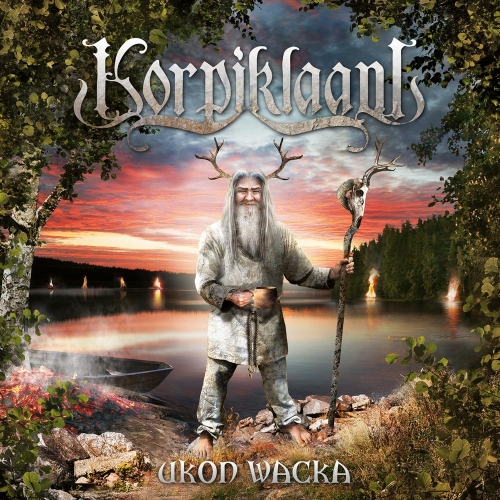
I just found out that Jaakko Hittavainen Lemmetty left Korpiklaani last month. According to the band’s official statement, “his personal health issues made the constant touring and recording impossible.” That might come as no surprise, considering Korpiklaani are one of the most prolific bands on the market. During his tenure they managed to release seven albums in nine years, and in 2010 alone they performed live approximately 100 times. I know I certainly wouldn’t be able to keep up.
His departure lends a sort of heightened significance to Ukon Wacka. Hittavainen might not have been their frontman, but he was responsible for all violins and woodwinds on all seven albums. In other words, half of what really made Korpiklaani folk metal is gone, and however well his replacement, Teemu Eerola, fills the void, their next album is bound to be different. Ukon Wacka might be the last of its kind.
Change is a pretty foreign concept to Korpiklaani, both in their sound and in their line-up. That is a point I’ve always appreciated about them. If it’s not broke, why fix it?
Louhen Yhdeksäs Poika
Ukon Wacka is no different. As always, the album makes no attempt at an introduction. It just kicks off from the get-go as quintessential Korpiklaani. Jonne Järvelä goes on rolling out incomprehensible lines at a break neck pace to a constant melody of accordion and violin, brought to life by standard metal instrumentation that’s designed to accent the folk, not compete with it. Throw in an awesome violin solo towards the end, and you’ve got a song that’s entirely unique to the band and entirely to form with everything else they’ve written. The stylistic monotony is hardly a fault, what with nearly all of their 80+ songs accomplishing a distinct and addictive melody. I probably get more Korpiklaani songs stuck in my head than any other band out there; I just might be at a loss to put a name or album to them.
Tequila
One of many long-standing traditions Ukon Wacka upholds is the booze track. Not that every song isn’t designed for copious consumption, there’s always been at least one song that requires no knowledge of Finnish to convey its lyrics. With Wooden Pints on Spirit of the Forest, Beer Beer on Voice of Wilderness, Happy Little Boozer on Tales Along This Road, Let’s Drink on Tervaskanto, Vodka on Karkelo, and now Tequila, Korven Kuningas remains the only album that doesn’t really fit that mold. And like all of those others, Tequila stands out as one of the album’s most memorable songs.
Surma
When it comes to closing songs, the band has been a little more diverse in their selection. But, aside from on Tales Along This Road, they’ve always seemed to save their most reflective or otherwise inspiring song for the end. Surma might not match Karkelo’s Kohmelo or Tervaskanto’s Nordic Feast, but it’s certainly the high point of Ukon Wacka as far as I’m concerned.
There’s not much I can say about the album really, because it sounds just like all of their others. I suppose Korpiklaani might be regarded as a bit shallow, at least in so far as most of their songs, especially in the absence of any understanding of the predominantly Finnish lyrics, are just fun and fairly thoughtless numbers about partying and getting drunk. But there’s also a sort of authenticity to that which renders them significantly more enduring than comparable acts like Finntroll. While I don’t think any particular Korpiklaani album holds a candle to Nattfödd or even Nifelvind, in the long run I always end up listening to them more. A lot of folk bands that don’t take themselves very seriously can only really be appreciated in their own right. Korpiklaani, on the other hand, extend beyond themselves, presenting a sort of continuity. I can’t really speak of them imitating or incorporating Finnish folk because, much like Irish punk and metal bands, they’re more the modern continuation of a long-standing tradition than an attempt to resuscitate it. I’ve never seen them live (they’re about to kick off a North American tour with Arkona that I might give in to a five hour drive across the state for), but I imagine their show incites a lot more dancing than headbanging, if you know what I mean. Authentic folk really implies community participation, and that’s the sort of thing Korpiklaani cater to, on Ukon Wacka as strongly as on anything else.
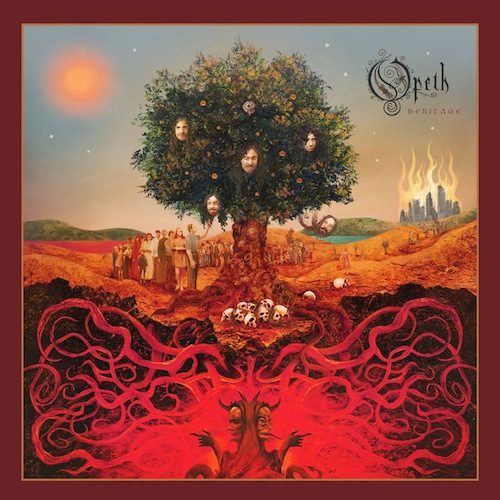
It’s been about a month now since I first acquired a copy of Heritage. I rather wish I’d reviewed it sooner, since my opinions ultimately never really changed. I really liked it on my first listen, and I like it to about the same extent, or perhaps slightly more, for about the same reasons now. Its reception hasn’t really changed either. Labeled pretty much from the start as Opeth’s worst album to date, it continues to wrack up impressively low scores across the board. (The average Encyclopaedia Metallum review is 54%, where no other Opeth album has failed to break at least 75%.) Either popular opinion has placed my presumed disposition towards good taste in dire jeopardy, or else I’m just approaching this from a wildly different perspective than the average listener. I am inclined to believe the latter.
Unfortunately, I cannot treat this as a normal Through the Shattered Lens review. That is, I cannot showcase particular songs via youtube and describe which elements really stand out to me for better and for worse. The band has been pretty forceful lately about preventing any and all means to experience their studio albums without first paying them. I’ll spare you a rant on antiquated copyright laws and record label monopolies, but suffice to say a musician’s attitude towards listeners will always be reflected in some capacity in the music. Whether Akerfeldt (signing to a notorious record label is no excuse) is too selfish or simply too oblivious to respect the means by which he became a celebrity in the first place, there is an over-inflated ego at work here.
But that wasn’t news to me. Really it shouldn’t be news to anyone who’s listened to Roundhouse Tapes and endured the six minutes of dialogue wrapping up the live version of Blackwater Park. (It’s always lame and cliche to mock-hype yourself up to be a celebrity, but it ceases to be tongue in cheek when you really are a celebrity.) At any rate I started losing interest when they released Deliverance, and by Ghost Reveries they were one of those “I really respect them, I just can’t get into their new sound” bands.
So I guess the first big difference between me and, well, pretty much everybody else, was my only thinly-veiled conviction that Opeth were no longer very good. I had absolutely zero expectations, so any mediocrity apparent in Heritage burst no bubbles for me. Rather, it being immediately clear that Heritage was not the sort of album I expected to hear, I ended up listening to it almost as though they were a brand new band. As such, I really can’t find fault in it. Sure, it’s not groundbreaking. It’s unlikely (though not out of the realm of possibility) that it will make my top 10 of the year charts when all is said and done. But damnit, this is a fun, creative, thoroughly entertaining album, and under any other band name I think it would earn fairly positive reviews. Unfortunately, urging people to listen to it with an “open mind” would be pointless, because it’s Opeth. There is no getting around its place in history. If you really liked Watershed it’s unlikely you will enjoy it.
If I could sample the songs here like usual I would treat this whole article differently. I would completely ignore the fact that it’s Opeth, point out all of my favorite bits and pieces, maybe make passing references to the cheesy lyrics and the possibility that they could have done away with a few unnecessary transitions which fail to fit the big picture, and save any mention of the band behind the album until the very end. Hell, maybe I’d say nothing at all and save a rant such as this for a completely separate follow-up article, just to make a point. But since that is not an option, and traditional reviews aren’t my style, the rant will stand alone.
One review I read quoted Akerfeldt as saying “I think you’ll need a slightly deeper understanding of our music as a whole to be able to appreciate this record.” The reviewer’s relative point was not particularly kind, and perhaps mine won’t be either, but I honestly find the quote precisely on the mark. Akerfeldt isn’t some rock solid icon of metal, unyielding and impervious. He’s no Lemmy, no Bruce Dickinson. Perhaps his last few albums were heavy and aggressive enough to make people think otherwise, but what they reflected for me was something quite the opposite–a sort of susceptibility to musical trends, overbearing producers, and well-deserved fame. It was a softness, almost a sort of frailty, that made Orchid, Morningrise, and My Arms Your Hearse so breathtaking, and the more he matured and rose to stardom the more that authenticity faded away, to be replaced eventually by dynamic-driven death metal of the popular sort that only excelled in perfecting a genre with little to no redeeming value to begin with. I think some of his original spirit has resurfaced on Heritage, albeit only slightly and in a very different form. Akerfeldt dumped off a lot of baggage when he chose to create Heritage the way he did, and from what I’ve gathered in interviews, he doesn’t intend to turn back. In retrospect, I’m pretty excited to see what will follow as the leech of popularity upon his creative genius begins to contemplate younger blood. But that wasn’t my first impression. Initially, abandoning all expectations, I just heard something pretty groovy and got into it.
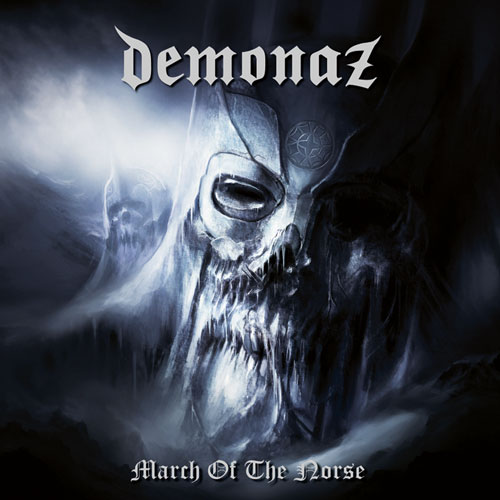
Unlike Abbath’s awkwardly titled sideproject I (which I haven’t actually heard yet), Demonaz Doom Occulta left little to the imagination in naming his new band. According to a lot of reviews I’ve read, he left little to his imagination in writing songs for it too. I don’t know that I can develop much of a case to the contrary, but March of the Norse is still more than capable of entertaining. I enjoy it.
Northern Hymn / All Blackened Sky
It’s definitely not a black metal album. If anything, you might say it’s an Immortal minus black metal album. In a lot of ways it has marks of the generic. The tempo and beat are pretty homogenous throughout, and what you hear is what you get; there’s not really anything buried beneath. There are a few slow moments that harken to Bathory, and a lot of plodding along in a way that characterizes stereotypical viking metal. But if you accept that Demonaz set out to create something pretty standard, I don’t think the results are bad at all. The songs never drag, and despite all sounding quite similar I did start to get pretty familiar with each individual song after a few listens, not just the sound as a whole. At the same time, the similarity with which each song starts gives it a lot of continuity. There aren’t many major transitions. In fact, I didn’t even notice when All Blackened Sky ended and the title track began my first listen through it. Don’t misconstrue that as a decidedly bad thing; it’s not that I missed it for lack of interest. The songs just flow together nicely.
Where Gods Once Rode
Now don’t get me wrong, aside from some pretty cool solos there is absolutely nothing “special” about March of the Norse. If you look for merit beyond face value you’re not going to find much, and I subsequently don’t have much to say about it. But it has value as a background piece. Because it’s neither very enticing nor unpleasant I can really put it on repeat all day long and never have to worry about being distracted from whatever I’m focused on, for good reasons or for bad. When I choose to tune in I always like what I hear, and I can tune right back out with no real effort.
I guess that’s all I have to say. I like this album, and I find it useful. It’s not the sort of thing I would go around recommending, but neither is it so base that only a die hard Immortal fan can enjoy it, as I’ve seen some people claim. Once something new crosses my path to replace March of the Norse as my sort of background album of the week I might never remember it again. But until then, well, I’ve got my $11 worth out of it. It’s certainly not the sort of thing I only listen to once and put back on the shelf. Sometimes generic done well is refreshing.
Geri and Freki does Heerfather feed, / the far-famed fighter of old, / but on wine alone does the one-eyed god / Wuotan forever live.
O’er Midgard Hugin and Munin both / each day set forth to fly. / For Hugin I fear lest he come not home. / but for Munin my care is more.
There Valgrind stands, the sacred gate, / and behind, the holy doors. / Old is the gate, but few there are / who can tell how it’s tightly locked.
Five hundred doors and forty there are, / I ween, in Walhall’s walls. / Eight hundred fighters through one door fare / when to war with the wolf they go.
Five hundred rooms and forty there are, / I ween, in Bilskirnir built. / Of all the homes whose roofs I beheld / my son’s the greatest meseemed.
There is Folkvang, where Freyja decrees / who shall have seats in the hall. / The half of the dead each day does she choose. / The other half does Othin have.
There is Gladsheim, and golden-bright / there stands Walhall stretching wide. / There does Othin each day choose / all those who fell in fight.
Now am I Othin, Ygg was I once. / Ere that did they call me Thund. / Wodan and Oden, and all, methinks / are the names for none but me.
Hail to thee, for hailed thou art / by the voice of Veratyr. / Where Valgrind stands, the sacred gate, / ye will find nine golden doors.
Hail to thee, for hailed thou art / by the voice of Veratyr. / Old is the gate, but few there are / who can tell how it’s tightly locked.
Where His Ravens Fly…
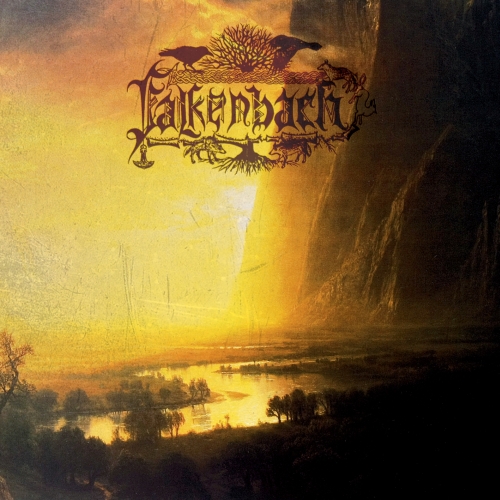
Far from a simple “see you in Valhalla,” Tiurida begins with a faring off worthy of kings, and even before understanding the lyrics you can feel their power in the music. Falkenbach’s 22 years of existence could be described as an effort to express the shared values, traditions, and beliefs of pre-Christian Europe. Written into the music just as much as the lyrics is a reverence for a greater age of man, in which fear and submission had not yet taken the place of mystery and honor. At least, that is what I have always taken out of his works, and perhaps it is why, in spite of the minimal variation in his sound over the years, I’ve always looked to new Falkenbach albums with a sort of reverence.
I never quite got the complaints that every Falkenbach album sounds the same–that he has eschewed developing as a musician and merely continued to produce the same thing over and over again. For while this is certainly true, especially of his last three albums, I would never want anything different. I would gladly take a hundred songs just like Where His Ravens Fly over any change that might cease to capture so fully the essence I’ve described.
Tanfana
I regard Tiurida as a phenomenal success, and possibly the best album of the year. Excluding the decidedly darker and heavier track Time Between Dog and Wolf, what you get on this album are five hymns. There is seldom any anxiety–no desperate or aggressive calls to return to past values, as so many other pagan bands manifest (with much success.) The lyrics are in the present tense, and so, in a sense, is the music. It’s hard to put my finger on what exactly I mean by this last comment, but it definitely lies in the folk side of his sound.
Tanfana is an instrumental song referring to a Germanic goddess of which very little is known. Tacitus’ mention of her in the 1st century is the only surviving source. Fitting, then, that the song should have no lyrics. This song is a very standard representation of how Vratyas Vakyas goes about employing folk music. A few things should stand out right away: The woodwinds are all synthesized; there are no actually traditional instruments at work here. Furthermore, they aren’t being played in any sort of traditional way, with any degree of diversity or improvisation. They are locked into the pace of the song and feel more like a sound sample loop than something performed live in studio.
The effects of this have to be significant, because it’s really what characterizes the folk element of almost all of Falkenbach’s songs. Well, two things stand out to me. Whether we’re talking monks or Burzum or really bad techno, there’s something inescapable about chanting effects. The repetition zones you in and forces you to experience the music in the here and now, whether you want to or not. It creates a heightened awareness of your present state of being. (And it might be why alcohol makes most awful music sound even worse but really bad techno sound awesome, but I’m getting way off focus now.) My point is that an element of this is present in Falkenbach’s sound, not only in the plodding progression of the drums and guitar, but in the folk. The other thing is that the folk instrumentation, being synthetic, bears a commonality with the more standard keyboard choruses he uses. Actual folk instrumentation generally calls to mind an image of something decidedly non-modern, but here there’s very little gap.
So when I say the music is in the present tense, what I mean is that his sound both evades my preconceived disconnection between folk and modernity and zones me into the moment–not of the music, but the on-going present state. Am I just babbling now? Perhaps, but it’s interesting to try and understand what about his sound appeals to me so distinctly from any other band describable as folk/viking/pagan metal. I think that, instead of taking me into the past, it has a sort of capacity to bring the past to me and blur any distinction.
Sunnavend
I suppose we all have particular bands and songs that move us in a personal way and might not have any such effect on anyone else. Falkenbach is just one of those bands for me. I don’t ever want his sound to change, and I’m so glad that on Tiurida it didn’t. This music gives me a unique sort of peace of mind–a feeling that lofty visions of the past aren’t mere idealizations or lost causes, but are entirely realizable in the present. This music is a hymn to the immortal, personified through gods whom modern society has yet to blaspheme.
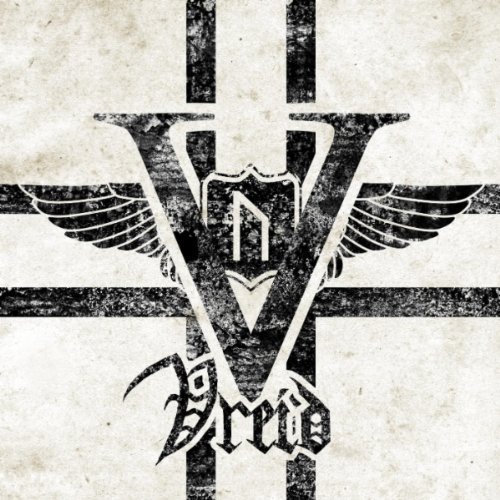
When Terje Bakken, better known as Valfar, passed away in 2004, one of the most significant bands in black metal passed with him. The remaining members of Windir went their separate ways, forming a number of different groups, and Vreid was one of them. As you might have guessed by the title, they’ve now released five studio albums, and they’ve evolved away from the sounds of their predecessor. I can’t say much for their first four albums, though I’ve listened to them, because I never really paid close attention. So I’ll be approaching this one alone, not as a comparison to their earlier stuff. I just thought I should give a brief history of the band first, since they have a legendary if now distant past.
I can’t heap endless praise on this the way I have a bad habit of doing for most albums. I’ve got pretty mixed feelings about it all in all.
Arche
Though classified as black metal, the driving force behind a lot of V is heavy metal–a perhaps generic term, but fitting in this case. The bulk of the album is very riff-driven. You can get a feel for their multi-styled approach from the very beginning. Though the chords build up into a melodic death sound that eventually breaks into black metal, the song is quick to return to the opening riff. You get a lot of repetition, but also a lot of opportunities for some really awesome solos–something that rarely coexists with blast beats and tremolo. The sound Vreid’s created here opens the doors to a lot of metal elements generally absent in specifically black metal, and the way they take advantage of it–the ample guitar solos first and foremost–are the album’s biggest highlights for me. You’ll hear plenty of death metal and (not exactly foreign to the genre) thrash metal as well.
The Blood Eagle
But there are some major detractors. I’m not always convinced that the sounds they put together really work. The Blood Eagle could be a pretty cool if simplistic heavy metal song, but the singer kind of kills it for me. I love his vocal style. I really do. But if perfect for black metal, it just doesn’t always work laid over a song that just as frequently calls to mind Iced Earth. Actually singing could make this song work. Alternatively, I could see them pulling off some deep, guttural death metal vox here. But the contrast between the tameness of the song and the shrill harshness of black metal vocals doesn’t find a rewarding middle ground. A lot of the album’s lyrics are pretty suspect too, especially, again, on this particular song. The opening lines, “Born out of worlds of fire and ice / The nature of spirits embrace our lives / From the underworld to above / We worship the fertile soil“, cease to be plausibly uplifting and just sound kind of sissy when followed up by a chorus of “Carved in the back / Blood-strained wings are dressed / An image of grotesque / The blood eagle of human flesh“. Pagan spirituality and gore-grind guts-fucking just don’t mix.
The Others and the Look
On some tracks, this one a great case in point, all of the elements Vreid employ come together to create diverse and enjoyable songs that never bore. On others I struggle to pay attention at all. Most of them have rewarding bits here and there with a lot of drag in between–repetitive riffs like in Arche and acoustic/keyboard interludes that don’t amount to much. I suppose it doesn’t help that I’m not fond of death metal, which Vreid seem to incorporate a lot of; someone with opposing tastes may well hear this album from a very different perspective and find it quite the success. But given all the other new material out there, it’s pretty unlikely that anything will move me to keep on listening to this one. I think that’s my final verdict on V: not bad, but too frequently boring for its positive features to really shine.
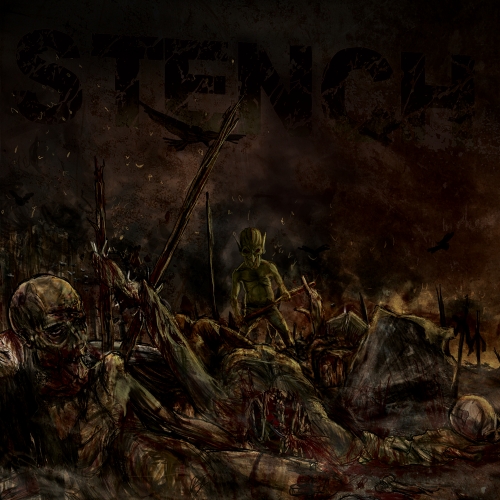
Up until late July, Nekrogoblikon were a nearly forgotten gimmick. Their first and only previous album, Goblin Island, was released in 2006, and that was the last I ever heard of them. Aside from telling the story of an extra-terrestrial goblin invasion of the most heinous sort (they even ruin Christmas), it featured, among other things, sound clips of the band screaming like little girls, an actual stereotypical Christmas song, a cover of In Flames’ Artifacts of the Black Rain with all the lyrics substituted for banter about goblins, and a dance beat chiptune outro. Musically, it was simultaneously a mockery of a lot of the bands that probably influenced them and a pretty decent, enjoyable imitation of them. But it was never funny in say, a GWAR or Alestorm sort of way. It was more like a Weird Al thing–a novelty. You laugh, but you really don’t want your friends to know you listen to it, and you never play through it twice in a row.
Goblin Box
Their new album is a very different beast. Over the past five years they’ve actually matured into really good song-writers. Don’t get me wrong, Goblin Island had some really catchy tracks, but in the music just as in the lyrics there was a sort of audible immaturity, by design of course, that made light of the bands they were imitating. On Stench this notion is more internal. That is, they’re still parodying Children of Bodom, Finntroll, and just about anything in between, but instead of hearing a bunch of kids making a joke you hear a bunch of goblins being goblins. The immaturity is no longer in the execution; it’s encased in really solid music that, given better production value, could rival many of the very same albums it pokes and prods.
Basically, on Stench the line between a musical parody and a successful cross-genre epic metal masterpiece is very grey indeed. Yet the lyrics are just as blatantly whimsical as ever. The result is hard to swallow, because it’s so good and so bad at the same time. I imagine the spoken ending of this song is a rip on Rhapsody of Fire’s infamously lame spoken lines; it goes approximately “The humans had opened the box to torture and maim all kinds of magical creatures, but the goblins were not to be trifled with. No, not to be trifled with at all. And as the humans laid there, a pulsating mound of bone and flesh, dead and mutilated beyond all hope and reason, the goblins feasted upon their rotting corpses, filling the halls with the shrill sound of chilling laughter….. Forever!” And yet when you listen to it, beneath the cheese you get the feeling that it’s a really badass ending.
It took quite a while for me to get sufficiently passed the fact that it’s a parody to enjoy it in its own right. That was Stench’s initial impact: a part of me was left feeling like I’d been cheated out of something awesome on par with Ensiferum and Equilibrium, but the more I listened to it the more I wanted to click repeat, plant my hand firmly in the center of my face, and grin from ear to ear underneath it. At this point I can safely say I love it unconditionally.
Gallows & Graves
There’s something of a third dynamic going on here as well, and it’s what really tips the scale towards greatness. In some odd capacity this really is, well, goblin metal. If we think of them as those short, mischievous little tinkers that are a good bit like gnomes with the added plus of being spawns of Satan, you can actually hear something of this in the music. Goblins ARE both comical and evil, and while Goblin Island was too much of a joke (albeit a good one) to capture this, Stench pulls it off. Trolls and vikings and pirates have all acquired a sort of musical imagery, much of which isn’t meant to be taken entirely seriously. The idea of a goblin is a good deal less serious than all of those to begin with, and if I was going to “seriously” create a metal sound to capture them, well, Stench seems pretty on the mark. The frantic intro/chorus melody of Gallows & Graves and the kind of childish clear vocals really do call to mind some small, obnoxious, vicious little bugger hopping around your feet, and this same musical imagery reoccurs throughout Stench with a consistency that Goblin Island lacked.
A Feast
It’s really hard to talk about what Nekrogoblikon “accomplished” on this album with a straight face, but the fact of the matter is Stench is really damn good. They manage to successfully combine elements of more metal sub-genres than I can count. It’s also got the clever bonus of thematically justifying all of its potential negatives. Goblins are as obnoxious as they are evil, right, so if they’re mocking a bunch of their metal predecessors musically it’s only natural. This is goblin metal.
Happy Labor Day! In honor of this holiday, I’d like to take a moment to acknowledge a unique genre of film that truly sparked my love affair with cinema. That genre, as you may have already guessed, was Italian horror.
Today’s song of the day comes from one of the greatest of the Italian horror films, Lucio Fulci’s Zombi 2. While the film’s very true artistry is often overshadowed by its infamous reputation and the score itself is clearly a product of its time (the late 70s), I think that Zombi 2 was a cinematic high point in general and a masterpiece of horror in specific. And a large part of that was due to Fabio Frizzi’s operatic yet foreboding score.
Here then is today’s song of the day, Fabio Frizzi’s Main Theme from Zombi 2.
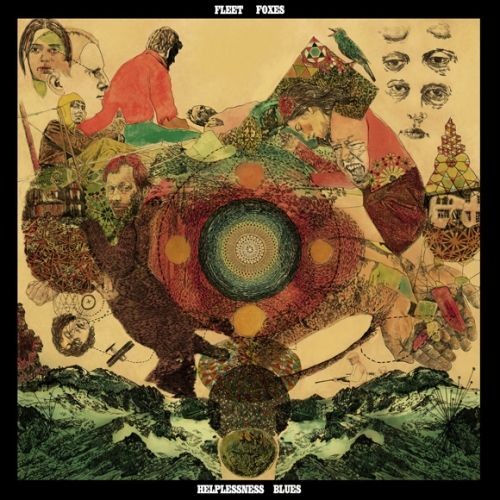
I’m sure nice things can be said about Helplessness Blues, the new album by Fleet Foxes. You won’t hear them here. The amount of praise and acclaim this album has received makes me want to puke, and it’s high time someone pointed out its potential mediocrity.
The confusion arises from the fact that their 2008 debut was brilliant. I was hoodwinked the same as everyone else up front, buying their new album without even downloading it first. The other misleading factor–the one I didn’t personally succumb to–is the fact that they’re still trying. I have no reason to believe Fleet Foxes did not attempt to create a good album. They aren’t sell-outs in the classic sense. Sure, it sounds like over the past three years they quit showering and traded an indie song-writing mindset for feelings-sharing stories around a campfire, but becoming a hippy is like contracting a deadly disease. That’s different from selling out.
When you desperately want an album to sound good and you know the band is still trying I guess it’s easy to ignore your ears and pretend you like it. But I’m a metal fan at heart; I don’t have to make apologies for a style I don’t obsess over. So let me quit immaturely bashing Helplessness Blues and get on with why I don’t like it.
Helplessness Blues
The vocal melodies aren’t melodic. Oh, that might be a mathematically false statement; I don’t concern myself with such things. But just listen to what’s going on in this song. I can’t think of any kind way of putting it; Helplessness Blues just consistently fails to resolve any of its melodies on appealing notes, and that’s 90% of the problem. Try to take this in context. After a half dozen listens today I started to kid myself into thinking the album was fairly decent (and I really have grown hopelessly fond of this particular song’s chorus), but it only took a listen to Ragged Wood and Blue Ridge Mountains to go “Oh, yeah, that’s what I meant” on the proof-read. This is Fleet Foxes we’re talking about. Their self-titled had some of the most subtly beautiful vocals I’ve ever heard, and they always, always rewarded the listener even at their most depressing points. By comparison, Pecknold sings all over the place on Helplessness Blues with no real guidance–without any real ear for making it all work. In a lot of cases there’s no resolution whatsoever. Listen from the transition at 2:50 on, then go listen to Blue Ridge Mountains, and I’m confident you’ll understand what I mean.
This isn’t the criticism. This is the problem. It opens the door for the criticism to come pouring in. See, from start to finish, certainly not just in this one instance, Helplessness Blues is a softy. It always chooses the path of least resistance, not the happy, upbeat resolve. That’s fine. But if you do nothing with it, then it’s also very boring. In order for Helplessness Blues to be an above-average album, if the choruses and focal melodies are not rewarding in their own right, then you have no choice but to ask how they play off their surroundings–how they fit in to the big picture productively. How do they serve to make this the album of the year contender so many sites consider it to be? Or if they don’t, then what makes it so great in spite of them?
It’s not the lyrics, that’s for sure. When they aren’t generic lines about being lonely or sad or having relationship issues, they’re often borderline nonsense. The song Lorelai especially stands out. Up until the chorus it hangs on the brink of greatness, and then he starts cooing “I was old news to you then, old news, old news to you then” over and over again ad nauseam to such a painful extent that you soon forget the song was about anything at all. Or take the second half of the song currently featured–the title track (long after the rubbish about the singer realizing he was not “unique among snowflakes”.) There’s nothing clever or creative about repeating “If I had an orchard, I’d work till I’m sore” a half dozen times. And it’s too odd and repetitive to be heartwarming. Sure, he throws in “And you would wait tables and soon run the store”. Like, we’d work hard for each other out of love and soon accomplish something, maybe, but I’m still thinking “An orchard? Really?” and wondering how many times he’s going to say the same strange thing over again. And then the end line, again musically unresolved and unsatisfying, “Someday I’ll be like the man on the screen,” might be intended as a twist, something thought-provoking, if the common association of celebrities with unauthentic lives can be applied, but the irritable melody doesn’t really incline me to put much thought into it, and in any case I’m still thinking “An orchard? Really?”
The lyrics on average are only insightful in that “I don’t get it” sort of way. That is, they only inspire those thoughtful enough to derive deep meaning out of just about everything and those thoughtless enough to think their inability to derive meaning out of something is a sign of its brilliance.
Someone You’d Admire
Not all of the lyrics are dull. Someone You’d Admire, for example, is decent enough. Perhaps if the song didn’t fall victim to my complaint about the melody I’d think it clever. And that’s what we’re looking for, right?: Something that makes the weak vocal melodies appropriate or makes the songs good in spite of them. Maybe if the lyrics were coupled with really good instrumentation it would all come together. But they aren’t. The dude’s just strumming basic chords on a guitar devoid of emotion. Oh, he alters the intensity a little here and there, but there’s never any fire in his strumming. It’s little more than variant degrees of volume. And that’s what you get with the bulk of the instrumentation on this album–moments that are loud and moments that are quiet, typically not transitioning so much as switching at random. Oh, and the ending is unresolved again.
The Cascades
The instrumental track The Cascades is a good example. The acoustic guitar in the first minute isn’t playing anything particularly melodic, and it doesn’t compensate with emotion. It’s just kind of there–the sort of bedroom recording I’d create in one take and delete soon after. Around 55 seconds something awesome happens, and for a brief moment the song feels like what I actually expected a new Fleet Foxes album to sound like, dreamy, beautiful, crea—wait, it’s over. By 1:18 it’s over, and it doesn’t even fade or transition. It just ends, and we’re solo acoustic guitar again. Oh wait, here, it’s coming back again at 1:35. Oh nevermind, it’s gone again at 1:45, erm, did this song just end?
The comings and goings, the ins and outs, whether it’s merely from quiet to loud and back again or from boring to beautiful and back again, it’s all borderline random. You never feel the transition. Nothing is natural. And with the average song clocking in at only about four minutes, there’s almost never time for something coherent to develop out of it all. Just like the vocal melodies, the instrumental dynamics pretty much never develop into or resolve on an appealing sound.
So their new approach to vocals is out. Their new approach to instrumentation is out. The lyrics demand more attention and aren’t sufficient to satisfy. Basically, none of their new ideas work. Not one, in the big picture. I will leave you with the one counterexample that I felt utilized them all successfully (perhaps in part because it’s not such a decisive break from their old material.) If the whole album was more like this next one, well, then I could really appreciate it:
The Plains/Bitter Dancer
Now I was being blatantly mean to the band in my introduction, and that’s quite unfair. If Helplessness Blues hadn’t gotten such rave reviews I would have been content to call it fairly uninspiring, harmless folk. As a pretty piss-poor musician myself, I have strong reservations against criticizing bands for the music they produce (at least if it doesn’t pretend to be awesome.) The frontman Robin Pecknold even so much as stated that he intended the album to be “less poppy, less upbeat and more groove-based.” He succeeded, for better or worse. There’s no sense in pointing out how direct yet subtle, uplifting and beautiful, the vocals and instrumentation all were (and unobtrusive the lyrics) on their self-titled release, if Helplessness Blues was expressly intended to be different. That it’s not what I wanted to hear is no excuse to slander them.
If I’m starting to sound apologetic now, make no mistake. I think Hopelessness Blues is pretty bad, and I would even absent the disappointment of expecting a repeat of 2008. I just want it to be clear that my accusative tone is a product of the Pitchfork and co “way to go champs, you were struggling but it paid off, 11/10” type reviews, not Fleet Foxes themselves. It didn’t pay off. It resulted in something dubious–something you might find a great deal of merit in–hell, something I hope you can appreciate a lot more than I can. But to think it’s unquestionably brilliant is just stupid. It’s ambitiously, recklessly experimental, and you can love it or hate it with equally good taste.
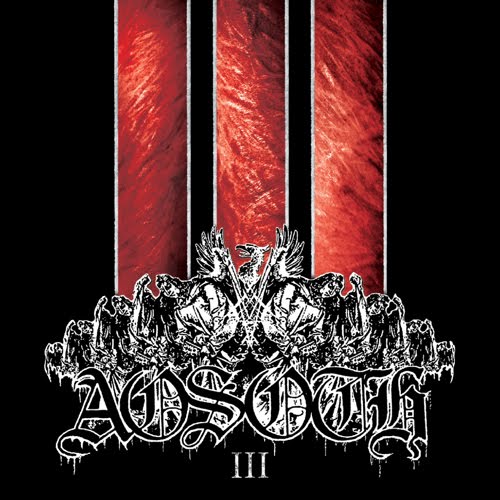
French black metal as crushing chaos is something of a novelty to me this year. I think I was sort of envisioning the metal scene there as composed of a dozen Neige side projects and Deathspell Omega. Blut Aus Nord and Aosoth’s new albums have both thus thrown me for a bit of a loop. I didn’t really listen to either band prior to this year, and both have recently released something tormented to the point of being both fascinating and entirely unpleasant to listen to.
II
Unlike 777 Sect(s) though, III doesn’t give me any sort of moving vision. It doesn’t so much take me on a journey through a nightmare I’d rather avoid as confront me head on. There’s a lot less to latch onto beneath the wall of noise, and what does surface isn’t exactly friendly. You can expect an album that’s tormented from start to finish, and unrelenting even in its slow parts. If II is the most frantic song on the album, it’s also perhaps the most direct example of this. At the transition around 1:15, what emerges as the song’s most defining characteristic is something of an instrumental tornado. Here the black metal serves as sort of a portal, a summoning sphere that conjures forth sinister elements from the beyond. On II it might be a tornado ready to rip you limb from limb. More frequently it’s a slow-moving monster with equally ill intentions, and the ritual that invokes it is likewise more of a methodical blood-letting than a butchery.
III
III is a bit more characteristic of what you can expect to hear throughout–a lot of slow, haunting progressions interlaced with blast-beat brutality. Again the song’s most memorable moment fades in. The break around 2 minutes doesn’t explode back into full-throttled black metal. It slowly builds up. A deeper guitar tone takes its sweet time to emerge out of the filth and present, around 3:45, possibly the most crushing, albeit brief, moment on the album, soon to be buried again beneath higher-pitched, haunting sounds and blast beats.
It wasn’t for a while after reviewing 777 Sect(s) that it really grew on me, and likewise Aosoth’s III might take more time than I’m willing to give it to develop in my ears into something not enjoyable, it will never be that, but at least more intriguing than it is unbearable. But then, the two albums don’t really compare as much as I’m making them out to, I just haven’t heard enough music like this to better describe it. There are definitely no good vibes to derive from Aosoth. Like I said, it’s not a journey filled with hidden horrors–it’s direct. What’s there to be heard I think you can take in in one attentive listen. It shares the ability to terrorize without any real relief, and for better or worse that may be its only effect. The songs are fairly diverse, but the bad vibe is consistent. As something I doubt was meant to be enjoyed I think it’s pretty successful. Prepare to walk away feeling a bit less content than when you started.
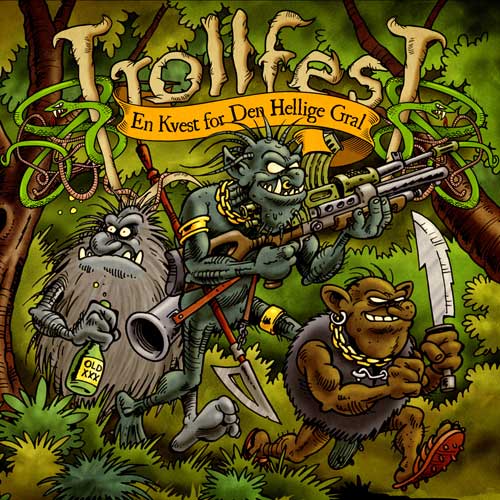
TrollfesT certainly aren’t for everyone, but I sometimes wonder whether a lot of people who criticize them even bother clicking play first. The biggest complaint I tend to see about TrollfesT is that they’re just a Finntroll ripoff. After all, they both have “troll” in their names. And they’re both bands. It must be a ripoff.
Undermålere (I am lead to believe this is a fan creation, not an official music video.)
Right. Well, now that you’re hearing this you’ve probably experienced more of the band than a lot of the people who’ve written negative reviews of them. What I think you get when you hear TrollfesT isn’t so much “another folk metal band” as a bunch of music students who’ve got some decent professional training but decided they enjoyed drinking and playing live more than grad school. TrollfesT is a clusterfuck of klezmer, Balkan and gypsy folk, and whatever else they were introduced to in musicology 101 and decided to incorporate. For better or worse.
One thing you’re not going to hear on En Kvest for Den Hellige Gral, or on any of their other albums, is much of a folk/viking metal ethos. There’s a decent chance they’re more familiar with Taraf de Haïdouks than with Bathory (though they have as much of an awareness of metal as all the other styles they incorporate). Hell, they’re probably the least serious band that can be called folk metal. The lyrics are barely coherent gibberish. En Kvest for Den Hellige Gral isn’t in German or Old Norse or anything of the sort. It’s exactly what it sounds like: “The Quest for The Holy Grail” as written by someone a little bit slow, like say, a troll? I think it’s supposed to be consistently coherent enough to be understandable if you know Norwegian, but it’s not a real language.
Each release is a concept album, and while I can’t speak for this one they’ve come package in the past with a mini-comic telling the tale. It usually involves a bunch of imbecilic trolls going on an epic journey for booze (I’m sure the Holy Grail here is some self-replenishing tankard of ale) and pillaging, plundering, slaughtering Christians and all those other good light-hearted folk metal topics along the way. It’s never going to make a statement or push a particular world view, it’s just meant to be fun.
Die Verdammte Hungersnot
Far from being “Finntroll ripoffs”, the band is so unique that there’s nothing I can really compare this to besides their own past works. So what I have to say about En Kvest for Den Hellige Gral specifically will be, I guess, pretty brief. One thing I noticed was a lot of breaks in the folk side of their sound. You’ll find a lot more 30 second or so segments of straight-up metal on this album than on Villanden. That, to me, is a bad thing, because when they’re not playing folk or doing something weird they’re pretty generic.
On the plus side, the folk is largely a continuation of Villanden. That is, rather than the home-grown sort of sounds they used on their first two albums, they incorporate recognizable styles that you can have some fun trying to identify. The recording quality seems to have improved a bit too, which in their case I found kind of disappointing. Villanden’s raw sound gave it a sort of primitive feel that I thought complimented their style.
In a lot of ways it’s their most mature and diverse work, but it lacks some of their last album’s lasting appeal. The songs aren’t quite as catchy. The way the middle of Die Verdammte Hungersnot instantly sticks in your head was a bit more commonplace in the past. The vocals aren’t nearly as unique, and if it sounds all around more professional, well, that doesn’t necessarily work as well for their image. If Villanden was borderline insane, En Kvest for Den Hellige Gral is merely pretty weird.
Der Sündenbock Gegalte
That all being said, if you’re new to the band entirely and intrigued I recommend Villanden over this one. I have a love/hate relationship with it that extends way beyond my interest in anything else they’ve released. But En Kvest for Den Hellige Gral is still pretty good, and it’s a promising sign of things to come that they’ve continued to expand their sound.
 Through the Shattered Lens