Whether you love comics like this or hate them, the simple fact is that we need more like them : legitimate “anything goes” creative free-for-alls that have nothing limiting them other than the scope of the author’s imagination — or, in the case, the authors’ imaginations, plural.
The “comic like this” in question is Swonknibus, a newly-released collection of cartoonist Chris Cajero Cilla and writer Greg Petix’s weekly Swonk strip that ran in the pages of the University of Arizona student newspaper The Daily Wildcat from 1995-97. It’s more than that, of course — Cilla published this under the auspices of his own Sardine Can Press (apparently there’s also a hardback version available as a print-on-demand job from Lulu) and has seen fit to include an intriguing smattering of ‘zine content he created with Petix from roughly the same time period, and to round the entire package out with three pages of extensive footnotes — but for purposes of this review, all you really need to know is that if Swonk is to your tastes, the supplemental material is sure to be as well, and if it’s not, then it won’t be. Fair enough?
How, then, to best decide whether or not Swonk is, indeed, to your tastes? Well, let’s see — if you like random pop culture references, even more random pop culture send-ups, absurdism thinly veiled as satire, absurdism for its own sake, satire for its own sake, political humor, entirely amoral humor, gross-out humor, gross-out shit that isn’t humorous, stand-alone strips, multi-part strips, recurring characters, one-off characters, and all kinds of stuff that either does or should make you feel at least a little bit guilty for laughing at it, then congratulations. You’ve come to the right place. There’s something in here to both please and offend just about everybody.
I’m a longtime admirer of Cilla’s comics, but this is my first time even hearing of Swonk, let alone actually seeing it, and as such it’s interesting to note the ways in which it both is and isn’t what a person would expect from the “warts and all” early work of someone who would go on to become an auteur cartoonist. A fair amount of the divergence from expectation can likely be chalked up to Petix’s influence, of course — he wrote this material, after all — but it’s equally interesting to note how markedly similar their sensibilities are in so many key respects, and therefore easy to see why collaboration was such a natural thing for them. They both share a decidedly askew view of reality and aren’t afraid to take the piss out of just about anyone and anything, but they both have a gift for making nonsense make sense (if — errrmmm — that makes sense), and so don’t be too surprised if much of what’s on offer here ends up feeling to you like it could just as well have been the product of one mind rather than two.
Still, in many ways, that’s the ultimate mark of success for endeavors such as this one, is it not? When what’s on the page reflects the creative output of two people who are on the same page, the results are often terrific, dare I even say alchemical, and so they are here — albeit with an added caveat, that being : if you take offense at the notion of being offended (not even necessarily easily offended) and can’t get past it, you’d do well to avoid this collection altogether. There are absolutely no sacred cows in the world of Swonk, and while that makes he strip very much an artistic inheritor of the underground legacy, well — if the undergrounds bugged you, this will too. And for many of the same reasons.For my own part, though, what can I say? I loved this book. But then slapdash regurgitations direct and unfiltered from the id have always been my cup of tea, and while I’m not at all dismissive of those whose life experiences have led them to develop more delicate sensibilities for any number of entirely valid reasons, I don’t think all comics should be forced to cater to said sensibilities by any stretch — especially when there are already so many comics that do so as a matter of course. It takes a cast-iron stomach and maybe even a vacationing conscience to enjoy much of Swonknibus — but if you have at least one or the other, preferably both, then you’re in for a great time.
Also, this review is “brought to you” by my Patreon site, where I serve up exclusive thrice-weekly rants and ramblings on the worlds of comics, films, television, literature, and politics. Subscribing is the best way to support my continuing work, so I’d be very appreciative if you’d take a moment to give it a look by directing your kind attention to https://www.patreon.com/fourcolorapocalypse
On paper, at any rate, R. Kikuo Johnson’s cartooning sounds like the kind of thing that an admittedly uncultured slob like yours truly wouldn’t — maybe even shouldn’t — find appealing : sleek, visually literate, evocative to the point of being achingly so at times, this is the kind of classy stuff one would expect to find in the pages of The New Yorker. And so it is that Johnson has spent much a good chunk of the past several years plying his trade for that venerable bastion of the Eastern self-appointed intelligentsia, which is no sin by any means : it’s just not, roughly speaking, “my thing.”
Still, every now and again it pays to stretch oneself beyond the limits of one’s own largely illusory “comfort zone” and to see just what it is that everybody else is reading — and there’s no doubt that Johnson’s long-awaited new graphic novel, No One Else (Fantagraphics, 2021) will be among the year’s most talked-about releases, especially when it comes to the so-called “bookstore crowd.” If one wanted to take a cynical view of things, in fact, it wouldn’t necessarily be at all out of line to say this comic essentially plays directly to that demographic’s sensibilities, being — as the title of this review would suggest — an inherently refined work by its very nature. But it’s that other world in the title, “rawness,” that kept me turning the pages with this one —
Maui resident Charlene, our nominal protagonist, has it rough from the outset : struggling to juggle work as a nurse with being a single mother to her son, Brandon, and caring for her aging, dementia-afflicted father is enough to drive anyone around the bend, but she’s found a way to center herself within the maelstrom of career and familial insanity by carving out a kind of necessary emotional distance bordering on aloofness that may not be healthy for those around her at all times, but preserves a sense of self for her within a life that affords almost no such mental health luxuries. When the old man dies she soldiers on as best she can, maintaining a disconcertingly businesslike demeanor at all times even as events at home clearly begin to overwhelm her, but when her estranged brother (who, for the record, she never even mentioned their father’s passing to) returns to the island, right after she decides to chuck her job in order to study for the med school entrance exam, and then her kid’s beloved cat disappears, the thin thread tethering her to the rest of humanity begins to fray — not that she’s even capable of verbalizing such things.
If there’s one shill Johnson excels at above all else, it’s representing Woody Allen-esque emotional austerity in a manner every bit as understated as such a mindset/personality type demands in order to come across as authentic. Where his visual metaphors (in this case a recurring motif of burning sugar cane fields) can come off as heavy-handed at best, too obvious by half at worst, his depictions of everyday life and its quiet alienations are never less than absolutely masterful. In a manner not entirely unlike Adrian Tomine back when he was still trying, Johnson’s characters say volumes by saying very little and letting his art do the talking. Brandon’s father is never mentioned, but we know the kid misses him all the same; Charlene’s vocabulary doesn’t even include the word “loneliness,” but we know it’s eating her alive; her father’s physical and mental abuse is never explicitly referenced until the late going, but it hangs over every page regardless. This is powerful, emotionally raw stuff, covered in the “nothing to see here, folks” trappings of multiple layers of mostly-silent denial.
To that end, while this is a brisk enough read, it’s nevertheless a draining and difficult one. Family dysfunction is never pretty, of course, family dysfunction that’s forever swept under the rug even less so, but damn if this isn’t the way reality plays out for any number of people attempting to get by in a late-stage capitalist economy that largely survives on the denial of intimacy at all levels in order to keep chugging along while it destroys the very natural world upon which its (and our) survival is dependent. In much the same way as his characters, Johnson addresses this without directly addressing it, hence those rather clumsy metaphors just referenced, but when he allows his characters to address it for him by dint of their actions and reactions, or lack thereof, the results are equal parts sublime and harrowing.
Yes, this is a self-consciously “sophisticated” comic. And while its central characters have their struggles, it’s fair to say they don’t seem terribly challenged in terms of making ends meet economically — apart from a very brief scene where Charlene’s credit card is turned down to pay for her med school exam, which seems to be resolved “off-page” in fairly short order. That in no way invalidates their traumas or mental and emotional hardships, though, and to dismiss them outright as the trials and tribulations of the “privileged” is to engage in a sort of reverse-snobbery that I don’t care to be a part of. Johnson is a master of his craft, and I can always appreciate exceptional cartooning, regardless of whether or not said style of cartooning is my usual cup of tea. There are other ways of making really good comics than the various and sundry methodologies and aesthetic approaches that I prefer — Johnson’s book serves as a very welcome reminder that understatement can sometimes be the most powerful statement of all.
Also, this review is “brought to you” by my Patreon site, where I serve up exclusive thrice-weekly rants and ramblings on the worlds of comics, films, television, literature, and politics for as little as a dollar a month. Subscribing is the best way to support my continuing work, so I’d be very appreciative indeed if you’d take a moment to give it a look by directing your kind attention to https://www.patreon.com/fourcolorapocalypse
Clocking in at a lean and mean 64 pages, Spanish cartoonist Ana Galvan’s latest, Afternoon At McBurger’s (originally published in 2020 as Tarde En McBurger’s, coming soon in a hardback English-language edition from Fantagraphics with translation by Jamie Richards) packs a tremendous conceptual wallop cleverly hidden within the trappings of a fairly breezy narrative. Inventively structured, meticulously rendered, and lavishly adorned with a riso-friendly color palette, it’s an auteur work in every sense of the term, a comic that could have been made by no one other than its creator. It’s also, and I say this with nothing but respect, a rather deft extended sleight-of-hand trick.
Which is to say, if laid out in strictly linear fashion, it would probably be a bit too obvious for its own good on the whole, but the mark of any visionary is to assemble things in a manner that reflects their own point of view, and often that involves presenting readers with a new take on fairly standard storytelling tropes. I mean, time travel narratives are nearly as old as time itself, and this is hardly the first occasion in which they’ve been utilized within the confines of what could broadly be termed “YA” fiction, but what Galvan is concerned with more than the nuts and bolts of the brief glimpses of the future the girls in her story are “gifted” with is the implications these “life spoilers” have on them in the here and now — and, on the other side of the coin, she’s also exploring by default how the mindsets of the youngsters’ here and now selves shape their perceptions of who they will become.
Not that the here and now of her comic is necessarily our own here and now, mind you — unless you know of fast food joints that run time travel lotteries for kids (appropriately termed “Once Parties”) or people who have little egg-shaped household robot servitors — but at its core the character of this world and its de facto social order is at least as familiar as it is exotic. Again, Galvan’s real skill lies in presenting the tried and true through a set of eyes that makes it all seem fresh bordering on the revelatory. And, in that sense, it’s not unfair to describe this as a pastel-hued rumination on the nature of adolescence itself, a coming-of-age fable for the first generation to have their lives directly impacted by AI algorithms from cradle to grave — even if that’s a gross oversimplification of things on its face. Loss of wonder and innocence and egalitarianism is still a part of growing up, but the effects of those losses have broader implications these days than they once did in that they’re now every bit as technologically based as they are biologically and socially. And while the corporate overlords of McBurger’s aren’t cruel enough to show the “winners” of their contest the steps and stages that will lead to the futures they’re temporarily dropped into, even a quick look at how things are going turn out for you will necessarily effect how a person goes about their lives in the present.
So, yeah — there’s a hell of a lot to consider when reading this comic, and Galvan’s layered, multi-faceted approach to telling it results in something of a narrative “onion” that reveals new layers beneath each one that readers peels away. Again, it’s not so much a confusing or convoluted approach as it is an inherently clever one, and while that’s undoubtedly deliberate, it’s to the cartoonist’s great credit that she’s not out to wow you with her ingenuity — she’s simply following her own artistic instincts, and that’s still the both the best and most honest way to make art in the first place.
Anyone who’s read Galvan’s previous Fanta-published work, the 2019 short story collection Press Enter To Continue, will recognize this new book as being very much “of a piece,” both thematically and aesthetically, with its predecessor, but don’t take that to mean she’s resting on her laurels and simply staking out familiar territory. While it’s true that she isn’t expanding her approach per se, she’s doing something every bit as important : refining it, sharpening it, and deepening it. She’s clearly got a very specific — and unique — methodology, as well as a very particular set of concerns and a very unorthodox prism through which she views them, but I don’t see that, at least to this point, as limiting the scope of her imagination in any way. In fact, I defy anyone to read both books in one go and not be utterly convinced that she’s finding both her her voice and her footing remarkably quickly and that her best work is probably yet to come.
But hey, what the hell do I know? I mean, it’s not like I can see the future or anything. In the present, though, I think it’s entirely fair to say that Ana Galvan is proving to be one of the most intriguing and exciting emerging talents in comics.
Also, this review is “brought to you” by my Patreon site, where I serve up exclusive thrice-weekly rants and ramblings on the worlds of comics, films, television, literature, and politics for as little as a dollar a month. Subscribing is the best way to support my continuing work, so I’d be very appreciative if you’d take a moment to give it a look by directing your kind attention to https://www.patreon.com/fourcolorapocalypse
Sometimes, as a critic, you do your best to skirt around the edges, to beat around the bush, to work your way from the outskirts in as you discuss/analyze a particular piece of work. It’s not a bad sleight-of-hand approach to take given that it generally achieves the desired effect of making you look thoughtful at the very least, maybe even smart if you’re lucky, but it only goes so far : some stuff, you see, simply demands that you cut through the bullshit and get right to the heart of the matter.
Pier Dola’s debut graphic novel From Granada To Cordoba (Fantagraphics Underground, 2021) is just such a work, it’s true, but it’s also something more than “merely” that : it’s a book so visceral, so unforgiving, so unrelenting that even descriptions or synopses of it aren’t for the faint of heart. It’s an absolute fucking gut-punch of a comic, in other words, and even though it’s also hysterically funny, the humor in no way alleviates the psychological pressure that literally bears down on you from first page to last.
All of which makes it sound like a far rougher slog than it really is, I suppose, but it’s probably best to weed out the easily-offended — or even just the easily-shocked — well in advance with a book like this one, even though there’s a solid argument to be made for the idea that the aesthetically unadventurous benefit most from exposure to work of this nature. And what “nature” would that be, you ask? Well, the story focuses on a poor shmuck (who, for the record, isn’t ever even given the dignity of a name) who suffers a rectal prolapse, gets diagnosed with terminal cancer, and can’t catch a break from anybody — Nazi cops, hookers, priests, you name it — as he contemplates the utter pointlessness of his life and the rapid approach of its end. Can’t a guy just tackle multiple insurmountable personal crises in peace?
The publisher’s back cover blurb promises “near-psychotic episodes, including what may be the most horrifyingly surreal Freudian nightmare ever penned by a cartoonist,” and damn if that’s not a case of absolute truth in advertising, but Dola’s incisive wit, inventive page layouts, admirable skills as an artist (in particular as a caricaturist — be on the lookout for a doctor who’s a dead ringer for Eddie Murphy among other celebrity-doppleganger “cameos”), and blithe, almost nonchalant approach to grappling with the existential abyss make taking this journey, well, if not exactly pleasurable, at least perversely enjoyable. Just be aware that the best place to store your gag reflex while reading this is probably in a strong box with an impenetrable lock, because if it even sneaks its way back into you, then you’re screwed.
This isn’t just confrontational material, then, it’s downright combustible — but that doesn’t preclude it from being both scathingly honest and, in its own way, absolutely accurate. As to what it’s it’s right about, well, that depends on your point of view, but if you take “life’s a bitch and then you die” not as an end-all/be-all cliche but as a starting point to understanding the full scope of reality’s unbending arc, then you’re ready for where Dola is out to take you. According to his bio he’s led the sort of life that would lend itself rather well to explorations of the sort he’s engaging in here, too — born in Poland, his father was purportedly a globe-trotting oil tanker worker who’d bring his son comics from South America, comics which indelibly stained/informed his outlook as he grew to adulthood and made his way through the seedy underbelly of Italy, living as a squatter until he got married and had a kid. Currently, he’s 56 years old, is employed as a dishwasher, and this is his first-ever published work — but how much of this is true, how much is pure bullshit, and how much falls somewhere in between I really couldn’t say. I almost find myself hoping it’s an entirely fraudulent piece of self-created legend, but what I want doesn’t really matter. Nor, for that matter, does the veracity of Dola’s backstory itself. What matters is that it makes for a fitting postscript to a book that sure seems like it could be the product of the imagination of someone whose existence has been a decidedly tumultuous one.
I say that because, really, tumult and turmoil is the order of business here, and the sheer amount of nonsense Dola’s protagonist has to contend with flies directly in the face of his “all of this was a bore, all of it was for nothing, so I might as well get my rocks off on my way out” attitude — or does it? Consider, perhaps, that Dola could actually be advancing an argument that life is an obstacle course that dares you to keep your sanity intact — a phantasmagorical whirlwind of misadventure, psychodrama, unknowable terror, and stifled, stilted attempts at achieving something forever out of reach. That it’s not so much a pointless slog, but a prolonged cosmic conspiracy to prevent you, personally, from realizing any sort of genuine satisfaction. If so, then that’s something well beyond garden-variety misanthropy, and probably more akin to the farthest fringes of nihilistic philosophy. I mean, it’s one thing to posit that life is meaningless and other people suck, quite another to posit that both life itself and the other people leading it are out to cut your nuts off at every turn.
Now, taking things a step further, if we accept — even just momentarily, or for the sake of argument — that this worldview is accurate, then the next logical (and decidedly uncomfortable) question is : what is death? Dola’s answer would appear to be that it is not just the end of life, not just “the peace of the grave,” but that it is actually life’s one and only act of mercy. I mean, I don’t want to give away too much about the final few pages here, but they are both absolutely beautiful and a succinct, non-lyrical appraisal of nature’s endless cycle of creation and destruction. It’s an entirely fitting capstone to a journey equal parts harrowing and hilarious in that it’s oddly melancholic while also being entirely unromantic in its realism, but shit — we’re so far beyond quaint concepts like good and evil, right and wrong at this point that the only way to judge it is in terms of its efficacy alone, and in that respect, it’s not only a fitting conclusion, it’s the only one there could possibly be.
There are any number of works of art across all media that are, if you’ll forgive the overused term, “easier to admire than they are to like,” but Dola has created something altogether different here : his comic is damn difficult to admire and even more difficult to like — but it’s also, ultimately, absolutely impossible for any reader who appreciates a challenge not to do both.
Also, this review is “brought to you” by my Patreon site, where I serve up exclusive thrice-weekly rants and ramblings on the worlds of comics, films, television, literature, and politics for as little as a dollar a month. Subscribing is the best way to support my continuing work, so I’d be very appreciative indeed if you’d take a moment to give it a look by directing your kind attention to https://www.patreon.com/fourcolorapocalypse
“There is another world. There is a better world. Well, there must be.”
Or so The Smiths — and, a few years later, Grant Morrison — would have us believe, but if there’s one thing the billionaire space race has taught us, it’s that these assholes are looking to commodify everything, Earthbound and otherwise, in their dick-measuring contest writ large. One of the most remarkable things about Lane Milburn’s new full-length hardback graphic novel, Lure (Fantagraphics, 2021), though, is that he started work on it some five years ago, long before Bezos, Branson, Musk, and their ilk decided the stars were their destination.
Okay, there’s one wrinkle in that it is Earth’s fictitious twin planet of Lure (hence the title) that the story’s Amazon stand-in has set its sights on for capitalist exploitation, but other than that you’ve gotta say that this is an eerily predictive slice of sci-fi, in addition to being a thoughtfully-written and gorgeously-rendered one. Our main protagonist, Jo, and her friends/co-workers are very much like people you and I know (if you’ll forgive the assumption that your social circle isn’t entirely dissimilar to my own) in that they’re artists making ends meet by voluntarily conscripting their creativity in service of “The Man,” but the stakes here are higher than than those attendant with, say, building a sculpture garden on a Silicon Valley corporate “campus”: if their 3-D holographic show goes off as planned, the world’s business and political leaders will be “all in” on a plan to let the Earth go to rot and kick off a new era of economic imperialism all over again under the unsullied (for now, at any rate) skies of our largely-aquatic neighbor world. So, yeah — it’s fair to say Milburn’s cosmic playground is equal parts eminently relatable and decidedly less so.
As you’ve no doubt picked up on, the allegorical value of this book is in no way subtle, but Milburn eschews heavy-handedness by making it a character study first and foremost — in fact, if there’s one (admittedly minor) criticism I’d level here it’s that the fluidity and ease with which he draws us into these people’s lives is almost too successful for its own good. The pacing is naturalistic, unhurried, even bordering on the lyrical for the first 95% of the story and then, bam! We get an out-of-left-field ending that’s admittedly effective, but nevertheless both sudden and open to all kinds of interpretation. I’ll be the first to admit that the more I thought about the story’s final act the more I liked it — and the less rushed it seemed in retrospect — but at the same time, I could’ve happily spent another hundred pages (at least) immersed in the various trials, travails, and tribulations of Jo and her friends.
Still, it’s always better to leave readers wanting than it is to overstay one’s welcome, and Milbun is first and foremost a highly intuitive artist : he knew when he’d said all that he had to say with these characters and proceeded to give his narrative a jarring, but entirely apropos, finale rather than belabor any of the points he was making. I respect the hell out of that even if it means a more concise book than I might have wanted personally — but seriously, how many readers other than myself are going to consider 192 pages to be “too short” in the first place? I don’t know much, it’s true, but I know when I’m standing alone.
One thing everybody is going to love about this comic, though, is the art. As lush, rich, and expansive as the planet upon which it takes place, Milburn’s illustrations are absorbing enough to lose yourself in for hours, and likewise add a layer of intrigue to the proceedings in that there are instances in which he deliberately obfuscates or even omits certain facial features for reasons that are known only to him, but offer fertile grounds for speculation for us. Again, repeated explorations of the material offer some clues — I would advise readers to pay special attention to the mythological backstory of the planet’s creation — but when it comes to firm answers, both narratively and visually, it’s going to be on you to divine a number of them for yourself. Fortunately, the art is so gorgeous that you’re not going to feel like putting the book down, anyway.Also worthy of note is Milburn’s decided lack of cynicism, which is remarkable when dealing with subject matter that offers so damn much to be cynical about. The triumph of, as my friend Aaron Lange recently put it, “Starbucks neoliberalism” is a depressing enough prospect to be staring in the face, as is the grim political reality that rabid, conspiratorial, racist and fascist nationalism is being widely embraced as the most viable pseudo-“response” to it, but Milburn seems to hold out hope that people can still throw a wrench in the works and prevent, to one extent or another the “Alternative 3” (speaking of conspiracies)-style future the captains of industry are planning. I don’t know if I share such an outlook myself, but Milburn made me believe in its possibility, if not probability, for at least a moment, and shit — in these dark times, that’s a solid achievement in and of itself.
As is Lure on the whole. As we make our way inexorably toward the end of another calendar year and the onslaught of “Top 10” lists come part and parcel with it, you can expect to see this book near the top of many of them.
Also, this review is “brought to you” by my Patreon site, where I serve up exclusive thrice-weekly rants and ramblings on the world of comics, films, television, literature, and politics for as little as a dollar a month. Subscribing is the best way to support my continuing work, so I’d be very appreciative if you’d take a moment to give it a look by directing your kind attention to https://www.patreon.com/fourcolorapocalypse
There is absolutely nothing about Baton Rouge-based cartoonist Scott Finch’s new long-form graphic novel, The Domesticated Afterlife, that can be compared to much else : at the margins, I suppose, it could be argued that it explores similar thematic territory to that mapped out by anarchist philosophers such as Jacques Camatte, John Zerzan, and Fredy Perlman (to name just a few), all of whom have espoused variations on the idea that domestication is inherently immoral and that the relative security offered by civilization is in no way worth the price paid given how much richness, vitality, and even meaning is lost when life distances itself from wild nature; and sure, the use of anthropomorphized animals to comment upon issues in the human world is nearly as old as comics itself, but honestly — Finch can’t be fairly said to be following tradition here, or to be marching to the…
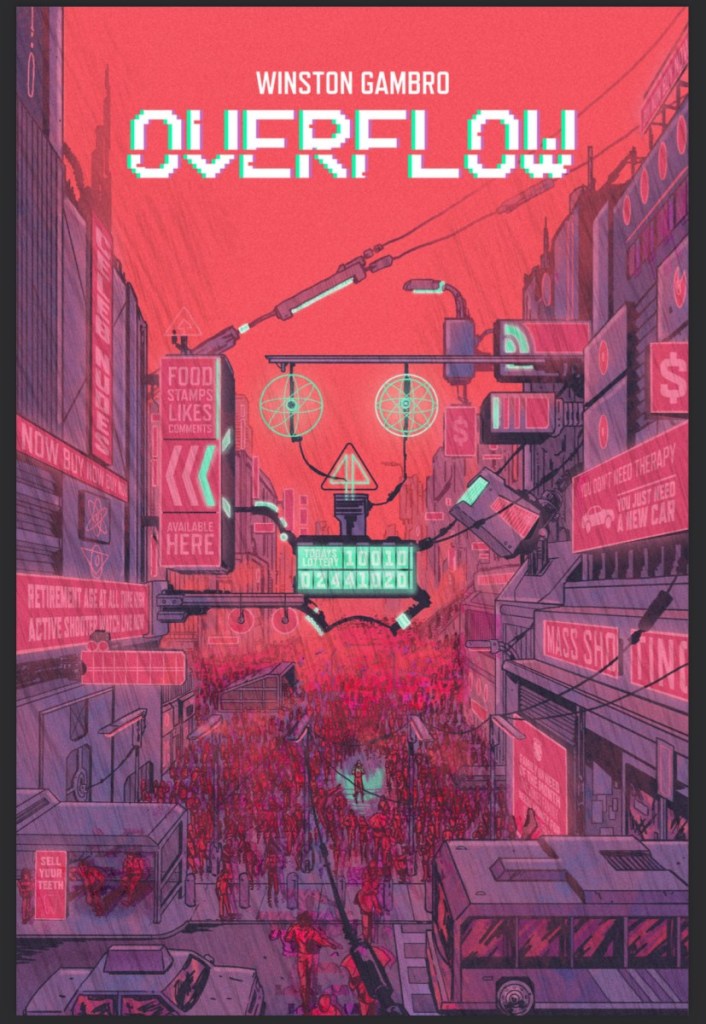
I’ll give Chicago cartoonist Winston Gambro credit : he seems to really believe in his newest project, Overflow. After first serializing all 118 pages of it online, he self-published it as a trade paperback, and appears determined to get it in the hands of critics — even critics like myself, for whom dystopian genre sci-fi such as this is, let’s just say, well outside the usual wheelhouse and/or comfort zone. Mind you, it’s not that I actively dislike comics of this nature that are both rooted in, and attempting their level best to emulate, mainstream “indie” sensibilities — it’s more the case that I’m not entirely sure I’m qualified to determine whether or not this is a good representative example of what it’s hoping to both be and achieve.
That being said, I certainly used to read a fair amount of Vertigo/Image/Dark Horse etc. stuff, and still peruse their…
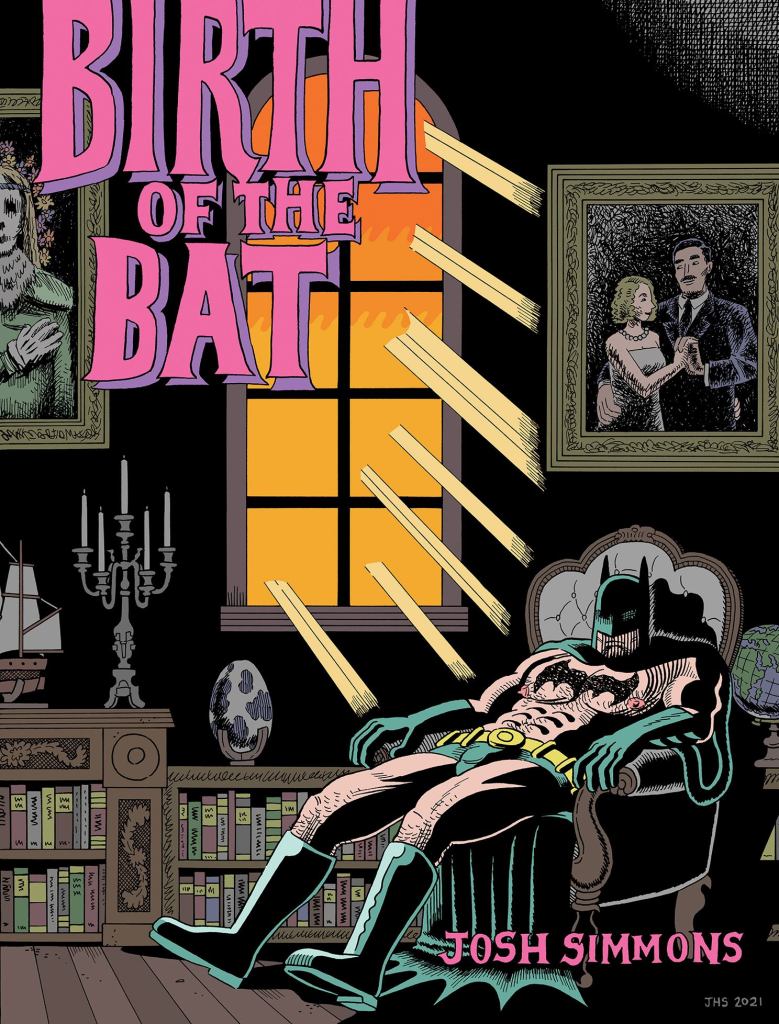
Every ending, they tell me, is a beginning — so what to make of Josh Simmons’ “Bootleg Batman” trilogy, where every issue interconnects thematically, but each also represents a discrete “stand-alone” ending in its own right? Or, at the very least, a speculative or potential ending?
I ask this not only because Simmons’ latest (and, for the record, greatest), Birth Of The Bat, has recently been released by The Mansion Press, but because I subsequently read it in tandem (it’s tempting to say “in order,” but that doesn’t really apply) with 2007’s Mark Of The Bat (which first introduces the idea of Batman maliciously “branding” criminals, a vaguely-sanitized approximation of which made its way into Zack Snyder’s Batman V. Superman : Dawn Of Justice) and 2017’s Twilight Of The Bat (a post-apocalyptic Batman/Joker fable done in collaboration with cartoonist Patrick Keck, the premise of which was lifted nearly…
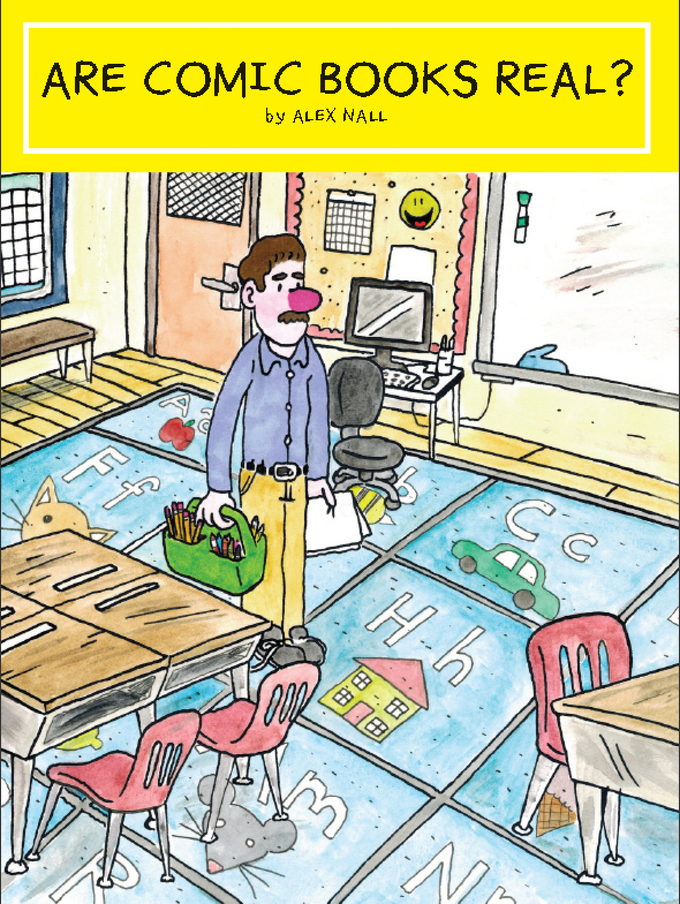
Akex Nall is the best children’s cartoonist working today. And by that I don’t mean he’s the best there is at making comics for children — but it should be noted that his work is, in fact, usually appropriate for all ages — I mean that he’s the best there is at making comics about children.
It’s not that he necessarily draws kids better than anyone else — although his art style is eminently agreeable and firmly rooted in knowledge and understanding of classical technique — no, it’s more that he so clearly understands and empathizes with children on the one hand, while having a kind of quiet reverence for the wide-eyed wonder with which they approach life and the world on the other. He respects kids, values them, and in many ways, I think it’s fair to say, he even envies their outlook. They mystify him, amaze him, at…
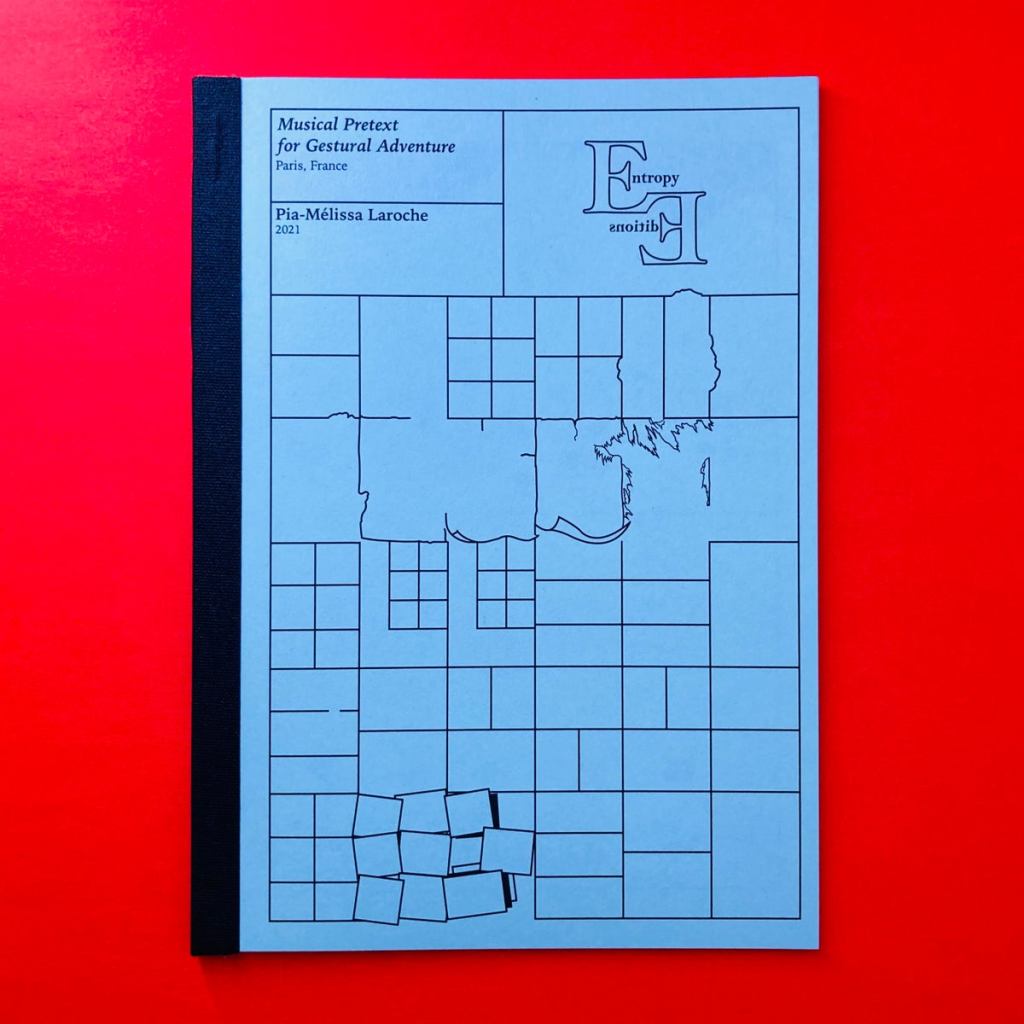
It’s not necessarily the easiest thing in the world to know where, or perhaps even how, to begin discussing French cartoonist Pia-Melissa Laroche’s Musical Pretext For Gestural Adventure — the fifth release in editor/publisher Justin Skarhus’ formally-inventive Entropy Editions series (or, as the back cover would have it, Entropy Editions 05), but it strikes me that’s rather the point : Laroche isn’t interested in showing us a world that can be described so much as one that can be sensed and felt.
It’s a tall order, after all, to craft a silent story that revolves around the transformative power of music, and to populate said wordless (and, crucially, tuneless) narrative with anthropomorphic forms that, in a pinch, most closely resemble trees, but for all that the through-line here is fairly easily discernible : events progress toward a conclusion that, depending on one’s reading and/or mood, is either…


 Through the Shattered Lens