Review: Boris – Heavy Rocks 2011


Oh Boris. The next album of their 2011 trilogy (they actually released a fourth one, a noise album with Merzbow that doesn’t deserve much attention) is named Heavy Rocks. It’s not called Heavy Rocks 2011, or anything like that. No, it has the exact identical same name as their April 2002 release. That’s not the most misleading thing about it though. What makes Heavy Rocks the oddest of the three is that in a lot of ways it’s not particularly heavy. The guitar and drums certainly are, to such a wild extent that it’s hard to take the first few seconds of the album seriously. But they’ve brought their more recent styles along for the ride.

Riot Sugar

What Heavy Rocks 2011 certainly is not is a full return to their stoner/doom roots. It’s something way more bizarre. Oh they turn up the distortion to the max and chug out deep dirty chords the whole way through, but somewhere in there it feels like they’re still playing the role of j-rock stars, floating around up in the sky somewhere. If the majority of the album is relatively in keeping with Riot Sugar, some of the songs are still more pop than anything else.

Window Shopping

I mean, if I called something “pop metal” it would normally be an insult–a reference to talentless mass consumer metal bands like Disturbed and Drowning Pool. But Boris take the notion more literally. This is the most unmistakable on Window Shopping and Tu, La La. I don’t think “pop metal” is their ultimate goal though. I wouldn’t say, from listening to it, that the album has anything so specific in mind. It just disregards the past, and unabashedly incorporates what Boris sound like here and now, which is a whole mess of different things really. The only real goal of the album, I’m pretty sure, is to be heavy. And to rock.

Aileron

Thus you get songs like Aileron. It’s unmistakably Boris, and stylistically it has a lot more in common with their early albums than with anything on New Album or Attention Please. But it doesn’t feel like those earlier works much. It’s underpinned by the dreamier qualities that they’ve recently adopted, for better or worse. I mean, this sounds like the breaking point of Flood III in reverse, like the water is all lifting up to the heavens. I really don’t know what I’m listening to on a lot of this album, and it took a while to grow on me. It has nothing of the immediate appeal present on the other two, but it’s good in its own unique way.

Galaxians

Galaxians is my favorite track, and it kicks off with some stoner metal more in keeping with the original Heavy Rocks than probably anything else on the album. But it still feels like it’s floating. The softer vocal style, that sort of laser gun effect they’re using, even the track title suggests something far from the earth. Maybe this song best represents what they’re going for. I think I’d have understood the whole album a lot better if they’d named it Heavy Clouds.

Heavy Rocks 2011 is my least favorite of the three, but don’t get me wrong. I really like it. Besides, Boris have a unique and coveted ability to never sound bad. It’s either really good or just really weird/experimental. Even at their worst (and I’m not calling Heavy Rocks 2011 that) they always reward us with something great somewhere down the line.

In 2011 that something great is called Attention Please, and I’ll be wrapping up this review series by covering it tomorrow.
Review: Boris – New Album


I really ought to have reviewed this album back in March when it was released, because a few things about it have changed. For one thing, the band has since released two additional full lengths, bringing their total discography up to 28 studio albums since 1996 and enough singles and ep releases to make your head spin. More importantly, six of its ten tracks have since been rerecorded. With a seventh song having appeared in a rather different form on an ep in 2009, it is now difficult to regard New Album as its own unique work and not a sort of compilation.

But Boris have never made the reviewer’s life easy, what with changing their style nearly every year and constantly reworking older recordings. This is a band that just refuses to conform to any norm of musical creation. They’ve been doom metal, they’ve been stoner rock, they’ve been drone, they’ve been heavy metal, they’ve been psychedelic rock, they’ve been post-rock, they’ve been shoegaze… It was in 2009 that they really started to go crazy though. They didn’t release much in the way of studio albums that year, at least by Boris standards. Most of what they had to offer came in the form of short one to four track recordings. But there wasn’t a style of the year this time, no one flavor they opted to focus on for a set period of time. No, they’d release a straight up pop single one month and a black metal song the next, with every style previously mentioned somehow incorporated in between.

フレア (Flare)

So what is New Album, and how is it distinguished from their other two releases, which share a number of the same tracks? Well, first of all New Album is j-rock. It was only released in Japan, and all of the songs that were to later appear as hard rock or dream pop here, without losing those characteristics, take on a much more happy, upbeat, decidedly Japanese flavor. The opening song, Flare, is the most telling, both because it is the most characteristically j-rock song of the lot and because it does not appear on any other releases.

Pardon?

But this brief summary doesn’t quiet explain New Album. I mean, the three songs that are exclusive to it–Flare, Pardon?, and Looprider–share very little in common. It’s the album’s take on tracks that reappear later that make it j-rock, far more so than the other two new additions. Wata’s chilled out psychedelic guitar solo on Pardon? is if anything the most thematically out of place portion of the whole album.

Where Heavy Rocks 2011 really stands apart, the distinction between New Album and Attention Please isn’t all that strong. The latter is better, the former is a bit more Japanese. Since I intend to cover their other two albums later this week, I don’t want to reveal too much. Let’s just say this is the happiest, poppiest of the three, and if that appeals to you then it’s definitely worth picking up. Or downloading, I guess, since it won’t be released in North America.

I’ll leave you with by far the most stand-out song on the album (and one that is again a bit out of place, if the album can be said to have an overall stylistic theme at all.) In 2009 Boris released Black Original as the second of two tracks on Japanese Heavy Rock Hits Volume 2. It was a pretty simple, subdued work, featuring a single synthy drum beat, Wata playing a continuous solo that never incorporated more than one note at a time, and Atsuo singing in airy vocals with an occasional small accompaniment. The new Black Original, in contrast, is anything but minimalistic.

Black Original

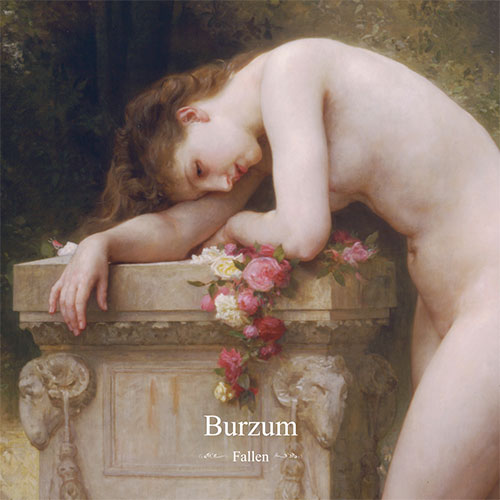
Review: Burzum – Fallen


Varg Vikernes was released from prison on May 24th, 2009, and in less than half a year he was recording a new album. Belus turned out to be everything I could have hoped for and more. It’s hard to describe what makes Varg’s music so enthralling. It has a sort of power to it–a trance-like quality that forces me to never really contemplate what it is he’s playing and just soak in its effects. Whether it’s Han Som Reiste in 1993 or Kaimadalthas’ Nedstigning in 2010, each album reaches a point where I’m completely lost in the music, sucked into his demented little world. Some of the weirdest dreams I ever had have ensued from falling asleep to Det Som Engang Var.

Jeg Faller

Sixteen years in prison didn’t seem to detract from this. Belus felt to me like the perfect continuation to Filosofem, as though his long absence from the metal world did not negatively impact his talents in the slightest. Yet somehow, just a year later, everything has changed.

I want to say straight ahead that Fallen is pretty bad. Not only does it musically lack his long-standing ability to captivate me, it’s pretty obnoxious at times. First of all, the vocals are a train wreck. Maybe in response to criticism that his screaming vocals weren’t as demented on Belus as they used to be, or maybe because he’s just an old man who can’t pull it off anymore, Varg completely abandons screaming on Fallen. Instead he whispers with a mouth full of marbles–the most annoying spoken vocals I have heard since Rhapsody of Fire were visiting the court of king chaos.

And the opening track’s chorus… Well, to quote a friend of mine, “It’s so catchy. I think Varg has an unexplored career in pop music waiting on him. Ahhhhh ahhhhh ah ahhh, jeg faller. Oooo oooo oo ooo, jeg faller.”

Enhver til Sitt

Jeg Faller might be the biggest joke on the album, but a lot of the problems that plague it persist. His new vocal style is completely unconvincing, and that feeling that he’s trying too hard forces me to actually pay attention to the music, not just let it take me like his past works. You’re then left with the realization that he’s really not a very good musician at all. In the absence of any encompassing force, the boring repetitive simplicity of his riffs stand defenseless.

It’s always intrigued me that a guy as batshit insane and colossally egotistical as Varg Vikernes could write such brilliant music. No one but Varg himself honestly expected Belus to be any good, and that made its success all the more startling. Fallen, on the other hand, is pretty much what I expected Belus to be.


Budstikken

That being said, the album has its few sparse moments. Budstikken stands out as my favorite by far, being the only track I actually really like. But its uniqueness is too little, too late. If he’d released Fallen straight out of prison I’d have said “ah well” and not bothered much with it. It’s because he so recently proved himself that Fallen disappoints rather than simply living up to low expectations.

The weird thing is this album seems to have met a generally better reception than Belus. I don’t know if more people actually like it or if the critics aren’t even wasting their breath anymore, but my verdict is that Fallen just isn’t very good. Who knows, maybe his next one will be brilliant. He’s a pretty unpredictable guy. But for now, I’m going to keep listening to Belus and pretend this one never happened. Except for Budstikken. I really like Budstikken.

Review: Waldgeflüster – Femundsmarka: Eine Reise in drei Kapiteln


Here is an album that should appeal first and foremost to fans of Agalloch. Waldgeflüster is a rather recent creation. The one-man project was started by Winterherz in Germany in 2005 and released its second full length this past May. I can’t speak for his first album, but Femundsmarka definitely deserves more attention than it’s bound to get. A product of that marriage of black metal and ambient folk that has become rather common these days, it might not reach the very top but it certainly rises above the status quo.

Interlude II: Night

Unfortunately most of the folk and ambient tracks of the album aren’t available on youtube. This one, as much as I love it, is my least favorite of the four. Just consider that while the vibe this track offers is present throughout the album, the musical styles creating it vary. The intro and outro make use of acoustic guitar, and the first interlude is a beautiful ambient piano piece.

The concept of the album is pretty self explanatory, but requires a bit of German translation. Femundsmarka is a national park situated in the mountain range separating Norway from Sweden, and the album is a musical retelling of the artist’s travels there, translating literally as “Femundsmarka: A Journey in Three Chapters”. The track list, roughly, translates to:

Prologue: Departure
Chapter 1: Lakeland
Interlude: Rest
Chapter 2: Stony Deserts
Interlude: Night
Chapter 3: Spruce Grove
Epilogue: Homecoming

Generally speaking, the main chapters are black metal and the in-betweens are folk, but there is plenty of cross-over both ways.

Chapter 1: Lakeland

So if many of the metal portions of the album are as reminiscent of Drudkh as the folk bits are of Agalloch, it should come as no surprise that all three bands highlight nature as their main theme. I could go about comparing them all, but I don’t think it would be entirely fair. This isn’t some monumental standard-setting album like Swan Road or Pale Folklore, nor does it strive to be.

And any first impressions that Winterherz is just copying other artists’ styles should vanish around the 2:30 mark anyway. It commences the most descriptive movement of the album, as you can hear the traveler begin to comprehend the beauty that surrounds him, exploding in a final triumphal realization around 4:20.

The work certainly isn’t perfect. I struggled at times in Chapters 2 and 3 to remember that Winterherz was trying to show me something and not just writing another metal album. But its high points are pretty great, and the only standard you might say it falls short of at times is its own–it’s consistently good, just not consistently visual. The introduction, interludes, and outro are my favorite moments, and give the album a higher degree of stylistic variance than most metal of its kind. The more subdued entries aren’t sparse, either, filling up nearly half of the album.

In the absence of a full track list on youtube, someone took the effort to compile an eight minute sample of the album that covers a lot of ground without revealing too much. I’ll leave you with this. If you have to buy it to hear the rest, well, your money will be well spent. Not an album of the year contender, but a pleasant surprise from an artist you’ve probably never heard of.

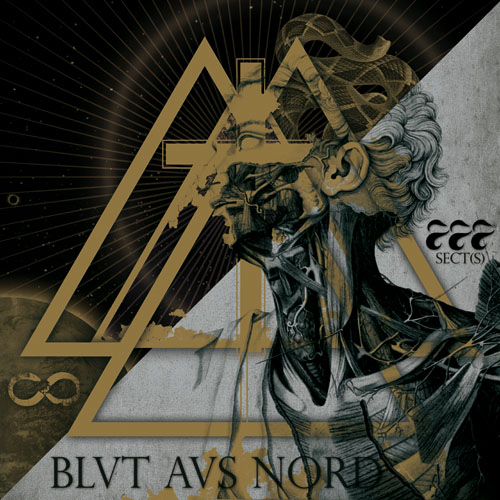
Review: Blut aus Nord – 777 Sect(s)


Blut aus Nord have released eight albums, and prior to this I’d only heard their last one, Dialogue with the Stars. So shame on me for thinking they were a rather chilled out black metal band with space-themed music and a lead guitarist with progressive rock tendencies. Fans of the band might hear a lot of consistencies in 777 Sect(s), but I could barely tell it was the same group. For better or worse.

Epitome 1

Because if Dialogue with the Stars was a pleasant ride, 777 Sect(s) is a chaotic nightmare. “Painful to listen to” is a description few bands acquire by intent, and bravo to them, I guess, for breaking from that norm. 777 Sect(s) tours some astral wasteland–some distant dimension of post-industrial horror that you’d really rather just avoid but can appreciate all the same. After about five and a half minutes of running for your life, just when you can barely stand any more of it, the music finds a safe haven, a place to reflect on the monster you’ve just engaged. It is remarkably effective, with the outro of the first track giving you time to catch your breath before gazing out from your refuge onto Epitome 2.

Epitome 2

The music describes what you’re looking at better than words can–some vast vulgar hell that marries a cyberpunk scene to an installment of the Doom series. Take what you will from this song. It seems to me like the centerpoint around which the rest of the album is designed–a portrait of the world you’ve briefly escaped from and are doomed to dive back into after seven minutes’ repose.

Epitome 5

777 Sect(s) isn’t like some Hollywood action-horror flick though, packed with distracting eye candy and special effects. It has its highs and lows, its moments of intensity and calm, but nothing is ever pleasant. After the second track you are never again permitted to live in the moment or appreciate the vastness of it all. No, it’s more realistic than a movie. You’re there, and it’s a shitty place to be, so there will be no relief. The feeling of dread never goes away, constantly nagging and distressing you. Blut aus Nord see to it through a series of songs that are not only ugly but sometimes downright annoying. The annoyance though–the repetition of unmelodic nonsense no matter how often the songs beg for coherence–can’t be directed at the band. You know that it’s intentional. You know that you’re not supposed to like it. So it manifests instead as anxiety.

Epitome 6

Even the closing song, the only coherent track besides Epitome 2, isn’t something you can really enjoy. Like track 2, it’s more of a grand view of the hell that surrounds you, but unlike that first look, where the recognition that you were a part of it had not quite sunk in, you’re not going to leave this one feeling good about yourself. The fear and disgust are ever present.

The end result is an album I never want to listen to again. You know, a lot of black metal, especially atmospheric scene-setting stuff, is really enjoyable if you aren’t too stubborn to appreciate the darker side of things. But this album, for me at least, doesn’t tap into the dark and vulgar. It harnesses fear and distress as its focal points, and does so not in real-world settings that anyone with a backbone wouldn’t be startled by, but rather within a nightmare. That’s something I’ve not come to sufficient terms with yet to enjoy. Perhaps what I take from 777 Sect(s) isn’t quite what the band intended, but there’s certainly something there for the taking, and it’s not for the meek.

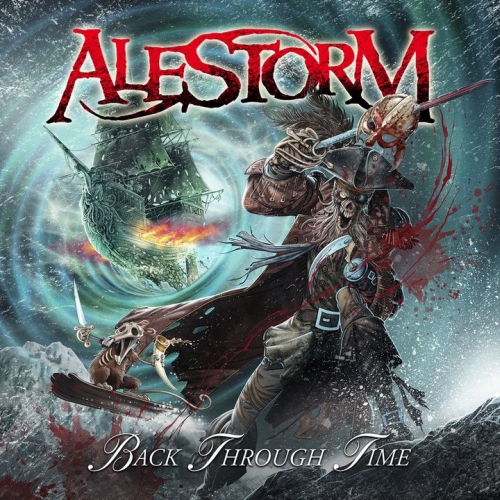
Review: Alestorm – Back Through Time


As long as Alestorm keep doing what they do I will continue to be entertained by them. They are incredible musicians and take folk metal down a unique path. The expectations for a band of their sort are pretty demanding though. You can’t just write good music; you have to be funny, kick ass, and do it all within a narrow context–in their case pirates.


Song: Back Through Time

Three albums in, Alestorm were probably feeling the drain on original material. At first they seemed to resolve it. Back Through Time opens with a GWARish novelty. The band stumble upon a portal into the past and wage war against vikings. With lines like “you put your faith in Odin and Thor, we put ours in cannons and whores,” the door was open to develop a clever concept album.

Song: Scraping the Barrel

Unfortunately, and rather irrationally, the new novelty is dropped almost as soon as they introduce it. They got my hopes up for a rival to GWAR’s Beyond Hell, and instead went right back to the same old topics from track 2 onwards. That’s fine, but Black Sails at Midnight really raised the bar from Captain Morgan’s Revenge. “I want more wenches and mead!” was thoroughly sufficient to amuse me on their first album, where pirate metal itself was still a novelty. On Black Sails the lyrics “matured”. They weren’t just silly, they were clever, well crafted, and effective. Epic tracks like Keelhauled and Pirate Song would have amounted to nothing if they were just more mindless clamorings for loose women and alcohol.

So the second track’s chorus of “Shipwrecked! Get drunk or die!” was a definite disappointment, even if it made me giggle. The rest of the album is pretty much the same mundane thing. A few absurd lines that make you smile every time (“Slap that midget with an oar! Remove his legs with a saw!”), and a lot of mindless demands for booze. I mean, it’s not that I don’t like it. Korpiklaani have been doing pretty much the same thing now for seven albums and I still listen to them obsessively. It’s just that I expected a little bit more lyrically out of Alestorm.

At least they know it. “Many have told us that we can’t go on–That one day we’ll run out of lyrics for songs. But when the time comes to write album four, we’ll scrape at the barrel once more!” It’s just that the whole pirate vs. viking thing seemed so promising and they went nowhere with it.

Song: Death Throes of the Terrorsquid

Among the album’s high points is a pretty epic grand finale. It’s something of a conclusion to the Black Sails track Leviathan. They lost to him last time, this time they win, simple enough. The lyrics are decidedly more creative than the rest of the album. That doesn’t exactly make them poetic, but they’re at least sufficient to not make a mockery of what is a really well written song. As the pirates reach their destination and the squid emerges, black metal vocalist Ken Sorceron of Abigail Williams takes up the mic to add a whole new level of intensity that I hope we’ll hear more of on their future releases. “Epic sea battle” isn’t a theme you exactly hear much of in music, and this song is Alestorm’s best effort to date at pulling it off.

But it’s not my favorite track.

Song: The Irish Descendants – Barrett’s Privateers

The only thing I might love more than Irish folk is Irish/Canadian sea shanties. Stan Rogers might not have written Barrett’s Privateers until 1976, but it became an instant, frequently covered classic of the genre, just as authentic as anything written in the 19th century. Alestorm have established a history of cover songs. Whether covering a proper song (Flower of Scotland on Captain Morgan’s Revenge), turning a shitty pop song into something amazing (Wolves of the Sea on Black Sails at Midnight), or just trolling the hell out of us (THIS fabulous atrocity on the LTD Edition of Back Through Time), Alestorm have been consistent about including at least one cover on every album. This is the first time they’ve tackled a song that was truly excellent in its original form however, and they pulled it off to perfection.

Song: Barrett’s Privateers

The fact that Týr frontman and folk metal god Heri Joensen appears to provide a guitar solo in the middle doesn’t hurt any.

All things considered, Back Through Time is nowhere near as good as Black Sails at Midnight and ranks slightly below Captain Morgan’s Revenge, but that’s no reason to avoid it. It’s still an entertaining ride from start to finish, and one I find myself putting on repeat on a regular basis. Check it out.

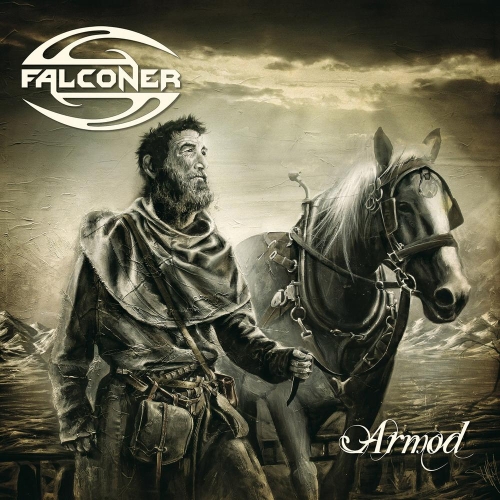
Review: Falconer – Armod


Falconer is a band I’ve been encouraged to listen to for close to a decade now, and a few song samples aside I did a fine job of ignoring them. The term “power metal”, for all the fabulous bands associated with it, is something of a caution sign. I see it and brace myself for either high-pitched whiny singing or operatic vocals excessive to the point of being cheesy, coupled with completely generic, repetitive riffs that without fail give way after the second chorus into the guitar solo equivalent of a mid-life crisis mobile.

Song: Svarta Änkan

Thankfully, Armod is not that kind of power metal album. You might think it is briefly on the first track, but there are early signs of deviation. Within 45 seconds Mathias Blad softly explodes onto the stage with a vocal performance reminiscent of Vintersorg’s work with Otyg. Not too much later (around 1:20) the guitarist changes course, mimicking the vocals with deep and pronounced tones that likewise resemble Otyg. Sure, the structure of the song follows a power metal standard, complete with a slightly overdone guitar solo that you hear coming a mile off, but Mathias’s singing, his choice of Swedish over English, and that folk metal style guitar that accompanies him and takes the spotlight around 5:15 all point to something more.

Song: Herr Peder Och Hans Syster

That something fully manifests in the second track, Dimmornas Drottning, but I’m going to go ahead and post Herr Peder Och Hans Systerinstead, it being my favorite on the album. It lacks the violin that distinguishes Dimmornas Drottning (another feature reminiscent of Otyg), but the vocals and guitar pair up just perfectly from start to finish. And with the exception of a mild reminder in the chorus, you would never know the band had heard of power metal let alone performed it for ten years. It’s about as folk metal as you can get with nothing but guitars, drums and vocals.

Song: Griftefrid

What’s really great about Armod though is that it’s not a folk metal album either. It will go down as folk/power metal, and rightly so I suppose, but what I’m really hearing is a conscious melding of styles. When I say some of the songs remind me of Otyg, it goes beyond a mere coincidental resemblance. I think their music was actively influential on the creation of this album. Likewise, Griftefrid offers up the power of black metal-influenced symphonic acts like Equilibrium because, I think, Falconer actively listens to music of that sort and made a conscious effort to integrate it into their own sound.

Song: Eklundapolskan

The end result is one of the most stylistically diverse albums I’ve heard all year, and it is diverse in the best possible way. This is the sort of album you could have never experienced in the dark ages of the 90s, when people still had to hunt down new music in person and pay hard cash for every release. I could be wrong, but I think Falconer really did their research on this one.

The album’s only down side is a set of “bonus” tracks at the end, comprised of songs from the album proper remixed with English vocals. Skip them, I beseech you. The Swedish vocals are the centerpoint of this album, around which all of the various metal trends Falconer incorporate coalesce.

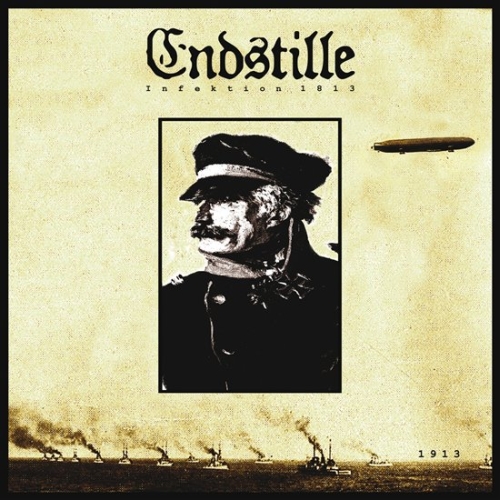
Review: Endstille – Infektion 1813


I’d never heard of Endstille until their 2009 release, Verführer. The album name, coupled with a cover which featured Kaiser Wilhelm II holding a bloody butcher’s knife, was just too delicious to overlook. It turned out to be one of my surprise favorites of the year. I wouldn’t call it original. In a lot of ways it reminded me of Dark Funeral–high production value, a mix that highlights drums over guitar, lyrical themes regulated to war and anti-Christianity. But where I could never get into the latter band, Endstille really impressed me. The same description fits their new album.

Trenchgoat

Endstille achieve their power through brutality and relentless drive, coupled with an acute eye towards German history. Not too many black metal bands emerge out of Germany. It’s a country with more historical precedence for themes of death and violence than anywhere in Scandinavia, serving the style well, but for the same reason there’s a lot more controversy involved in embracing the subjects. Endstille have been accused of right-wing affinities, even mislabeled nsbm by some, but the lyrics are discernible enough to verify the absence of a political stance.

Something that make their lyrics more cutting, and perhaps more controversial in turn, is the deadpan expression they hold throughout both albums that I’ve heard. I can’t help but mention Marduk’s triumph of 1999, perhaps the most brutal black metal album in existence at the time. It was lyrically and musically extreme to such an extent that the band themselves couldn’t fully take it seriously. The cheesy rock and roll finish to Panzer Division Marduk, delicious track titles like Fistfucking God’s Planet and Christraping Black Metal… you knew they were having fun. With the one exception of Verführer’s cover art, Endsille manage to avoid any hint of enjoyment. The effect isn’t better, just different. You never smile with Endstille. The comic appeal is substituted for a more authentic brutality.

But Infektion 1813 does seem to be lacking in catchy moments. Marduk, for all their redundancy, were at their height capable of writing some unforgettable songs. Baptism By Fire probably gets stuck in my head more than any other black metal song out there. Closer to home, Verführer had a number of memorable spots. Suffer in Silence struck me most. It surprised me just now, listening to it again, to realize Iblis only shouts “fuck God’s kingdom” two times. Coming in the midst of a steady plod with nothing obvious to distinguish it, it is yet a line you can’t miss on your first listen to the album or forget afterwards. The track currently playing on the other hand, while good as a whole, possesses nothing with which to really distinguish itself.

Bloody H (The Hurt-Gene)

The other band I want to compare Infektion 1813 to is Carpathian Forest. Now, I am probably alone in thinking that Fuck You All!!!! is the best straight-up black metal album ever recorded, but suffice to say Carpathian Forest are among the most underrated big names in the genre. I didn’t realize my first few listens through Infektion that Endstille got a new vocalist. I thought Iblis just got a lot better. Zingultus, the new singer, sounds strikingly similar. But there is a certain shrillness to his still relatively deep vocals that made me immediately think of Nattefrost, where Iblis never did. Nattefrost is my favorite black metal vocalist, so there you go.

The other comparison to Carpathian Forest really stands out in this current track, Bloody H. It’s got beats you can really bang your head to. The album review I saw on Encyclopaedia Metallum described it as “driving black grooves via Darkthrone”, and that’s more accurate than I can word it, but with Darkthrone’s commitment to low production value the similarity isn’t so obvious. Rather, it made me think first and foremost of Fuck You All!!!. Consider that quite a compliment.

Ok, bear with me for a minute here. Yes, I just linked a Rammstein song. I haven’t listened to them since Sehnsucht came out in what, 1997? There’s really not much I can say about them. I could never get past the whole electronica thing, even when I was some idiot kid worshiping Korn and the like. But there was one song on that album that blew my mind at the time and, much to my surprise, listening to it for perhaps the first time in fourteen years, still does. I’m sticking Klavier in here to draw attention to that special thing about the German language that’s so stereotypical that it tends to be forgotten in practice: It sounds evil as fuck.

Eh, and maybe this song was my first introduction to tremolo picking and I never knew it. But whatever, moving on:

Endstille (Völkerschlächter)

The final track on Infektion 1813 is hands down the most brilliant thing I’ve heard by them, and it would be boring in any other language. I mean, the music consists of a seven second long riff that repeats for eleven minutes. The lyrics consist of Zingultus naming a bunch of historic figures. That’s it. That’s really it. It’s about as minimalistic as a black metal song could ever hope to be. And it’s one of the darkest songs I have ever heard.

Why? Because he names them all with a German accent, and because it’s not called “Mass Murder” or “Slaughter or the People” or anything like that. It’s called Völkerschlächter, and the music is so repetitive that only the words matter. The first time I really paid attention to it I sat in constant anticipation waiting to hear who he’d name next, each figure smashing me in the face with the atrocities they committed.

I’m not saying Infektion 1813 is extraordinary, or even necessarily as good as Verführer, but it’s one of the best black metal albums we’ll hear in 2011. Don’t let this one sneak by you.

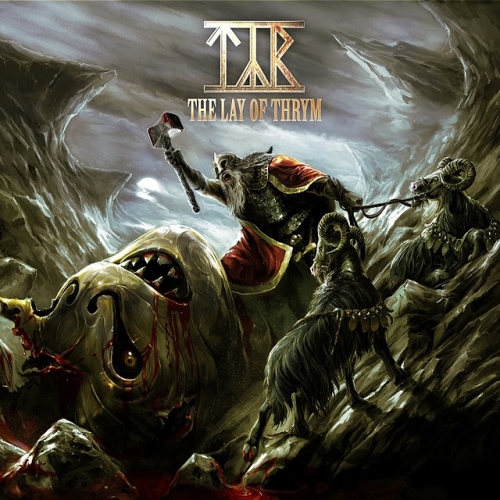
Review: Týr – The Lay of Thrym


2009’s By the Light of the Northern Star was a huge transition for Týr, the only band I know of from the Faroe Islands. No more slow, plodding, progressive folk metal. The band became a bit more aggressive, a bit faster… a bit more in keeping with the folk metal standard. It was still distinctly and undeniably Tyr; I can only fairly describe it as a change for the worse if I preface that it’s still better than most else out there. But for better or worse, it was something more like “heavy folk metal” than “progressive folk metal.” To sum up The Lay of Thrym in a nutshell, it takes the band’s new approach and improves on it.

In which case, you might say it’s pretty damn good. The opening track, Flames of the Free is just deliciously catchy, and, unlike Hold the Heathen Hammer High, it’s not so redundant that a dozen plays will demote it from enjoyable to obnoxious. Such a track does exist, unfortunately, in the form of Take Your Tyrant, but it is conveniently further in and thus easily skipped when it begins to wear on you. It is also followed by my favorite song on the album, Evening Star:

Which is a kind of unlikely contender. I mean, if you read these articles you have an idea of what I listen to by now. I’m not exactly into rock ballads. Tyr have always been their best at slower tempos though, in my opinion, and here they pulled off something completely captivating. I think it might be the most beautiful song they’ve written, and it is well placed to ease off of Take Your Tyrant.

The next track I want to highlight is the album’s second: Shadow of the Swastika. For a band as popular as Tyr (at least by folk metal standards), it’s a really ballsy inclusion. The song is a reaction to ignorant accusations that Tyr are racist for their Norse-centric lyrics and imagery. (The band’s logo includes an ancient runic symbol at one time employed by the Nazi party.) It simultaneously denounces anyone who thinks the modern generation should feel guilty about crimes committed 70 years ago and anyone who attempts to justify those crimes.

That might seem like common sense, but it’s something difficult to state. The critics who labeled Tyr racist in the first place are likely to interpret this song as saying “It’s time to get over the Holocaust” and have a field day, but obviously that’s not what Tyr are getting at, and I think they did an excellent job of making their case to anyone willing to hear it. The song is significant because they make no apologies. They aren’t saying “Please try to see that we aren’t racist,” they’re saying it should be obvious that they aren’t racist, and if you thought otherwise fuck off. Maybe some people will find it immature–will think that such accusations don’t deserve a response in the first place. But having made the choice to tackle a touchy subject, Tyr did it right.

You who think the hue of your hide means you are to blame, and your father’s misdeeds are his son’s to carry in shame: Not mine, I’ll take no part. You can shove the sins of the your father where no light may pass, and kiss my Scandinavian ass.

You who think the hue of your hide means you get to blame the black for your own faults and so bring humanity shame: Make sure you count me out of the ranks of you inbred morons with your sewer gas, and kiss my Scandinavian ass.

Pages of the past, how long will they last? A lie lost in the legacy of fools left us this parody unsurpassed. Pages of the past, how long will they last? The shadow of the Swastika by fools’ fears now for far too long has been cast.

I will leave you with the fifth track, Hall of Freedom. The album seems to stack its catchiest or otherwise most noticeable songs early on, with the final five requiring a bit more attention to hit home, thus I’ve only discussed and sampled the first half of The Lay of Thrym here. Regardless, it is a solid product nearly to the end (I could live without the bonus cover songs). My final verdict on The Lay of Thrym: It’s a big step up from By the Light of the Northern Star, which was a pretty decent album itself. Don’t expect the vibe of say, Eric the Red or Land on here, but it’s still no disappointment. To fans and newcomers alike I highly recommend it.

My Top 5 Albums of 2011 So Far


Well, it’s June, and as usual I’m getting behind in music. There is a lot more to keep up with this year than the last, and I’ve only downloaded 30 new releases so far. Hopefully that will change over the summer. Allow me to kick off three months of more active music reviews with my top five albums of 2011 thus far.

5. Moonsorrow – Varjoina Kuljemme Kuolleiden Maassa

Moonsorrow have a lot of material out there, and suffice to say I haven’t heard enough of it. I am used to really long songs in black metal, but not in folk, and I always find myself treating them like the former, playing their albums for ambient effect and paying close attention only where the music reaches out and demands it. I’ve listened to all 30 minutes of Tulimyrsky 19 times apparently, and I don’t remember it. Likewise, I forgot they’d released an album this year until I was browsing last.fm and discovered that I’d listened to it 13 times.

So take that for what it’s worth. This album has four full songs with a few 1-2 minute tracks in between. The two middle ones of the four are decidedly more catchy, whether you want to call them better or not. Moonsorrow may never move me as successfully as Finsterforst did copying their style on the underrated masterpiece Zum Tode Hin, but nevertheless here is an album I will probably never tire of, even as I never fully embrace it. I want to call it my fifth favorite of the year so far, but it’s so difficult to place.

Their songs are too long for youtube, but this video fits in the vast majority of track 5, Huuto.

.

4. Korpiklaani – Ukon Wacka

Another year, another Korpiklaani album. Since 2003 they’ve released seven. That’s 83 songs that all sound pretty much the same and are all either about beer, drinking beer, being out of beer, having a hangover, or killing your hangover by drinking beer. But while they might not be folk metal’s most poetic troupe, they are hands down the most fun of the lot.

Ukon Wacka doesn’t really have any down time. From start to finish it’s a consistently enjoyable, catchy album. Sure, every song could have appeared on every other album without being out of place, but unlike on many of their others you’ll never find yourself skipping tracks. And like on Karkelo, they saved the best track for last, encouraging you to stick around:

.

3. Altar of Plagues – Mammal

I never really talk about White Tomb. I got it the first day it leaked and have listened to it dozens of times since, but it’s not something I feel inclined to sing the praises of. With the exception of the first few minutes of Watchers Restrained, there was never a point where I could tell people wow, you’ve got to hear this. It’s something a bit more personal–the sort of thing I like to play when I’m working late and really need to concentrate. It’s got a slow brooding energy that you can just feed off of. It empowers the listener without ever demanding much attention. Mammal can be described similarly, but should you choose to shut off the lights, sit back, and just soak it in, you’ll find it has a lot more to offer than their first album. I’ve only listened to it five times so far, but I feel confident placing it among the best. Here are the first 15 minutes of the opening track:

.

2. Krallice – Diotima

Here we get into the albums I consider true masterpieces. Krallice have pioneered a sound that few artists are physically capable let alone creatively inclined to emulate. But their last album, Dimensional Bleedthrough, was a bit of a disappointment. Last.fm claims I have listened to it twelve times, and I’m here to tell you I don’t remember the slightest thing about it. While it might have been more technical and refined than their first release, it lacked those standout moments that made songs like Wretched Wisdom and Forgiveness In Rot so unforgettable.

Diotima reclaims the beauty and emotion of their first album, and couples it with the mind-bending technical skill and complexity they have further developed since then. This is easily my second favorite album of 2011 at the moment, and may in time lay claim to the top slot. I highlighted Telluric Rings last week, so allow me to point out my other favorite, the title track. The lead guitar from 5:30 to 7:20 will leave you speechless.

.

1. Falkenbach – Tiurida

I was both shocked and disappointed to see this album go almost entirely unnoticed. I mean, Vratyas Vakyas is the second most important figure in the history of folk and viking metal after Quorthon. Yet even on wikipedia’s quite inclusive article on metal releases in 2011 it goes unmentioned. This would be excusable were it the washed-up product of an artist past his prime, but Tiurida is my favorite album of 2011.

The only complaint I have read is that it’s too repetitive, but that’s exactly what Falkenbach is meant to be. There’s a difference between repetitive and generic, and he has always been far from the latter. Indeed, it was my fear that Tiurida, his first release in six years, might lack that creative genius present in all his prior works and compensate by at last substituting some stylistic variance. But Vakyas never lost his edge, and has here created his best work since En Their Medh Riki Fara fifteen years ago. Let the glorious opening and closing tracks speak for themselves: