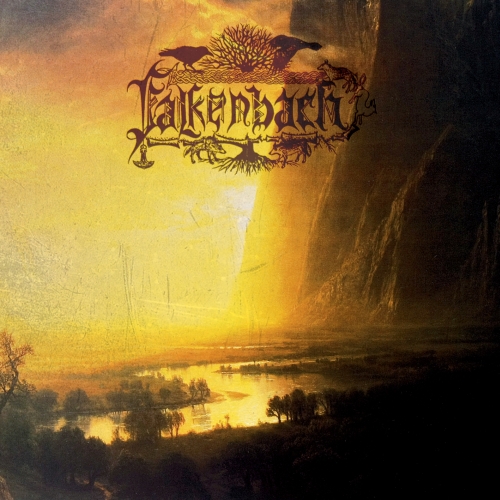
Review: Falkenbach – Tiurida


Geri and Freki does Heerfather feed, / the far-famed fighter of old, / but on wine alone does the one-eyed god / Wuotan forever live.

O’er Midgard Hugin and Munin both / each day set forth to fly. / For Hugin I fear lest he come not home. / but for Munin my care is more.

There Valgrind stands, the sacred gate, / and behind, the holy doors. / Old is the gate, but few there are / who can tell how it’s tightly locked.

Five hundred doors and forty there are, / I ween, in Walhall’s walls. / Eight hundred fighters through one door fare / when to war with the wolf they go.

Five hundred rooms and forty there are, / I ween, in Bilskirnir built. / Of all the homes whose roofs I beheld / my son’s the greatest meseemed.

There is Folkvang, where Freyja decrees / who shall have seats in the hall. / The half of the dead each day does she choose. / The other half does Othin have.

There is Gladsheim, and golden-bright / there stands Walhall stretching wide. / There does Othin each day choose / all those who fell in fight.

Now am I Othin, Ygg was I once. / Ere that did they call me Thund. / Wodan and Oden, and all, methinks / are the names for none but me.

Hail to thee, for hailed thou art / by the voice of Veratyr. / Where Valgrind stands, the sacred gate, / ye will find nine golden doors.

Hail to thee, for hailed thou art / by the voice of Veratyr. / Old is the gate, but few there are / who can tell how it’s tightly locked.


Where His Ravens Fly…

Far from a simple “see you in Valhalla,” Tiurida begins with a faring off worthy of kings, and even before understanding the lyrics you can feel their power in the music. Falkenbach’s 22 years of existence could be described as an effort to express the shared values, traditions, and beliefs of pre-Christian Europe. Written into the music just as much as the lyrics is a reverence for a greater age of man, in which fear and submission had not yet taken the place of mystery and honor. At least, that is what I have always taken out of his works, and perhaps it is why, in spite of the minimal variation in his sound over the years, I’ve always looked to new Falkenbach albums with a sort of reverence.

I never quite got the complaints that every Falkenbach album sounds the same–that he has eschewed developing as a musician and merely continued to produce the same thing over and over again. For while this is certainly true, especially of his last three albums, I would never want anything different. I would gladly take a hundred songs just like Where His Ravens Fly over any change that might cease to capture so fully the essence I’ve described.


Tanfana

I regard Tiurida as a phenomenal success, and possibly the best album of the year. Excluding the decidedly darker and heavier track Time Between Dog and Wolf, what you get on this album are five hymns. There is seldom any anxiety–no desperate or aggressive calls to return to past values, as so many other pagan bands manifest (with much success.) The lyrics are in the present tense, and so, in a sense, is the music. It’s hard to put my finger on what exactly I mean by this last comment, but it definitely lies in the folk side of his sound.

Tanfana is an instrumental song referring to a Germanic goddess of which very little is known. Tacitus’ mention of her in the 1st century is the only surviving source. Fitting, then, that the song should have no lyrics. This song is a very standard representation of how Vratyas Vakyas goes about employing folk music. A few things should stand out right away: The woodwinds are all synthesized; there are no actually traditional instruments at work here. Furthermore, they aren’t being played in any sort of traditional way, with any degree of diversity or improvisation. They are locked into the pace of the song and feel more like a sound sample loop than something performed live in studio.

The effects of this have to be significant, because it’s really what characterizes the folk element of almost all of Falkenbach’s songs. Well, two things stand out to me. Whether we’re talking monks or Burzum or really bad techno, there’s something inescapable about chanting effects. The repetition zones you in and forces you to experience the music in the here and now, whether you want to or not. It creates a heightened awareness of your present state of being. (And it might be why alcohol makes most awful music sound even worse but really bad techno sound awesome, but I’m getting way off focus now.) My point is that an element of this is present in Falkenbach’s sound, not only in the plodding progression of the drums and guitar, but in the folk. The other thing is that the folk instrumentation, being synthetic, bears a commonality with the more standard keyboard choruses he uses. Actual folk instrumentation generally calls to mind an image of something decidedly non-modern, but here there’s very little gap.

So when I say the music is in the present tense, what I mean is that his sound both evades my preconceived disconnection between folk and modernity and zones me into the moment–not of the music, but the on-going present state. Am I just babbling now? Perhaps, but it’s interesting to try and understand what about his sound appeals to me so distinctly from any other band describable as folk/viking/pagan metal. I think that, instead of taking me into the past, it has a sort of capacity to bring the past to me and blur any distinction.


Sunnavend

I suppose we all have particular bands and songs that move us in a personal way and might not have any such effect on anyone else. Falkenbach is just one of those bands for me. I don’t ever want his sound to change, and I’m so glad that on Tiurida it didn’t. This music gives me a unique sort of peace of mind–a feeling that lofty visions of the past aren’t mere idealizations or lost causes, but are entirely realizable in the present. This music is a hymn to the immortal, personified through gods whom modern society has yet to blaspheme.

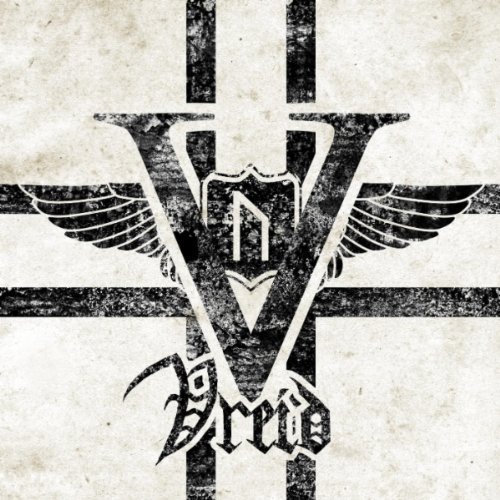
Review: Vreid – V


When Terje Bakken, better known as Valfar, passed away in 2004, one of the most significant bands in black metal passed with him. The remaining members of Windir went their separate ways, forming a number of different groups, and Vreid was one of them. As you might have guessed by the title, they’ve now released five studio albums, and they’ve evolved away from the sounds of their predecessor. I can’t say much for their first four albums, though I’ve listened to them, because I never really paid close attention. So I’ll be approaching this one alone, not as a comparison to their earlier stuff. I just thought I should give a brief history of the band first, since they have a legendary if now distant past.

I can’t heap endless praise on this the way I have a bad habit of doing for most albums. I’ve got pretty mixed feelings about it all in all.


Arche

Though classified as black metal, the driving force behind a lot of V is heavy metal–a perhaps generic term, but fitting in this case. The bulk of the album is very riff-driven. You can get a feel for their multi-styled approach from the very beginning. Though the chords build up into a melodic death sound that eventually breaks into black metal, the song is quick to return to the opening riff. You get a lot of repetition, but also a lot of opportunities for some really awesome solos–something that rarely coexists with blast beats and tremolo. The sound Vreid’s created here opens the doors to a lot of metal elements generally absent in specifically black metal, and the way they take advantage of it–the ample guitar solos first and foremost–are the album’s biggest highlights for me. You’ll hear plenty of death metal and (not exactly foreign to the genre) thrash metal as well.


The Blood Eagle

But there are some major detractors. I’m not always convinced that the sounds they put together really work. The Blood Eagle could be a pretty cool if simplistic heavy metal song, but the singer kind of kills it for me. I love his vocal style. I really do. But if perfect for black metal, it just doesn’t always work laid over a song that just as frequently calls to mind Iced Earth. Actually singing could make this song work. Alternatively, I could see them pulling off some deep, guttural death metal vox here. But the contrast between the tameness of the song and the shrill harshness of black metal vocals doesn’t find a rewarding middle ground. A lot of the album’s lyrics are pretty suspect too, especially, again, on this particular song. The opening lines, “Born out of worlds of fire and ice / The nature of spirits embrace our lives / From the underworld to above / We worship the fertile soil“, cease to be plausibly uplifting and just sound kind of sissy when followed up by a chorus of “Carved in the back / Blood-strained wings are dressed / An image of grotesque / The blood eagle of human flesh“. Pagan spirituality and gore-grind guts-fucking just don’t mix.


The Others and the Look

On some tracks, this one a great case in point, all of the elements Vreid employ come together to create diverse and enjoyable songs that never bore. On others I struggle to pay attention at all. Most of them have rewarding bits here and there with a lot of drag in between–repetitive riffs like in Arche and acoustic/keyboard interludes that don’t amount to much. I suppose it doesn’t help that I’m not fond of death metal, which Vreid seem to incorporate a lot of; someone with opposing tastes may well hear this album from a very different perspective and find it quite the success. But given all the other new material out there, it’s pretty unlikely that anything will move me to keep on listening to this one. I think that’s my final verdict on V: not bad, but too frequently boring for its positive features to really shine.

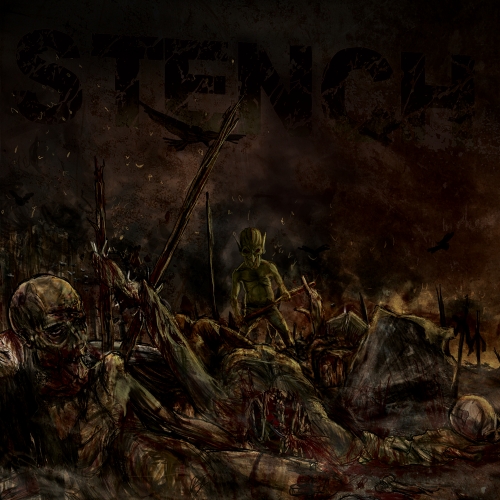
Review: Nekrogoblikon – Stench


Up until late July, Nekrogoblikon were a nearly forgotten gimmick. Their first and only previous album, Goblin Island, was released in 2006, and that was the last I ever heard of them. Aside from telling the story of an extra-terrestrial goblin invasion of the most heinous sort (they even ruin Christmas), it featured, among other things, sound clips of the band screaming like little girls, an actual stereotypical Christmas song, a cover of In Flames’ Artifacts of the Black Rain with all the lyrics substituted for banter about goblins, and a dance beat chiptune outro. Musically, it was simultaneously a mockery of a lot of the bands that probably influenced them and a pretty decent, enjoyable imitation of them. But it was never funny in say, a GWAR or Alestorm sort of way. It was more like a Weird Al thing–a novelty. You laugh, but you really don’t want your friends to know you listen to it, and you never play through it twice in a row.


Goblin Box

Their new album is a very different beast. Over the past five years they’ve actually matured into really good song-writers. Don’t get me wrong, Goblin Island had some really catchy tracks, but in the music just as in the lyrics there was a sort of audible immaturity, by design of course, that made light of the bands they were imitating. On Stench this notion is more internal. That is, they’re still parodying Children of Bodom, Finntroll, and just about anything in between, but instead of hearing a bunch of kids making a joke you hear a bunch of goblins being goblins. The immaturity is no longer in the execution; it’s encased in really solid music that, given better production value, could rival many of the very same albums it pokes and prods.

Basically, on Stench the line between a musical parody and a successful cross-genre epic metal masterpiece is very grey indeed. Yet the lyrics are just as blatantly whimsical as ever. The result is hard to swallow, because it’s so good and so bad at the same time. I imagine the spoken ending of this song is a rip on Rhapsody of Fire’s infamously lame spoken lines; it goes approximately “The humans had opened the box to torture and maim all kinds of magical creatures, but the goblins were not to be trifled with. No, not to be trifled with at all. And as the humans laid there, a pulsating mound of bone and flesh, dead and mutilated beyond all hope and reason, the goblins feasted upon their rotting corpses, filling the halls with the shrill sound of chilling laughter….. Forever!” And yet when you listen to it, beneath the cheese you get the feeling that it’s a really badass ending.

It took quite a while for me to get sufficiently passed the fact that it’s a parody to enjoy it in its own right. That was Stench’s initial impact: a part of me was left feeling like I’d been cheated out of something awesome on par with Ensiferum and Equilibrium, but the more I listened to it the more I wanted to click repeat, plant my hand firmly in the center of my face, and grin from ear to ear underneath it. At this point I can safely say I love it unconditionally.


Gallows & Graves

There’s something of a third dynamic going on here as well, and it’s what really tips the scale towards greatness. In some odd capacity this really is, well, goblin metal. If we think of them as those short, mischievous little tinkers that are a good bit like gnomes with the added plus of being spawns of Satan, you can actually hear something of this in the music. Goblins ARE both comical and evil, and while Goblin Island was too much of a joke (albeit a good one) to capture this, Stench pulls it off. Trolls and vikings and pirates have all acquired a sort of musical imagery, much of which isn’t meant to be taken entirely seriously. The idea of a goblin is a good deal less serious than all of those to begin with, and if I was going to “seriously” create a metal sound to capture them, well, Stench seems pretty on the mark. The frantic intro/chorus melody of Gallows & Graves and the kind of childish clear vocals really do call to mind some small, obnoxious, vicious little bugger hopping around your feet, and this same musical imagery reoccurs throughout Stench with a consistency that Goblin Island lacked.


A Feast

It’s really hard to talk about what Nekrogoblikon “accomplished” on this album with a straight face, but the fact of the matter is Stench is really damn good. They manage to successfully combine elements of more metal sub-genres than I can count. It’s also got the clever bonus of thematically justifying all of its potential negatives. Goblins are as obnoxious as they are evil, right, so if they’re mocking a bunch of their metal predecessors musically it’s only natural. This is goblin metal.

Understanding World Golf Ranking and Event Rating Values


Over the past two years, golf has become my favorite spectator sport. I have never played it. I can’t tell you the difference between an iron and a wedge. I definitely can’t tell from a player’s swing whether the ball’s more likely to land on the green or in the woods somewhere. I suppose I’m approaching the sport completely backwards from the vast majority of people who take interest in it.

No, I have zero technical knowledge of golf. When I was growing up my family watched the Masters every year, and my best efforts to ignore it amounted to all I ever experienced of the game prior to two years ago. Then, maybe for tradition’s sake, maybe as a complete fluke, I actually tuned in and paid attention to all four rounds of the Masters in 2010. I had no idea who Phil Mickelson and Lee Westwood were, but watching them battle for the win turned out to excite and entertain me as much as any football or hockey game I’d witnessed. The U.S. Open came and went before I ever realized that there were four big tournaments each year, and then the British Open finally hooked me for good.

I haven’t missed a day of the four majors since, but it was the players that dragged me in–the confidence, determination, ease under pressure, and extraordinary patience it took to compete in a major tournament. McIlory’s triumphal return after choking in the Masters, Clarke’s late-career comeback in the face of personal tragedy, Westwood’s ability to stay cool despite having come just short of victory so many times, that aura of greatness that surrounds Tom Watson everywhere he goes–that’s why I fell in love with golf. I’m only slowly learning how it all works after the fact. The physical techniques don’t interest me that much, but it’s time I started to get a feel for what professional golf consists of beyond the four majors.

I figured the logical place to start would be the official world golf rankings, but the data provided there looks pretty wild at first glance. Take Luke Donald, the current top-ranked player in the world. I know relatively little about the guy–he hasn’t stood out enough in the majors I’ve watched for me to really take notice of him. But he’s number one by a pretty big margin. The data, which can be found here, looks like this:

Pt.s Avg.: 10.41
Tot. Pts.: 551.71
# of Evts.: 53
Pts. Lost 2009/10: -181.07
Pts. Gained 2011: 422.21

The gist of it is pretty simple. You gain points based on your performance in events. Donald has 551.71 points over the course of 53 events, making his average points per event 10.41. This is the number by which he is ranked.

Simple enough. The other two columns are what threw me for a loop, and my confusion turned out to be well justified after reading more about the calculation process. No math is going to get you from the Pts. Lost and the Pts. Gained columns to the Tot. Pts. column; They aren’t directly relevant statistics. Here’s what’s really going on:

The # of Evts. column is the total number of events a player has participated in which can award points in the past two years from the current week. That is, not in the past two seasons, but in the past 104 weeks. Points from events diminish over time beginning with the 14th week, in order to give higher precedence to current performance. So let’s say you win the Masters. That’s worth 100 points. For 13 weeks, those 100 points will be included in your Tot. Pts., from which your average is derived. On the 14th week they begin to diminish. So 104 weeks minus 13, that means, as I understand it, for the next 91 weeks you will lose about 1.1 points from your total, until the value of that Masters win eventually reaches 0.

The Pts. Lost 2009/10 column is an oddly worded category, since you can lose points earned in 2011 as well. It should (and elsewhere does) read Pts. Lost 2011. It really means points lost due to diminishing values in the 14 through 104th weeks as of the start of the 2011 season. With that in mind, if Luke Donald has 551.71 points right now, gained 422.21 this season and lost 181.07, he must have ended the 2010 season with 310.57 points. And that he did. So this column is a mildly abstract way of tracking a player’s improvement between seasons. The result is a chart that simultaneously measures success over a 104 week period and performance in the two most recent calendar years.

Of course, the ultimate ranking is derived by dividing total points by the number of tournaments participated in, and this opens a whole new string of questions. In order to rank at all, a player has to have participated in 40 tournaments in the past 104 weeks. The maximum number of tournaments is in the process of changing, but by January 1st will be 52. That is, once you’ve competed in your 53rd tournament in 104 weeks, the results of your earliest tournament in that timespan will be dropped. It’s the minimum of 40 that intrigues me though. It begs the question of qualification for recognized events.

Let me shift focus to Tiger Woods. Currently ranked 44th, his world ranking stats are:

Pt.s Avg.: 3.03
Tot. Pts.: 121.02
# of Evts.: 40
Pts. Lost 2009/10: -239.66
Pts. Gained 2011: 45.42

If you watched the PGA Championship, you can’t have missed the commentary on Woods. By failing to make the cut, he dropped out of the top 125 points leaders for the 2011 season, and that is the qualification standards for the FedEx Cup. This cup consists of four tournaments and is currently underway. Since Woods can’t compete, did in 2010, and currently sits at 40 events, I gather that a week from yesterday he will cease to be a ranked golfer.

Digging into the consequences of that, I found that the standards to compete in an average tournament aren’t so high once you’ve got tour membership. Tiger Woods, as I understand the qualification process, is already a lifetime member of the PGA Tour. With the exception of a few tournaments with specific demands, like those of the FedEx Cup, I’m pretty sure a PGA Tour member is eligible to enter any tournament in the rotation, with the available slots going in the order of priority listed here. In other words, whatever all Woods’ fall has cost him, it’s not going to prevent him from playing with the other pros if he wants to.

In the process of verifying that, I found some other links of interest. Phil Bundy, a middle-aged fellow on a mission to play on the PGA Tour, wrote up some informative articles on 5 ways to become a member of the PGA Tour and How to qualify for a PGA Tour event without a membership. They answered a lot of my residual questions.

I’m still a little thrown off, because pgatour.com’s official list of active members includes a number of names not on the exemption chart I just linked. To this I found no clear answer, but it might just be that the active list isn’t as up to date as the exemption list.

At any rate, my last questions return to the topic at hand. Sure, players gain points by performing well in tournaments, but how many options do they have, and what exactly determines how many points a tournament can provide? The second, third, and fourth ranked players in the world aren’t even on the PGA Tour, so there’s got to be a lot more to it than that. A quick glance across wikipedia will show you just how extensive the opportunities for ranked matches can be. The PGA Tour alone includes 49 events this year, and while it might be the most prestigious tour, it is still only one of twelve from which a golfer can earn points. The European Tour stands almost equal in its number of matches and potential rating values, followed by the Japan Golf Tour and PGA Tour of Australasia, then the Sunshine Tour (South Africa), Asian Tour, and Nationwide Tour (USA), then the Challenge Tour (Europe), and lastly the Canadian Tour, OneAsia Tour, Tour de las Américas, and Korean Tour. Not all are quite so large, and each has its own method for attaining membership, but generally speaking there are a lot more opportunities out there to participate in matches that factor into the World Golf Ranking than I’d thought.

The last bit of math we have to do to figure out exactly how players move up the ranks–how many points a particular tournament can award–involves Total Rating Values. I googled this term and golf and got 8 results, so perhaps there is a more common phrase used than the official one, but all you really need to understand it is the pretty thorough breakdown provided on the Official World Golf Rankings website. This looks pretty complex at a glance, but it’s actually really straight forward, and while you might need a calculator and a lot of free time to figure out how the points will break down for a given tournament, the necessary data is all quite accessible.

The most important thing to note on this chart is that Total Rating Values and Ranking Points are completely different sets of numbers. A tournament’s Total Rating Value determines which Ranking Points column it will fall into. If a tournament has a rating value of 35, for example, the winner will earn 14 ranking points, second place will earn 8.4, and so on. There is a minimum column for each Tour and Premier Event, but theoretically any tournament willing to open its doors to the top 200 players in the world can have a Rating Value of 925, and if the top 30 in the world all happen to be part of that Home Tour–were they all, for example, PGA Tour members in a PGA Tour event–the tournament would have a Rating Value of 1000. A 1000 Rated tournament is thus entirely possible but completely unrealistic.

The World and Home Tour Event Rating Values listed on the bottom of the first page are what give you the tournament’s rating value. As you can see by the breakdown, each tournament’s Rating Value goes up based on the number of high ranking pros participating. The top ranked player in the world, just by participating, adds 45 points to an event’s Rating Value. If the event is on that player’s home tour, the second smaller chart’s value is added on top of it. So Luke Donald adds 53 rating value to any European Tour event he attends. The effect this has on how many actual ranking points are awarded to each position diminishes the higher up the Rating Value gets. For example, adding 32 rating value points to an event that would otherwise have zero (if say, a Canadian reached world #3), would bump the ranking points awarded to the winner from 6 to 14, whereas in an event that would otherwise have a 556 rating value, adding 32 makes no difference at all.

Here are some other examples in case it’s not clear. Even though a Canadian Tour event can have a minimum Rating Value of 0, if Luke Donald was eligible and willing to participate it would be bumped into the 41-50 bracket. If Westwood joined him it would already be up to the 76-90 bracket. So if that was it–Donald, Westwood, no one else but players under 200 in the world rankings–the winner would take home 22 ranking points. This is the number that’s divided by a player’s number of tournaments to create their average, the final determiner of their world rank. If, on the other hand, not enough high ranking player participated to bump the tournament out of that 0-5 column, the winner would take home 6 (so long as we’re still talking a Canadian Tour event.) If it was a PGA Tour event and the entire world top 200 decided to sit out, the winner would still gain 24.

Note that an event’s Rating Value always starts at 0, not at the minimum. The minimum only comes into effect if the combined total of all world rank-derived Event and Home Tour Rating Values of participants fails to exceed it. (Thus if Donald and Westwood were the only players in the top 200 in a European Tour event, its rating value would not be the minimum (91) plus 97. It would be just 97. These minimum values come more into play in “Alternative” events. An Alternative event takes place at the same time as a Regular event, designed for players who couldn’t get into the Regular. An Alternative event’s Rating Value is cut in half, so the minimum pretty much always kicks in.

The big exceptions to these (and thus the most important matches of the year ranking points-wise) are the four majors and the Players Tournament. The majors each have a fixed value of points awarded by position independent of Rating Value, and the Players’ minimum is set to the maximum possible–the 906 to 1000 column, making its point distribution likewise fixed.

This might all sound like a bunch of useless detail to you, but I’ve had an interesting time figuring it all out. It’s nice in any sport to see a big list of numbers and be able to tell what it all means, and golf rankings are a bit less straight forward than the fantasy football stats I’m used to reading. It’s taught me a couple of other things too: that the Players is decidedly the fifth most important tournament of the year, and that if you’re really wondering how important a given tournament will be for the World Golf Rankings, you just have to look at who all’s playing in it.

Well, there you have it.
New Tom Waits set for October 25th


Tom Waits announced yesterday that he would be releasing a new studio album, Bad as Me, on October 25th, his first since Real Gone in 2004 (if we exclude live albums and compilations). In conjunction with the announcement, he released the above comedy sketch and album sample, along with a single of the title track. I can’t offer you the single–you’ll have to buy it or use more nefarious means of acquisition–but I can assure you he keeps it weird. If the single and sample video are any indication, I expect this to be yet another solid effort that upholds his stature as the most unique musician America has ever produced. The album will contain thirteen tracks, with three additional ones available on the pre-order and deluxe editions of the album. I’m pretty damn excited.

If you aren’t familiar with Tom, it’s hard to say where to begin. In the 38 years he’s been releasing albums he’s ranged from a jazzy barfly to an eclectic staple of American folk, always easily identifiable by his cool, loner image, phenomenal gravely voice, and consistently thoughtful, often clever lyrics. I would say start with Small Change and Swordfishtrombones, but it’s hard to go wrong with any of his nineteen studio albums. Just pick one, dive in, and be sure to mark October 25th on your calendar.

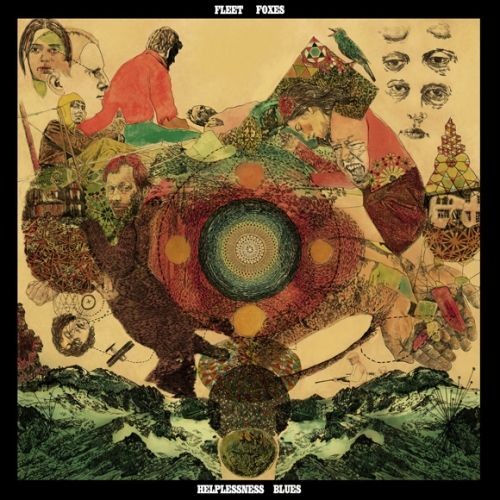
Review: Fleet Foxes – Helplessness Blues


I’m sure nice things can be said about Helplessness Blues, the new album by Fleet Foxes. You won’t hear them here. The amount of praise and acclaim this album has received makes me want to puke, and it’s high time someone pointed out its potential mediocrity.

The confusion arises from the fact that their 2008 debut was brilliant. I was hoodwinked the same as everyone else up front, buying their new album without even downloading it first. The other misleading factor–the one I didn’t personally succumb to–is the fact that they’re still trying. I have no reason to believe Fleet Foxes did not attempt to create a good album. They aren’t sell-outs in the classic sense. Sure, it sounds like over the past three years they quit showering and traded an indie song-writing mindset for feelings-sharing stories around a campfire, but becoming a hippy is like contracting a deadly disease. That’s different from selling out.

When you desperately want an album to sound good and you know the band is still trying I guess it’s easy to ignore your ears and pretend you like it. But I’m a metal fan at heart; I don’t have to make apologies for a style I don’t obsess over. So let me quit immaturely bashing Helplessness Blues and get on with why I don’t like it.


Helplessness Blues

The vocal melodies aren’t melodic. Oh, that might be a mathematically false statement; I don’t concern myself with such things. But just listen to what’s going on in this song. I can’t think of any kind way of putting it; Helplessness Blues just consistently fails to resolve any of its melodies on appealing notes, and that’s 90% of the problem. Try to take this in context. After a half dozen listens today I started to kid myself into thinking the album was fairly decent (and I really have grown hopelessly fond of this particular song’s chorus), but it only took a listen to Ragged Wood and Blue Ridge Mountains to go “Oh, yeah, that’s what I meant” on the proof-read. This is Fleet Foxes we’re talking about. Their self-titled had some of the most subtly beautiful vocals I’ve ever heard, and they always, always rewarded the listener even at their most depressing points. By comparison, Pecknold sings all over the place on Helplessness Blues with no real guidance–without any real ear for making it all work. In a lot of cases there’s no resolution whatsoever. Listen from the transition at 2:50 on, then go listen to Blue Ridge Mountains, and I’m confident you’ll understand what I mean.

This isn’t the criticism. This is the problem. It opens the door for the criticism to come pouring in. See, from start to finish, certainly not just in this one instance, Helplessness Blues is a softy. It always chooses the path of least resistance, not the happy, upbeat resolve. That’s fine. But if you do nothing with it, then it’s also very boring. In order for Helplessness Blues to be an above-average album, if the choruses and focal melodies are not rewarding in their own right, then you have no choice but to ask how they play off their surroundings–how they fit in to the big picture productively. How do they serve to make this the album of the year contender so many sites consider it to be? Or if they don’t, then what makes it so great in spite of them?

It’s not the lyrics, that’s for sure. When they aren’t generic lines about being lonely or sad or having relationship issues, they’re often borderline nonsense. The song Lorelai especially stands out. Up until the chorus it hangs on the brink of greatness, and then he starts cooing “I was old news to you then, old news, old news to you then” over and over again ad nauseam to such a painful extent that you soon forget the song was about anything at all. Or take the second half of the song currently featured–the title track (long after the rubbish about the singer realizing he was not “unique among snowflakes”.) There’s nothing clever or creative about repeating “If I had an orchard, I’d work till I’m sore” a half dozen times. And it’s too odd and repetitive to be heartwarming. Sure, he throws in “And you would wait tables and soon run the store”. Like, we’d work hard for each other out of love and soon accomplish something, maybe, but I’m still thinking “An orchard? Really?” and wondering how many times he’s going to say the same strange thing over again. And then the end line, again musically unresolved and unsatisfying, “Someday I’ll be like the man on the screen,” might be intended as a twist, something thought-provoking, if the common association of celebrities with unauthentic lives can be applied, but the irritable melody doesn’t really incline me to put much thought into it, and in any case I’m still thinking “An orchard? Really?”

The lyrics on average are only insightful in that “I don’t get it” sort of way. That is, they only inspire those thoughtful enough to derive deep meaning out of just about everything and those thoughtless enough to think their inability to derive meaning out of something is a sign of its brilliance.


Someone You’d Admire

Not all of the lyrics are dull. Someone You’d Admire, for example, is decent enough. Perhaps if the song didn’t fall victim to my complaint about the melody I’d think it clever. And that’s what we’re looking for, right?: Something that makes the weak vocal melodies appropriate or makes the songs good in spite of them. Maybe if the lyrics were coupled with really good instrumentation it would all come together. But they aren’t. The dude’s just strumming basic chords on a guitar devoid of emotion. Oh, he alters the intensity a little here and there, but there’s never any fire in his strumming. It’s little more than variant degrees of volume. And that’s what you get with the bulk of the instrumentation on this album–moments that are loud and moments that are quiet, typically not transitioning so much as switching at random. Oh, and the ending is unresolved again.


The Cascades

The instrumental track The Cascades is a good example. The acoustic guitar in the first minute isn’t playing anything particularly melodic, and it doesn’t compensate with emotion. It’s just kind of there–the sort of bedroom recording I’d create in one take and delete soon after. Around 55 seconds something awesome happens, and for a brief moment the song feels like what I actually expected a new Fleet Foxes album to sound like, dreamy, beautiful, crea—wait, it’s over. By 1:18 it’s over, and it doesn’t even fade or transition. It just ends, and we’re solo acoustic guitar again. Oh wait, here, it’s coming back again at 1:35. Oh nevermind, it’s gone again at 1:45, erm, did this song just end?

The comings and goings, the ins and outs, whether it’s merely from quiet to loud and back again or from boring to beautiful and back again, it’s all borderline random. You never feel the transition. Nothing is natural. And with the average song clocking in at only about four minutes, there’s almost never time for something coherent to develop out of it all. Just like the vocal melodies, the instrumental dynamics pretty much never develop into or resolve on an appealing sound.

So their new approach to vocals is out. Their new approach to instrumentation is out. The lyrics demand more attention and aren’t sufficient to satisfy. Basically, none of their new ideas work. Not one, in the big picture. I will leave you with the one counterexample that I felt utilized them all successfully (perhaps in part because it’s not such a decisive break from their old material.) If the whole album was more like this next one, well, then I could really appreciate it:


The Plains/Bitter Dancer

Now I was being blatantly mean to the band in my introduction, and that’s quite unfair. If Helplessness Blues hadn’t gotten such rave reviews I would have been content to call it fairly uninspiring, harmless folk. As a pretty piss-poor musician myself, I have strong reservations against criticizing bands for the music they produce (at least if it doesn’t pretend to be awesome.) The frontman Robin Pecknold even so much as stated that he intended the album to be “less poppy, less upbeat and more groove-based.” He succeeded, for better or worse. There’s no sense in pointing out how direct yet subtle, uplifting and beautiful, the vocals and instrumentation all were (and unobtrusive the lyrics) on their self-titled release, if Helplessness Blues was expressly intended to be different. That it’s not what I wanted to hear is no excuse to slander them.

If I’m starting to sound apologetic now, make no mistake. I think Hopelessness Blues is pretty bad, and I would even absent the disappointment of expecting a repeat of 2008. I just want it to be clear that my accusative tone is a product of the Pitchfork and co “way to go champs, you were struggling but it paid off, 11/10” type reviews, not Fleet Foxes themselves. It didn’t pay off. It resulted in something dubious–something you might find a great deal of merit in–hell, something I hope you can appreciate a lot more than I can. But to think it’s unquestionably brilliant is just stupid. It’s ambitiously, recklessly experimental, and you can love it or hate it with equally good taste.

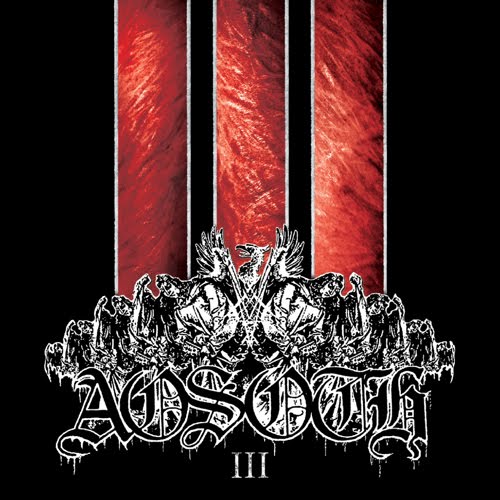
Review: Aosoth – III


French black metal as crushing chaos is something of a novelty to me this year. I think I was sort of envisioning the metal scene there as composed of a dozen Neige side projects and Deathspell Omega. Blut Aus Nord and Aosoth’s new albums have both thus thrown me for a bit of a loop. I didn’t really listen to either band prior to this year, and both have recently released something tormented to the point of being both fascinating and entirely unpleasant to listen to.


II

Unlike 777 Sect(s) though, III doesn’t give me any sort of moving vision. It doesn’t so much take me on a journey through a nightmare I’d rather avoid as confront me head on. There’s a lot less to latch onto beneath the wall of noise, and what does surface isn’t exactly friendly. You can expect an album that’s tormented from start to finish, and unrelenting even in its slow parts. If II is the most frantic song on the album, it’s also perhaps the most direct example of this. At the transition around 1:15, what emerges as the song’s most defining characteristic is something of an instrumental tornado. Here the black metal serves as sort of a portal, a summoning sphere that conjures forth sinister elements from the beyond. On II it might be a tornado ready to rip you limb from limb. More frequently it’s a slow-moving monster with equally ill intentions, and the ritual that invokes it is likewise more of a methodical blood-letting than a butchery.


III

III is a bit more characteristic of what you can expect to hear throughout–a lot of slow, haunting progressions interlaced with blast-beat brutality. Again the song’s most memorable moment fades in. The break around 2 minutes doesn’t explode back into full-throttled black metal. It slowly builds up. A deeper guitar tone takes its sweet time to emerge out of the filth and present, around 3:45, possibly the most crushing, albeit brief, moment on the album, soon to be buried again beneath higher-pitched, haunting sounds and blast beats.

It wasn’t for a while after reviewing 777 Sect(s) that it really grew on me, and likewise Aosoth’s III might take more time than I’m willing to give it to develop in my ears into something not enjoyable, it will never be that, but at least more intriguing than it is unbearable. But then, the two albums don’t really compare as much as I’m making them out to, I just haven’t heard enough music like this to better describe it. There are definitely no good vibes to derive from Aosoth. Like I said, it’s not a journey filled with hidden horrors–it’s direct. What’s there to be heard I think you can take in in one attentive listen. It shares the ability to terrorize without any real relief, and for better or worse that may be its only effect. The songs are fairly diverse, but the bad vibe is consistent. As something I doubt was meant to be enjoyed I think it’s pretty successful. Prepare to walk away feeling a bit less content than when you started.

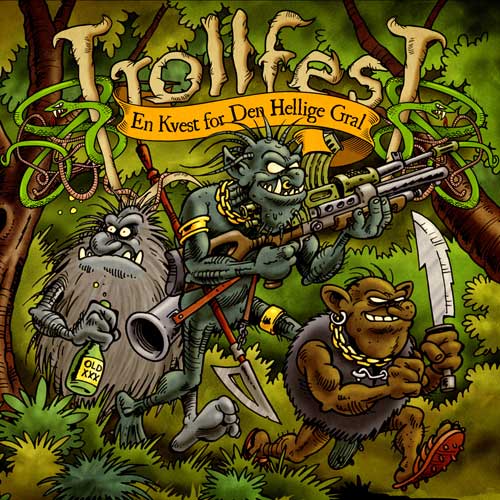
Review: TrollfesT – En Kvest for Den Hellige Gral


TrollfesT certainly aren’t for everyone, but I sometimes wonder whether a lot of people who criticize them even bother clicking play first. The biggest complaint I tend to see about TrollfesT is that they’re just a Finntroll ripoff. After all, they both have “troll” in their names. And they’re both bands. It must be a ripoff.


Undermålere (I am lead to believe this is a fan creation, not an official music video.)

Right. Well, now that you’re hearing this you’ve probably experienced more of the band than a lot of the people who’ve written negative reviews of them. What I think you get when you hear TrollfesT isn’t so much “another folk metal band” as a bunch of music students who’ve got some decent professional training but decided they enjoyed drinking and playing live more than grad school. TrollfesT is a clusterfuck of klezmer, Balkan and gypsy folk, and whatever else they were introduced to in musicology 101 and decided to incorporate. For better or worse.

One thing you’re not going to hear on En Kvest for Den Hellige Gral, or on any of their other albums, is much of a folk/viking metal ethos. There’s a decent chance they’re more familiar with Taraf de Haïdouks than with Bathory (though they have as much of an awareness of metal as all the other styles they incorporate). Hell, they’re probably the least serious band that can be called folk metal. The lyrics are barely coherent gibberish. En Kvest for Den Hellige Gral isn’t in German or Old Norse or anything of the sort. It’s exactly what it sounds like: “The Quest for The Holy Grail” as written by someone a little bit slow, like say, a troll? I think it’s supposed to be consistently coherent enough to be understandable if you know Norwegian, but it’s not a real language.

Each release is a concept album, and while I can’t speak for this one they’ve come package in the past with a mini-comic telling the tale. It usually involves a bunch of imbecilic trolls going on an epic journey for booze (I’m sure the Holy Grail here is some self-replenishing tankard of ale) and pillaging, plundering, slaughtering Christians and all those other good light-hearted folk metal topics along the way. It’s never going to make a statement or push a particular world view, it’s just meant to be fun.


Die Verdammte Hungersnot

Far from being “Finntroll ripoffs”, the band is so unique that there’s nothing I can really compare this to besides their own past works. So what I have to say about En Kvest for Den Hellige Gral specifically will be, I guess, pretty brief. One thing I noticed was a lot of breaks in the folk side of their sound. You’ll find a lot more 30 second or so segments of straight-up metal on this album than on Villanden. That, to me, is a bad thing, because when they’re not playing folk or doing something weird they’re pretty generic.

On the plus side, the folk is largely a continuation of Villanden. That is, rather than the home-grown sort of sounds they used on their first two albums, they incorporate recognizable styles that you can have some fun trying to identify. The recording quality seems to have improved a bit too, which in their case I found kind of disappointing. Villanden’s raw sound gave it a sort of primitive feel that I thought complimented their style.

In a lot of ways it’s their most mature and diverse work, but it lacks some of their last album’s lasting appeal. The songs aren’t quite as catchy. The way the middle of Die Verdammte Hungersnot instantly sticks in your head was a bit more commonplace in the past. The vocals aren’t nearly as unique, and if it sounds all around more professional, well, that doesn’t necessarily work as well for their image. If Villanden was borderline insane, En Kvest for Den Hellige Gral is merely pretty weird.


Der Sündenbock Gegalte

That all being said, if you’re new to the band entirely and intrigued I recommend Villanden over this one. I have a love/hate relationship with it that extends way beyond my interest in anything else they’ve released. But En Kvest for Den Hellige Gral is still pretty good, and it’s a promising sign of things to come that they’ve continued to expand their sound.

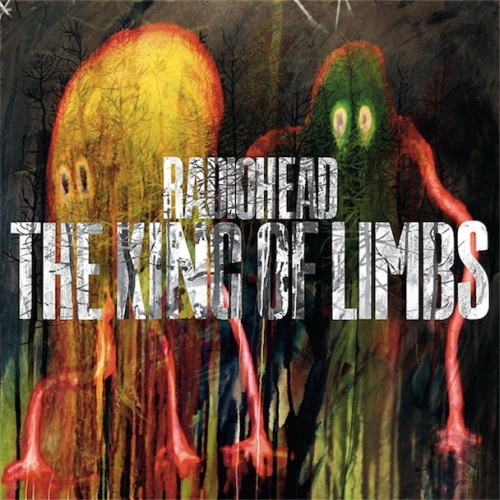
Review: Radiohead – The King of Limbs


I have never heard anyone say that a Radiohead album was bad. They’re probably the most respected group of musicians in the world, and not without good reason. But they do change quite a lot. Not every album is for everybody. Kind of like Kid A, In Rainbows just really didn’t do much for me when it was released. Oh, I recognized it as one of the better albums of the year, but it just wasn’t my thing. The problem was an eight year gap. By 2011, I’d long played all of the others to death. Radiohead had faded from my favorite band in the world to a distant memory–some pleasant reminder of my high school years and nothing more.

So The King of Limbs is pretty much a dream come true. As that kid who always liked Amnesiac more than Ok Computer, what I would have ideally wanted in a new Radiohead album probably doesn’t comply with the average opinion. But I won. The King of Limbs is a return to that smooth, laid back, jazzy side of the band that poked its head out in 2001 and then went into hiding for a decade.


Bloom

It’s pretty hard to talk about what makes any Radiohead album good, but I think I can safely point to the bass effects as The King of Limb’s most dominant feature. The first three tracks are all similarly constructed–short drum loops that vary little over the course of a given song, underpinned by bass sounds that are always looking forward and lending a great deal of flavor to otherwise very repetitive music. There’s a gliding feeling present throughout, like the songs are sliding across ice in perpetual motion. Little electronic bubbles of sound dot the bass progression, lighting the path. You don’t anticipate the destination, you just enjoy the ride. Vague? It’s a Radiohead album. You can only really talk about it in metaphors.


Morning Mr. Magpie

Like any Radiohead album, the track order matters for better or worse, despite being only 37 minutes long. I’m not going to say there’s a definite, intentional progression to it, but everything feels like it’s in the right place to create a well-rounded picture. The first three songs all have this incredibly chill Amnesiac feel to them–the same sort of vibe I get from say, I Might Be Wrong and Dollars and Cents. You can’t necessarily feel a transition coming in Little By Little, but it’s decidedly less dreamy than the first two. If they’re going to make a move, it’s the best one to lead off from. What follows might not be expected though. Feral turns out to be one of those experimental glitchy Radiohead à la Aphex Twin efforts that found some presence in The Gloaming but were otherwise regulated to b-sides starting on the Knives Out and Pyramid Song singles.

Track five, Lotus Flower, returns to elements of the first three songs, but there’s nothing smooth about it. It feels pretty tense if you ask me. Thom’s voice is more longing, an eerie keyboard sneaks in and out of the background, and there’s this kind of creepy clapping hand effect that makes me feel like the whole song is about ready to snap. I haven’t yet convinced myself that I like it, and the span of Feral and Lotus Flower is definitely the weak link of the album for me, but better to keep the tension to the middle than to throw me off at the beginning or end. From track six on it’s a calm ride again.


Codex

Codex, my favorite track, might start out feeling like Pyramid Song, and it has a lot of the same dreamy qualities, but it never picks up. It’s just Thom, a piano, and some minimal mournful effects. What he’s singing is anybody’s guess half the time, and the cd packaging offers no guidance there, but what I looked up put it as “Slight of hand, jump off the end into a clear lake, no one around. / Just dragonflies flying to the side. No one gets hurt. You’ve done nothing wrong. / Slide your hand, jump off the end. The water’s clear and innocent. The water’s clear and innocent.” Simple and beautiful, and the antithesis of the song that precedes it.

The next song, Give Up the Ghost, follows the same trend, replacing minimalistic piano for equally subdued guitar and a backing vocal loop that has a sort of blues feel to me. The two go together perfectly to round out the real meat of the album. I think I’d describe the first seven tracks as gliding forward smoothly, hitting a rocky road, and being content to stand perfectly still and fade away. Then there’s Separator.


Separator

I’m not sure where this song comes from. It feels out of place and yet perfectly fitting, a sort of ending credits. Radiohead have a long tradition of putting the most out of place song at the end, usually with great results, and this is no different. Separator is smooth and upbeat, a lot like the first three songs, but it’s stationary like Give Up the Ghost. Who knows what the band’s getting at here, but it’s suggestive in a lot of ways. It’s a song about waking up. The album is done, the dream is finished, but “if you think this is over with you’re wrong.“. It’s just the separator; there’ll be more to come. Never mind how fatalistic the last two tracks felt, no one is giving up the ghost here.

Radiohead have been around for an awfully long time, but it’s only the brevity of this album that makes it feel like a late-career effort to any extent. It’s difficult to rate the quality in comparison to other Radiohead albums because of the lack of quantity, but it’s excellent in its own right. If anything it feels more like Radiohead in their prime to me than In Rainbows did (if I can call that 1997-2003 without much debate), but it also demands a more timely follow-up than they’ve been offering lately. I’m sure if you already like Radiohead you don’t require any convincing to check this one out, but I especially recommend it to my fellow Amnesiac fans.

Review: Peste Noire – L’Ordure à l’état Pur


“The verb troll originates from Old French troller, a hunting term.” I kind of want to end right there. But I’ve read reviews of 2009’s Ballade cuntre lo Anemi francor, one of my favorite albums ever, that basically accused Famine of making something intentionally horrible. To just say no, Ballade was a work of genius, L’Odure is their intentionally horrible album, without any justification, would be a bit naive.

I don’t think I can really say what I want to say about L’Ordure without taking a good look at Ballade though, so let me start with the opening song of their 2009 album.


La Mesniee Mordrissoire (on Ballade cuntre lo Anemi francor)

Following a short introduction track, La Mesniee Mordrissoire kicks off perhaps the most dark and disturbing album I’ve ever heard. Famine’s infamously twisted vocals, the peculiar, unnatural way in which the album is distorted, the unity of all of its seemingly random features, the cackles, the ultra-nationalistic chants, the contrast of all this to riffs and beats that are sometimes happy, sometimes longing in an entirely human sort of way, everything about this album is warped beyond belief. And it just gets “better”. I wish I was a psychopath just so I could have the fulfillment of jabbing my victims with a red-hot poker while dancing to track 3. … Ok well, anyway…

I refuse to believe that this album was a fluke. I refuse to believe that Famine’s real intention was to create something really awful and he just by accident shit out a masterpiece. Sure, it might have vastly exceeded his expectations–works of this caliber often surpass their creators–but it was not a complete accident.

At the same time, a lot of what you hear on Ballade couldn’t have been recorded with a straight face by a normal person, and I have no reason to believe Famine isn’t one. I for one don’t think I could chant “sieg heil! sieg heil!” or sing a chorus of “la la la la lala” without busting out laughing regardless of how well it fit my artistic vision. I typically see Famine being accused of immaturity, not of being a radical, but I fail to see why he couldn’t have taken the album seriously and still gotten a kick out of the elements of it which, when taken out of context, are completely ridiculous.

When I say L’Ordure à l’état Pur, translated to something like Garbage in its Pure Form, is horrible, I’m saying that I think Famine intended it to be horrible. I think it has next to nothing conceptually in common with its predecessor. It’s like he’s saying “No, this is immature. Do you see the difference?”

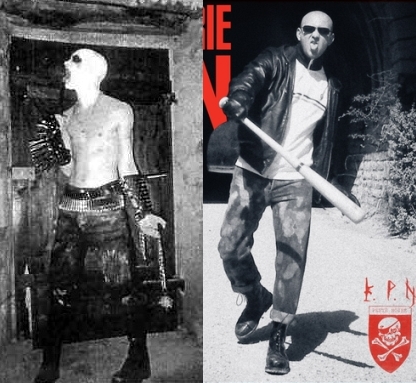
L’Ordure à l’état Pur came packaged with an image change for the band that might clarify the difference.


Cochon Carotte Et Les sœurs Crotte

This is the only song I’m going to sample from L’Ordure à l’état Pur, because I think it’s all you really need to hear to decide whether you want to pick up the whole thing or not. If you can appreciate sound samples from scat pornography, belching noises substituted for drum beats, Famine doing his best impression of an irritated chicken, and really bad techno, maybe this album is for you. Hell, maybe you can kid yourself into thinking the band is making some statement about society. But for me, Famine is just trolling here. Maybe he wanted people to derive some sort of meaning from it all, or maybe he just wanted to sit back and laugh at all the people who try to. I think I’ll not risk falling victim to the latter.

L’Ordure à l’état Pur has a few really great features, but by and large it’s awful. Take the album title literally. You might think there is meaning buried beneath the joke, but that is the joke.