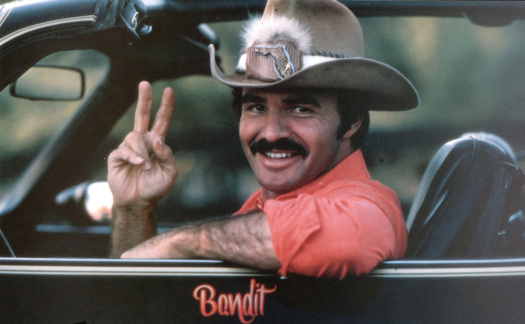
Scenes That We Love: The Bandit Fools Smokey in Hal Needham’s Smokey and The Bandit


Today would have been Hal Needham’s 89th birthday and that means that it’s time to celebrate with Smokey and the Bandit.

Before he made a name for himself as a director, Hal Needham was a legendary stuntman.  In 1977, the same year that Smokey and the Bandit came out, Gabriel Toys even sold as a “Hal Needham Western Movie Stunt Set,” which came with a spring-launched Hal Needham action figure.  When Needham went into directing, he made unpretentious movies for people who wanted to have a good time at the theater.  The majority of his films featured fast cars, tough good old boys, and spectacular action.  They also often featured Burt Reynolds doing what he did best.  Needham made the type of movies that never won Academy Awards but which audiences loved.  In fact, audiences still love them.  When I watch Smokey and the Bandit, I always want to quit my job and just smuggle Coors east of the Mississippi for a living.  I know that Coors is legal now so there’s no need to smuggle it but that’s the power of a good Hal Needham film.

In the scene below, the Bandit (Burt Reynolds) and Snowman (Jerry Reed) manage to avoid getting caught by the Mississippi Highway Patrol.  Not only do we get to hear Eastbound and Down but this scene also features the moment that Hal Needham knew the film was going to be a hit.  He later said that, as soon as Burt Reynolds broke the fourth wall and stared straight at the camera with “that shit-eating grin on his face,” he knew that audiences were going to love the Bandit.

And he was right.

Hal Needham died in 2013 and Burt Reynolds followed him five years later.  However, their legacy lives on.  The characters of Rick Dalton and Cliff Booth in Quentin Tarantino’s Once Upon A Time in Hollywood were based on Burt and Hal.  If anyone could have taken on and beat the Manson family single-handed, it would have been the great Hal Needham.

A Real American Hero (1978, directed by Lou Antonio)


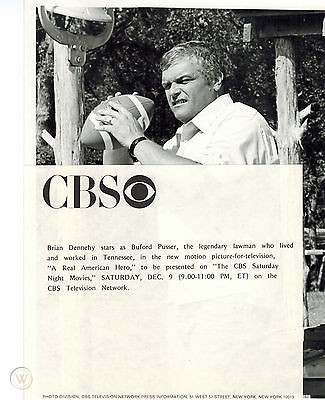
Based on the title, you might think this made-for-TV movie is about G.I. Joe but instead it’s about Buford Pusser, the club-wielding sheriff who battled bootleggers in Tennessee and who might have been murdered by them.  While he was still alive, Pusser was played by Joe Don Baker in the original Walking Tall.  After Pusser’s mysterious death, Bo Svenson took over the role for two sequels and a Walking Tall television series in 1981.  Meanwhile, in A Real American Hero, the role is played by Brian Dennehy.

Though Pusser may be played by a different actor than in the original movies, A Real American Hero finds him still dealing with same threats.  As a result of getting some bad moonshine at the Dixie Disco, two teenagers are dead and two are blind.  Buford is determined to take down the owner of the Disco, Danny Boy Mitchell (Ken Howard).  Unfortunately for Buford, Danny Boy has a mole in the sheriff’s department and always manages to clean up his club before Buford arrives.  When Buford does arrest Danny, the case is thrown out of court because Buford didn’t have probable cause or any real evidence beyond hearsay.

Buford’s solution is to start enforcing every single law on the books, even the ones that haven’t been relevant for over a century.  Buford knows that stopping Danny Boy for a misdemeanor would give him probable cause to search him for any evidence of smuggling moonshine.  For instance, Buford pulls Danny Boy over because he’s driving a vehicle but, in violation of a law written in 1908, he doesn’t have a man walking in front of the car and waving a red flag.  Another time, he gives Danny Boy a ticket because, in violation of a law from 1888, he never ties his carriage to a hitching post and a law written in 1910 legally defines all cars as being carriages.

The problem is that, if Buford only enforces the law against Danny Boy, he could be accused of police harassment.  So, everyone in the country has to be held to the same standard, which means that everyone in town is soon getting ticketed and jailed for the minor offenses as Danny Boy and his associates.  Everyone gets angry with Buford but, after Danny Boy tries to assassinate the sheriff while he’s got his kids in the car, they change their minds and support being overpoliced.

A Real American Hero was obviously an early attempt at a pilot for a Buford Pusser TV series.  Bulky Brian Dennehy is physically right for Buford but he’s never as convincing a redneck as Joe Don Baker was in the role.  Plus, it’s impossible to watch Dennehy hauling people into court for not hitching their “horseless carriages” without being reminded of Dennehy harassing Sylvester Stallone at the start of First Blood.  Despite a subplot where Pusser tries to help a former prostitute re-enter society, Buford comes across more like a jerk than a real American hero.  Meanwhile, Ken Howard does his best but Danny Boy is still just a generic television bad guy.  If he wasn’t selling moonshine in Buford’s county, he’d probably be further down south, trying to frame the Duke boys for a bank robbery.

This one is for Walking Tall completists only.

Music Video Of The Day: (This is Not a) Love Song by Public Image Ltd. (1983, directed by ????)


Once upon a time, a record company exec made the mistake of asking Johnny Lydon if he could write and record a nice and commercial love song for Public Image Ltd.’s next album.  This is how Lydon responded:

This Is Not A Love Song is repeated a total of 44 times in this song.  The other lyrics are all meant to satirize the corporate mindset as Johnny announces that he is going to sell out:

I’m adaptable and I like my new role
I’m getting better and better
And I have a new goal
I’m changing my ways where money applies

This video was shot in Century City, which was the center of the Los Angeles business community in the 80s.

Enjoy!

Not Another Mistake (1989, directed by Anthony Maharaj)


Not

Another

Mistake

As the title indicates, this is another Nam film, where a veteran reenters the jungle and finally rescues the POWs who were left behind when the United States fled Saigon.  With Sylvester Stallone, Chuck Norris, and even Gene Hackman leading the way, these films were all the rage during the 80s.  They provided American audiences with a chance to go back and win the only war that, up to that point, America had lost.  Not only did they provide wish-fulfillment for audiences but they also confirmed what several suspected, that the only reason the U.S. lost in Vietnam was because our soldiers’s hands were tied by generals and Washington pencil pushers.  If we had just let our men go in and fight the VC guerrilla-style, these films say, Saigon never would have fallen.

Not Another Mistake came out towards the end of the cycle and you know what type of film you’re about to get into as soon as the “A Troma Team Release” skyline appears at the start of it.

Don’t let that skyline scare you off.  Not Another Mistake is slightly better than the average Troma film.  Admittedly, that’s not exactly a high bar to clear.

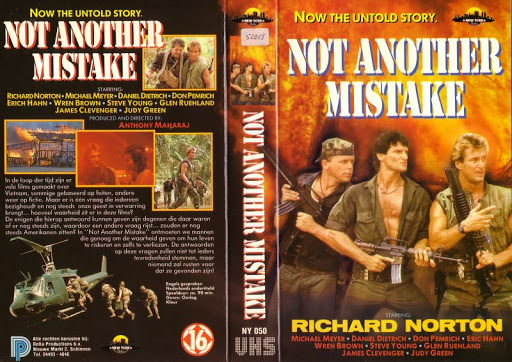
Richard Norton plays Richard Straker, who served in a special ops unit during Vietnam and who was a key part of Operation Black Thunder.  In other words, he’s a badass.  After the war ended, Straker raised a family and found success as a businessman.  One night, he returns home and interrupts a home invasion.  He kills the thugs but not before his wife and daughter each suffer a slow motion death.  (Straker has Vietnam flashbacks while shooting the thugs.)  Straker spends a year drinking and then goes to Vietnam to lead a raid on a POW camp.  What’s interesting is that Straker’s family being murdered doesn’t really figure into the rest of the plot.  He never brings up his tragic past nor does it appear to have made him more willing to take crazy risks or anything else you’d expect it to do.  Instead, his family is gunned down because I guess the movie had to start in some way.

Once Straker is sent to Vietnam, he’s given a ragtag group of soldiers to command.  None of the soldiers have any personality but then again, neither do any of the POWs or the camp guards or anyone else in the movie, other than Straker.  Richard Norton has appeared in a lot of movies like this and his appeal has always been that he seems like he could probably do everything that he does on film in real life.  Norton is convincing in the action scenes and he does okay in the big dramatic scenes, like when he rescues an old friend, just to discover that, after years in a POW camp, the man is nearly dead.

It takes a while for Not Another Mistake to really get going.  There’s a lot of extremely dark jungle scenes where you can’t really see what’s going on.  Things pick up once they get to the POW camp and the rescue operation leads to some exciting action scenes.  There’s a good chase scene on a train and this film features some of my favorite example of one man being able to blow up gigantic buildings with just one grenade launcher.  One thing that I appreciated about the film is that it attempted to be honest about what type of state a person would be in after spending 20 years in a POW camp.  This isn’t one of those films where the POWs can pick up a discarded machine gun and immediately follow Chuck Norris into battle.  Also, as easy as it is compare Not Another Mistake to the other POW rescue films of the 80s, it has a surprisingly dark and abrupt ending, which suggests that maybe the film was meant to be more than just an exercise in jingoistic wish fulfillment.  It’s the type of sober ending that you never would have seen happen to Norris or Sylvester Stallone but Richard Norton handles it like a champ.

Too long by at least 30 minutes and severely hampered by a low budget, Not Another Mistake still has enough surprises and enough Richard Norton to stand out from the rest of the POW rescue genre.  If you’re a fan of the genre, watching this won’t be another mistake.
Music Video of the Day: Sabotage by the Beastie Boys (1994, directed by Spike Jonze)


Today’s music video of the day is my personal pick for the greatest music video of all time, Sabotage by the Beastie Boys!

This song was actually inspired by the band’s frustration with a sound engineer who the band felt was trying to rush them through their recording sessions.  The feeling was that he was deliberately “sabotaging” them and the band expressed their frustrations in an instrumental track.  It wasn’t until two weeks before the track was actually to be recorded that the Beastie Boys came up with the lyrics for the song.

The video, famously, features the Beastie Boys as three cops on a 70s cop show, pursuing and apparently murdering Sir Stewart Wallace.  This video is usually held up as an example of director Spike Jonze’s love of kitsch but the 70s cop show theme was actually first suggested by Adam Horowitz.

Believe it or not, this video was controversial when it was first released because it was considered by some to be too violent.  MTV actually demanded three cuts before they would accept it.  They demanded that the knife fight be shortened and that shots of bodies being tossed out of a car and over a bridge be taken out of the video.  Of course, in both shots, the body was obviously a dummy so I’m not sure what MTV was freaking out about.

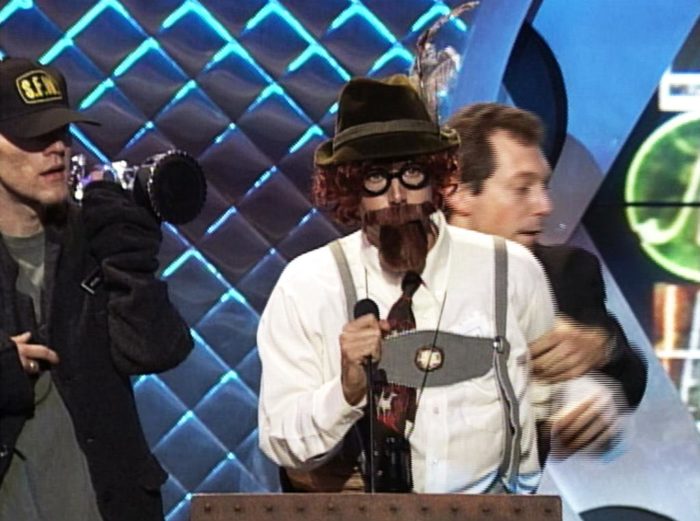
Sabotage received five nominations at the MTV Music Video Awards and, amazingly, it lost every one of them.  Even best direction was won by Jake Scott, who did the video for R.E.M’s Everybody Hurts.  While Michael Stipe was accepting the best direction award, Adam Yauch rushed the stage (while dressed as Nathaniel Hornblower) and protested the snubbing of Sabotage.  

This was actually the first time in the history of the VMAs that someone rushed the stage to protest a win.  Kanye West, of course, later made this a famous move but Adam Yauch did it first.  (My favorite thing about the picture above is the look on Michael Stipe’s face.)

The MTV Music Video Awards may not have appreciated Sabotage but the rest of the world certainly did.  It not only remains one of the signature tunes of the 90s but, if you believe Star Trek, it’s also the song that inspired Jim Kirk to grow up, join Starfleet, and put the safety of everyone under his command at risk at least once a week.

Enjoy!

The Cop in Blue Jeans (1976, directed by Bruno Corbucci)


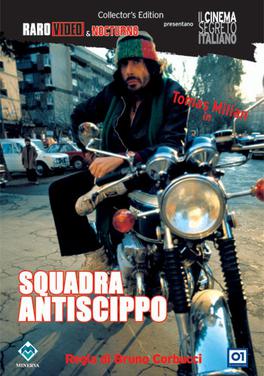
Nico Giraldi (Tomas Milian) was once one of Rome’s top thieves.  He stole handbags and briefcases and he sold them through a network of underground sellers.  Now that Nico has grown up, he’s turned over a new leaf.  Though he still bristles at authority and is just as quick to break the rules, Nico is now a member of the Rome police, assigned to the anti-mugging squad.  He’s a tough cop who has no problem beating the Hell out of a mugger after he captures him.  However, Nico knows that arresting the muggers is only half the job.  To Nico, the real enemies are the sellers who employ the muggers.  Nico wants the men at the top of the criminal food chain, men like the mysterious Baron (Guido Mannari) and the sadistic American crime boss, Richard Russo (Jack Palance).

It’s not just his background that’s unconventional.  Dressing like a slob and sporting an unkempt beard, Nico is a strong contrast to his more conventional co-workers.  Nico even carries a mouse named Captain Spaulding in his front shirt pocket.  The ladies, of course, love Nico.  His girlfriend (played by the beautiful Maria Rosaria Omaggio) is a literary agent who is hoping the publish a manuscript that is being smuggled out of Russia.  The Russians try to sabotage her efforts by switching a briefcase.  It’s a pretty good thing that Nico still remembers how to pull off the perfect mugging.

Though Nico is obviously based on Al Pacino’s performance in Serpico, The Cop in Blue Jeans has little in common with Sidney Lumet’s classic.  Instead, The Cop in Blue Jeans is a mix of action and comedy.  The action comes from Nico’s attempts to capture the members of Russo’s gangs and Russo killing anyone who displeases him.  (A scene in which Russo has a man suffocated in a car is far stronger than anything you would ever see in an American comedy.)  The comedy comes from Nico being such a slob that even his fellow police officers often attempt to arrest him.  Nico insults everyone and everyone insults Nico.  It’s actually not that funny but I liked how every fight turned into an elaborate brawl and Tomas Milian, who was always well-cast as scruffy iconoclasts, gives a good performance as Nico.  Add to that, it’s always entertaining to see Jack Palance play the bad guy, even if this was clearly just a film that he did to pick up a paycheck.

The Cop in Blue Jeans was a big hit in Italy and, coming out a time when Milian’s career was struggling after his early Spaghetti Western successes, it helped to revive his career.  Milian went on to play Nico in ten sequels before then establishing himself as a character actor.  (The role that most modern audiences know him from is as the corrupt Mexican general in Traffic.)  Milian died in 2017 and today would have been his 87th birthday.  The Cop in Blue Jeans features him at his best and shows why he was a star for such a long time.

Music Video Of The Day: Doom and Gloom by The Rolling Stones (2012, directed by Jonas Akerlund)


“The song sounds a lot different than the title. The theme is that Mick is talking to a girl saying, ‘All I hear from you is doom and gloom – let’s go party, let’s go dance.’ It’s an uptempo tune.”

— Organist Chuck Leavell on Doom and Gloom

“At first I said, Hey Mick, ‘Doom and Gloom’ is a kind of weird title for a 50-year celebration, you know? But you know what the Stones are like, it’s always against the grain. But he came up with it and it’s a great track and a really quite ‘funny’ song, actually – there are some great lyrics.”

— Keith Richards on Doom and Gloom

Also according to Keith, Doom and Gloom was one of the quickest recordings that the Rolling Stones ever did.  It only took three takes to lay down the track.  Richards credits that to the chemistry that the Stones have when they’re playing together.  As Keith puts it, the only problem when it comes to recording a new Rolling Stones song is finding a time when everyone can actually get together.

As for the video, it was filmed in a warehouse in Paris and it was directed by Jonas Akerlund, a prolific video director who is best-known for his work with Madonna.  The video stars Noomi Rapace, the Swedish actress who starred in the original Girl With The Dragon Tattoo trilogy and who later appeared in Prometheus.

One thing about the Stones: they don’t quit.  The band has existed for nearly six decades and they’re still making music that demands to be played loud.

Enjoy!

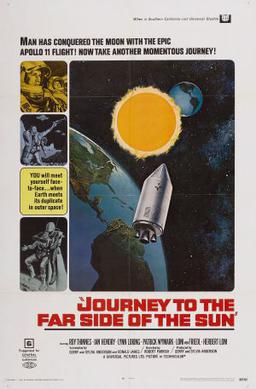
Journey to the Far Side of the Sun (1969, directed by Robert Parrish)


In the year 2069, the European Space Exploration Council discovers that there is a planet on the other side of the Sun, one that orbits the same path as the Earth.  Unfortunately, a spy transmits this information to the communists so America and Europe team up to make sure that they reach the planet before the Russians!

(Remember, production started on this movie in 1967, when America and Soviet Union were still competing to see who would be the first to land on the moon.  Of course, by the time Journey to the Far Side of the Sun was released in 1969, America had already landed on the moon and the Russian space program was no longer taken seriously.)

Two astronauts are assigned to a manned mission to explore the new planet.  Glenn Ross (Roy Thinnes) is American.  John Kane (Ian Hendry) is British.  After spending three weeks in suspended animation, Ross and Kane awaken to discover themselves orbiting a planet that appears to have much the same atmosphere as Earth.  When their ship crashes into the planet, Kane is fatally injured and Ross is retrieved by a human rescue team!  He’s told that the ship crashed in Mongolia.  Kane and Ross were orbiting Earth all along!

Or were they?  Even though Ross is reunited with his wife and debriefed by Jason Webb (Patrick Wymark), the head of the mission, he soon discovers that things are different.  People who were once right-handed are now left-handed and text is now written from right-to-left instead of left-to-right.  People drive on the wrong side of the road and, after Ross makes love to his wife, she feels like something was different about him.  Ross realizes that he’s on a counter-Earth!

It’s an intriguing premise but, unfortunately, Journey to the Far Side of the Sun doesn’t do much with it.  It’s not as if Ross has landed on the Bizarro world, where people say, “Bad Bye” and root for the bad guys at the movies.  Instead, it’s just a world where right-handed people are now left-handed and everyone drives on the opposite side of the road.  Ross theorizes that everything that happens on Earth also happens on Counter-Earth, which means that the other Ross is on Earth, realizing the exact same thing that the first Ross is realizing but who cares because there’s not really any major differences between the two Earths.  Maybe if Counter-Earth had an alternate history where Rome never fell or the Germans won World War II, the movie would be more interesting or at least more like an old episode of Star Trek.  Instead, the movie is all about Ross trying to convince the people on Counter-Earth that he didn’t intentionally abort the mission and that he should be given a chance to return to his Earth.   It’s the driest possible way to approach an interesting premise.

I will say that Journey to the Far Side of the Sun also has one of the strangest endings that I’ve ever seen.  I won’t spoil it here, other than to say that I wonder if the ending was written before or after 2001 made confusing conclusions cool again.

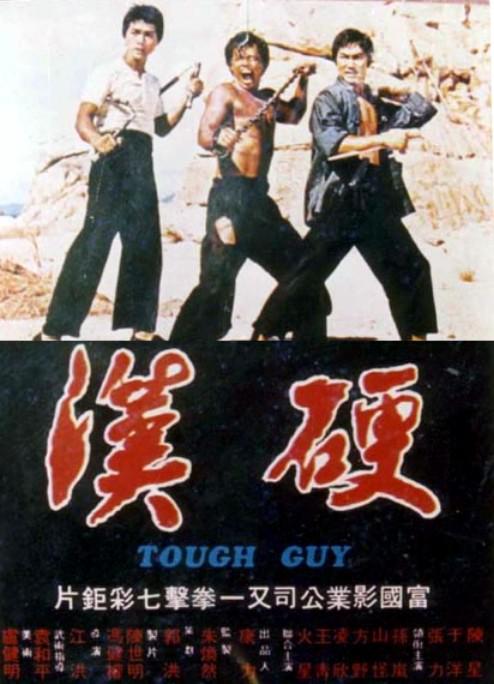
Tough Guy (1972, directed by Joseph Kong Hung)


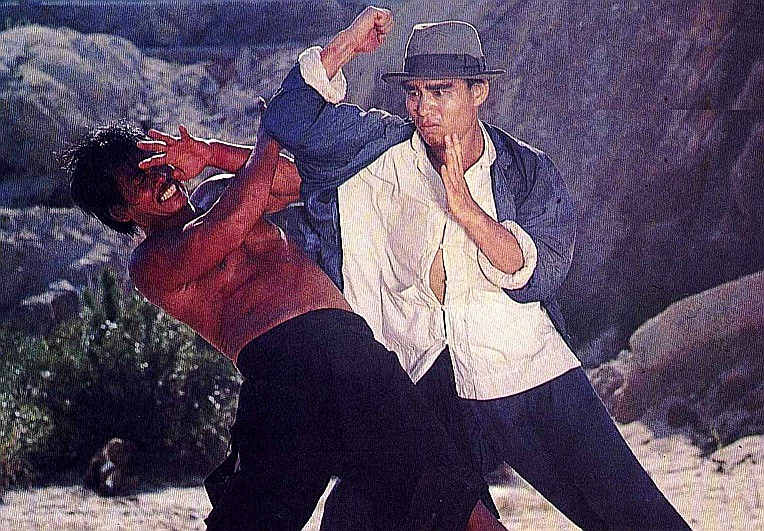
Chen Xing and Cheung Lik are two cops who have been assigned to take down a drug lord.  In order to infiltrate the criminal gang, Chen Xing goes undercover as a prisoner.  When he escapes from the prison, he does so with another member of the gang.  While Cheung Lik pretends to be a simple villager so that he can keep an eye on his partner, Chen joins the gang and immediately shocks everyone with his fighting abilities.  What sets Chen apart from other martial artists is his ability to kill his opponents just by grabbing their foreheads and smashing their skulls.  That impresses everyone who sees it.  However, when the drug lord finds out that Chen is actually an undercover cop, he captures and tortures him.  Will Chen be able to escape in time to have a climatic fight in a mud pit with the drug lord’s main enforcer?

One of my favorite martial arts films, Tough Guy is known by several titles.  When it was released in the West, it was apparently retitled — and I am not kidding — Kung Fu The Head Crusher.  When it was subsequently released on video, it was called Revenge of the Dragon, probably to try to fool people into thinking that it was a Bruce Lee film or, at the very least, that it starred Bruce Li or some other Bruceploitation star.

Whatever it’s title, Tough Guy is an often brutal film, featuring some of the most exciting fight scenes that I’ve ever seen.  What Chen Xing and Cheung Lik lacked in screen charisma, they made up for in skill and relentlessness.  When Chen Xing gets in the middle of things and starts trading blows with his adversaries, it’s like watching a wild animal suddenly go on the attack.  He doesn’t stop moving until no one’s left standing and he even manages to make the whole skull crushing thing look credible.  He’s matched by Cheung Lik, who may not have as big a role as Chen Xing but who still proves himself to be a formidable fighter.  The fights themselves are expertly choreographed and largely filmed in close-up.  There’s no cheating the camera or anything else that martial arts films sometimes did to make their stars look more skilled than they actually were.  Another thing that I appreciated is that, when Chen and Cheung have to fight multiple opponents, the bad guys usually attack all at once, as a group, instead of everyone standing around waiting for their turn to get in their punches.

There’s little intentional humor to be found in Tough Guy and there’s even less discussion of the philosophy behind the martial arts.  Instead, this is a tough and violent crime movie that wastes no time in getting down to business.

One final note: While watching Tough Guy, be sure to pay attention to the film’s score.  If it sounds familiar, that’s because it was lifted nearly note-for-note from Ennio Morricone’s score for Once Upon A Time In The West.

Music Video Of The Day: It Must Be Love by Madness (1981, directed by Chris Gabrin)


“In the pool, I had these lead weights on. I thought I was gonna die. The hire guitar got bent so we got a hairdryer and sent it back. They said, ‘The neck’s like a banana.’ So we had to buy it.”

— Guitarist Chris Gabrin on performing under water in the video for Madness’s It Must Be Love

In America, this song and video was released as Madness’s follow-up to their first (and, to date, only) hit in the United States, Our House.  Unfortunately, for the band’s U.S. popularity, the video was heavily influenced by the very British Ealing comedies and it was not immediately appreciated by audiences across the Atlantic.  I think if the video were released today, at a time when more people are aware of international cinema and appreciation of British comedy is now a mainstream phenomena as opposed to just the kids in the computer lab talking about Monty Python, it would be better received in the States.

In the U.S., It Must Be Love peaked at #33.  As with most of Madness’s song, It Must Be Love was far more successful in the UK, where it has twice reached the UK Top 10, once when it was originally released and then when it was re-released in 1992.

Obviously, the British have always been better about appreciating a bit of madness than the Americans.

Enjoy!