
by Frank Frazetta
This is from 1977. The cover was done by the legendary Frank Frazetta.
Weird Thrillers was one of the many horror comics to be published in the early 50s. Though there were only five issues and the content was largely made up of true crime stories and sci-fi stories instead of straight horror, Weird Thrillers is still remembered for its awesome covers.
Here are the five covers for Weird Thrillers. The first four issues were published in 1951. The fifth and apparently final issue was published in 1952.

Artist Unknown

by Allen Gustav Anderson

by Allen Gustav Anderson

by Norman Saunders

Artist Unknown

by Charles L. Wrenn
This is from 1926. With the bars set that far apart, I’m not surprised he escaped.

Richard Case, who is not related to the comic book artist of the same name, was a pulp illustrator who was active in the 1940s. Though he worked in all genres, he’s best-known for his work for western pulps. Below are a few covers from the 40s, all portraying the wild west of Richard Case.


Artist Unknown
This is from 1959, a story about a man who is very busy.

by J. Allen St. John
This exciting cover is from 1944. I’m trying to figure out which one is Jongor.

by Raymond Johhnson
Today’s spelling lesson comes from 1950.

by Freeman Elliott
I wonder which one is the good sister.
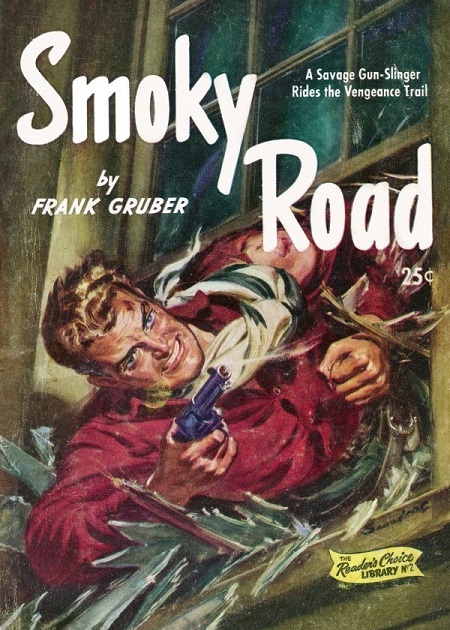
by Norman Saunders
This exciting cover is credited to Norman Saunders, who has been featured many times on this site.

by P.J. Monahan
As you can see on the cover, this is from 1926. Is she supposed to the maid’s twin sister? Or was she once the maid herself? The answers are within.
 Through the Shattered Lens