
by Charles Copeland
This is from 1959. Try to figure out who is the teacher and who is the student.
by Charles Copeland
This is from 1959. Try to figure out who is the teacher and who is the student.

by Erin Nicole
This picture was taken at Richland Community College, on a lonely afternoon.

by Mort Kunstler
True Adventures was a pulp magazine that ran from 1955 to 1971. Each issue featured stories about manly men doing manly things and they were all supposedly true. Today, True Adventures not because of the stories but the very pulpy and often very violent covers.
Here, for our adventurous readers, is just a sampling of the covers of True Adventures:

by Basil Gogos

by Doug Rosa

by Earl Norem

by Joe Little

by John Leone

by Norm Eastman

by Robert Schulz

by Victor Olson

by Victor Prezio
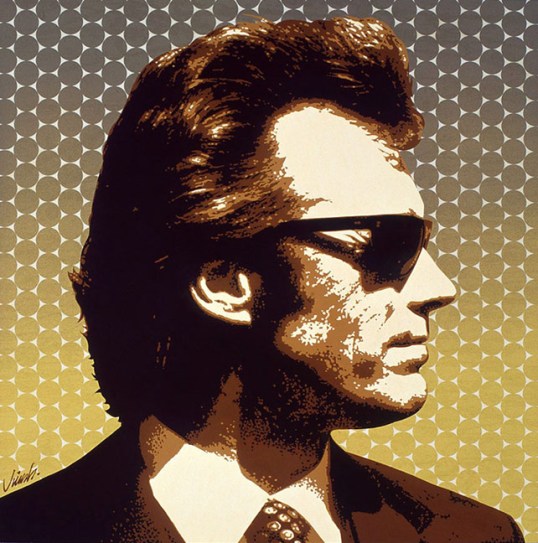
Painting by Jim Blanchard
Happy birthday, Clint Eastwood!
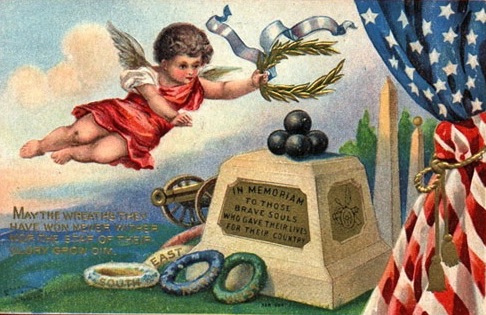
“No duty is more urgent than that of returning thanks.”
— St. Ambrose
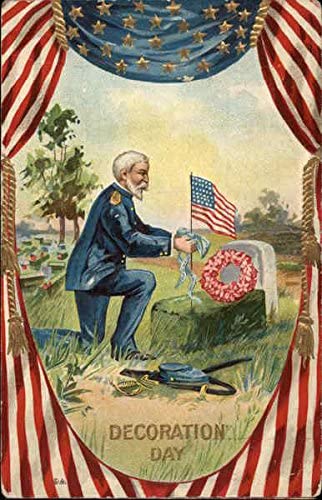
It can be difficult to know how to observe Memorial Day, especially in these times when people are so divided and there are so many voice out there saying that there are no more heroes. For me, though, these two vintage images sum up what Memorial Day is about. It’s not day for celebrating war. It’s a day for honoring those who lost their lives fighting for this country and it’s a day to hope for peace. It’s a day to give thanks and to pledge that their sacrifice will not have been in vain.

by Jacob T. Secrest
Thank you for your service.

by Erin Nicole
This is the JFK Memorial in downtown Dallas.
Hard Case Crime publishes novels about crime. Some of them are reprints of classics from pulp era. Others are new works by authors paying homage to hard-boiled detective and crime stories of the 50s and 60s. The retro covers also pay homage to the pulp era. Some of the best cover artists around — from Robert McGinnis to Glenn Orbik to Chuck Pyle and many others — have done covers for Hard Case Crime and I absolutely love them. There are many people who buy these books strictly for the covers. I’m one of them.
I’ve shared several Hard Case Crime covers on this site. Here are a few of the more recent covers to come out of Hard Case Crime:

by Claudia Caranfa

by Claudia Caranfa

by Claudia Caranfa

by Paul Mann

by Paul Mann

by Ron Lesser

by J. Oval
Having a war anywhere is bad enough without having it in the sun. This is a really good cover, from the mysterious J. Oval.
Born in Pennsylvania but raised in California and Oregon, Stockton Mulford lost his right eye in a childhood accident but he never lost his ambition to become an artist. With a glass eye and a painter’s easel that was given to him by his father, Mulford worked part-time as a bank clerk while taking art classes during the weekend. In 1907, deciding that it was all or nothing, Mulford moved to New York City and devoted himself full time to art.
After studying at the Art Students League, Mulford found quick success as an illustrator and become one of the busier artists of the pulp era. After he retired from illustrating in 1946, he moved to Connecticut and, at the age of 60, he became an expert cabinet maker and found a second career restoring furniture for local museums. He eventually passed away in 1960, at the age of seventy-four.
Below is just a small sampling of Stockton Mulford’s work:


 Through the Shattered Lens