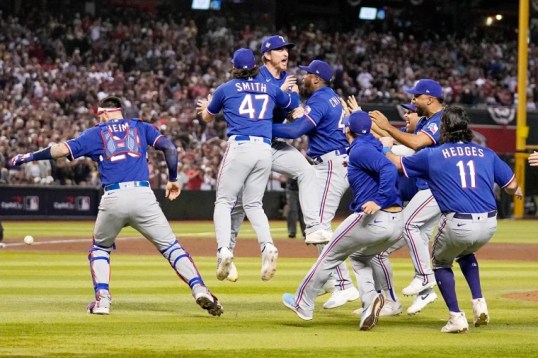
Spring Training is nearly over. Opening Day is March 26th. That’s just two more days! Some people have the Super Bowl. Some people have the Oscars. I’ve got baseball and, even more importantly, I’ve got the Rangers Sometimes, the Rangers break my heart. Not every season has been great. But I can still remember how happy I was when they won their first World Series in 2023. No one gave them much of a chance but the Rangers proved all the doubters wrong. I hope they’ll do it again this year.
Whichever team you cheer for, I hope they bring you a lot of happiness over the upcoming months.
“There are no such things as ‘wars between absolute good and absolute evil’ in human history. Instead, there exist wars between one subjective good and another.” — Yang Wen-li
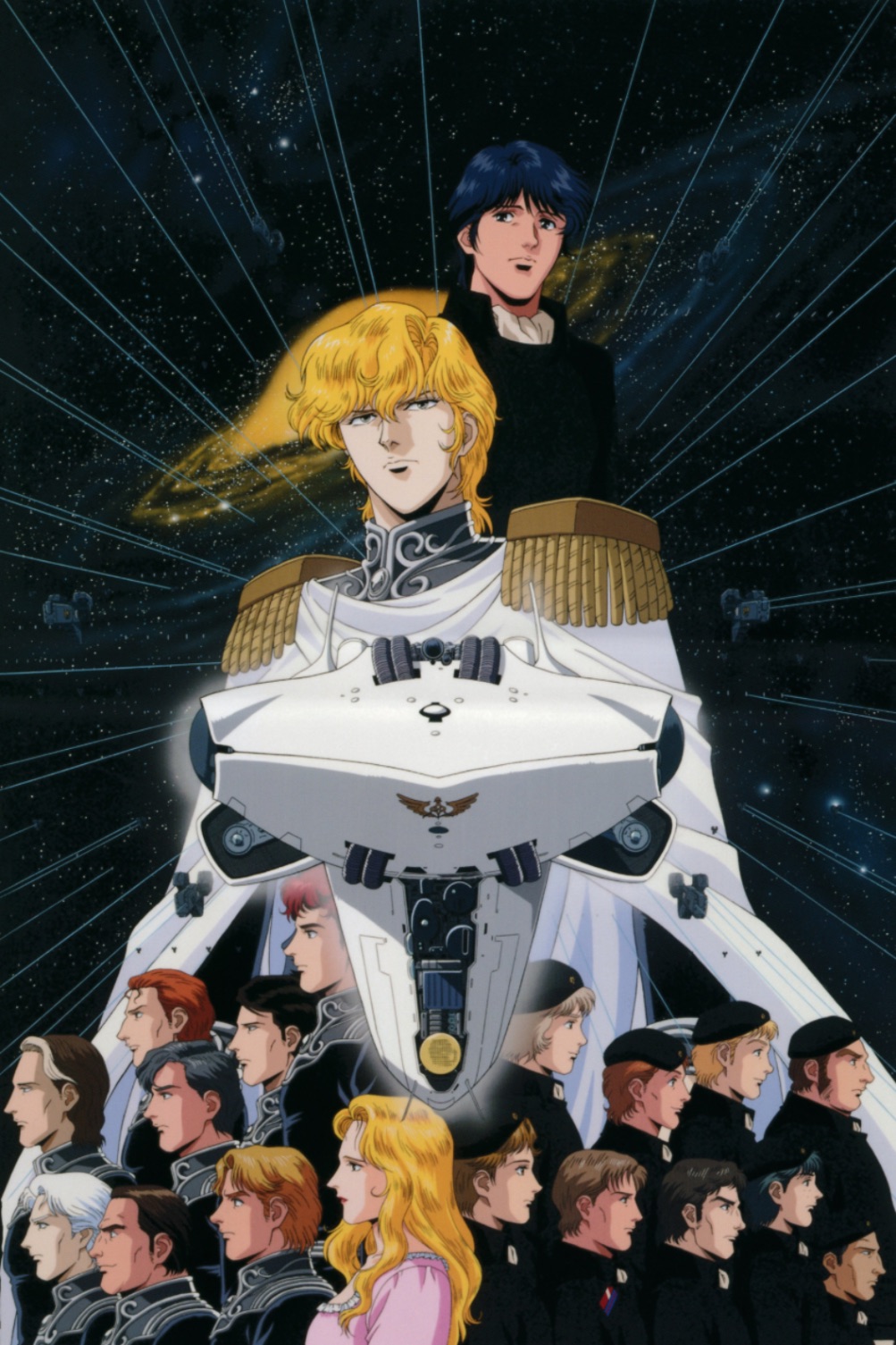
Legend of the Galactic Heroes is an anime that feels like it was built to remind you why the medium can be so powerful, not just as entertainment but as a place to wrestle with big ideas. The original 110‑episode series that ran from 1988 to 1997 is especially important for that reason: it’s long enough and patient enough to show you how war, politics, and history shape entire lives, not just cool power‑ups or final‑boss showdowns. If you’re already a fan of anime, this series is a must‑watch because it proves that the medium doesn’t have to rely on flashy fights or teenage melodrama to hook you; it can do it with strategy, speeches, and the slow, quiet weight of people making terrible choices in the name of “the greater good.” And if you’re someone just getting into anime, it works as a kind of gateway to more serious, adult‑leaning stories that still feel human and emotionally grounded instead of cold or pretentious.
Part of what makes this series so essential is that it doesn’t talk down to its audience. Over 110 episodes, it assumes you’re willing to sit through long debates about democracy, autocracy, and the ethics of war, and it rewards that patience by actually letting those debates matter to the plot. Most mainstream anime might touch on “war is bad” or “freedom is important” in vague, feel‑good terms, but Legend of the Galactic Heroes dives into the details: it shows how democracy can be cowardly, how autocracy can be efficient, and how both systems can produce heroes and monsters at the same time. For fans who love cerebral storytelling, that kind of moral complexity is exactly what’s often missing from shorter, more commercial series. For newcomers, it can be a revelation that anime doesn’t have to be about tsundere romance or overpowered protagonists to feel deeply satisfying.
The series also stands out because of how it handles its two main characters, Reinhard and Yang. Most war epics would turn one of them into a straightforward villain and the other into a noble savior, but the original run refuses that easy split. Instead, it lets you watch both men grow, stumble, and change over years, sometimes seeming inspiring and sometimes genuinely frightening. Reinhard’s rise from a brilliant outsider to a feared ruler is a slow, almost clinical study of how ambition and trauma can merge into something dangerous. Yang’s lazy, bookish personality masks a deep frustration with the same people who glorify him as a hero while voting for politicians he can’t stand. For long‑time fans of the medium, these arcs feel like a masterclass in how to build layered, psychologically rich characters without relying on gimmicks. For someone new to anime, they’re a great introduction to fiction that cares more about nuance than easy answers.
Another reason this series is a must‑watch is its sheer scale and ambition. The 110‑episode run isn’t just “long” for the sake of it; it uses that time to build a galaxy that feels lived‑in and real. You don’t just get two fleets clashing in space; you get senators arguing, spies scheming, soldiers complaining, and civilians living in the shadow of the war. The original series keeps zooming in on ordinary people—low‑rank soldiers, politicians, citizens, even random kids—so you never lose sight of the fact that the “big picture” is made up of a million tiny human stories. For fans already invested in the medium, that sense of depth and worldbuilding is addictive; it feels like peeking into a living timeline instead of a one‑off action romp. For newcomers, it shows that anime can be as epic and historically minded as any live‑action war drama, but with its own visual and narrative language.
Technically, the original 1988–1997 run is modest by today’s standards, but that actually works in its favor. The animation is clean and functional, the space battles are readable rather than flashy, and most of the energy goes into faces, voices, and dialogue. What you lose in spectacle you gain in intimacy: you really feel the tension in a quiet strategy meeting or the weight in a politician’s hesitation before declaring war. The series leans heavily on classical music and long, thoughtful monologues, which can feel like a throwback, but that aesthetic also makes it stand out from most modern anime that chase fast pacing and visual overload. For established fans, this restraint can be refreshing; it’s a reminder that anime doesn’t have to be loud or kinetic to feel emotionally intense. For someone just getting into the medium, it’s a great way to get comfortable with slower, more dialogue‑driven storytelling that still packs an emotional punch.
On a broader level, Legend of the Galactic Heroes is the kind of series that shifts how you see other anime after you finish it. Once you’ve spent so many hours watching admirals argue about the ethics of preemptive strikes or politicians manipulate public opinion, stories that used to feel “weighty” or “serious” might start feeling shallow or emotionally shallow by comparison. The original series doesn’t just entertain you; it trains you to pay attention to how stories talk about power, history, and collective responsibility. For longtime fans, that’s a rare gift: it deepens your appreciation for the medium’s potential. For newcomers, it can be a low‑key entry point into more politically and philosophically ambitious anime without feeling like homework or a lecture.
In short, whether you’re a seasoned anime watcher or someone who’s only just starting to dip into the medium, the original 110‑episode Legend of the Galactic Heroes is worth your time simply because it does things that most anime don’t even try. It trusts the viewer to sit with long, thoughtful conversations, to care about hundreds of characters, and to sit with moral ambiguity instead of rushing to a clean conclusion. It’s not the easiest watch, and it’s definitely not the flashiest, but that’s exactly why it’s one of those series that fans of the medium should experience at least once: it reminds you that anime can be as serious, as sweeping, and as emotionally rich as the best novels and films out there.
In honor of the birthday of Steve McQueen, today’s song of the day comes from his 1968 film, Bullitt. Composed Lala Schifrin later went on to do the score for another film about a California detective with his own way of doing things, Dirty Harry.
In honor of the birthday of actor Steve McQueen, the true epitome of all things cool, here is the famous and trend-setting chase scene from 1968’s Bullitt, featuring McQueen behind the wheel and doing his own stunts on the streets of San Francisco.
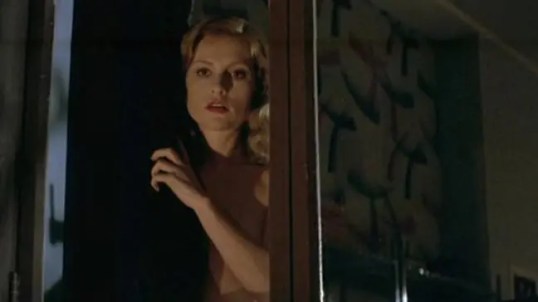
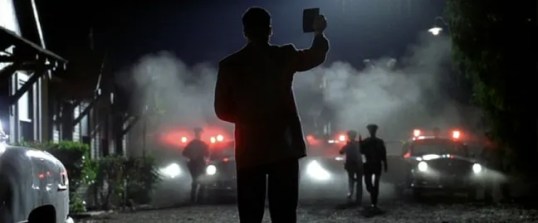
4 Or More Shots From 4 Or More Films is just what it says it is, 4 shots from 4 of our favorite films. As opposed to the reviews and recaps that we usually post, 4 Shots From 4 Films lets the visuals do the talking!
Today, in honor the birthday of the late great Curtis Hanson, it’s time for….
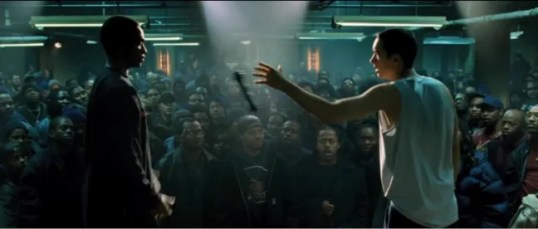
4 Shots From 4 Curtis Hanson Films
The Bedroom Window (1987, dir by Curtis Hanson, DP: Gilbert Taylor)
L.A. Confidential (1997, dir by Curtis Hanson, DP: Dante Spinotti)
Wonder Boys (2000, dir by Curtis Hanson, DP: Dante Spinotti)
8 Mile (2002, dir by Curtis Hanson, DP: Rodrigo Prieto)


 Through the Shattered Lens