Comics As Unresolved Labyrinth : Bruce Zeines’ “Life Out Of Sequence”


Confession time : the title of this review isn’t mine. But it sure is good, so I appropriated it — fortunately, from the very book we’re here to take a look at, so I needn’t feel too terribly guilty. And, in truth, the notion of graphic sequential storytelling as an “unresolved labyrinth” is only one of many that stuck with me long after I closed the covers of cartoonist Bruce Zeines’ 2021 self-published opus on the nature of very medium he’s utilizing, Life Out Of Sequence. Time, spatiality, the unique properties and possibilities that a blank page to be populated by juxtaposed words and images offers — Zeines is equally haunted and fascinated by all these things, and so the subtitle of this, the second volume in his “Musings” series, is very apropos indeed : “A Personal Exploration Of Sequential Art.”

I’m tempted to be glib here and say that Zeines accomplishes more in a standard-format (and standard-length) comic book than Scott McCloud did in a “doorstop” graphic novel, but in truth this is no “primer” on the medium a la Understanding Comics, nor is it a de facto “how-to” guide for aspiring cartoonists to take their cues from. The word “Personal” in that subtitle looms large here, as this is Zeines feeling his own way forward through his creative process, and commenting upon it as he does so — not so much a lecture, then, as it is a mapping out of territory that is ever fresh, ever new, ever confounding, ever expansive. Did I just say it was a map? Maybe more like an atlas — but a decidedly theoretical one.

What’s not at all theoretical but is, rather, concrete reality is the power of Zeines’ intensely-rendered and almost obsessively-detailed illustration : he fills every scintilla of space with imaginatively-conveyed visual information that somehow establishes, and subsequently sustains, an incredible naturalistic fluidity in spite of its admittedly crowded-at-first-glance appearance : it’s a lot to take in, sure, but the act of doing so is thrilling, immersive, and never less than consequential. Zeines doesn’t waste a line or a brush stroke any more than he wastes a conceptual thread or a thematic beat — this is story and art both with a purpose and related for a purpose, and while those may seem like they should always be one and the same thing, a masterfully-articulated work such as this makes you realize how often one or the other is either serving a subservient role or, even worse, absent altogether. Not so here — this is a cartoonist at the absolute height of his powers grappling with how to most effectively use them. And, for the record, succeeding marvelously at doing so.

What’s perhaps most remarkable about all of this, though, is the welcoming, accessible, and downright conversational tone that Zeines maintains throughout — these are some heavy issues he’s tackling for those of us with a personal investment in the comics medium, and he’s approaching them with the near-reverential respect they deserve, without ever crossing the line into pretentious gibberish or faux-erudition. Somebody who’s never picked up a comic could enjoy this quite easily, then, but for those of us who pick up hundreds, if not thousands, of them per year? Well, this is the kind of thing that sends us over the damn moon — a dissertation on the form we love, communicated through the form we love, that deepens our admiration of the form we love.

I realize I’m preaching to the choir here, but there’s nothing a person can’t do with words and pictures — as Zeines himself knows full well. Given that, then, the next thing to figure out is how to use words and pictures to their utmost as a storytelling tool. I think it’s something all comics creators and readers grapple with — sometimes consciously, more often unconsciously — and to see it dealt with from a fresh perspective many actually haven’t considered at all is an unexpected joy. I hope I’m not giving away too much here, but Zines’ central thesis is that life itself — and certainly memory — doesn’t actually have a sequential flow, so arranging a visual story in a way that does? Well, it’s a bigger challenge than it would at first appear.

I’ll tell you what, though : this is an artist who’s more than up to that challenge, and probably any other that you can throw his way. And so I’ll close this review with a challenge to you, the reader : find me a flaw in this comic. Anywhere. Because I sure as hell can’t.

***************************************************************

Life Out Of Sequence is available for $15.00 from Austin English’s Domino Books distro at http://dominobooks.org/lifesequence.html

Also, be sure to check out Bruce Zeines’ website at https://www.theartofbrucezeines.com/
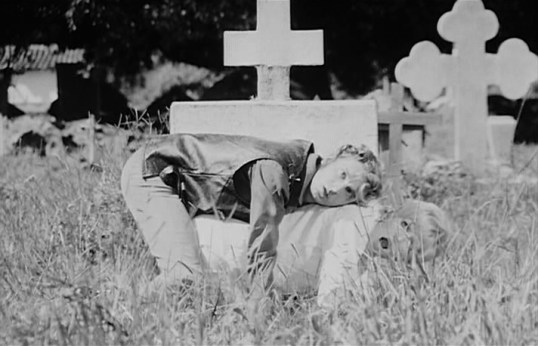
4 Shots From 4 Films: Special Alejandro Jodorowsky Edition


4 Or More Shots From 4 Or More Films is just what it says it is, 4 shots from 4 of our favorite films. As opposed to the reviews and recaps that we usually post, 4 Shots From 4 Films lets the visuals do the talking!

Today, the Shattered Lens wishes a happy birthday to master of surrealism and the man who nearly turned Dune into a film before either David Lynch or Denis Villeneuve, Alejandro Jodorowsky!  It’s time for….

4 Shots From 4 Alejandro Jodorowsky Films

Fando y Lis (1968, dir by Alejandro Jodorowsky, DP: Rafael Corkidi and Antonio Reynoso)

El Topo (1970, dir by Alejandro Jodorowsky, DP: Rafael Corkidi)

The Holy Mountain (1973, dir by Alejandro Jodorowsky, DP: Rafael Corkidi)

Santa Sangre (1989, dir by Alejandro Jodorwosky, DP: Daniele Nannuzzi)

Music Video of the Day: How Long by Tove Lo (2022, dir by KENTEN)


Today’s music video of the day is another emotional music video from Tove Lo.  This is what I like whenever I watch a move about …. well, a movie about anything.  It’s not that hard to make me cry.

Enjoy!

Try to play it cool
I like you
Have me in your hand
Just like that
Wish I never told ya
It’s killing me to wonder

You give, you give me

Empty promises of love
You’re an honest man when you’re drunk
Wish I never asked ya
But it’s killing me to wonder
How long
How long

How long have you loved another
While I’m dreaming of us together
She got the best of you
Part of me always knew
How long have you tried to end it
While I’m blaming myself to fix it
How long
How long

Listen to my fears
Not my friends
They don’t tell the truth
They like you
Wish I never told ya (but I told ya)
It’s killing me to wonder (I wonder)

You give, you give me

Empty promises of love
You’re an honest man when you’re drunk
Wish I never asked ya
But it’s killing me to wonder
How long
How long

How long have you loved another
While I’m dreaming of us together
She got the best of you
Part of me always knew
How long have you tried to end it
While I’m blaming myself to fix it
How long
How long
I need to know how
How long have you loved another
While I’m dreaming of us together
How long

I know love isn’t fair
I know the heart wants what it wants
There’s no way to prepare
For burning brutal rejection
I know it takes some time
To feel the pain of loosing a lie

How long have you loved another
While I’m dreaming of us together
She got the best of you
Part of me always knew
How long have you tried to end it
While I’m blaming myself to fix it
How long
How long
I need to know how
How long have you loved another
While I’m dreaming of us together
How long
How long

A Rough Kind Of Magic : Frances Cordelia Beaver’s “On A Cute One”


Can earnestness and heart alone carry a 600-plus-page graphic novel?

It’s a question I’d never thought to ask myself before, but was forced to upon completion of Philadelphia-based cartoonist Frances Cordelia Beaver’s new self-published tome On A Cute One, both because of where and how the book shines and where and how it comes up short. To be clear : what it does well, it does really well, and the ways in which it misses the mark aren’t “deal-breakers” by any stretch, so maybe I’ve answered my own introductory question here already, but nevertheless, let’s dig a bit deeper. After all, this is an ambitious work and has earned the right to be examined closely —

It’s clear right from the copyright indicia here that Beaver is straddling a fine line between memoir and fantasy, in a manner referred to in the literary world as “auto-fiction,” so it’s a given that many of protagonist Cordie’s thoughts, feelings, and experiences are rooted firmly in the artist’s own — but then there’s the whole Gorgon thing she’s got going on so, ya know, expect a fair degree of creative license, as well. Essentially, this is a travelogue relating a cross-country-and-back-again journey Cordie takes on a “Superliner” train (I guess a kind of Amtrak on steroids?), but it’s peppered with flashbacks and reminiscences generally related to her coming out and subsequent process of transition, so in that respect it has some thematic resonances and commonalities with celebrated recent works such as Maia Kobabe’s Gender Queer and L. Nichols’ Flocks — but to Beaver’s credit, she largely eschews delivering a “primer” of sorts on issues relating to the non-binary community in favor of speaking to audiences who may or may not be trans themselves, but at least have a degree of social familiarity with trans individuals. Her narrative starting point, then, is not with early-days gender dysphoria but rather is considerably, for lack of a more readily available term, further down the road. That’s refreshing, as are Beaver’s emotively-articulated points of view on various issues trans folks face, particularly her detailed examination of trans women’s quest for acceptance among cis women, which is a recurring theme here that she deals with in an admirably open, honest, and candid fashion.

In fact, candor in general is something this book certainly doesn’t lack — Beaver’s authorial tone is remarkably frank and has no time for pretense, which is something I think we can all appreciate. What I will say, however, is that she probably could have used the services of an editor here. The pacing of the marrative is generally relaxed and fluid, but every once in awhile she’ll insert a jarring page loaded down with far too much exposition for its own good that puts the breaks on the rhythm of her storytelling, and I also found some of her flashback scenes to be handled a bit — -well, perhaps not so much clumsily as confusedly. There are instances where it’s not really clear at first when something is occurring and again, it seems to me that a pair of editorial eyes could have helped with that.

A couple things worth mentioning vis a vis the always-nebulous “style points” category : a LOT of this book is composed of double-page spreads, and they break right in the middle, as you can see above. Beaver is putting this out via the auspices of Lulu, so there’s probably nothing much that can be done about that, but it’s a shame, because her cartooning is well-thought-out, expressive, quite often imaginative and, when she’s drawing landscapes, flat-out gorgeous. It’s a travesty to see it bisected. One thing more firmly within Beaver’s control that I think lets the side down, though, is her decision to use computer-font lettering. I get it, this is a well and truly homemade project and one only has so much time, but Beaver’s hand lettering (utilized primarily, ironically, when she’s showing Cordie’s phone screen) is superb, and mechanical lettering can’t help but feel sterile and cold, which means in this case that it’s working directly against the otherwise-entirely-heartfelt aesthetics of the book as a whole.

All that being said, perhaps because this is so obviously a labor of love, in some ways I can’t help but find its technical and production “flaws,” as well as some of the overall amateurism on display (there are any number of questionable grammar choices, the monster metaphor at the heart of the narrative is sometimes too oblique for its own good, other times too obvious) to be more than a bit endearing in their own way. I do believe in granting “points for trying,” so while it’s never in doubt that Beaver is clearly “learning on the job,” so to speak, in my estimation that almost always makes for an interesting and exciting ride, even if it’s necessarily a bumpy one. There’s a world of difference between putting it all on the page and pouring your all into a page, and given the choice, I’ll opt for the latter every time — on that most crucial score, this is a book that I can say in all honesty absolutely never fails to deliver.

********************************************************************

On A Cute One is available for $45.50 at https://www.lulu.com/en/us/shop/frances-beaver/on-a-cute-one/paperback/product-685m56.html?page=1&pageSize=4

Check out Frances Cordelia Beaver’s website at https://www.francescordeliabeaver.com/

TV Review: Pam & Tommy 1.5 “Uncle Jim & Aunt Susie in Duluth” (dir by Gwyneth Horder-Payton)


This week’s episode of Pam & Tommy was a definite improvement on last week’s, largely because it didn’t feature Seth Rogen wandering around with a “poor me” expression on his face.  Last week, far too much time was devoted to Rogen’s sad sack portrayal of Reed Gauthier, who the show insists on trying to make a sympathetic character even though he was essentially just a thief who tried to make a lot of money by stealing and then selling someone else’s private sex tape.

Reed was nowhere to be found in this week’s episode.  Instead, the narrative focused on how Pam and Tommy’s sex tape became a national story.  Not surprisingly, it all turned out to be Tommy Lee’s fault.  When the show opens, Jay Leno won’t make jokes about the sex tape because it’s not something that Uncle Jim and Aunt Susie in Duluth have heard about.  The LA Times won’t run a story on it because the editor says that it’s not real news.  With Pam preparing for the opening of Barb Wire and Tommy working on his new album (and very much aware that his label no longer views him or the band as being a top priority), it appears that there’s a chance that Pam and Tommy can ride this out.

But then Bob Guccione the publisher of Penthouse, gets his hands on the tape and Tommy and a bunch of lawyers decide to file a lawsuit to keep him for publishing stills.  Pam has her doubts but Tommy and the lawyers do what they want.  Guccione responds by saying that he had a first amendment right to publish pictures from the sex tape.  The L.A. Times discovers, from the court filings, that the sex tape was stolen from Pam and Tommy and that it’s being sold without their permission.  With the story going national, Jay Leno realizes that Duluth now know all about it.  On top of all that, Pam learns how to use a search engine!

It was a busy episode.  And, in contrast to the nearly hour-long episodes that proceeded it, it was only 32 minutes long.  A half hour is the perfect amount of time to spend with Pam & Tommy.  Spending more than half an hour with them means dealing with the fact that Tommy’s a moron and Pam really does seem to think that she’s going to win an Oscar for Barb Wire.  Spending just 30 minute with them means that both characters get a chance to present their cases without wearing out their welcome.  Sebastian Stan and Lily James both gave good performances in this week’s episode, with Stan portraying Tommy as being a manchild who is in deep denial about the fact that the 80s are over while Lily James captured Pam’s need to try to keep everyone happy.  It’s Pam who instinctively knows the right way to deal with Guccione but she’s ignored by Tommy and his team of lawyers.  As Pam’s publicist puts it, women are taught from an early age to always say yes and to agree with men, even when they know that the men doesn’t have the slightest idea what they’re talking about.

That said, Pam & Tommy is still definitely a flawed vehicle.  For every moment that works, there’s a moment or a line of dialogue that just tries too hard.  Particularly in the scenes with Jay Leno, Pam & Tommy felt like it was one Nathan Lane cameo away from turning into a Ryan Murphy production.  Five episodes in and the main problem remains that Pam & Tommy continues to struggle to convince the audience that it’s telling a story that needs to be stretched out of over 8 episodes.  If ever a true story was meant to a 90-minute TBS production, this is it.


The Crowded Abyss : Garresh’s “Disco Lavante”


Here’s the thing : on paper, at least, there’s no compelling reason why Scottish cartoonist Garresh’s Disco Lavante (Strangers Publishing, 2022) shouldn’t all make sense. It’s straightforward, uncomplicated, maybe even tidy. We’ve got lost souls endlessly roaming the void that exists beyond the pale courtesy of a good, old-fashioned suicide cult, and finding that — generally speaking — whatever sort of “existence” there is after this one ends probably isn’t all it’s cracked up to be. Kinda like life on Earth, I suppose, only weirder, more oppressive and, if you can believe it, even more pointless. Except —

That might not be what’s going on here at all, even if it is. Or, perhaps more accurately, it’s very likely only part of what’s going on here. Rest assured, however, that my aim here isn’t to confuse you — more to honestly convey the confusion that this nicely-done oversized comic ‘zine stirred up in me. Which, for the record, is no complaint — regular readers know I enjoy a challenge and don’t mind spending a fair amount of time wrapping my head around something. But the possibilities here are are, in spite of what the previous paragraph would have you believe, bordering on the myriad, and the same is true of the number of considered analyses one can can derive from the book . This is one of those things you’re better off, at the risk of sounding glib, feeling your way through.

Be aware, though, that the process of doing so is necessarily a pretty fucking grim one. “Feel-good” material this is not. It’s not without its humorous moments and instances, that’s for sure, but it’s “gallows humor” all the way, and to the extent that it sustains a cohesive tone, that tone is decidedly nihilistic — for the most part, at any rate. Garresh seems to be positing that there is, in fact, a way out of (or should that be beyond?) the idea that all is lost, but he certainly takes his time getting to that conclusion, and seems a bit ambivalent about it once he (sort of) arrives at it.

Of course, I could have it all wrong — I told you there were any number of ways of looking at this comic, and another perfectly plausible one is that what I take to be an afterlife is actually a post-apocalyptic wasteland that’s entirely real (as in, it exists on the physical plane) populated by displaced refugees “overseen” (if that’s the term we want to use) by a Rip Van Winkle-type who is viewed in undeservedly messianic terms by the masses. It’s hard to say for sure — but again, you might find it as simple to interpret as I have this strange, lingering feeling that it’s meant to be. Hell, I’d go so far as to say that I earnestly hope you do.

What’s not up for debate is the quality of Garresh’s cartooning — dark, evocative, nuanced, foreboding, and textured in the extreme, I may be having a hard time processing everything he’s communicating narratively, but visually his work rings loud, clear, and true. He’s definitely mining some heavy — and heady — conceptual territory, but his ravishingly grotesque artwork functions as a tonal tour guide that leads you through some uncomfortable (to put it mildly) places in such a way that you can’t help but give it your full and undivided admiration. You may not want to go where he’s leading you, but you sure won’t want to look away once you’re on the path — even if it would probably do your overall mental and emotional disposition some good to cut tail and run, trust me when I say that simply isn’t an option here.

So — where does that leave us? Hoo-boy, I wish I knew. But given that I freely admit I was in over my head from the start here, I can’t claim to be any more flummoxed by this book by the time I reached the end of it, so there’s that. I loved the art, obviously. And I appreciate the raw power of Garresh’s visuals and how they convey precisely the sort of atmosphere that’s required for this comic to work — which is an admission that it really does work. And Eddie Raymond at Strangers is to be applauded for publishing something this challenging and, frankly, demanding. But you’re going to want to make sure you approach this knowing full well how relentlessly and unapologetically dark it is. Be prepared for it to stick with you for quite some time — for good, for ill, or for some of both.

***********************************************************

Disco Lavante is available for $10.00 from Strangers Publishing at https://strangerspublishing.com/products/disco-lavante-by-garresh

Also, this review is “brought to you” by my Patreon site, where I serve up exclusive thrice-weekly rants and ramblings on the worlds of comics, films, television, literature, and politics for as little as a dollar a month. Subscribing is the best way to support my continuing work, so I’d be very appreciative indeed if you’d take a moment to give it a look by directing your kind attention to https://www.patreon.com/fourcolorapocalypse

International Film Review: How I Fell In Love With A Gangster (dir by Maciej Kawulski)


For as long as I can remember, I always wanted to fall in love with a gangster.

*cue Layla piano coda*

How I Fell In Love With A Gangster is a three hour Polish film, one that the audience is told is based on the true story of Nikodem ‘Nikos’ Skotarczak (played by Tomasz Wlosok), a career criminal who became a bit of a celebrity in Eastern Europe during the late 80s and 90s.  The film follows Nikos from his unhappy childhood in Poland to his time as one of Eastern Europe’s most notorious car thieves.  He assembles his own crew and, while he does steal a lot of cars, he also seems to be a rather amiable criminal.  He’s not the type of criminal who kills people or who even threatens to kill people.  Instead, he’s just looking to make some extra money, have a good time, and defy anyone who would try to tell him what to do.  He’s the type of criminal who would rather deal with trouble by escaping out a window than by drawing a gun.  At least from the way that he’s portrayed in the film, it’s hard not to like him.  As more than one character points out, he’s hardly a gangster.

Unfortunately, things change.  Nikos does a few stints in prison.  Each time he gets out, he discovers that the underworld had become a bit more violent and that it’s becoming increasingly more difficult to stay loyal to his old business associates.  He may not be a gangster but the people around him definitely are.  The cops are still after him.  Two rival gangs expect him to support them in a gang war.  Nikos just wants to snort cocaine, spend time with his latest wife, and try to be a good father but none of that turns out to be as easy as he was hoping.  Also haunting Nikos is his own belief that his family has been afflicted with a death curse.  Every six years, one of his relatives dies violently.  Eventually, Nikos believes, it will be his turn.

It’s a bit of an odd film.  The story features a framing device, in which a young reporter interviews an older woman who was in love with Nikos.  The majority of the film is told in flashback but, throughout the flashbacks, Nikos’s friends and business partners often break the fourth wall and talk straight to the audience.  Occasionally, this is used to good effect but it still leaves the viewer wondering just who exactly is telling the story.  The film’s 3-hour running time also feels excessive.  For every scene that really works (and there are quite a few), there are other scenes that are a bit too derivative of other gangster films.  As soon as Nikos partnered up with a criminal named Silvio, it was obvious that the audience had reached the part of the film where the clever and honorable criminal mastermind would have to deal with an out-of-control subordinate.

Flaws and all, the film did work for me.  A lot of that was due to Tomasz Wlosok’s charismatic performance as Nikos.  Over the course of the film, Nikos went from being a fun-loving, hyperactive criminal to being a rather sad and defeated middle-aged man, isolated from his former associates and waiting for fate to intervene.  Wlosok was never less than compelling in the role.  Though the soundtrack was occasionally a bit too on-the-nose, the use of Moby’s One Of These Mornings added a certain poignance to the film’s final scenes.  Finally, the film itself looked great, providing a nice contrast between the industrial drabness of communist-controlled Eastern Europe and the neon-infused glory of Nikos’s life as a criminal.  In the end, Nikos emerges as a tragic figure, a man who just can’t understand how or why the underworld has suddenly become such a dangerous and unforgiving place.