‘Museum Hours’ (dir. by Jem Cohen)


“Museum Hours” is an absolutely beautiful and hypnotic film; one that depicts the idea of life as art, and vice versa, while examining how we have become disconnected from this notion and from one another; and how it is through the smaller more intimate details in both life and art that this connection is re-established.
mh

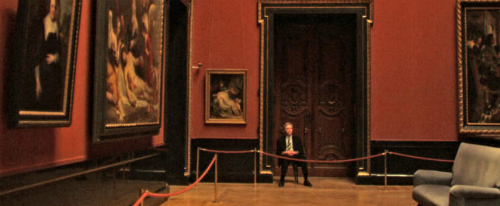
This is explored through a week or so of the life of Johann, a guard at the Kunsthistorisches Art Museum, who enjoys his quiet life amongst the artwork. He spends most of his day pondering the meaning of the paintings around him, as well as ruminating over the visitors who are either transfixed by the images or as he points out “seem to be competing over who can be the most bored”.

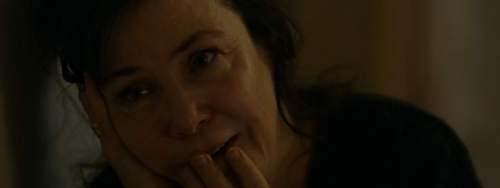
Early in the film Johann befriends a Canadian woman named Anne. She is visiting Vienna to care for her comatose cousin who she hasn’t seen in years. The burden of being in a country she has never been before and tasked with the care of an unconscious cousin she barely knows weighs heavily on her. She appears lost, an outsider disconnected from the people and culture around her.
mh2

Luckily for her Johann agrees to play tour guide and the two spend most of their free time together as Johann brings her around the city. It is in exploring Vienna with Johann, and seeing not the tourist attractions but the small shops, pubs and flea markets that she begins to feel connected again not just with the cities culture but also with her cousin. The joy of her time with Johann awakening memories long lost.

For Johann there is a similar revival. All these old places he once visited in his past seem new again. Not simply because he hasn’t been to them in years but because they have changed in such subtle ways that the experience feels new again. For both of them, it is the small things, the details we usually overlook, that reestablish a connections with family, country and friends.

This is reflected in the works of Pieter Bruegel whose art is the center piece of the film. He was a Dutch artist who made richly detailed paintings in which, as Johann explains, someone might find something new hidden within the frames with each viewing. You could easily say the same thing of “Museum Hours”. For director Jem Cohen, the film is his canvas and the streets, museums and pubs of Vienna his subjects. He plays observer, like a visitor in a museum, finding and capturing the intimacy of a city and its people. Inspired by art and human nature, he paints a richly detailed picture of the world we live, seeing details one might usually miss.
mh3

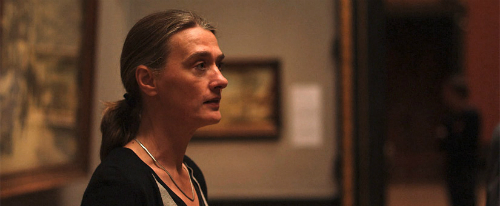
The importance of all this is expressed in one of the best scenes from any film this year as we watch an art scholar lead a group of tourists around the museum’s Bruegel exhibit. Here she points out that although many of his paintings depicted important religious tales, the focal point of the imagery is not the central religious figure but a bystander or object that gives the piece a meaning more important than that central figure. It is a powerful moment. At first glance we might all think we are seeing the same things creating a false sense of inter-connectivity. But ultimately it is how the smaller details affect us that truly matter. It is through this that the connections between life and art are reestablished, in ways that the bigger more seemingly important aspects of life can’t. A great artist can capture this. Cohen has done so here, by making the familiar feel new.

‘Europa Report’ (dir. by Sebastian Cordero)


“Europa Report”, which is available to rent on VOD, is a sci-fi gem that has me conflicted. On one hand, it does what many similar films have not – it delivers a unique story, rooted in actual science, that examines the sacrifices some are willing to make in the name of exploration and discovery…but on the other hand, it is a film weighed down by a format that begins to overshadow the human element and the themes mentioned above.

er

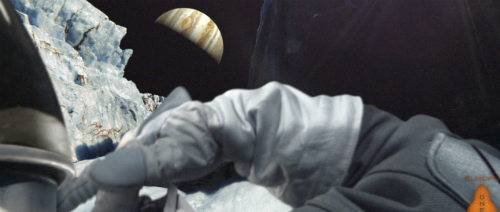
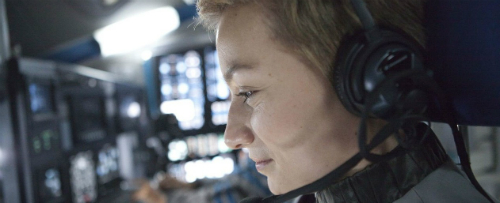
The film follows a crew of astronauts on their two year journey to Europa, an ice covered moon around Jupiter that scientist believe contains an ocean of water right below the surface; and as one scientist in the film points out, where there is water there is also usually life. The possible discovery of that life is the crew’s mission. They are to explore the ocean below the moon’s surface in hopes of finally discovering that we are not alone.

To tell the story the film is played out like a documentary. It consists mostly of archived video footage of the ship’s crew, as well as interviews with the earth based mission control members who organized the operation. It is this format that on one hand is a brilliant way of documenting the crew’s journey, but on the other really hampers the themes and suspense of the film.

er2

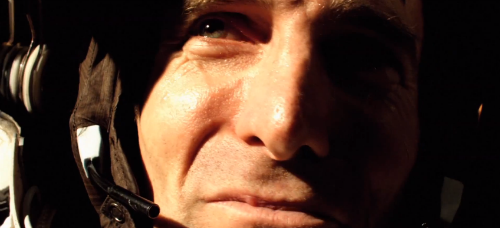
Through these recordings, we get to see the crew bonding and encountering tragedy on their journey to and on Europa. It turns out to be a really wonderful human tale of a group of people who without any hesitation or pretensions are willing to give anything and everything in order to make a discovery that could change the way we view ourselves, life and the universe. This portion of the film is a wonderful thing to behold, especially when their treacherous journey has some truly thrilling moments, including one gut wrenching scene played beautifully by Sharlto Coley. This is made all the better by the fact that unlike other similar sci-fi films (“Sunshine”), it doesn’t cop-out in the end and actually contains a third act that is tonally in tune with everything that comes before it.

er3

Sadly, this documentary style also means that the story is broken up by interviews with scientist and mission control members on earth explaining the crew’s goal. The issue here being that everything these individuals say in their interviews is simply exposition that is already clearly expressed through either the words or action of the mission’s crew in the recordings. So although the video footage and central story and themes are pretty clear cut, the addition of the interviews makes it feel like the filmmakers are trying to beat you over the head with them. It just ends up feeling unnecessary and breaks up the tension which is really disappointing.

Luckily, for me at least, this didn’t ruin my viewing experience. In the end the film still works, with a core story and themes that are still expressed and earned that lead to a brilliant ending; where the result of their mission is made clear and as ridiculous as it initially may seem, everything really comes into perspective and it ends up having an emotional punch and staying power one wouldn’t expect. Because of this I highly recommend this ambitious little gem of a film. If you can look past the interviews, and focus on the central story as I did, then you are in for a real treat.

Ten Years #36: The Mountain Goats


Decade of last.fm scrobbling countdown:
36. The Mountain Goats (846 plays)
Top track (37 plays): Home Again Garden Grove, from We Shall All Be Healed (2004)
Featured track: Fault Lines, from All Hail West Texas (2002)

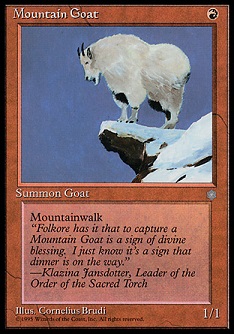
Back in my later high school days, when my early obsession with metal music coexisted with an active participation in games like Magic: The Gathering and Dungeons & Dragons, I remember stumbling across a 1/1 beast in Ice Age that I became bound and determined to name a pseudo-grim heavy metal band after:

I was very briefly disappointed to find that a band had already beaten me to the punch on that one. One of the things that makes John Darnielle an awesome person, though, is the very real possibility that this is no coincidence and he took his band name from M:tG too. (Probably not, given that his first album came out in 1994, but you never know.) This guy has made a guest appearance on an Aesop Rock hip-hop album and written an acoustic love song set to a Marduk black metal concert in the same year; his appreciation for the awkward and out-of-place couples with an above-average awareness of other musical scenes to conjure a constantly befuddling self-image. The first time I saw him live, before I was very aware of his works, I wasn’t sure if I ought to take the dialogue between each track as stand-up comedy or legitimate commentary by someone who was hopelessly socially inept. In retrospect, it was more the former, but the heart-felt sincerity Darnielle packs into everything he says or writes is both a quintessential part of the act and a reflection of who he really is–someone both incredibly aware and controlling of his public image and just a little bit legitimately weird. He has made his claim to fame writing sentimental solo acoustic songs with over-the-top lyrics and awkward subject matters that are simultaneously heart-felt and tongue-in-cheek. He has cultivated his awkwardness into some of the best solo acoustic albums recorded since Bob Dylan.

Lately, The Mountain Goats have evolved from a solo project to more of a full band. Last time I went to their show the audience had expanded from about a hundred to a few thousand, and Darnielle was hamming up the rock-star image with a shit-eating grin on his face the whole time. I absolutely love this guy and his works, and while I can’t say that I’ve kept up with him consistently over the years (his discography is massive), I’ve certainly listened to him enough to rank in my top 50 most played artists of the past decade. Here are the lines to Fault Lines, to give you some idea of his brilliantly bizarre lyrics:

Down here where the heat’s so fine
I’ll drink to your health and you drink to mine
As we try to make the money we scored out in Vegas hold out for a while
We drink vodka from Russia
We get our chocolates from Belgium
We have our strawberries flown in from England
But none of the money we spend seems to do us much good in the end
I got a cracked engine block, both of us do
Yeah the house, the jewels, the Italian race car
They don’t make us feel better about who we are
I got termites in the framework, so do you
Down here where the watermelon grows so sweet
Where I worshiped the ground underneath of your feet
We are experts in the art of frivolous spending
It’s gone on like this for three years I guess
And we’re drunk all the time, and our lives are a mess
And the deathless love we swore to protect with our bodies
is stumbling across its bleak ending
But none of the rage in our eyes
Seems to finish it off where it lies
I got sugar in the fuel lines, both of us do
Yeah the fights and the lies that we both love to tell
Fail to send our love to its reward down in hell
I got pudding for a backbone, and so do you
La la la la! Hey hey!