Review: Ghost Bath – Moonlover


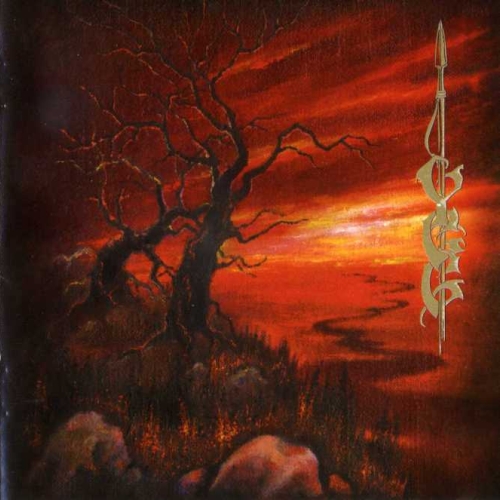
Gimmicks don’t always work out as intended. When I heard that Ghost Bath were not, as they once claimed, Chinamen from Chongqing Municipality, but rather well-mustached American hipsters, I believe my first question was “who?” But if this band’s efforts to fool fans before they actually had any comes off a bit less clever than stupid, my negative points end there. Moonlover is a pretty interesting work from its cover all the way to the closing track. Hailing from the far more obscure and frostbitten wasteland of North Dakota, Ghost Bath have forged a really solid sophomore LP that should stand among the better metal albums we hear this year.

https://www.youtube.com/watch?v=JEIitknNeSQ

Track: “Golden Number

After a brief, haunting intro track that definitely lends credence to their name, Moonlover makes an awkward but forgivable transition into a really uplifting number that has everyone on the internet comparing them to Deafheaven. With one of those explosions of emotional, half-heartbroken half-triumphant post-black metal glory that sounds more familiar every year, followed by a kind of punk lick underlined by passionate, poppy drumming straight off Amesoeurs’ Ruines Humaines and unearthly vocal shrieks, “Golden Number” is certainly in line with the trend of the day. It kind of feels like someone drug Woods of Desolation out of their basement and shoved them into a top-notch recording studio, and yes, the comparisons to Sunbather have their merit too. But if Ghost Bath are not necessarily pioneers, they are definitely refining the machine.

Much like post-rock, where you had a whole bunch of totally distinct bands making waves while everyone else ripped off Mono–and we could hardly complain about that–post-black metal is definitely developing a “standard” sound. “Golden Number” is that sound to a T, and I absolutely love the clarity with which Ghost Bath pull it off. This is a genre born of static noise. It was the realization that you could invoke a lot of emotion by hiding something pretty in an aural cesspool that really kicked off the scene, and even Deafheaven’s “Dream House”, for all its ability to swoon foreign audiences, was really heavily distorted. The noise carried the passion, but it was also limiting. Moonlover is a surprisingly clean album, and because of it the band can do subtle things that I don’t often hear. The tremolo at the beginning of “Golden Number”, for instance, is complemented by a second, barely audible guitar that’s tapping instead of picking. Maybe post-bm has gone that route before, but if so I never noticed it. The clarity on this song, at least relative to its genre, allows me to detect these things, and the end product feels so much more full of life for it.

“Ghost Number” ends with two minutes of piano, and “Happyhouse” picks the metal back up with a totally different feel from the song before it. Three minutes of melancholy plodding lead into a fresh vision of that ghostly guitar we heard in the intro track, and Dennis Mikula treats us to more of his otherworldly screams. Amesoeurs again comes to mind, and I have to believe Neige was an inspiration on this band in more ways than one, but to me Mikula’s vocals sound most reminiscent of Ygg, a short-lived but brilliant Ukrainian trio featuring former members of Nokturnal Mortum and Helg from Khors. “Happyhouse” erupts into black metal for only a passing burst of intensity before returning to its moody plod. Post-rock guitar ultimately defines the song’s direction, while Mikula’s outstanding vocal performance brings the depth. “Happyhouse” could be a cookie-cutter bore, but the band’s keen execution and knack for making their short repeated phrases consistently catchy turns it into something I can really embrace.

10 minutes go by before you hear another ounce of metal, but I would hardly call it a wait. “Beneath the Shade Tree” and “The Silver Flower pt. 1” are both dreamy guitar-driven visions of forests and streams, feeling perhaps a cross between Agalloch and Alcest. The nature effects on the latter track especially brought to mind the intro and outro to Alcest’s “Le Secret”, though I’m sure you could name a dozen other bands that might have played an influential hand here. The origins are quite irrelevant; these two songs only beg identification because they are so vivid and beautiful. The sound is ultimately the band’s own.

https://www.youtube.com/watch?v=Sasl16Nm4y0

Track: “The Silver Flower pt. 2

When Moonlover‘s heavier half does return, it feels infused with the spirit of the instrumental tracks before it. “The Silver Flower pt. 2” floats along with no edge to speak of beyond the first minute, drifting on the dream that came before. If it weren’t for Mikula’s persistently tormented vocals–a bit out of place now, I must admit–it could pass as a moody but up-tempo rock song. The style feels strikingly familiar, yet I can’t put a finger on it. It’s sort of equivalent to how Katatonia were playing around with the metal sounds of their day in the late 90s, and it calls the whole “black metal” label for this band into question. Moonlover incorporates so much more, riding a dozen different stylistic approaches to take us on a journey. We started out with a burst of passion–a sense of fulfillment and life–on “Golden Number”, then road down a path into depression with “Happyhouse”. The commune with nature in “Beneath the Shade Tree” and “The Silver Flower pt. 1” revitalizes, moving the album from positive and negative extremes to an even-keel, smooth ride on “The Silver Flower pt. 2”. The final track, “Death and the Maiden”, sort of brings us around in a circle. The equilibrium of “pt. 2” picks up its pace here, growing in excitement until the return of a black metal sound breaks it. We’re back to highs and lows, and we end on the latter. The album trickles out in a dark depressing grind back into the haunting sounds of the introduction, and that opening melody repeats, now made even more ghostly through a synth whistling tone.

I like it. Moonlover feels like a complete package, flushing out a musical narrative that consistently develops from track to track. It might not match up precisely to the picture it painted in my mind, but a progression is definitely there. Ghost Bath refuse to restrict themselves to one genre, incorporating a wide array of styles into a really coherent whole. The drums are tight, the guitarists can pull off some neat noodling but know when to keep it simple, and the album is book-ended by its two best tracks. I don’t think it would have hurt Dennis Mikula to chill out on the screaming for a bit on “The Silver Flower pt. 2”, but over all I love his vocals. There’s not much I can complain about. And since I want to start making a point to link where you can purchase the albums I ramble about: go adopt a moon on Bandcamp.
My Top 15 Metal Albums of 2011


The years I most actively indulge my musical interests are the ones I find most difficult to wrap up in any sort of nice cohesive summary. December always begins with a feeling that I’ve really built up a solid basis on which to rate the best albums of the year, and it tends to end with the realization that I’ve really only heard a minute fraction of what’s out there. I’m going to limit this to my top 15. Anything beyond that is just too arbitrary–the long list of new albums I’ve still yet to hear will ultimately reconfigure it beyond recognition.

15. Thantifaxath – Thantifaxath EP
Thantifaxath’s debut EP might only be 15 minutes long, but that was more than enough to place it high on my charts. The whole emerging post/prog-bm sound has been largely a product of bands with the resources to refine it, and it’s quite refreshing to hear sounds reminiscent of recent Enslaved without any of the studio gloss. That, and I get a sort of B-side outer space horror vibe from it that’s not so easy to come by. (Recommended track: Violently Expanding Nothing)

14. Craft – Void
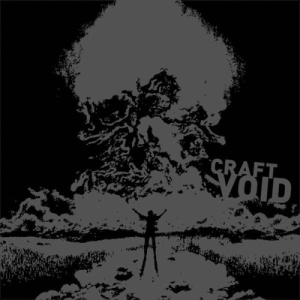
This is the straight-up, no bullshit black metal album of the year. It doesn’t try anything fancy or original. It’s just good solid mid-tempo bm–brutal, evil, conjuring, and unforgiving. Hail Satan etc. (Recommended track: any of them)

13. Turisas – Stand Up and Fight
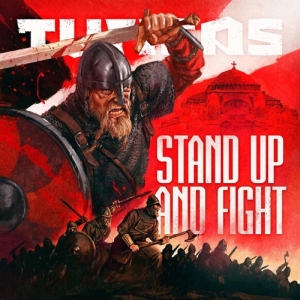
Stand Up and Fight doesn’t hold a candle to The Varangian Way, but I never really expected it to. As a follow-up to one of my all-time favorite albums, it does a solid job of maintaining that immensely epic, triumphal sound they landed on in 2007. It lacks their previous work’s continuity, both in quality and in theme, but it’s still packed with astoundingly vivid imagery and exciting theatrics that render it almost more of a movie than an album. (Recommended tracks: Venetoi! Prasinoi!, Hunting Pirates)

12. Endstille – Infektion 1813
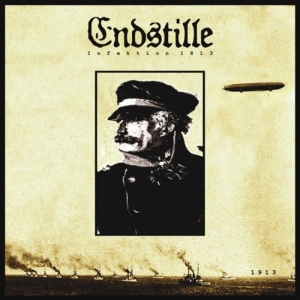
Swedish-style black metal seldom does much for me, and it’s hard to describe just what appeals to me so much about Germany’s Endstille. But just as Verführer caught me by pleasant surprise two years ago, Infektion 1813 managed to captivate me in spite of all expectations to the contrary. Like Marduk (the only other band of the sort that occasionally impresses me), they stick to themes of modern warfare, but Endstille’s musical artillery bombardments carry a sense of something sinister that Marduk lacks. The dark side of human nature Endstille explores isn’t shrouded in enticing mystery–it’s something so thoroughly historically validated that we’d rather just pretend it doesn’t exist at all. The final track, Völkerschlächter, is one of the best songs of the year. Stylistically subdued, it pummels the listener instead with a long list of political and military leaders responsible for mass murder, named in a thick German accent over a seven second riff that’s repeated for 11 minutes. It’s a brutal realization that the sensations black metal tends to arouse are quite real and quite deplorable, and it will leave you feeling a little sick inside.

11. Nekrogoblikon – Stench
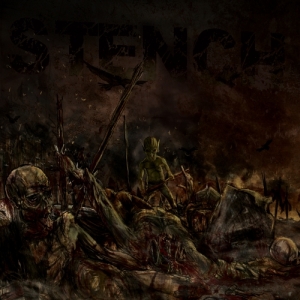
Nekrogoblikon released a folk metal parody album in 2006 that was good for laughs and really nothing else. The music was pretty awful, but that was intentional. It was a joke, with no presumption to be any good as anything but a joke. They’re the last band on earth I ever expected, a full six years after the fact, to pop back up with a really fucking solid sound. But Stench is good. I mean, Stench is really good. It’s still comical in theme, but the music has been refined beyond measure. Quirky, cheesy guitar and keyboard doodles have become vivid images of little flesh-eating gremlins dancing around your feet, whiny mock-vocals have taken the shape of pretty solid Elvenking-esque power metal, pretty much everything about them has grown into a legitimate melo-death and power infused folk metal sound. Don’t get me wrong, it’s still not meant to be taken seriously, but they’re now of Finntroll caliber. (Recommended tracks: Goblin Box, Gallows & Graves, A Feast)

10. Týr – The Lay of Thrym
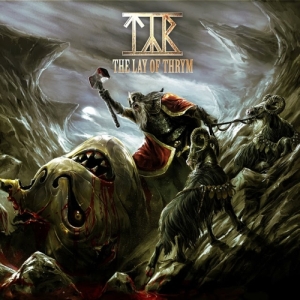
I thought By the Light of the Northern Star was a fairly weak album, and because The Lay of Thrym maintains some of the stylistic changes they underwent then, a part of me keeps wanting to say it can’t be as good as say, Land or Eric the Red. But of all the albums I acquired in 2011, I’ve probably listened to this one the most. Týr have one of the most unique sounds on the market, and it’s thoroughly incapable of ever boring me or growing old. Heri Joensen’s consistently excellent vocal performance alone is enough to make them perpetual year-end contenders. (Recommended track: Hall of Freedom)

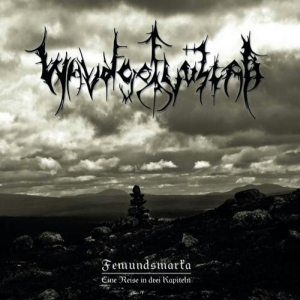
9. Waldgeflüster – Femundsmarka – Eine Reise in drei Kapiteln
This is some of the most endearing black metal I’ve heard in a while. Intended as a musical reminiscence of Winterherz’ journey through Femundsmarka National Park in Scandinavia, it’s a beautiful glorification of nature that takes some of the best accomplishments of Drudkh and Agalloch and adds to them a very uplifting vibe. Someone made an 8 minute compilation of the album on youtube which does a good job at previewing without revealing all of its finest moments. (Recommended track: Kapitel I: Seenland)

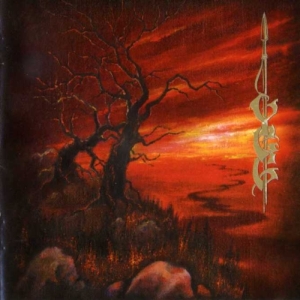
8. Ygg – Ygg
Ygg is an hour-long trance, evoking ancient gods in a way that only Slavic metal can. You could probably pick apart the music and discover plenty of flaws, but that would miss the point. I think that a lot of these Ukrainian and Russian bands are true believers, and that the purpose of music like this is more to create an experience in the listener than to be good for its own sake. This is a spiritual journey, and if it fails to move you as such it will probably come off as rather repetitive and generic, but I find it impressively effective. (Recommended track: Ygg)

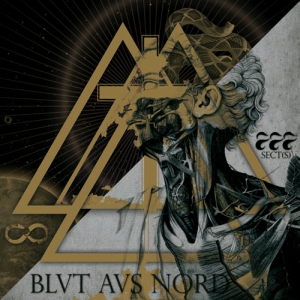
7. Blut aus Nord – 777: Sect(s)
I don’t know where to put this really. I could just as easily have labeled it second best album of the year. Dropping it down to 7th might seem a little unjustified, but eh, this is a list of my top albums, not of the “best” albums of the year. There’s no denying Sect(s) credit as a brilliant masterpiece, but it’s an ode to madness. I mean, this music scares the shit out of me, and if that means it’s accomplished something no other album has, that also means I don’t particularly “enjoy” listening to it. (Recommended track: Epitome I)

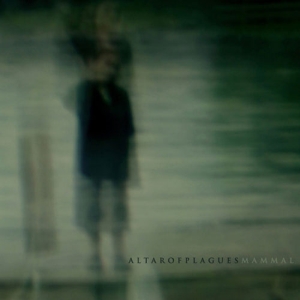
6. Altar of Plagues – Mammal
I never did listen to Mammal as actively as I would have liked. I never sat down and gave it my undivided attention from start to finish. But it’s served as a background piece for many late nights at work. It zones me in–stimulates my senses without ever distracting them from the task at hand. I don’t feel like I can really say much about what makes it great, because that’s not the sort of thing I’ve considered while listening to it, but I absolutely love it. It’s a big improvement from White Tomb, which was itself an excellent album, and more so than most other releases of 2011 I will probably continue to listen to it frequently in years to come. (Recommended track: Neptune is Dead)

5. Primordial – Redemption at the Puritan’s Hand (track: No Grave Deep Enough)
Redemption at the Puritan’s Hand is by no means perfect. It’s got a few sub-par tracks detracting from the full start to finish experience, but when it’s at its best all else can be easily forgiven. Call it folk metal or call it black metal, whichever you prefer, but first and foremost call it Irish, with every good thing that might entail. The vocals are outstanding, the music rocks out in folk fashion without ever relenting from its metal force, and while the lyrics don’t always make sense, they always hit like a fucking truck. Where they do all come together, delivered with Nemtheanga’s vast and desperate bellows, the result is overwhelming. O Death, where are your teeth that gnaw on the bones of fabled men? O Death, where are your claws that haul me from the grave? (Other recommended tracks: The Puritan’s Hand, Death of the Gods)

4. Falconer – Armod (track: Griftefrid)
Prior to 2011 I’d largely written Falconer off as one of those power metal acts that were just a little too cheesy to ever excite me. Maybe it was bad timing. Maybe I just happened to hear them for the first time while Kristoffer Göbel was filling in on vocals. Or maybe Armod is just their magnum opus–a spark of genius they’ve never neared before. Flawless if we ignore the “bonus tracks”, Armod takes that early folk metal sound Vintersorg pioneered with Otyg, merges it perfectly with power metal, and offers up 11 of the most well-written and excellently produced songs of the year. Mathias Blad’s vocals are absolutely phenomenal. (Other recommended tracks: Herr Peder Och Hans Syster)

3. Falkenbach – Tiurida (track: Sunnavend)
A lot of people might voice the legitimate complaint that Tiurida, Vratyas Vakyas’s first studio album in six years, sounds absolutely indistinguishable from his prior four. For me, that’s exactly why it ranks so high. Vakyas landed on a completely unique, instantly recognizable sound which, alongside Bathory, defined viking metal as a genre, and he’s refused to change it one bit. I fell in love with this album ten years ago. (Other recommended tracks: Where His Ravens Fly…)

2. Liturgy – Aesthethica (track: Harmonia)
Yes, Liturgy. It’s immature, childish, and imperfect, but it’s uplifting in a completely new way. No matter how far Hunt-Hendrix might go to embarrass himself and his band mates, behind all of his pompous babble there just might be some truth to it. (Other recommended tracks: True Will)

1. Krallice – Diotima (track: Dust and Light)
More than the album of the year, Diotima is one of the greatest albums ever made. I can’t fathom the amount of skill it must take to perform with the speed and precision that these guys do, but if they battered down a physical barrier to metal in 2008, they finally grasped hold of what lies beyond it in 2011. They claim that the songs on their first three albums were all written at the same time by Mick Barr and Colin Marston, before their self-titled debut. If that’s the case, then it must be the experience of performing together and the creative contributions of Lev Weinstein and Nick McMaster that raised Diotima to a higher level. It’s not just that they’ve improved in every way imaginable; the songs themselves are overwhelming, breathtaking, and chaotic to a degree they’d never before accomplished. Krallice perform an unwieldy monster that took a few albums to thoroughly overcome. Now they’re in complete control, and their absolutely brilliant song-writing can shine through. With the exception of the dubious Litany of Regrets, this is possibly the greatest album I have ever heard. (Other recommended tracks: Inhume, Diotima, Telluric Rings)

Review: Ygg – Ygg


I don’t know if I’m just a big fan of the Ukrainian metal scene so I’m inclined to notice or if that country really is popping out more bands than anywhere else in the world, but it seems like a year doesn’t go by that I can’t talk about a new band, probably from Kharkiv, releasing an impressive debut album. Ygg is comprised of three musicians from other bands you may have heard of–Nokturnal Mortum, Khors, and Святогор/Svyatogor to name a few–but I wouldn’t call it a side project. Members of that scene collaborate to such an extent that there’s next to no musician you can associate with only one act. The influences are thus a little more engrained, and it would be kind of silly for me to describe Ygg as sounding like a mix of other bands; they sound like Ukrainian metal. And they sound awfully good.

…Знаю, Висел Я В Ветвях На Ветру…(…I know, I hung in the branches in the wind…)

The album kicks off with one of the more effective intros I’ve heard in a while. Alone it might incline you to expect a pretty elementary album. Simple ambient synths, the overlapping sounds of wind blowing and waves crashing (or are those rustling leaves?), and a jew’s harp that they don’t so much play as randomly wank on amounts to something anyone could create in one take given a keyboard and a sufficiently grim, frostbitten basement.

What I’ve come to find over the course of a couple listens though is that the rest of the album is persistently faithful to the mood it sets. I wouldn’t have even noticed the continued presence of that wind and water effect buried beneath the distortion of the first metal track if the intro hadn’t brought it to my attention, and the jew’s harp bleeds into the next song as well. Over the course of the remaining six tracks these effects fade to be replaced by others, but in a way that maintains consistency from song to song.

YGG

So they’re not really switching gears here. They’re presenting the same scene as the intro from a metal perspective. The trance-like mix of tremolo chords and a moderate steady beat certainly maintains that particular ambient feel, and it’s executed in a way that should make any Drudkh fan happy.

The other elements are perhaps a little less accessible though. The kind of wavy, kind of bubbly keyboard sound would seem a bit out of place for me if Nokturnal Mortum hadn’t used the exact same thing so effectively on Weltanschauung. There is already precedence for associating it with paganism, so the sort of futuristic vibe I originally got from it isn’t an issue here. I imagine if I hadn’t listened to specifically Weltanschauung so many times before it might throw me for a loop.

The most obviously distinguishing feature of the album, the vocals, also require a little consideration. It’s a style very seldom used, and I imagine it would inevitably come off as pretty cheesy on first encounter. Previous bands that have employed it have tended to aim for an effect of pure hatred or insanity, for which it’s probably better suited. I don’t really think that fits Ygg’s picture though. Their sound focuses on nature and paganism, at least as I hear it. The track/album/band name is itself one of the many traditional names for Odin, and the introductory track’s title approximates the opening line of the Rúnatal, a 13th century recording of Odin’s self-sacrifice to acquire the wisdom of the runes. No, the vocals aren’t trying to express insanity or hatred.

So I’m inclined to hear the singing as a sort of vocal reproduction of the howling wind in the introduction. I don’t know, maybe that’s a stretch, but it’s an interpretation that works for me. It’s a sound that’s a bit harder to pull off, because a less chaotic theme requires more precision. When his voice occasionally sounds a bit too human it’s more of a brief letdown for me than a poignant reminder of music’s theme. But at this point perhaps I sound so absurdly full of myself that I’m doing the album more harm than good. I’ll just stop. Suffice to say I really like this, and I think a lot more went into its conception than just three guys jamming black metal and landing on something nice. It’s a rewarding work that’s fairly complex in its simplicity, and I highly recommend it.