Scenes that I Love: Walter Matthau Talks To Robert Shaw in The Taking of Pelham One Two Three


100 years ago, on this date, Joseph Sargent was born in New Jersey.  Sargent would go on to become one of the busiest directors of the 70s, 80s, and 90s, working in both film and television.  Though he would never receive the type of critical attention as some of his contemporaries, Sargent was a skilled director who specialized in making entertaining, no-nonsense films.  Though his reputation was tarnished a bit by the fourth Jaws film, it should be remembered that Sargent was also responsible for films like Colossus: The Forbin Project, Tribes, Nightmares, and The Taking of Pelham One Two Three.

1974’s The Taking of Pelham One Two Three has come to be recognized as a genre classic.  It’s certainly one of my favorite films about how New Yorkers will be rude to anyone in any circumstances.  You can see an example of this in today’s scene that I love.  Having hijacked a train, Robert Shaw calls in his last of demands and gets a very New York response.

10 Movies For The Week (7/20/25)


Here Comes Shark Week

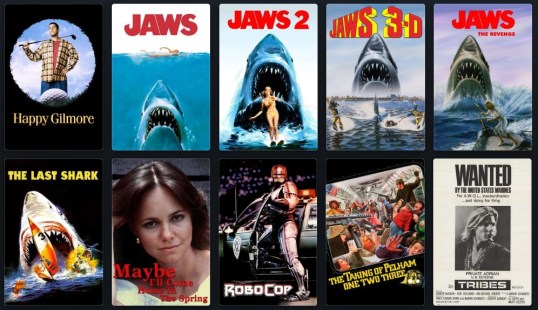
This upcoming week is Shark Week.  At the risk of making the most obvious recommendation ever, Jaws (1975) is currently on Netflix.  I doubt that I need to sell anyone on the film.  Jaws is one of those films that everyone accepts is a classic.  I’ll just say that every time that I watch Jaws, I’m surprised at how well it has held up over the years.  I watched it a few weeks ago while flying to Hawaii and, even when viewed in less than ideal conditions, it still held my attention and made me jump a little.  To be honest, I sometimes miss the Spielberg who directed Jaws.  It’s such a fun and scary movie, all the more so because it was made by a director who clearly lived for film.  Jaws is currently streaming on Netflix.

Jaws 2 (1978) does not get the same respect as the first Jaws, nor does it deserve it.  That said, I can’t help but kind of like Jaws 2.  If the first Jaws has a timeless quality to it, Jaws 2 is proudly a product of the 1970s.  Jaws 2 has some pacing issues but it also features Roy Scheider going totally crazy at the end of the film.  After giving a fairly subdued performance in the first Jaws, Scheider went all out for Jaws 2.  Just listen to him yell at that shark!  Jaws 2 is also on Netflix.

Jaws 3 (1983) is a bit of a guilty pleasure, largely because it was originally filmed in 3-D and the special effects are charmingly bad.  Roy Scheider does not return for this one but Dennis Quaid shows up as Chief Brody’s son.  This film was shot at SeaWorld Orlando but the main message seems to be, “Stay away from Seaworld!”  For the record, I relate to Lea Thompson’s character.  It can be viewed on Netflix!

The makers of Jaws: The Revenge (1987) decided to see what would happen if they made a Jaws film that centered on the least interesting character from the first film.  With Chief Brody having died of a heart attack and one of her sons having been eaten by a shark, Mrs. Brody heads down to the Caribbean and is apparently followed by a shark.  Its dumb but Michael Caine is charming and I’m a completist at heart.  If you’re going to watch one this week, you might as well watch all four!  Jaws: The Revenge is on Netflix.

Great White (1981) is an Italian film that was also released under the title The Last Shark.  Directed by Enzo G. Castelleri, Great White was so similar to Jaws that Universal actually sued the filmmakers in an attempt to keep the film from being released in the States.  To me, that’s always seemed like an overreaction.  There were hundreds of Jaws rip-offs released after 1975.  Great White is actually a pretty entertaining film.  James Franciscus and Vic Morrow team up to take on a giant shark.  The shark eats a helicopter.  This film can currently be viewed on YouTube.

In Praise of Joseph Sargent

Jaws: The Revenge was directed by Joseph Sargent.  Sargent would have been a hundred years old on July 22nd.  Sargent was a classic, no-nonsense director who could handle many different genres.  Here’s a few Sargent films that are not Jaws: The Revenge.

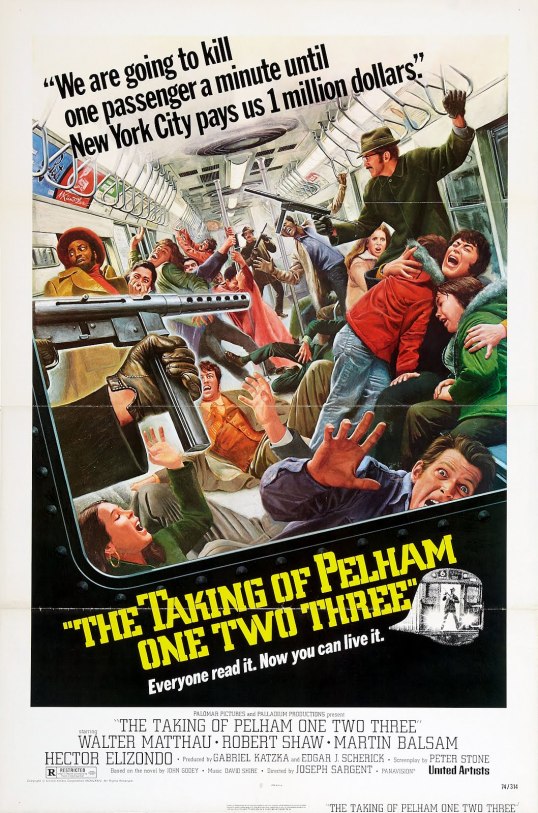
The Taking of Pelham One Two Three (1974) is probably Sargent’s best film.  Four criminals hijack a subway train.  The police spend their time negotiating, arguing, and searching.  It’s certainly my favorite example of the “New Yorkers Will be Rude To Anyone” genre.  Featuring great performances from Walter Matthau, Robert Shaw, Jerry Stiller, and Martin Balsam, this is one of the great New York heist films.  It can be viewed on Tubi.

Maybe I’ll Come Home In The Spring (1972) is a personal favorite of mine, a made-for-television film featuring a young Sally Field as a hippie who returns home and David Carradine as her controlling boyfriend.  This is a lowkey but effective look at life in the suburbs and it features an excellent performance from Sally Field.  It can be viewed on Tubi.

Tribes (1970) features Jan-Michael Vincent as a peace-loving hippie who is drafted and Darren McGavin as the drill sergeant who tries to turn him into a soldier.  Jan-Michael Vincent is absolutely gorgeous in this film.  It can be viewed on YouTube.

Odds and Ends

Paul Verhoeven celebrated a birthday a few days ago.  The original (and still the best) Robocop (1987) is available on Tubi.  Much like Jaws, it’s a film that has stood the test of time and survived countless imitations.

Finally, with the sequel due to be released on the 25th, this week is a great time to amuse yourself with the original Happy Gilmore (1996)!  I love this film and I make no apologies for it.  Bob Barker beating up Adam Sandler?  Seriously, how can you not love this film? Personally, I’ve always felt bad for Shooter McGavin.  Making him hit that ball off of Richard Kiel’s foot?  Totally unfair!  Happy Gilmore is streaming on Netflix.

Click here for last week’s movies!
 

Live Tweet Alert: Join #FridayNightFlix For The Taking Of Pelham One Two Three!


As some of our regular readers undoubtedly know, I am involved in a few weekly live tweets on Twitter and Mastodon.  I host #FridayNightFlix every Friday, I co-host #ScarySocial on Saturday, and I am one of the five hosts of #MondayActionMovie!  Every week, we get together.  We watch a movie.  We tweet our way through it.

Tonight, at 10 pm et, Robert Shaw, Walter Matthau, and Martin Balsam star in 1974’s The Taking of Pelham One Two Three!

If you want to join us this Friday, just hop onto twitter, start the movie at 10 pm et, and use the #FridayNightFlix hashtag!  It’s a friendly group and welcoming of newcomers so don’t be shy.

The Taking of Pelham One Two Three is available on Prime!  See you there!

Scenes that I Love: Walter Matthau Talks To Robert Shaw in The Taking of Pelham One Two Three


98 years ago, on this date, Joseph Sargent was born in New Jersey.  Sargent would go on to become one of the busiest directors of the 70s, 80s, and 90s, working in both film and television.  Though he would never receive the type of critical attention as some of his contemporaries, Sargent was a skilled director who specialized in making entertaining, no-nonsense films.  Though his reputation was tarnished a bit by the fourth Jaws film, it should be remembered that Sargent was also responsible for films like Colossus: The Forbin Project, Tribes, Nightmares, and The Taking of Pelham One Two Three.

1974’s The Taking of Pelham One Two Three has come to be recognized as a genre classic.  It’s certainly one of my favorite films about how New Yorkers will be rude to anyone in any circumstances.  You can see an example of this in today’s scene that I love.  Having hijacked a train, Robert Shaw calls in his last of demands and gets a very New York response.

Film Review: The Taking of Pelham One Two Three (dir by Joseph Sargent)


Welcome to New York in the 1970s!  While the intellectuals flock to the latest Woody Allen movie and the wealthy throw radical chic parties in Manhattan and disturbed young men drive taxis at night and pray for a real flood to clear away all the vermin, most of the city’s citizens are just trying to make it through the day.  For many of them, that means spending an hour or two riding the subway.  In some ways, the subway is the great equalizer.  The minute that you sit down on a filthy train car, it doesn’t matter how old you are or how you vote or the color of your skin.  All that matter is finding a way to avoid making eye contact with anyone else.

Four men, all wearing obvious disguised, board the downtown Pelham 1-2-3 train.  They all look suspicious but, this being New York, no one wants to make eye contact.  Everyone just wants to reach their next stop.  The men — who are known as Mr. Blue (Robert Shaw), Mr. Green (Martin Balsam), Mr. Grey (Hector Elizondo), and Mr. Brown (Earl Hindman) — have other plans.  Revealing that they’re armed, they take the 18 passengers of the first car hostage.  Their leader, Mr. Blue, has a simple demand.  He wants a million dollars to be delivered to the car within an hour.  If the money’s late, he will kill one hostage every minute, until he receives what he wants.

While the cold-stricken mayor (Lee Wallace) tries to figure out how to 1) raise a million dollars and 2) handle the situation without losing any potential votes in his reelection campaign, Lt. Zach Garber (Walter Matthau) communicates with Mr. Blue via radio.  With Mr. Blue underground and Zach above ground, the two of them establish a cautious rapport.  Robert Shaw plays Blue as being efficient, polite, but ruthless while Walter Matthau plays Garber with his usual rumpled but intelligent style.  As embodied by Matthau, Garber is New York City in human form while Shaw is perfectly cast as the outsider who, for at least an hour or two, has managed to bring the city to its knees.

Even though the original The Taking of Pelham One Two Three is often described as being a Walter Matthau film or a Robert Shaw film, the film’s main character actually is the city of New York City.  The film portrays the city as being chaotic, angry, and unpredictable but, at the same time, also resilient and strong.  Yes, Garber may spend a lot of time bickering with his co-workers but, in the end, he and Lt. Rico Patrone (Jerry Stiller, another great New York figure) work together to do what has to be done to resolve the situation.  For all the time that’s spent on how Mr. Blue and his compatriots take that train hostage, just as much time is spent focusing on how the police, the politicians, and the Transit Authority react to what’s happened.  Not having any firsthand knowledge of the New York subway system (beyond being told not to use it when I was in NYC a few years ago), I can’t say whether or not the film is realistic but what’s important is that it feels realistic.  Even though the film is full of familiar character actors, it still seems as if you’re just watching a bunch of New Yorkers having a very long day.  Though guns are fired and there is a runway train, The Taking of Pelham One Two Three takes a refreshingly low-key approach to its story.  There’s no huge action set pieces.  The film’s classic final shot hinges not on Garber’s marksmanship but instead on his ability to remember the small details.

The Taking of Pelham One Two Three is one of my favorite heist movies.  It’s well-acted.  It’s got an interesting plot.  It’s got a few moments of unexpected humor.  Robert Shaw is a great (and, at times, almost compelling) villain while Walter Matthau and Jerry Stiller make for a great detective team.  The great Martin Balsam also turns in a wonderful turn and, even though he’s playing a bad guy, it’s hard not to sympathize him.  You need only see his apartment to understand why exactly he felt the city of New York owed him more than it had given him.  Best of all, The Taking of Pelham One Two Tree is a tribute to a great American city.  The Taking of Pelham One Two Three celebrates New York City in all of its rude, messy, and brilliant glory.