Throughout the 2000s, Agalloch unleashed a series of albums that have influenced countless bands across the metal spectrum. Not only did Ashes Against the Grain (2006) play an enormous role in ushering in the era of post-black metal, but Pale Folklore (1999) pioneered the folk metal aesthetic for a nation whose traditional genres stood leagues apart from the metal scene. (It would be another decade before Austin Lunn nailed a metal interpritation of bluegrass.) Most American folk metal bands carry Agalloch’s stamp of influence with them, and why not? Pale Folklore perfectly captures a sense of melancholy mystery that reflects a land whose native sons were slaughtered, leaving their secrets only a faint whisper in the air.
If someone asked me what the most significant metal band of the past decade was, I am not entirely sure which name I would ultimately drop, but the elite circle of finalists would definitely include Agalloch. Pale Folklore (1999) and The Mantle (2002) pretty much defined America’s brand of folk metal, influencing countless bands to come as that global musical movement picked up steam. Ashes Against the Grain (2006) gave us one of the earliest incarnations of post-black metal on record. It might not sound much like what that term conjures to mind today, but in its day it was monumental, and time has not lessened the epic weight of tracks like “Limbs”.
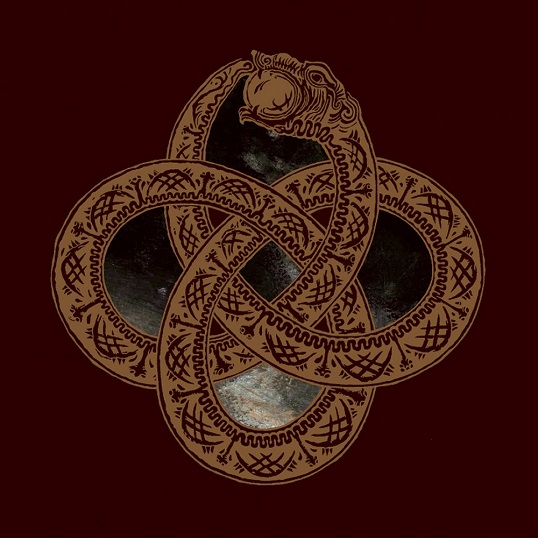
But then there was Marrow of the Spirit (2010). This album was ugly. I can’t think of any better word for it. I won’t go so far as to say it was bad, but it was sufficiently displeasing to my senses that I never engaged it long enough to responsibly draw that conclusion. I didn’t want to listen to it, and it left enough of a bad taste in my mouth that I didn’t really want to listen to The Serpent & the Sphere either.
Agalloch – Birth and Death of the Pillars of Creation, from The Serpent & the Sphere
But I did listen to The Serpent & the Sphere. I listened to it quite a lot, actually, in the background as I worked or played games. It was pushing a dozen on my last.fm charts before I got to thinking “Hey, I ought to give that new Agalloch album a spin and review it.” Wait, have I heard this before? “Birth and Death of the Pillars of Creation” had been lulling me into such a passive state that I must have forgotten I was listening to anything at all by the time its ten minutes ran their course.
It’s the antithesis to Marrow of the Spirit‘s “Into the Painted Grey”, in a way. Where that track summoned in me the instant urge to rip my headset off my ears and put on something else, “Birth and Death of the Pillars of Creation” dug its way into the back of my skull and set its roots where I would barely notice them. It didn’t just get tuned out; it etched itself in my subconscious. And it’s no wonder. On my first really attentive play through, with the volume blaring, I find the track completely enthralling. It’s a brooding neofolk masterpiece best experienced without anticipation. If you listen wondering where it might lead, you are bound to grow impatient. If you just embrace it in the moment and let it consume you, you’re in for a treat.
Agalloch – The Astral Dialogue, from The Serpent & the Sphere
The next track, “Serpens Caput”, is a gorgeous and rather brief acoustic instrumental, and then “The Astral Dialogue” kicks off like Pale Folklore was just released a year ago. The many inattentive listens before had engrained the melody in my mind without my knowing, and the familiarity was so strikingly similar to their 1999 debut that I found myself shocked to realize I had only first heard the song a few months ago. A dubious avant-garde interlude at 3:14 aside, “The Astral Dialogue” is old school Agalloch to a T. At least, I should say, the composition is. The feel is a bit different. Where Pale Folklore was as crisp as a cold winter sunrise, The Serpent & the Sphere has a much fuller sound. (Youtube, as usual, can’t hope to capture it all.)
The Serpent & the Sphere feels a bit frontloaded, with the opening 20 minutes being the most compelling, but “Dark Matter Gods” and “Celestial Effigy” carry on the Pale Folklore mid-tempo folk metal tradition. “Cor Serpentis” offers another fabulous acoustic interlude track much like “Serpens Caput”. I think the album loses steam a bit on “Vales Beyond Dimension”. We get a catchy hook at the beginning and near the end, but the plod in between feels a bit contrived.
Agalloch – Plateau of the Ages, from The Serpent & the Sphere
“Plateau of the Ages”, the final track before a brief acoustic outro, more than makes up for any second thoughts about “Vales Beyond Dimension”. It kicks along in the Pale Folklore tradition we are by now thoroughly reacquainted with until 4:20, when we hit a wall of post-rock. It switches back after a two minute taste of things to come, and we get the real grand post-rock exit from 9:30 to the end. It might not be the most breathtaking use of the genre that you have ever heard, but I love the way Agalloch take it and make it their own, masterfully fusing it to the sound that has defined them for years.
I have actually read a lot of comments suggesting that Agalloch lost their touch on The Serpent & the Sphere. It’s hard for me to see any grounds for that. I suppose it is not much like Ashes Against the Grain really, and not at all like Marrow of the Spirit, but I don’t regard those albums as Agalloch at their best. Ashes might have been their most significant work, but my heart was always for Pale Folklore. The Serpent & the Sphere feels like that album, more than anything they’ve released since it. Oh, it might not be quite as catchy, and it’s certainly not as raw or black metal infused, but it’s a pleasant blast back to the Agalloch I loved most.
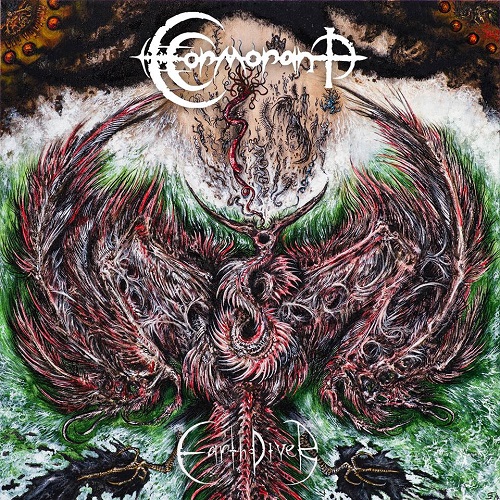
Cormorant are a 4-piece San Francisco Bay band formed in 2007. They released their third studio album, Earth Diver, back in April of this year. Lacking major ties to any other band I have heard of, it’s probably no surprise that they stayed off my radar until now, but this is a band that definitely deserves some attention. Their well-crafted mix of folk, progressive rock, post-rock, and black metal sets a high standard at the cutting edge of metal today. While Earth Diver may possess a fatal flaw, it offers a world of potential that few bands can hope to realize.
Cormorant – Daughter of Void, from Earth Diver
Earth Diver opens with “Eris”, a two and a half minute instrumental folk guitar track with a bit of a Spanish flare. As nice as the song sounds in and of itself, I am not convinced that it was the ideal choice for their opener. The second track, “Daughter of Void”, kicks off acoustic as well, and with the two tracks combined, the intro just seems a bit overdrawn. Don’t worry though; that’s the last time I’ll be complaining about the album’s structure. The acoustic portion of “Daughter of Void” sets the stage nicely and gets us straight to the point without much delay, kicking the metal side of the song off theatrically. We start with a nice metal groove lacking any of the repetitiveness you might expect from a band with the “black” tag, and at two minutes their prog tendencies start to show. Black metal vocals give way to something reminiscent of Opeth or Mastodon, and the song shifts through a variety of genre norms without really breaking from the overall feel. The song hits a peak at 4:05 with an Amorphis-esque vocal melody and a really catchy rhythmic hook. The bending tremolo behind the vocals starting at 5:35 is sick, and they build on it further at 6:25. The song is just packed with little standout moments that never last long enough to seem like overkill. (The youtube video ends early, but you’re only missing eight seconds.)
This is the sort of track you could easily remember from start to finish, if you could get in to it enough to care. If. The down side to “Daughter of Void” is a fairly mediocre production job that fails to really pull me in. I can hear everything clearly enough, but I can’t really feel it. They are going for classic low-key grit over big, booming sounds, and I get that, but it feels pretty washed out. The sort of sound Agalloch accomplished with Ronn Chick on Pale Folklore could have pushed this song from above average to outstanding.
Funny fact I didn’t realize until I wrote this: Cormorant actually do share some production history with Agalloch. They work with Justin Weis, who did a notoriously shitty job on Marrow of the Spirit. Go figure.
Cormorant – Sold as a Crow, from Earth Diver
“Sold as a Crow” has a very different feel about it. We kick off with some delicious post-black metal. A pretty tremolo melody warps into a desperate cry as the distortion and blast beats kick into gear. The snare does not always feel quite on point with the guitar, but Lev Weinstein might just have me spoiled in that department. This is the kind of black metal I live for. I love the single-beat stop at 1:46 and 2:00. I love the harmony at 1:50 and 2:05. I love the octave shift at 1:52. I love the three seconds of guitar flare at 1:55. This constant barrage of subtle nuances tends to distinguish post-black metal from its ancestor, and it’s the reason I can recall every note of a 15-minute Krallice composition while an Immortal track might fade into the back of my mind in seconds.
At 2:36 the main melody returns with a sort of flowing, jazzy feel, and then the majority of the song repeats. We get some new variation at 4:03 as build-up to a minute of soloing to close out the track. Maybe because the ending doesn’t appeal to me quite as readily, the production of the album starts to eat at me again. It still feels a bit of a wash, lacking depth or crispness without a good reason. I can appreciate “Sold as a Crow”. I can love listening attentively to every note from every instrument, especially in the first two and a half minutes. But I’m left without that desire to hear it again, right goddamn now. I can never listen to a whole Krallice album at once, because I always get stuck on a track and set it to repeat ad nauseam. “Sold as a Crow” could have been a song like that, but its beautiful structure is not matched by compelling tonal quality.
Cormorant – Broken Circle, from Earth Diver
What you’re not going to hear on Earth Diver is more of the same. This isn’t the sort of album where I can describe two or three tracks and feel like I’ve summed the collective up well. Every song is a masterfully complex beast unto its own. With Opeth always on the tip of my tongue, peppered by Amorphis, Agalloch, and Krallice, Cormorant manage to remind me of a lot of the most unique bands in metal without ever paralleling any of them for long or losing its own unique flavor. “Broken Circle” has jazzy acoustic guitar a la My Arms Your Hearse Opeth, straight-up in-your-face black metal, a break to a distinct Orchid-era Opeth sound at 3:29, brief allusions to math rock, and a world in between. When the singer isn’t barking in classic black metal fashion, he might be pulling off his best Pasi Koskinen or Mikael Åkerfeldt impression, letting out a bellowing roar, or even shouting at the top of his lungs (2:04). You can often catch the bass running wild, sounding especially like Johan De Farfalla during the Orchid moment (why oh why did Mikael fire that man?). But as many band references as I can throw out there, the majority of “Broken Circle” sounds like Cormorant’s own unique creation.
And yet. And yet I can’t pull this album in and hold it close for long. What struck me as mediocre production from the start begins to feel like a travesty in the face of such absolutely brilliant compositions. This album was robbed of its well-deserved glory by a quality of sound that totally ostracizes me. I keep cranking the volume up louder and louder, hoping that I am just not experiencing it immersively enough to feel the pull. But it’s never there. Oh, it doesn’t sound half as bad as the transcoded garbage you’re hearing in these youtube samples. It would be fine for an average, run-of-the-mill album. But Earth Diver is not that. It deserved above-average attentiveness–something carefully crafted to showcase their sound in all of its uniqueness. I can’t help but think that if Colin Marston had gotten his hands on this raw potential it would have been molded into the best album of 2014.
Decade of last.fm scrobbling countdown:
46. Agalloch (653 plays)
Top track (147 plays): Odal (Demo), from The End Records Sampler: At the End of Infinity [Echoes & Thoughts of Wonder] (2002)
Featured track: Limbs, from Ashes Against the Grain (2006)
Throughout the first decade of this century, Agalloch stood at the forefront of some of the most progressive movements in metal. They were the product of a new generation of musicians exceptionally well informed on musical trends happening outside of their own genre. Citing such diverse influences as Katatonia, Ulver, and Godspeed You! Black Emperor, they endowed their first major release, Pale Folklore in 1999, with an entirely unique sound. Bleak neofolk guitar and piano merged with black metal as the two most dominant styles to paint a beautiful and desolate snowy landscape that demands the listener’s full attention from start to finish. The folk felt, to me at least, just as influenced by neofolk artists far beyond the metal spectrum like Current 93 and Death in June as by Ulver’s Kveldssanger.
The Mantle in 2002 took this diversity a step further, incorporating post-rock proper as a central structural theme for most of the album. But it was Ashes Against the Grain, in 2006, that really solidified their place as one of the most significant metal bands of the era. It got back to the heavier influences that The Mantle had left behind, offering a seamless fusion of folk, post-rock, and metal that would inspire dozens of bands in the years to follow. As a band first born of black metal, their developed sound helped pave the way for a new era in experimental bm that broke the restraints of the 1990s. These restraints, of course, had long been shattered by Ulver, with Enslaved and ex-Emperor frontman Ihsahn following close behind, but these artists’ credentials as legendary musicians were well established while formulaic black metal was still the norm. Agalloch, alongside Alcest, appeared to me as the next generation, born into a much broader gene pool of music and taking full advantage of their situations. As the seven years since Ashes Against the Grain have shown, progressive and post-black metal was the new wave–and perhaps one of the most outstanding waves in the history of metal in general. I can’t tell you whether Agalloch directly influenced the bands that followed them or not, but their open-minded ability to appreciate black metal for its unique sensory qualities without giving in to the corpse-paint drenched exclusiveness of its accompanying culture drastically expanded the genre’s exposure.
I would say today that Pale Folklore is my favorite Agalloch album, though Ashes struck me the most when I first heard it. The version of the song I’ve played the most in Agalloch’s library though does not appear on any of their albums. It was the first track I ever heard by the band–an edited pre-release version of Odal from The Mantle that The End Records had featured on a free sampler cd. The song is not appreciably different from its studio album variant, but it cuts out sizable chunks of the intro and outro to create a much more repeatable track. Odal immediately struck me as deliciously similar in atmosphere to Matt Uelmen’s Tristram from the Diablo series, and I am often inclined to put the two on repeat together. I’ll leave you with a video of the finalized cd version of the song:
 Through the Shattered Lens