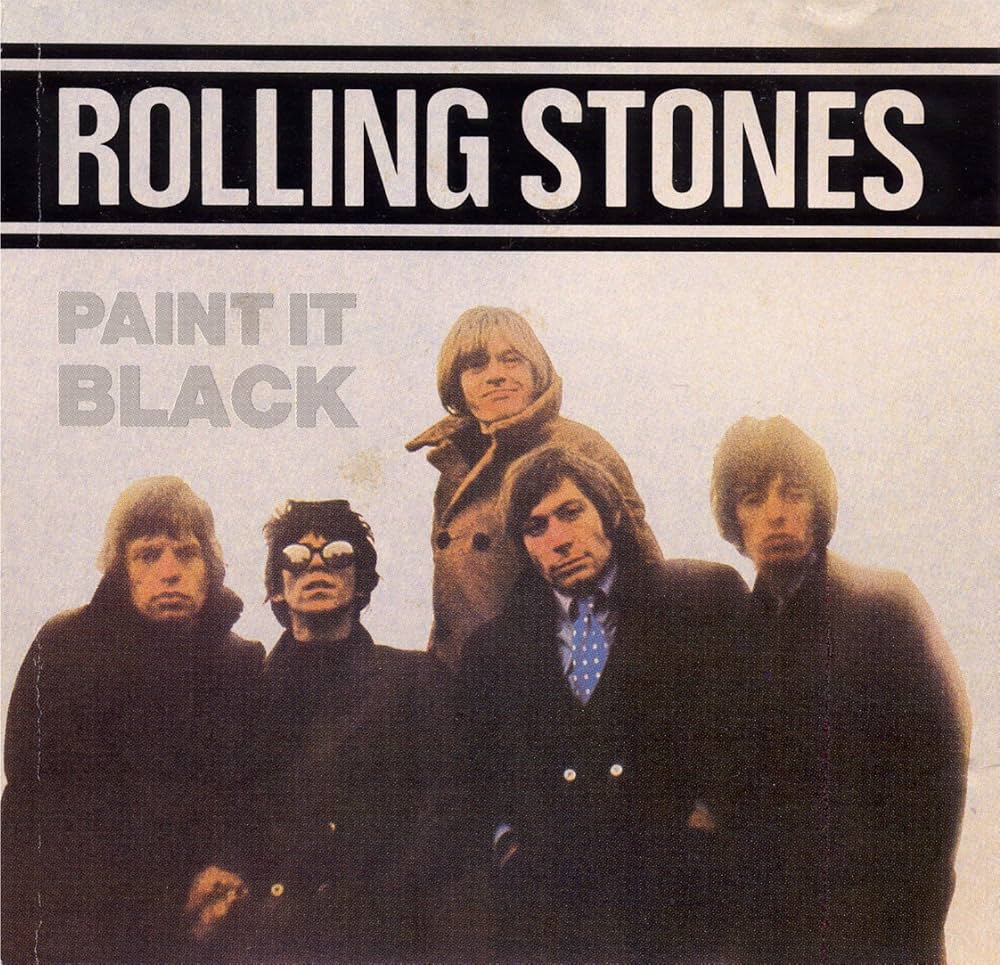
You ever notice how “Paint It Black” doesn’t really start so much as it unfolds—that strange sitar riff creeping in like a bad dream you can’t quite shake? The Stones captured something that feels less like heartbreak and more like a total emotional blackout. The sound is restless, paranoid even, like someone pacing around inside their own thoughts at 3 a.m. That’s what makes it such a sharp symbol of depression: it’s not just sadness, it’s this all-consuming fog where color, joy, and even meaning itself disappear.
The thing that always strikes me is how the song turns that private darkness into a worldview. The singer doesn’t only feel grief—he wants the whole world to match how he feels inside. That line between self and everything else completely breaks down. You can hear it in the drumming, that pounding rhythm chasing itself in circles, or the sitar’s looping melody that never resolves. It’s like he’s trapped in motion, unable to stop thinking or feeling, stuck in a spiral that makes sense only to him. It’s haunting because it sounds familiar to anyone who’s been that low.
And that’s why, even decades later, “Paint It Black” still feels so alive—so uncomfortably modern. Underneath the 60s cool, it taps into that quiet nihilism a lot of people still wrestle with today: the idea that maybe there’s nothing left worth looking at, so you might as well black it all out. But there’s something cathartic in that honesty. The song doesn’t try to fix anything or offer redemption; it just sits in the darkness. And sometimes, that’s what makes it hit harder than any happy ending could.
Paint It Black
I see a red door
And I want it painted black
No colors anymore
I want them to turn black
I see the girls walk by
Dressed in their summer clothes
I have to turn my head
Until my darkness goes
I see a line of cars
And they’re all painted black
With flowers and my love
Both never to come back
I’ve seen people turn their heads
And quickly look away
Like a newborn baby
It just happens everyday
I look inside myself
And see my heart is black
I see my red door
I must have it painted black
Maybe then, I’ll fade away
And not have to face the facts
It’s not easy facing up
When your whole world is black
No more will my green sea
Go turn a deeper blue
I could not foresee this thing
Happening to you
If I look hard enough
Into the setting sun
My love will laugh with me
Before the morning comes
I see a red door
And I want it painted black
No colors anymore
I want them to turn black
I see the girls walk by
Dressed in their summer clothes
I have to turn my head
Until my darkness goes
I wanna see it painted
Painted black
Black as night
Black as coal
I wanna see the sun
Blotted out from the sky
I wanna see it painted, painted, painted
Painted black, yeah
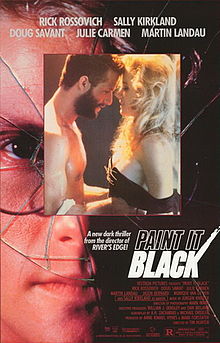 This month, since the site is currently reviewing every episode of Twin Peaks, each entry in Move A Day is going to have a Twin Peaks connection. Paint In Black was directed by Tim Hunter, who directed three episodes of Twin Peaks,
 Through the Shattered Lens