
The 1964 film, One Potato, Two Potato, is the story of two people who fall in love.
Julie Cullen (Barbara Barrie) was previously married to Joe (Richard Mulligan). She’s divorced now and raising her daughter, Ellen (Marti Mericka), on her own. Ellen was barely a year old when Joe abandoned his family and she’s never known her father. Perhaps that’s for the best because, as we later see firsthand, Joe was an immature and abusive man.
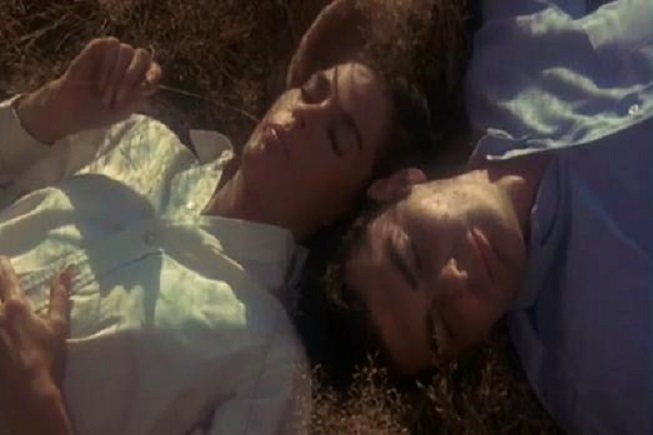
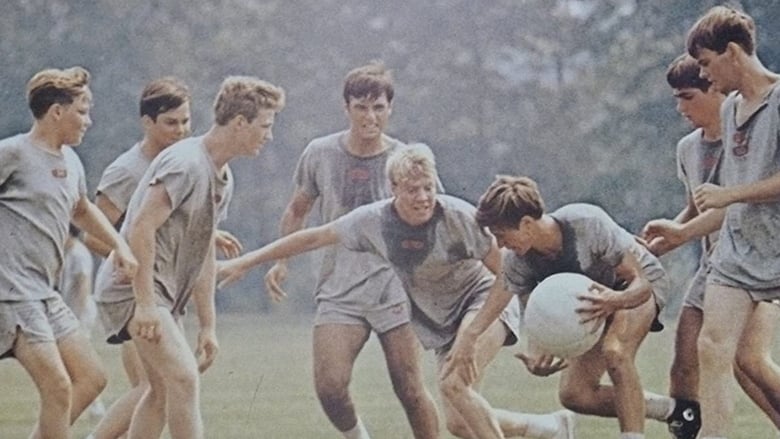
Frank Hamilton (Bernie Hamilton) is quiet, responsible, and mild-mannered. For the majority of the movie, the only time that we see Frank show any emotion is when he’s playing football with coworkers. However, he’s obviously a sensitive and intelligent man. He and Julie begin a relationship, tentatively at first. But soon, they’re very much in love and planning to get married.
And really, there’s nothing unusual about either one of them. They’re two genuinely nice people who met and fell in love. The only thing that sets their romance apart from so many other romances is that Julie’s white and Frank’s black. For that reason, Frank and Julie get harassed by the police when they try to enjoy a romantic stroll at night. For that reason, Frank’s parents (played by Robert Earl Jones and Vinette Carroll) object to their relationship, saying that all the love in the world can’t overcome prejudice. For that reason, when Frank and Julie do get married, hardly anyone comes to the wedding and the one bridesmaid glares at them throughout the ceremony. Frank and Julie end up living on a farm with Frank’s parents, in love but practically isolated from the world. (Tellingly, the “friend” who first introduced them doesn’t want to visit them after they marry.) When Joe suddenly shows up and discovers that Julie has not only remarried but that her new husband is black, he goes to court and demands custody of his daughter.
It’s interesting think that, in 2019, it’s very easy to take interracial relationships (not to mention interracial marriages) for granted. And yet, it wasn’t until 1967 (three years after the release of One Potato, Two Potato), that the U.S. Supreme Court officially ruled that laws against interracial marriage were unconstitutional. One Potato, Two Potato was an early independent film, precisely because none of the major studios were willing to deal with an issue as controversial as interracial marriage. (When the studios finally did deal with it, the end result was Guess Who’s Coming To Dinner, a film that was as safe and mild as One Potato, Two Potato was brave and angry.) Barbara Barrie did win the best actress award at Cannes and the film itself received an Oscar nomination for Best Original Screenplay but otherwise, it’s a sadly neglected piece of film history. If I hadn’t recorded it off of TCM, I probably never would have seen or even heard of this film.
And that would have been a shame because, along with being a valuable historical document, One Potato, Two Potato is a compelling and heartbreaking drama. The film approaches its subject matter with a maturity and an honesty that probably stunned audiences back in 1964. This film refuses to give into any of the well-intentioned clichés that often dominated films about racism in the 60s and 70s. There are no sympathetic whites (à la Gregory Peck in To Kill A Mockingbird) willing to argue for Frank and Julie’s right to raise Ellen. (In fact, the lawyer that they hire gets angry when Frank first approaches him and advises them to leave the state.) It does Frank no good to be dignified and patient. The racism in One Potato, Two Potato does not come from a handful of ignorant souls. Instead, it’s built into the very system to which Frank and Julie are now having to appeal.
One Potato, Two Potato is also a rarity in that it’s a film that allows a black man to get angry about the way he’s being treated, even if it means making whites in the audience uncomfortable. One need only compare the hopeful ending of Guess Who’s Coming To Dinner with the heart-breaking conclusion of One Potato, Two Potato. Whereas Guess Who’s Coming To Dinner highlighted Sidney Poitier saying, in his dignified manner, that he has no interest in fighting the battles of the past, One Potato, Two Potato finds a distraught Bernie Hamilton watching a western and finally breaking down as he yells, “Kill that white bastard!”
One Potato, Two Potato ends with a title card that informs us that the story that we’ve seen is fictional but that the laws and the issues discussed in the film are real. 55 years after it was released, One Potato, Two Potato remains a compelling drama and an important historical document.


 Through the Shattered Lens