I am going to have to go by the release of their singles because working off of mvdbase or IMVDb is causing me to jump over videos. This one fits in between Waterloo and Bang-A-Boomerang. For me, this is right on the borderline between saying it is a music video and that it was possibly a live broadcast. I didn’t realize it would be this tough to do a simple retrospective of ABBA music videos, but it is. The real issue is the drastic difference in quality between the music videos on their official channel and the few that you find elsewhere.
I have discovered a couple of things about the band that are kind of relevant going forward. Reportedly there is going to be some sort of virtual reunion of the band in the coming year. Basically it would entail having them each sing from the comfort of their own home, and have it pieced together digitally. Why not? How many Let’s Plays have you watched where the people doing it aren’t in the same room together. I’ve made a few myself where I was the one at the computer and I shared my screen with the other person. It works fine.
I’ve also found out what I kind of suspected already. Frida & Benny and Agnetha & Björn were couples during most of the bands’ run. It doesn’t really have any bearing on the music videos themselves, but I did stumble upon it while digging through all the videos on YouTube.
Finally, it seems that the primary focus was frequently on Agnetha. There’s a big surprise for you if you watch their videos. I would have never guessed after watching Take A Chance On Me and SOS.
Getting to this video. There are definitely multiple sets. There are definitely edits. There are video effects at play. The thing that bothers me is that there is nothing that says the parts with the rocking chairs couldn’t have been pieced together with parts that were shot at another time. Perhaps they aired a version to the TV audience that is in this video, but you would only see them in the chairs if you were in the studio audience? But, those change out later too. As a result, I’m calling it as a music video.
I find it interesting how they move from Old Hollywood, where these couples have to be in their own beds, to sharing bunks. I know it ties in with the tents, but they do the same with the chairs as well by taking them from rocking chairs to very 1970s ones. You also see them climb a set of stairs to reach a top before descending. It’s not that they’ve come full circle so much as it is that they have moved ahead, but in that future they are just in a modern and less fancy form of separate beds (bunks). That’s all I find particularly interesting other than that it is in black and white. That’s the last reason why it was difficult to call it definitively as a music video.
It had to happen eventually, and don’t say I didn’t warn you in advance when I started this retrospective. I discovered an earlier video that I didn’t do in sequential order. Love Isn’t Easy (But It Sure Is Hard Enough) was the last single released off of their first album after Ring, Ring in 1973. That means this video was most likely made to promote that single at the same time.
There is very little to bring up here. It’s an early example that they were taking advantage of the fact that the group was made up of two women and two men in order to act out the songs that had to do with love. That’s something you’ll see them capitalize on in their future videos.
I also like how casual it is. It feels very improvised. That’s nice. It brings down to Earth these musicians that otherwise only appear very polished when you watch the endless numbers of live performances on YouTube.
On a related note, it highlights that the group has a sense of humor. You pick that up in some of their other videos, but this is a good early example. Whether I feature it as a music video or decide that it is only a unique live performance, I intend to include a certain live performance of Mamma Mia. In it, the girls sing the song from the beginning of the performance, but the two guys spend about half the song talking to deliverymen trying to get their instruments taken out of boxes, put in place, and signing off on delivery slips while the music they are supposed to be playing is still playing regardless, because it is pre-recorded.
Their sense of humor would come out big time in 2004’s The Last Video, but I am getting way ahead of myself. Enjoy!
They finally escaped the white dimension! Too bad it was for a lousy song and video.
Okay, there are a few things of note here.
First is the obvious. They are on location rather than in a studio. However, they don’t really make use of it. It feels like it was out of necessity or they felt it was humanizing instead of having them all dolled up as usual. They would make better use of location shooting in their later videos such as Knowing Me, Knowing You.
We get the first video that implies a relationship between band members beyond the band. This is something that would be crucial to Knowing Me, Knowing You. I don’t know if any of them ever paired off like Fleetwood Mac was famous for doing, and it doesn’t matter to me either.
This is also the first video that has a title on it. We’ll see that on I Do, I Do, I Do, I Do, I Do and Mamma Mia as well.
This is also the first video where we not only see to people go face-to-face, but they do it to the point where they look like they are either about to make-out or head-butt each other.
We get our usual use of profile shots, but there’s also something you didn’t really see in Waterloo and Ring, Ring. We’ve seen the camera pan and around band. However, this is the first video where we move from a head shot of one member to another without an edit. It really only serves to match the pace of the video with the song in the same way as the quick face-to-face and comic book inserts do, but we’ll see it used to great effect in Knowing Me, Knowing You. Still, like this; Waterloo; and Ring, Ring, this moving around means that the performance the band is giving is still going on even if the camera is somewhere else. It makes me wonder how scripted a lot of these early videos were, and how much was Hallström telling them to get up there and recreate one of their live performances while he built a video around it on-the-fly.
I guess you could call this music video a dry-run for Knowing Me, Knowing You.
I’m glad I am doing this as a retrospective. That way I can build upon their previous videos. What do we add this time?
We get the quick zooms at the beginning that people who grew up during the 1990s probably remember from the music video for the Rock Version of Ready To Go by Republica. Also, I know I will say it again when I get to a music video directed by Michael Bay, but one of the most important reasons that music videos are not to be ignored in the history of cinema is because they changed the way editing was done. This video is a good early example. Elected by Alice Cooper from 1972 and Stayin’ Alive by The Bee Gees from 1977 are better examples, but it’s still worth mentioning with Waterloo because it will become more noticeable when we get to videos like Take A Chance On Me and SOS. As you watch any of those videos, notice how it isn’t just a song played over a film, but a film and a song transformed into an integrated whole. That’s a big change from many films that came before music videos that used music in service of the film rather than it being a two-way street.
Also, while the phones were kind of stupid in that alternate version of Ring, Ring; the Napoleon bust nicely ties the band, song, and their costumes together with him to immediately set the theme and speed of the song.
There’s something subtle in this music video that is easy to miss. You still have the profile shots where they aren’t looking at the camera. You still have the shot through the girls to Benny on the piano. You have the addition of the girls looking at each other to sing. The thing that is subtle and easy to miss is that during the low angles, the band is all looking straightforward whereas they do look up when the camera shoots them from a high angle. You’ll see that featured prominently in SOS, as if they are looking up to you for help. Here it looks like they refuse to look down, but only straightforward and upward towards their future. The crane shots are also more impressive in this one, than Ring, Ring.
One of my favorite things about the video is the ending. Ring, Ring ended on a cheesy freeze-frame. This one has the camera move further and further between Frida and Agnetha until you are left with a blank white shot that it lingers on even after the song has stopped. It is a nice way to visually match the vocals drifting off because the camera is also drifting off of the subjects (the band). It also visually matches the song coming to an end.
One negative thing I can say is that an edit was left in at about one minute-and-five-seconds that feels like it is there to cover up a goof.
From what I can gather, this was either a music video that was broadcast live for Danish TV, or was shot at another time, and then aired later on.
It is a sad video to look at once you have seen the well-known one. I don’t even like the addition of the phones despite the title. However, we do get a hallmark of future ABBA music videos here: one of the members singing towards the camera while the other is in profile.
That’s it! I would have excluded it, but it does look official enough that I felt it needed to be included in this retrospective.
I was originally planning to start 2017 off by working through the videos that aired on the first day of MTV. At the last minute, I decided I would do a retrospective of the music videos of ABBA with special days off for certain holidays or events. It is a little tough to do and kind of easy. It is tough because once you get back into the 1970s, then you run into several problems.
First, it is sometimes difficult to tell whether a music video is just a release of a live performance they gave or is what we think of as a music video. This is a particular problem with ABBA since the more and more I look at YouTube, the more and more I become convinced that every performance they ever gave is on there. A good example of this issue is that there is another version of Ring, Ring. The problem is that while it could be released as a music video, it really looks like it was a live broadcast rather than something recorded in advance. I will probably do that though. Another great example is Mony Mony by Tommy James & The Shondells. It could easily be a music video or something they did live. It’s not like A Whiter Shade Of Pale by Procol Harum or Nights In White Satin by The Moody Blues that are clear-cut music videos.
Second, you really get into the issue of different versions. In the case of Dancing Queen, it looks like there might be four different versions. This also includes the Spanish versions of some their songs. In the case of the song Happy New Year, there are two different versions of the video. They didn’t just dub the video in Spanish. They actually reshot certain things, maybe shot some new material, and rearranged parts of the video. It’s distinctly different.
Third, there are undocumented videos. This is always a problem. Meat Loaf will be a nightmare when I decide to do his 1980s videos rather than just the Bat Out Of Hell ones. In the case of ABBA, mvdbase and IMVDb have them covered pretty well. Also, the ABBA VEVO channel seems to have just about every official video they made, including the one called The Last Video that isn’t documented in either database.
Fourth, there are videos out there that were made after the group either broke up or came into existence years after the song was released. A video for Joy Division’s Atmosphere was made years after the group broke up after the suicide of Ian Curtis. Also, there is a music video for Money by Pink Floyd that sure looks like it was made in the 1970s. It is even listed as having been released in 1973. However, they also list that Wayne Isham directed the music video. Isham would have had to have been fifteen when he made it. When you go to his IMDb page, you can find a big list of his music videos. Money was actually made in 1989.
Finally, there are going to be videos that I can see possibly exist, but I can’t find a copy of to embed. A great example of that is this video right here. According to mvdbase, there is a music video for People Need Love that came out either just before, or after this one. I can find live performances of that song. I can’t find a music video.
In general, I will be leaning towards the conservative side of things. If I come across something later on that I clearly missed, then I will add it.
Now for the video.
This is about as basic an ABBA music video as you are going to get. You have them in a straight line with the primary focus on Agnetha and Frida, and they are all trapped in the white dimension. However, as we go through their music videos, you can see the evolution of the promo film to what we think of as a modern music video.
One of the hallmarks of an ABBA music video is the profile shot. You can also see Hallström played with focus during those shots. My favorite part of the profile shot is when it doesn’t cut from them singing to the guitar, but instead pans down from their faces and changes focus to bring a very close-up shot of the guitar being played into focus.
I also like the part of the video when the video uses a side shot through Agnetha and Frida so we can see Benny on the piano.
I get the strong feeling that Hallström looked at earlier music videos like the one for Hello, Goodbye by The Beatles, and started thinking how he could change that up using different filmmaking techniques. It’s a similar video, but there’s a polish and style missing from it that is in this one. Ring, Ring would become a basis for You Better Run by Pat Benatar in 1981 and other such simple put-the-band-on-a-set-and-have-them-perform videos.
Owe Sandström and Lars Wigenius were costume designers on this music video.
You can watch Sandström talk about ABBA costumes in general below.
The following quotes are from the book, I Want My MTV:
“For Bat Out of Hell [in 1977], I talked the label into giving me $30,000 to shoot three live performance clips, and I got them played as trailers before midnight showings of The Rocky Horror Picture Show. That is still the number one selling album in the history of Holland, and I never played there. It’s all because of the “Paradise by the Dashboard Light” video.” –Meat Loaf
“MTV was never very kind to me. They never played any of my videos.” –Meat Loaf
I love to speculate as to the reason why. It certainly doesn’t seem to have stopped him from trying. I can find many music videos that he made during the 80s. It’s telling though, that despite being such a well-known artist, most of the videos aren’t in mvdbase or IMVDb. That includes Dead Ringer for Love that had Cher in it.
What else is telling is that no matter what video it is, or no matter how much it tries to look like a modern music video, they are just the Bat Out Of Hell videos with some window-dressing. There’s nothing wrong with that, but it’s not MTV. I’m sure Meat Loaf being overweight didn’t help either. Also, as great as the songs are, it’s not really rock as much as it is rock-tinged opera music, or put more simply, rock opera. If MTV had trouble selling Def Leppard to the point that their videos looked like Duran Duran ones, then imagine trying to sell Meat Loaf. It all adds up to an artist that was kind of destined to fall through the cracks.
A good way to see the difference between Meat Loaf music not making it to MTV, and Meat Loaf music making it to MTV, is to compare his videos to Bonnie Tyler music videos. Her songs were also from Jim Steinman in one form or another. They are operatic as well. You can really hear that on Holding Out For A Hero and Faster Than The Speed Of Night. However, Tyler is pretty, she’s a woman, she’s thin, she can sing, and most importantly, her videos were an event. Even more than thirty years later, you can say her name and the video for Total Eclipse Of The Heart comes to people’s minds. There is symbolism, storylines, an overall vision across several of her best videos, and they are memorable, which makes them re-watchable.
You see a Meat Loaf music video, you like the song, and buy the album. The cycle ends there. That kind of cuts MTV out of the picture when you don’t want to come back to them to see the video. During the time a Meat Loaf video would play, they could be airing Breaking The Law by Judas Priest, Poison Arrow by ABC, and Rio by Duran Duran that all stand separate from the song and bring back viewers. You have to remember that several people who were at the genesis of MTV were from The Movie Channel where it was their job to optimize programming based on demographic research. They needed money and had limited airtime.
Today we live in a world where the record companies can dump everything on YouTube. Who cares if it only brings in a few thousand views? Every single video can be watched concurrently by as many people as there are in the world, and you don’t have to worry about it after that except for licensing deals that you would have to handle anyways. I can’t imagine it costs much to put up either. They also have the benefit of people filling in the gaps by putting the videos up themselves that they can then claim advertising rights on. MTV didn’t have these luxuries.
Of course while this might have been the case for Meat Loaf during the 80s, the 90s were a different story when they and VH1 must have realized that he now fit their more original programming model since he was also an actor on top of being a famous musician. I remember him hosting a game show for VH1. There was also that biopic in 2000 called Meat Loaf: To Hell and Back.
I made a mistake yesterday when I spotlighted Fantasy by Mariah Carey. I only relied on mvdbase for directing credits, so I thought this music video was solely directed and shot by Daniel Pearl. It turns out, she co-directed it with him. He still shot it, but they made the video together. You can still see the strong influence that a talent of Pearl’s caliber had on the music video. It also makes it more interesting to talk about since this video does share aspects with Fantasy, that was directed only by Carey, and those elements are used correctly this time.
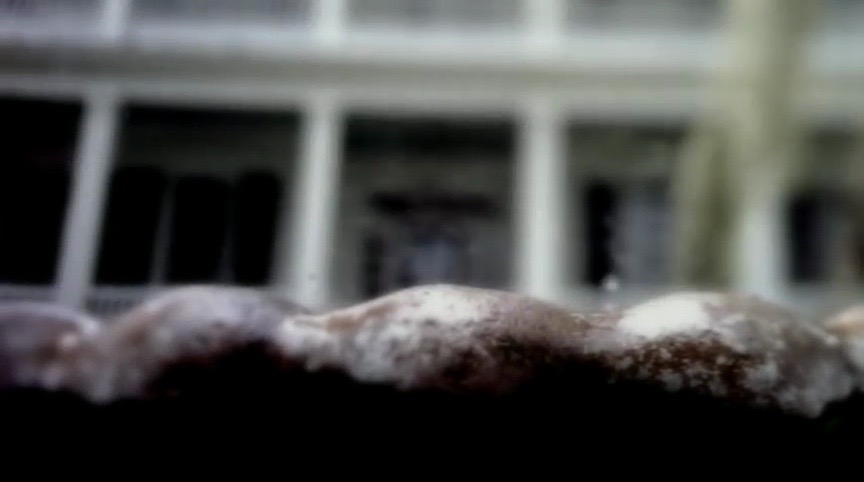
The video starts us outside the house as we rise up from behind a birdbath. You’re immediately greeted with white columns that are like prison bars. It is raining. That means that inside of the two seconds that the initial shot lasts, we get a hint that there was once something here that is now empty, the house is like a prison, and the rain sets the sad tone the video begins on.
The next shot we see a man walking past what could be flowers lying on the ground.
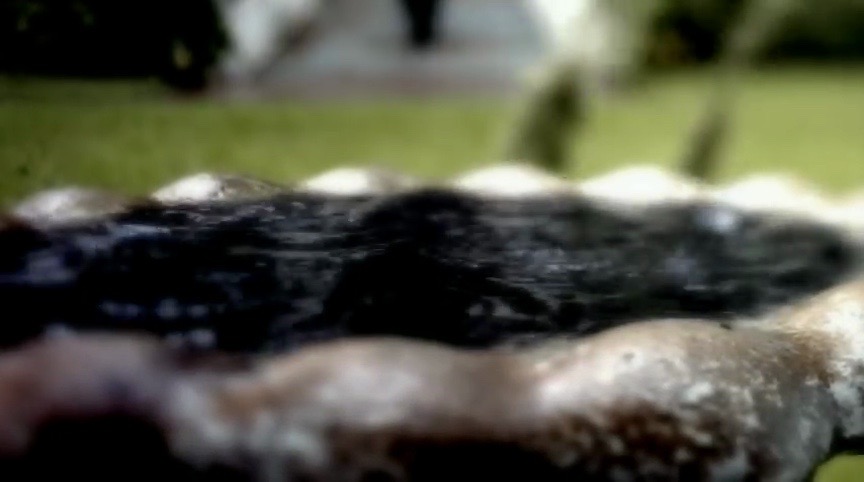
That shot is followed by a clear shot into the rain-filled birdbath with the faceless man way in the background, and out of focus, climbing the stairs onto the porch of the house. That confirms to the audience that the birdbath is now only filled with rain that acts as a stand-in for tears while also telling us that the video is now moving from the emptiness of the outside to the interior of this prison. Him being out of focus also highlights his faded existence in Carey’s life.
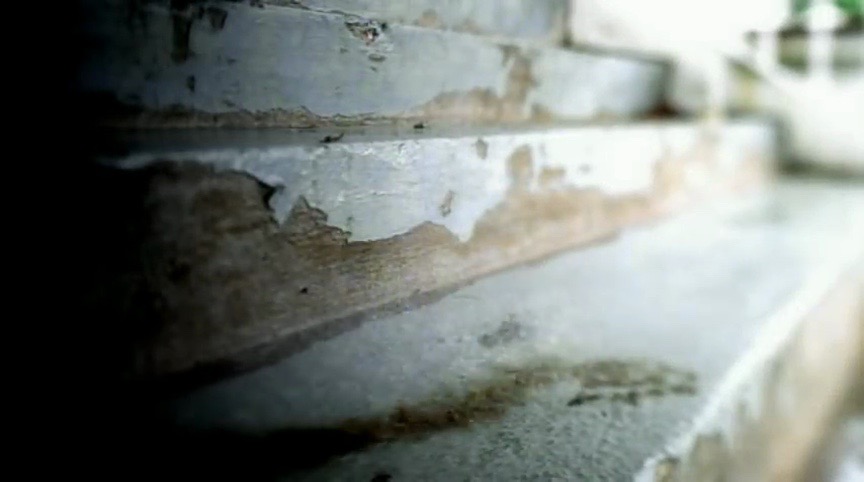
The rain is then shown washing off the mud his footprint left on the stair. Tears may be sad, but that shot tells us that we are supposed to see them as a cleansing force rather than something that is going to drive Carey deeper into herself. It is also another sign that he is being washed out of her life as he is in the present.
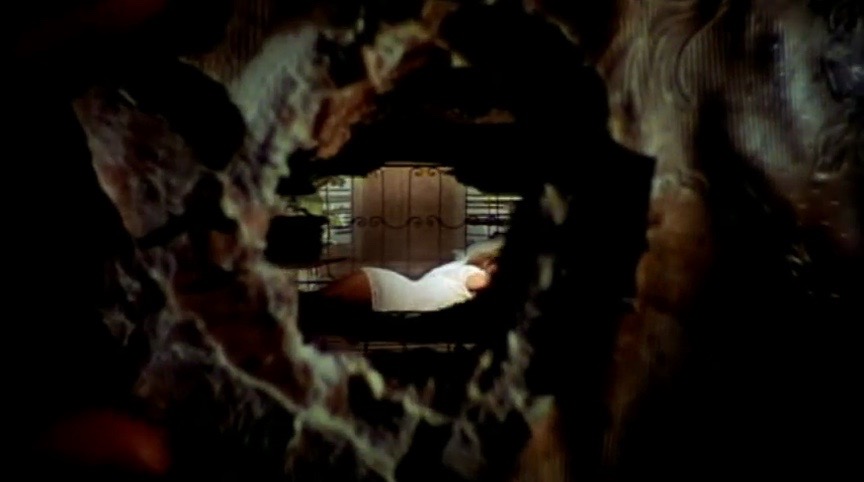
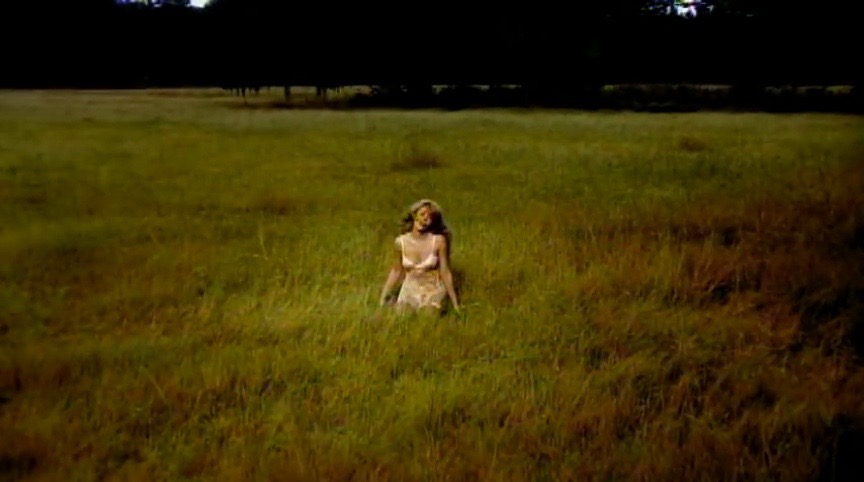
Then we begin our trip into the house through the Baby Doll inspired hole-in-the-wall. You can just barely see the man’s finger in the lower lefthand-corner as the camera moves forward to show us Carey on a bed with a rocking horse behind it. Then, in a split-second, we see Carey get a small smile on her face. That is followed by a shot of her legs that, along with everything else about the shot, indicates to us that she is an attractive person that is cooped up in this house in bed like she is a baby in the safety of her crib. Then the lyrics kick in, we start to get to know her, and begin her journey.
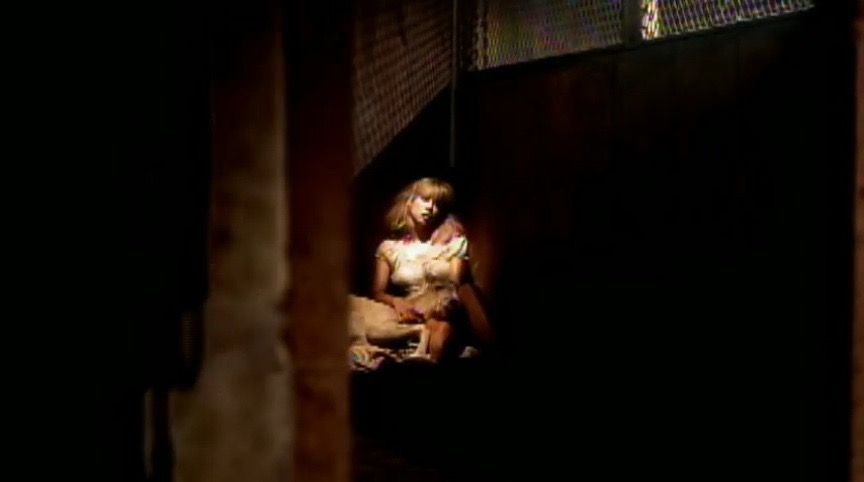
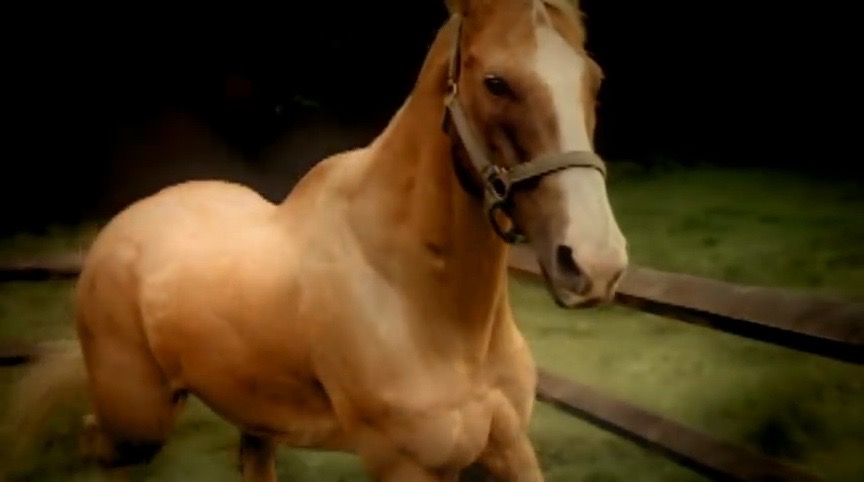
The next shot is of Carey in a barn with a baby horse. You can also see a shadow that moves across the entrance and quickly disappears. We’ve gone from his feet to a quick shot of his hands to a shadow. The horse has gone from something wooden in a room that obviously means something to him since he is making one last visit to it, but that we and Carey are already moving past it. These parts are memories that she is thinking of as she lies half-asleep in bed.
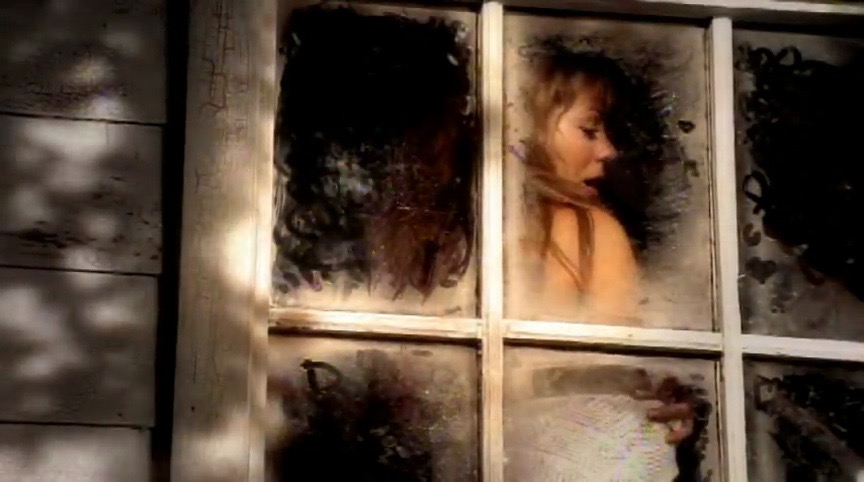
We get a few more shots into the house through the hole, and our last shot of the guy as he pulls away. Awake and still in the bed, she visualizes the horse in the barn again and it running around a small patch of grass surrounded by a wooden fence. She sees the outside via a window that we can see has had been wiped away at to make it possible to see through it–probably on numerous occasions. It cuts between these window shots and her getting progressively up from lying in the bed before she finally rises to move onto the next stage of her recovery.
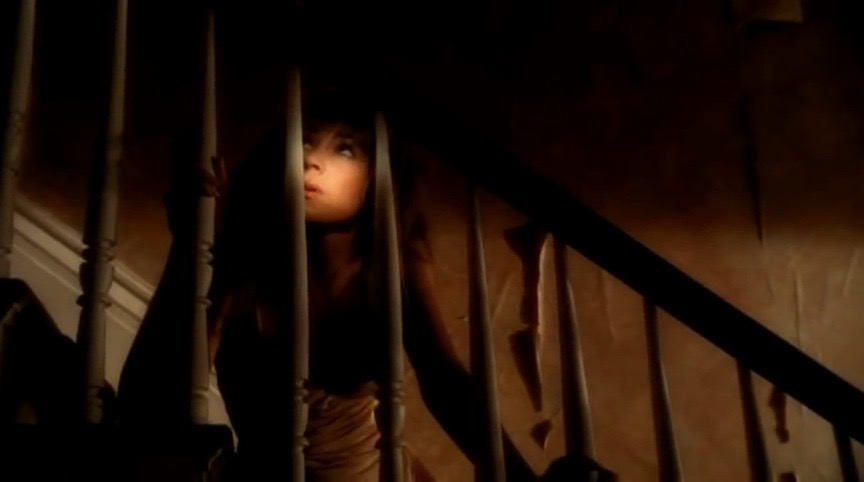
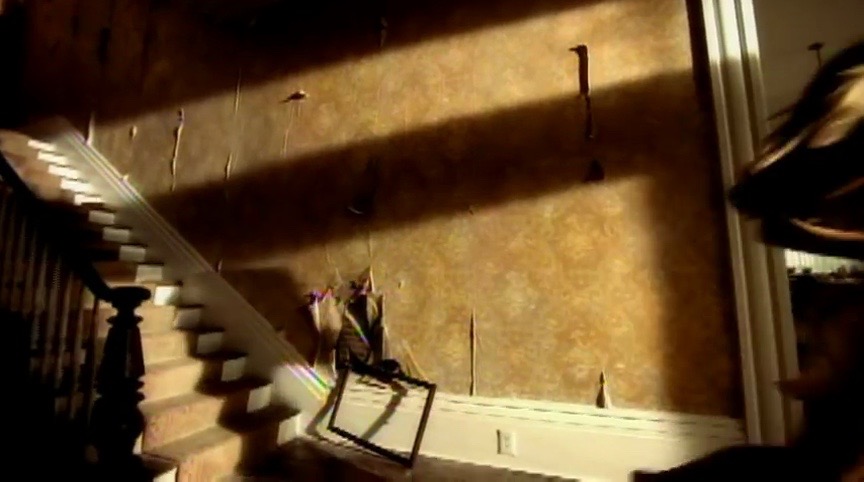
Now we see her on the stairs. But we see her from behind the bars of the stairs.
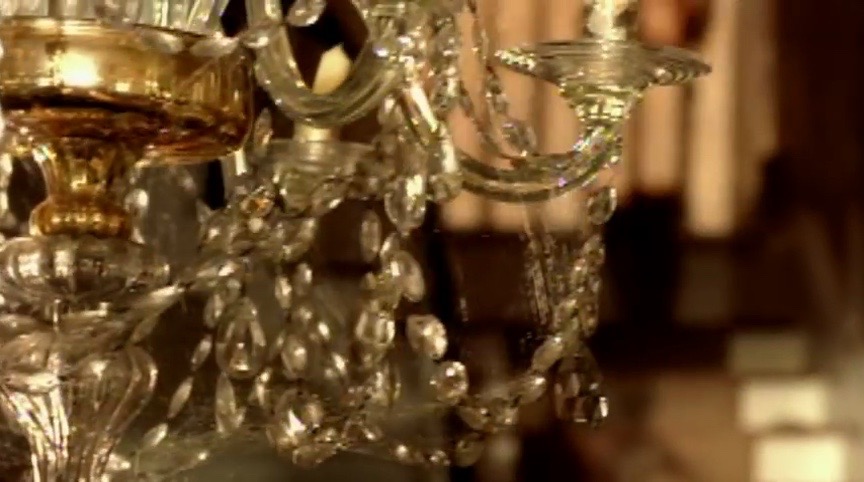
We also see the chandelier that is beautiful, but abandoned, as shown by the cobwebs on it. It’s another sign that there was something here once and that this house has now become a prison that needs to be escaped from no matter how gorgeous it once was. This is done at the same time as we see the golden-light shining in from outside representing hope, and indicating to the audience that the video will now move Carey to the next stage of her recovery, which she does as she runs down the stairs outside.
As she does it, we can see that there is not only the peeling on the wall that we could see before, but also another hole in a wall.
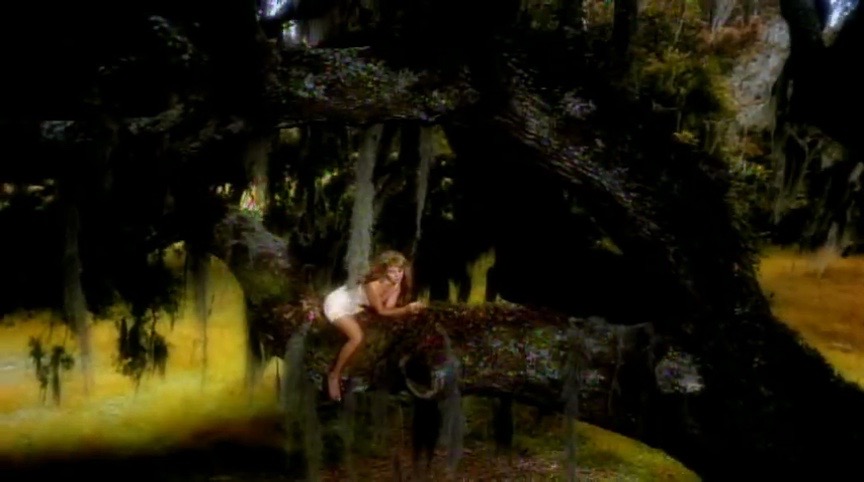
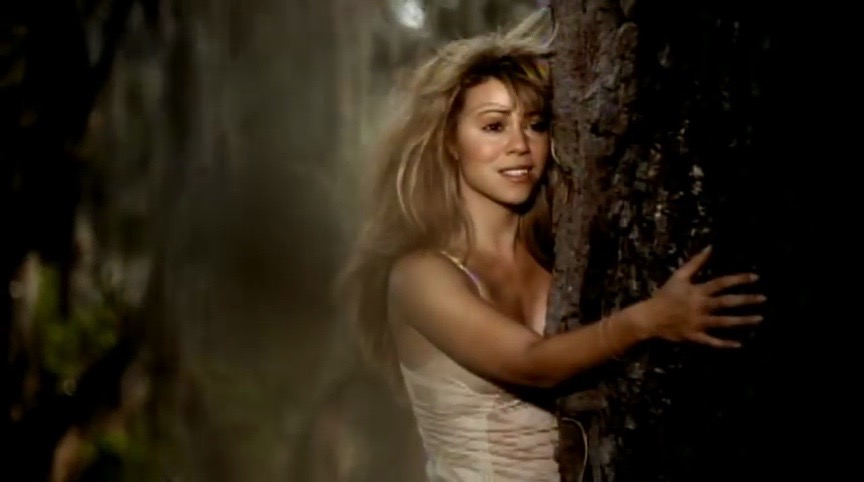
We next see Carey outside straddling a tree branch like she would if she were riding a horse. The tree is an intermediary step. It reminds her of both riding the horse and stability–since the tree won’t move.
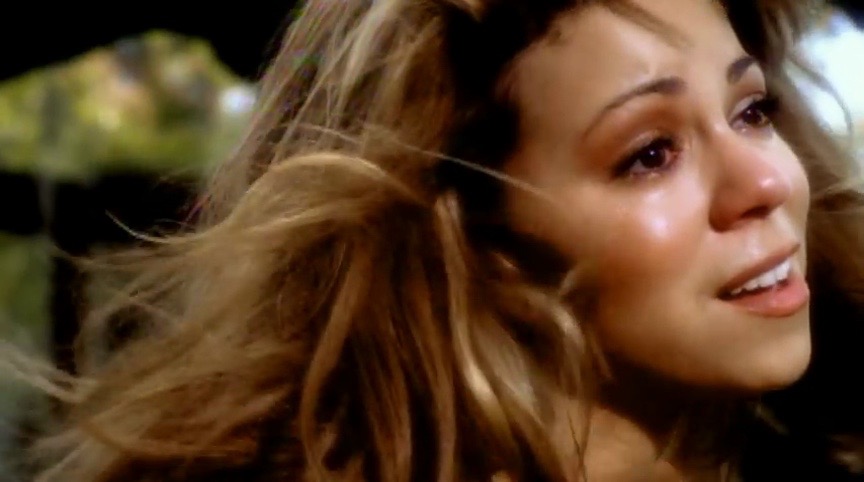
We can also see the wind blowing in her hair that is in contrast to her hair being stationary inside the house. We also get conflicting images of the horse still in the little gated area and running wild with other horses. It is also no longer raining outside, but can see tears on Carey’s face. She’s beginning to let go.
We now see Carey holding onto the trunk of the tree. She is no longer in its embrace. She is standing on her own two feet, but leaning against it for comfort because she hasn’t completely let go yet. It cuts back a few times to her in the tree before she runs away from it.
Next, we see Carey finally taking the horse out from the first gate that kept it in a very small area.
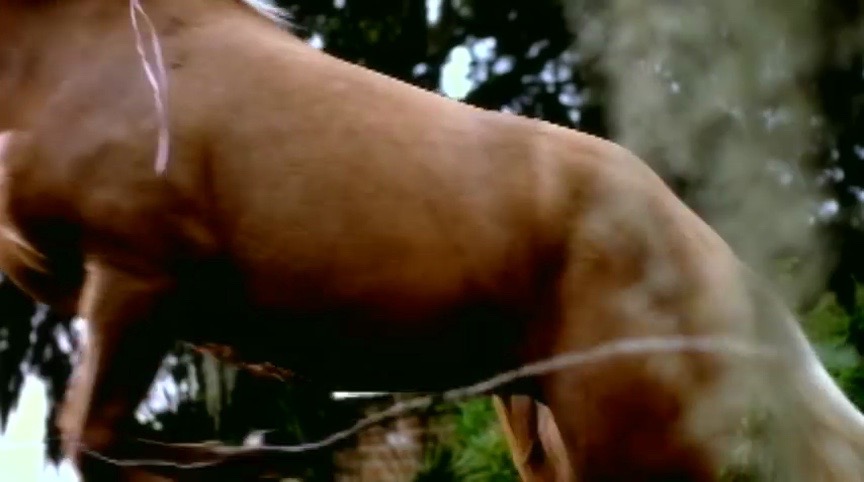
That is followed by the horse jumping the barb-wire fence. While the horse makes it over the fence, it still catches its legs on it.
Carey then runs up and grabs the fence herself, wounding her hand. It cuts back to her in the tree at first, then follows that with her knocking down the fence. Her and the horse are escaping free, yet wounded. This nicely ties the horse and Carey together. Both were trapped, and in releasing one, the other also gained their freedom. The cut tells us that while necessary, it isn’t painless, no matter how strong she has become at this point.
We now see her ride the horse for the first time in the video.
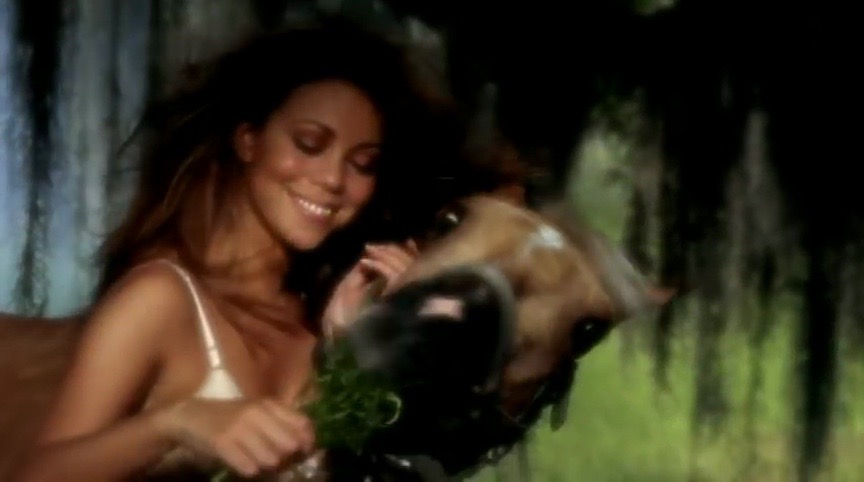
We see her feed it, and have some last moments with the horse before the camera pans up to show that she is alone again like she was at the start.
The difference is she is outside in the sun, hopeful, ready to start again, and free of the memories of the relationship that were comforting and confining.
The whole time, these images and transitions correspond with the music and lyrics. In particular, she keeps talking about what she is letting go returning to her if they were meant to be together. We see that it doesn’t. I like how you can read this apparent contradiction in different ways.
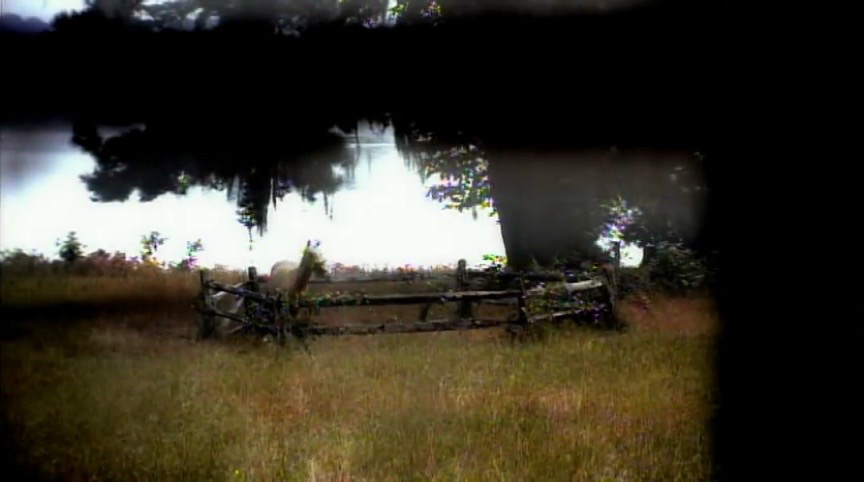
There are a couple of other things to notice while you watch the music video. There are several indicators of the passage of time. One of my favorite ones is the way the wood that makes up the wood fence changes. Sometimes it looks new.
Other times it appears to be rotting with vines growing on it.
The other thing I like is that it is usually not a single horse running free. You can read that several ways too.
————–
In Fantasy, the rollercoaster elements are isolated and don’t appear throughout the video. It’s a memorable visual, but that’s it. It is also gone at about a minute-and-forty seconds out of the approximately four-minute runtime. The Butterfly equivalent to the rollercoaster is the horse. The difference is that the horse, and what it represents, is interwoven throughout the video from it being a rocking horse behind the bed to running wild beyond both of the fences–wooden and barbed-wire. Yes, the two songs are quite different in their subject matter, but it could have served the same purpose. It kicks off the song, but doesn’t bookend the video even though it should since it can stand in for a ride through the “fantasy” as well as the song itself.
The other thing that is used better is blur. It is distracting in Fantasy, feels like someone trying out a new feature they discovered on their camera, and almost gives you the impression that Carey wanted to blur out everyone else to place the sole focus on her. Here, you only really notice it when someone tells you to look for it. Otherwise, just like the progression of the horse, it feels seamless.
“I’d done a lot of videos and wasn’t always a hundred percent thrilled. For the most part, I was never thrilled with the results, so I figured I would give directing a shot. It was a pretty simple concept. Most of the scenes were featured at the amusement park, at a late-night outdoor celebration. I was really happy to be able to include O.D.B in the remix video.” — Mariah Carey
If Carey wasn’t thrilled with her earlier videos because they were too well-made, then she sure changed that for this music video. I guess it shouldn’t come as any surprise seeing as twenty years later she would get behind the camera to make her first feature film for Hallmark called A Christmas Melody (2015). I saw it this year, and its one of the worst I’ve seen of the current 263 Hallmark films I have watched almost entirely because of the directing. If that movie is any indication, then she shouldn’t be behind the camera.
As “simple” as Fantasy is, she could have done a much better job. The dancing scenes at night aren’t done very well even if they sort of cap a storyline that is told by the setting sun. There is a drastic overuse of blur (not really a reflection of the title). Also, her earlier music videos had her as the singer surrounded by other people who appeared to organically gather around someone who was a good singer. In Fantasy it feels artificial (again, not a reflection of the title), dated even faster than her earlier stuff, and makes the whole thing feel like two videos spliced together. Carey started it right by shooting it during the day at the Playland amusement park in Rye, New York. So many of her earlier videos were done on studio sets/interiors. I love those rollercoaster bits and when I went into writing this post, I was surprised when it switched to the night dancing sequence. They are so forgettable, while the rollercoaster parts are so memorable, that even 20+ years later, I remembered them distinctly. I forgot that there were any other parts to the video.
However, if Carey wasn’t thrilled with her earlier music videos because they were last generation and made her seem interchangeable with other female artists of the time, then it’s a good thing she made this music video regardless of quality. Her earlier music videos portrayed her like Céline Dion or Whitney Houston. Excellent singers, but whether you like, or can’t stand Carey looking unreal and dolled-up, it is her thing. It makes her stand out and is the stamp of Mariah Carey so much so that you can still find comments on IMDb for Precious (2009) from people surprised that it was her in the movie. It’s her brand.
In summary, I don’t think Carey did a good job here, but she did need a break in the style of her music videos even if that meant ending up with something substandard. It sent a message to other directors–some of whom she had worked with before–that this was the way to film her. You can even see the difference in One Sweet Day that was done by Larry Jordan who directed at least five of her pre-Fantasy music videos, and that was just her in a studio with Boyz II Men. She would go on to direct the music video for Always Be My Baby before largely returning to other directors.
There is also a reworking of this music video that Carey did, which incorporated O.D.B.
That’s all it is. She just added a few bits with him singing, and rearranged the scenes from the original video.
One last thing. I’m sure I will mention it again, but Carey is one of those artists that clearly recognized the talents of legendary music video cinematographer Daniel Pearl. From what I can gather, he has shot about twenty of her music videos. He also shot her movie Mariah Carey’s Merriest Christmas (2015). She even got him to direct two of her music videos. To my knowledge he has only done that five times in his close to fifty-year career. That’s amazing since Pearl has even been quoted as saying that he is perfectly happy with being a cinematographer, and doesn’t see cinematography as a stepping stone to becoming a director–at least for him. Seeing as I did this music video today because I did Genius Of Love by Tom Tom Club yesterday, then I guess I will do one of the music videos Daniel Pearl shot and directed for Carey tomorrow. It’s night-and-day by comparison to this one.
For that one person who didn’t know already, this is the song that Mariah Carey sampled for her song Fantasy. It has also been sampled for so many other songs that I am not going to list them all. You can find a list of songs on the Wikipedia article for this song.
Tom Tom Club was a side project for Tina Weymouth and her husband Chris Frantz who were the bassist and drummer, respectively, for Talking Heads. I say “was” since Talking Heads are no longer together, but Tom Tom Club still is.
In the case of the song, there is a nice explanation over on Songfacts that is too long to repeat here. I will mention one thing. Apparently David Byrne–lead singer of Talking Heads–basically ignored its success. That fits with a quote over on her Wikipedia article where she described Byrne as “a man incapable of returning friendship.” That must have been frustrating considering she has been married to Chris Frantz since 1977, which is the year the band released their debut album.
The music video was made by duo Rocky Morton & Annabel Jankel based on the artwork of James Rizzi, which is on the cover of the album. They are two directors that are simultaneously thought well of and hated. They are great because they made Max Headroom (1985). They are awful because they also made Super Mario Bros. (1993). They have also done around 15-20 music videos.


 Through the Shattered Lens