Review: Fallout (Season 1)


“War never changes. You look out at this Wasteland, looks like chaos. But here’s always somebody behind the wheel.” — The Ghoul

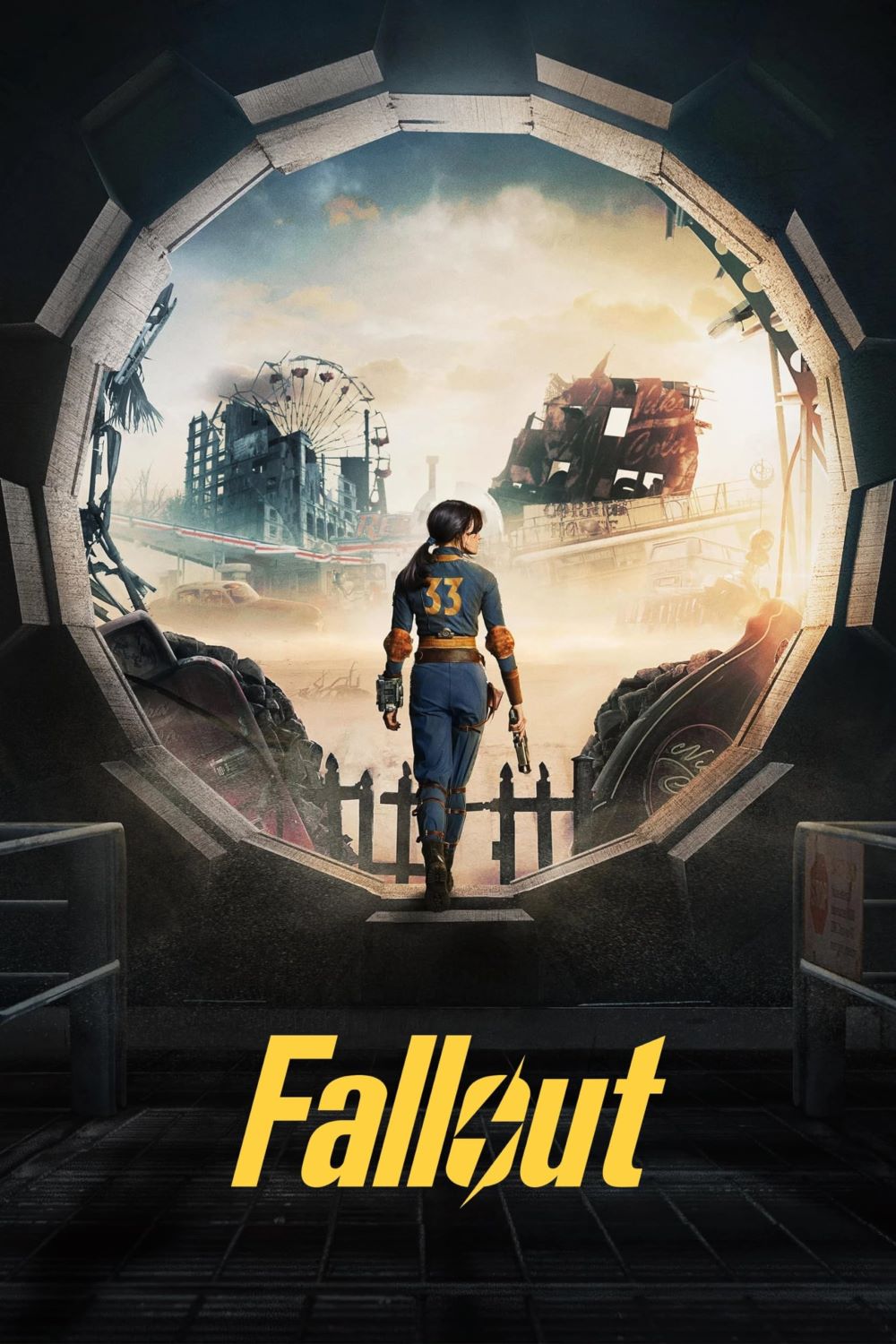
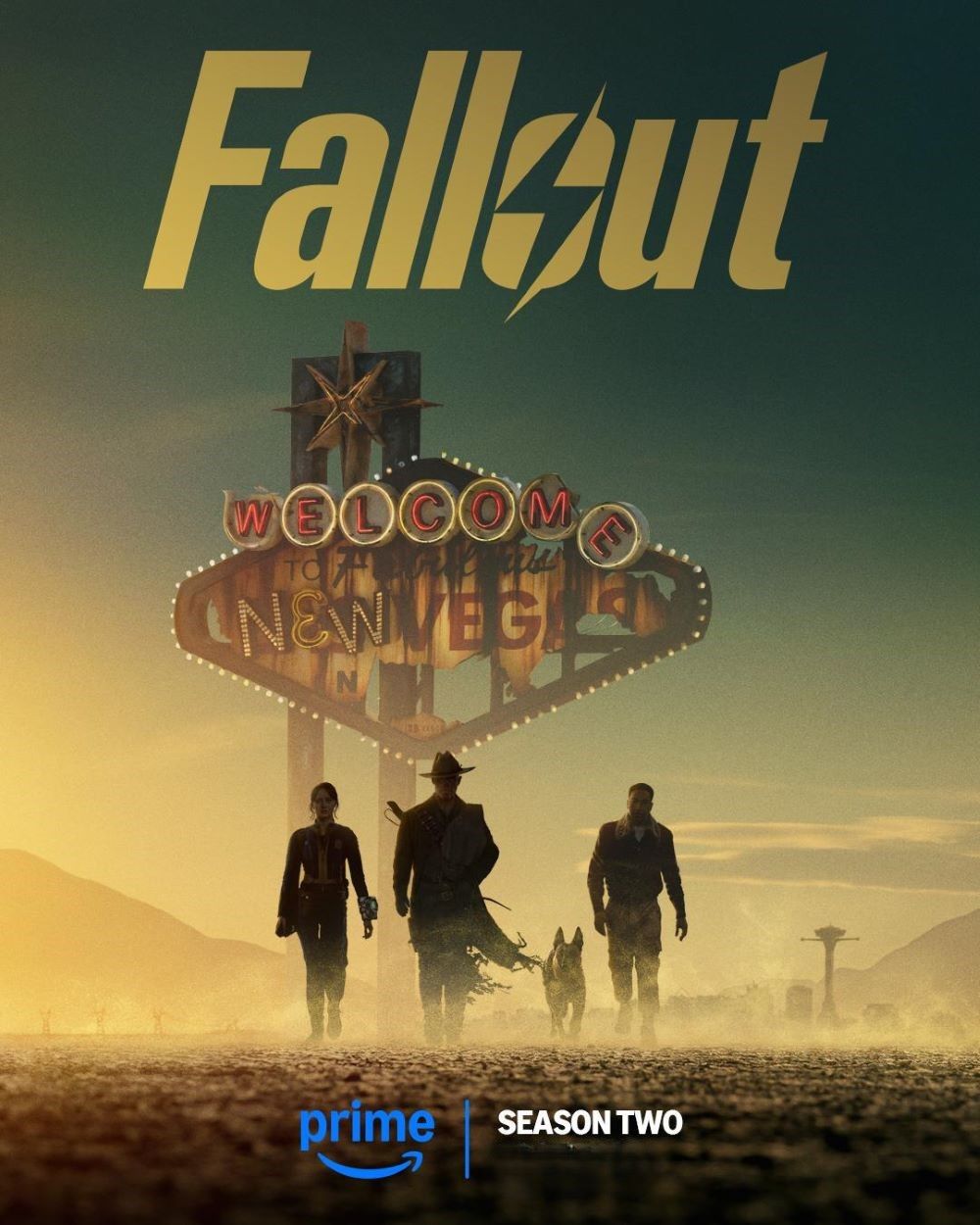
Fallout’s first season lands like a mini-nuke: messy around the edges, but undeniably powerful and surprisingly fun. It’s one of those adaptations that feels comfortable being both a love letter to the games and its own weird, often hilarious beast.

Set a couple of centuries after nuclear war, Fallout drops viewers into a retro-futurist wasteland where 1950s aesthetics collide with irradiated horror and corporate evil turned up to eleven. The show splits its focus between three main threads: Lucy, a bright-eyed vault dweller forced to leave her underground utopia; Maximus, an eager but insecure squire in the Brotherhood of Steel; and The Ghoul, a bounty hunter whose past life as a pre-war actor slowly bleeds through his charred exterior. The decision to juggle these perspectives is smart, because each storyline scratches a different itch: Lucy carries the emotional core and fish-out-of-water comedy, Maximus gives the militaristic, power-armor fantasy with a side of satire, and The Ghoul supplies the hard-boiled noir edge and moral ambiguity. The result is a season that rarely feels static; even when one plotline stalls a bit, another kicks in with fresh energy.

The tone is one of the show’s biggest strengths. Fallout leans hard into pitch-black humor without ever completely undercutting the stakes, which is harder to pull off than it looks. Limbs fly, heads explode, dogs get eaten, and yet the show keeps finding a way to make you laugh at the absurdity without turning the apocalypse into a joke. The violence is graphic and frequent, but it usually serves a purpose: to remind you that this world is brutal, even when the characters are cracking wise or bartering over chems. If the games felt like wandering into a deranged theme park built on the ruins of civilization, the series captures that same feeling of “this is horrible, but also kind of hilarious.” That balance, more than any specific lore reference, is what makes it feel like Fallout rather than just another grimdark sci-fi show.

Performance-wise, the casting is pretty inspired. Ella Purnell plays Lucy with this mix of optimism, naivety, and stubborn decency that could easily have been grating, but instead becomes the emotional anchor of the whole season. She brings just enough steel to the character that her idealism feels like a choice, not a default setting. Aaron Moten’s Maximus is a slower burn, and early on he risks fading into the background as “generic soldier guy,” but the more the show digs into Brotherhood politics, insecurity, and the pressure to be “worthy” of power armor, the more interesting he becomes. Walton Goggins, though, more or less walks away with the show. As The Ghoul, he’s vicious, funny, and weirdly tragic, and the flashbacks to his pre-war life give the season some of its most compelling dramatic beats. There’s a sense of continuity in his performance between the slick actor he was and the monster he becomes that keeps the character from feeling like a one-note cowboy caricature.

Visually, Fallout looks a lot better than a streaming adaptation of a video game has any right to. The production design leans into practical sets and tactile props where possible, and it pays off. Power armor has real heft, the vaults look lived-in rather than just glossy sci-fi hallways, and the wasteland feels like a place where people actually scrape out a living instead of just a CGI backdrop. The show has fun with the franchise’s iconography—Nuka-Cola, Pip-Boys, Vault-Tec branding, goofy radios—but it rarely pauses to point and wink too hard. The design team clearly understands that Fallout is basically “atomic-age corporate optimism weaponized into apocalypse,” and that theme is baked into everything from costumes to billboards rotting in the sand. Even the creature designs, like the mutated critters and ghouls, walk that line between unsettling and cartoonishly over-the-top, which fits the overall tone.

On the writing side, the structure of the season feels very much like an RPG campaign. Episodes often play like individual “quests” that build toward a bigger mystery: Lucy stumbling into a bizarre settlement, Maximus dealing with Brotherhood politics, The Ghoul chasing a lead that intersects with both of them. That quest-chain structure gives the first half of the season a propulsive, almost episodic energy, and it’s one reason the show is so watchable. At the same time, this approach has trade-offs. Sometimes character development feels a bit checkpoint-driven—people change because the story needs them to for the next “quest,” rather than as a smooth emotional progression. You can occasionally see the writers nudging the pieces into place, especially as the season barrels toward the finale.

Fallout sits in an interesting sweet spot when lined up against another prestige video game adaptation like HBO’s The Last of Us. Instead of treating the games as a sacred script that must be recreated line for line, it treats the Fallout universe as a shared sandbox—a tone, a style, a set of rules—rather than a fixed storyline that must be obeyed. Where The Last of Us is largely a faithful retelling of Joel and Ellie’s journey, Fallout seems far more interested in asking, “What else can happen in this world?” instead of “How do we restage that iconic mission?” It borrows the franchise’s black-comedy vibe, retro-futurist Americana, and corporate dystopia, then builds mostly original plots and character arcs on top.

That choice immediately gives the writers room to play. They’re not constantly checking themselves against specific missions, boss fights, or famous cutscenes; they’re free to jump around the timeline, invent new factions or townships, and reframe old ideas in ways that a beat-for-beat adaptation could never manage without sparking outrage. This approach also lets Fallout add to the lore instead of just reanimating it in live action. Because it’s not locked into recreating a particular protagonist’s path, the show can explore corners of the wasteland that were only hinted at in the games, complicate existing factions, or take big swings with backstory and world history. That kind of freedom inevitably creates some continuity friction for hardcore fans, but it also keeps the series from feeling like a lavish, expensive recap of something players already experienced with a controller in hand. Where The Last of Us excels by deepening and humanizing a story many already know, Fallout thrives by expanding its universe sideways, treating the source material as a toolbox rather than a template—and that makes it feel more like a genuine new chapter in the franchise than a live-action checklist.

Thematically, the show has more on its mind than explosions and fan-service, which is nice. Fallout keeps circling back to questions about corporate power, the illusion of safety, and how far people will go to preserve their own little slice of control. Vault-Tec’s smiling fascism is a blunt but effective metaphor for real-world systems that promise protection while quietly planning for everyone’s demise. The Brotherhood of Steel, meanwhile, becomes a vehicle for exploring militarized religion, hierarchy, and the dream of “owning” technology and knowledge. None of this is subtle, but Fallout isn’t a subtle franchise to begin with, and the series has enough self-awareness to let its satire stay sharp without slowing everything down for speeches. When it hits, it feels like the writers are asking, “Who gets to decide what’s worth saving when everything’s already gone?”

Where the season stumbles most is consistency. The pacing isn’t always smooth; some mid-season episodes are stacked with memorable set pieces and character moments, while others feel like they’re mostly there to set up endgame twists. The finale, in particular, is likely to be divisive. On one hand, it ties several plot threads together, drops a couple of bold lore swings, and sets up future seasons with a few big, crowd-pleasing reveals. On the other hand, it rushes emotional payoffs and leans heavily on explaining rather than letting certain developments breathe. The shift in tone in the last episode is noticeable enough that some viewers may feel like they suddenly switched to a slightly different show. It’s not a deal-breaker, but it does mean the season ends with more “wow, that was a lot” than a clean emotional landing.

As an adaptation, this freedom-to-expand strategy pays off by appealing to longtime fans and welcoming newcomers without getting bogged down in purist debates. Fans of the games will catch tons of details, locations, and tonal echoes that feel like affectionate nods rather than empty easter eggs. At the same time, the show isn’t just re-skinning existing game plots, which is a good call. It feels like a side story in the same universe rather than a strict retelling. That said, the lore choices late in the season—especially around the broader timeline and certain factions—are bound to spark arguments. If someone is deeply attached to the canon of the older games, some of the retcons and reinterpretations might play like a slap in the face. If someone is more relaxed about canon and just wants an entertaining, coherent story in that world, the show will probably land much better.

The writing of individual scenes shows a lot of care, especially in the way humor and dread coexist. Some of the best moments aren’t the big action beats but the small conversations: a strange, tense chat in a ruined diner, a piece of pre-war media resurfacing at the worst possible time, or a casual bit of wasteland banter that suddenly turns threatening. The dialogue sometimes leans too modern for the retro setting, but the rhythm feels natural enough that it rarely jars. When the show is firing on all cylinders, it nails that specific Fallout flavor: characters staring at incomprehensible horror and responding with a joke, a shrug, or a desperate sales pitch.

If there’s one area where the season could improve going forward, it’s in fleshing out the secondary cast and giving certain arcs more emotional weight. Some supporting characters are memorable and sharply drawn, while others feel like they exist mainly to be lore-delivery devices or cannon fodder. The world feels rich enough that it can absolutely sustain more side stories and slower, character-focused detours. A little more breathing room for relationships—whether friendships, rivalries, or romances—would help the big twists land harder and keep the show from occasionally feeling like it’s sprinting from spectacle to spectacle.

Overall, Fallout’s first season is a strong, confident debut that understands what made the games stand out without being slavishly beholden to them. It’s funny, brutal, stylish, and surprisingly character-driven for a show that spends so much time reveling in bloodshed and nuclear kitsch. The missteps in pacing and the polarizing choices in the finale keep it from being flawless, but they also signal a series willing to take risks rather than play it safe. For viewers who enjoy genre TV with personality, and for gamers who have been burned by adaptations before, this season is absolutely worth the trip into the wasteland. It doesn’t just survive the jump to live action; it stomps into it in full power armor, flaws and all.

Film Review: Gia (dir by Michael Cristofer)


Today is Angelina Jolie’s 50th birthday.

As I sit here writing this, Jolie is very much a respectable figure, one who doesn’t appear in as many movies she once did.  When she does act, it’s almost always in the type of big and rather glossy films that inevitably seem to be destined to be described as potential Oscar contenders.  She’s so identified with the work that she does for UNHCR that it can be argued that she’s even better known now as a human rights activist than as an actor.  (On Wikipedia, her career is listed as being “actress, director, humanitarian.”)  Angelina Jolie has made the move from acting to directing and even though none of her directorial efforts have been especially memorable, they still tend to get a lot of attention because she’s Angelina Jolie.  Angelina Jolie is definitely a part of the establishment and, let me make this very clear, there’s nothing wrong with that!  She’s still a good actress.  She seems to be far more sincere about her activism than many of her fellow Hollywood performers.  Personally, I think the efforts to get her to run for political office have been a little over-the-top (and they seem to have died down after an attempted presidential draft in 2016) but again, she’s earned her success and she deserves it.

That said, it can sometimes be surprising to remember that, before she became so acceptable, Angelina Jolie was Hollywood’s wild child, the estranged daughter of Jon Voight who talked openly about being bisexual, using drugs, struggling with her mental health, and playing with knives in bed.  This was the Jolie who, long before she married Brad Pitt, was married to Billy Bob Thornton and used to carry around a vial of his blood.  This was the Angelia Jolie who had tattoos at a time when that actually meant something and who went out of her way to let everyone know that she was a badass who wasn’t going to let anyone push her around.  This was the Angelina Jolie who was dangerous and unpredictable and who wore her wild reputation like an empowering badge of honor.

That’s the Angelina Jolie who starred in Gia.

Made for HBO in 1998, Gia was a biopic in which Jolie played Gia Carangi, one of the first supermodels.  The film followed Gia, from her unhappy childhood (represented by Mercedes Ruehl as Gia’s mother) to her early modeling days when she was represented by the famous Wilhelmina Cooper (Faye Dunaway) to her struggles with heroin and cocaine to her eventual AIDS-related death.  During the course of her short life, Gia falls in love with a photographer’s assistant named Linda (Elizabeth Mitchell) but, as much as Linda tries to help her, Gia simply cannot escape her demons.

That Gia is a fairly conventional biopic is not a shock, considering that it was directed by the reliably banal Michael Cristofer.  He starts the film with people talking about their memories of Gia and he doesn’t get anymore imaginative from there.  That the film works and is memorable is almost totally due to performances of Elizabeth Mitchell and Angelina Jolie, both of whom give such sincere and honest performances that they make you truly care about Gia and Linda.  Jolie, in particular, portrays Gia as being an uninhibited and impulsive agent of chaos, one who follows her immediate desires and who makes no apology for who she is and what she does.  There’s a lot of physical nudity in this film but the important thing is that Jolie allows Gia’s soul to be naked as well.  There’s nothing hidden when it comes either the character or Jolie’s empathetic and passionate performance.

Jolie won an Emmy for her performance in Gia and her work in this film led to her being cast in 2000’s Girl, Interrupted, the film for which she would win the Oscar for Best Supporting Actress.  Since then, Jolie’s become, as I said at the start of this review, very much a member of America’s cultural establishment.  My hope, though, is that someday, someone will give Jolie a role that will remind viewers of who she was before she became respectable.  I think she still has the talent to take audiences by surprise.

The Films of 2020: The Night Clerk (dir by Michael Cristofer)


“Tye Sheridan Is …. THE NIGHT CLERK!”

That’s not how The Night Clerk was advertised, though perhaps it should have been.  This is one of those overheated melodramas that’s so sure that it’s making a bigger statement than it actually is that it becomes somewhat fascinating to watch.  Usually, when we say that a film is fascinating to watch, we mean that it’s either fascinatingly good or fascinatingly bad.  The Night Clerk is fascinatingly middle-of-the-road.  It has opportunities to be good, largely due to the performances of Tye Sheridan and Ana de Armas.  And it has opportunities to be bad, largely due to the direction and script of Michael Cristofer.  Try as it might, the film never becomes truly good and yet it’s never truly bad, either.  It’s just kind of there.

The title character is Bart Bromley (Tye Sheridan), a young man who has Asperger’s syndrome and who works as a night desk clerk at a hotel.  He’s hidden cameras all over the hotel, so that he can observe the guests in their rooms.  He even watches the guests when he returns to the home that he shares with his mother, Ethel (Helen Hunt).  That’s undeniably creepy but we’re not supposed to hold that against Bart because he’s only watching the guests so that he can learn how to talk and communicate with other people.

(To be honest, the film is very lucky that Tye Sheridan was available to play Bart.  As written, Bart is not a particularly sympathetic character.  But Sheridan is such a likable actor and has such an appealing screen presence that you’re willing to overlook a lot of narrative inconsistencies where his character is concerned.)

Anyway, Bart ends up taking an interest in a guest named Karen (Jacque Gray) but, when Karen’s murdered, Bart becomes the number one suspect.  Even though Bart knows that Karen was killed by a mysterious man who had a distinctive tattoo, he can’t reveal how he knows that information.  When Bart is assigned to another hotel, he meets Andrea Riviera (Ana de Armas).  Andrea seems to take an interest in Bart but is she sincere or is she somehow involved with the murderer herself?

Do I really need to answer that question for you?

And again, the film is lucky that Ana de Arams was available to play Andrea because Andrea is another character who wouldn’t be particularly sympathetic if she had been played by a less appealing performer.  The film can never seem to make up its mind whether she’s a calculating femme fatale or a naive victim and it’s somewhat amazing that de Amas is able to give a good performance considering how badly Andrea is written.

The Night Clerk is one of those films that holds your interest while you watch it but it tends to fade from the memory as soon as it ends.  Sheridan and de Armas are appealing actors but the film’s central mystery isn’t a particularly interesting one.  When the mystery is finally solved, I was so underwhelmed that I kept waiting for another twist to suddenly pop up.  Surely, I kept saying, it can’t be that simple.  But yes, it is.  Though the hotels are impressively trashy, the film itself has a rather flat, uninteresting look and director Michael Cristofer never really brings the story together.  It’s a mess of a film but it does work as a testament to the talents of Tye Sheridan and Ana de Armas.

When McQueen Met Ibsen: An Enemy of The People (1978, directed by George Schaefer)


What happened when famed action star Steve McQueen met playwright Henrik Ibsen?

Here’s Steve McQueen in The Great Escape:

Steve McQueen In The Great Escape

This is Steve McQueen in Bullitt:

Steve McQueen in Bullitt

Here’s Steve McQueen with his future wife, Ali MacGraw, in The Getaway:

Steve McQueen in The Getaway

And finally, here’s Steve McQueen starring in An Enemy of the People:

Steve McQueen in Enemy of the People

In the four years between appearing in the Oscar-nominated The Towering Inferno and starring in An Enemy of the People, McQueen notoriously turned down several high-profile projects.  He turned down the lead role in Sorcerer because director William Friedkin would not write a role for MacGraw.  He turned down the lead role in Steven Spielberg’s Close Encounters of The Third Kind because he felt that he would not be able to cry on cue.  (When Spielberg offered to take out the crying scene, McQueen replied that it was the best scene in the script.)  Francis Ford Coppola could not afford his salary and McQueen missed out on the chance to play Capt. Willard in Apocalypse Now, a role he would have been perfect for.

AnEnemyOfThePeople_posterInstead, after a four years absence, McQueen returned to the screen in one of the least expected films of his career.  Based on Arthur Miller’s adaptation of Henrik Ibsen’s original play, An Enemy of the People featured McQueen playing Dr. Thomas Stockmann, a scientist who discovers that his town’s local spring has been polluted by a tannery.  When Stockmann reveals his findings, the town turns against him and his family.  Stockmann has to decide whether to give into pressure from the town or to stay true to his principles.

As a star who was best known for playing stoic men of action, Steve McQueen was the last actor that anyone expected to appear in a film based on an Ibsen play.  McQueen also insisted on playing the role with a heavy beard and a stocky build, making him virtually unrecognizable on-screen.  Warner Bros. had no idea how to advertise An Enemy of The People so they didn’t.  After a year of sitting on the shelf, An Enemy of the People was given a limited run in a few college towns.  Many critics assumed that McQueen deliberately made an uncommercial movie just to get out of his contract with Warner Bros but, according to both Ali MacGraw and Marshall Terrill’s Steve McQueen: An American Rebel, McQueen was actually very enthusiastic about making An Enemy of the People and extremely disappointed when it was not a success.  After the film failed to find an audience, Steve McQueen returned to appearing in action films and westerns.

Steve McQueen in Tom Horn (1980)

Steve McQueen in Tom Horn (1980)

I recently saw An Enemy of the People on TCM and I thought it was slow and didactic.  (It did not help that An Enemy of the People is Ibsen’s weakest play.)  Especially in the beginning, there are a few scenes where McQueen struggles to hold his ground against co-stars Charles Durning and Richard Dysart, both of whom had far more theatrical experience.  But McQueen gets better as the film goes on and proves that his deceptively casual approach can still be effective even when he is playing an intellectual who chooses to make his point with his words instead of his fists.  He does a good job handling Ibsen’s notoriously wordy speeches.  By the end of the movie, the idea of Steve McQueen in an Ibsen play no longer seems strange at all.

After An Enemy of the People, McQueen would only make two more movies before dying of cancer at the age of 50.  Based on his performance as Dr. Stockmann, I believe that if McQueen had not died, he would have aged into being a great actor, in much the same way as Clint Eastwood.  It’s unfortunate that McQueen never got that chance.

bfi-00o-4ni

Film Review: Body Shots (dir. by Michael Cristofer)


(Spoilers)

Recently, I saw a 1999 film called Body Shots on the Fox Movie Channel.  If you look at the poster at the top of this review, you’ll see that Body Shots was apparently advertised with the boast: “There are movies that define every decade…”  That’s true.  It’s also true that, every decade, there are movies that define self-importance and pretension.  Can you guess what Body Shots defines?

Since Body Shots claims to be a film that exposes what secretly goes on in American society, I figured I would start this review by sharing a secret of my own.

Ready?

I love over-the-top morality tales.  I love movies that attempt to expose 20something for being the shallow, terrible people that older people believe us to be.  Every decade sees at least a handful of these films.  Typically, they are made by male filmmakers in their 50s and they attempt to paint an accusing portrait of the foibles of youth.  These films assure the older generation that their children have all grown up to be a bunch of drug-abusing, heavy-drinking, over-sexed degenerates.  It’s a proud of tradition of American cinema and television, one that includes everything from the crazed pot smokers of Reefer Madness to The Newsroom’s Jeff Daniels announcing that my generation is the “WORST.  GENERATION.  EVER.”

Typically, dreadfully earnest filmmakers who think that they are making an important statement about the future of human society are responsible for these films.  That the filmmakers often turn out to be so totally out-of-touch and histrionic just adds to the campy charm.

Body Shots is a part of this tradition.  According to the imdb, director Michael Cristofer (who is currently appearing on Smash) was 54 years-old when he made this film about 8 decadent 20-somethings who spend a decadent night at a Los Angeles nightclub and then have to deal with the consequences in the morning.

For the first part of Body Shots, we’re introduced to the 8 main characters (4 men and 4 women, which works out nicely as far as pairing off is concerned).  While they’re all generically attractive (and, at times, interchangeable), they are also each meant to represent a different take on sexuality and relationships.

body-shots-645-75

The men:

Rick (played by Sean Patrick Flannery) is a lawyer.  He doesn’t have much of a personality but he’s in the most scenes so I guess he’s supposed to be the protagonist.  Flannery is required to awkwardly deliver the line, “Hey, Penorisi, have another cocktail, why don’t you?” not once but three time.

Mike Penorisi (played by Jerry O’Connell) is a professional football player who drives a Mercedes and who spends almost the entire movie struggling to keep his hair out of his eyes.  We know he’s a jerk because Jerry O’Connell plays him and he does things like shout, “If pussy’s on the menu, I’m there!”  (Seriously, Body Shots?)

Shawn (played by Brad Rowe) is a friend of Rick’s.  He’s a nice guy and he says things like, “Sex without love equals violence.”  (And, again, seriously?  Agck!  If a guy ever said that to me, I would be out the door so quick…)

Trent (played by Ron Livingston) is Shawn’s roommate.  We’re continually told that Trent is a loser but, since he’s played by Ron Livingston, he’s also one of the only likable people in the entire film.  Trent is crude and obsessed with sex but, as opposed to everyone else in the film, he’s at least honest about it.  Unlike the rest of the cast, Livingston is intentionally funny.

The women:

Jane (played by Amanda Peet) is kind of Rick’s girlfriend.  Like Rick, she really doesn’t have much of a personality and she’s mostly distinguished by being an absolutely terrible dancer.  (Unfortunately, the filmmakers don’t seem to realize just how awkward Peet looks out on the dance floor.)

Sara (played by Tara Reid) is Jane’s best friend.  She’s blonde, drinks to excess, and is open about her sex life.  So, naturally, the filmmakers go out of their way to punish her during the film’s second half.

Whitney (played by Emily Proctor, from CSI: Miami) is another blonde who drinks to excess and is open about her sex life.  In order to keep us from confusing her with Sara, the filmmakers have Whitney sodomize one of the men with a dildo.

Emma (played by Sybil Temchen) is depressed and worries that people can tell that she “hasn’t gotten laid in months” just by looking at her.

Anyway, these eight characters spend the first part of the movie getting ready to go out, going out, meeting up, hooking up, and occasionally telling us their thoughts on sex and relationships.  And by telling us, I mean that, in a technique beloved by first-time playwrights who have yet to learn anything about being subtle or allowing characters to reveal themselves organically, they literally look straight at the camera and deliver monologues about what they’re looking for in life.  I suppose this is all supposed to make us feel as if we’re getting an intimate look into the inner angst and secret loneliness of these characters but the monologues are all so awkwardly written that they just make the characters seem even more shallow than before.  Trust me, I could have happily lived my entire life without having Jerry O’Connell staring straight at me while discussing oral sex.  (“No teeth!” Jerry grins.  BLEH!)

And yet, I still enjoyed the first part of Body Shots, precisely because the characters were so shallow and the movie was so unintentionally over-the-top in its efforts to paint the Los Angeles nightlife as the equivalent of Sodom and Gomorrah.  The scenes where the women were getting ready to go out for the night all had a ring of truth of them and Ron Livingston (who appeared to be the only member of the cast to understand just how silly a film Body Shots would ultimately turn out to be) was a lot of fun.

Even better, once everyone gets to the club, Michael Cristofer decides to earn his auteur credentials by tossing in every trick he can think of.  Scenes where the action is needlessly sped up follow scenes that play out in slow motion.  The camera glides through the club, focusing on all the neon while a generic beat blasts in the background.  The walls are covered with graffiti that reads, “Swim At Your Own Risk” and “No Diving” and you better believe that the camera lingers over every letter.  Meanwhile, Amanda Peet dances awkwardly while trying to give Sean Patrick Flannery a come hither look while Emily Proctor passes out shots and Jerry O’Connell keeps tossing back his hair.  And then Ron Livingston shows up, straight from a golf course and – you’ve got it! – still dressed for his game.

Seriously, it’s all so stupid and silly and over-the-top unbelievable.  And, of course, while all this going on, the characters still find the time to stare straight at the camera and tell us their feelings about bondage and whether or not true love actually exists.  Cristofer is trying so hard to say something profound and he fails so completely that it’s actually a lot of fun to watch.

Unfortunately, during the second part of the film, Body Shots falls apart.  The next morning, Sara shows up at Jane’s apartment and says that Penorisi raped her.  Penorisi is arrested and claims that the sex was consensual and that Sara was just upset because he accidentally called her “Whitney.”  We get flashbacks to both Mike and Sara’s version of the events.  While they each tell a different story, Cristofer seems to be implying that, regardless of who is telling the truth, it wouldn’t have happened if Sara had not been out drinking and flirting.

To be honest, it’s pretty fucking offensive.

If the first part of Body Shots appeared to have been made by an out-of-touch guy with good intentions, the second part is the work of a moralistic hypocrite.  What makes it even worse is that the film ends without resolving the case.  I’m sure that Cristofer would argue that the open ending was meant to make the audience think about what they had just seen but, ultimately, it feels like a cop out.  It’s almost as if Cristofer reached a point where he said, “Okay, I’m tired of making this movie.  Let’s just quit.”

And considering how the second half of the movie plays out, you can’t really blame him.  Still, the first part of Body Shots is unintentionally hilarious and a lot of fun.  Just don’t watch past the 45-minute mark.