Review: Fallout (Season 2, Episode 1 “The Innovator”)


“Control is not control unless it’s absolute.” — Robert House

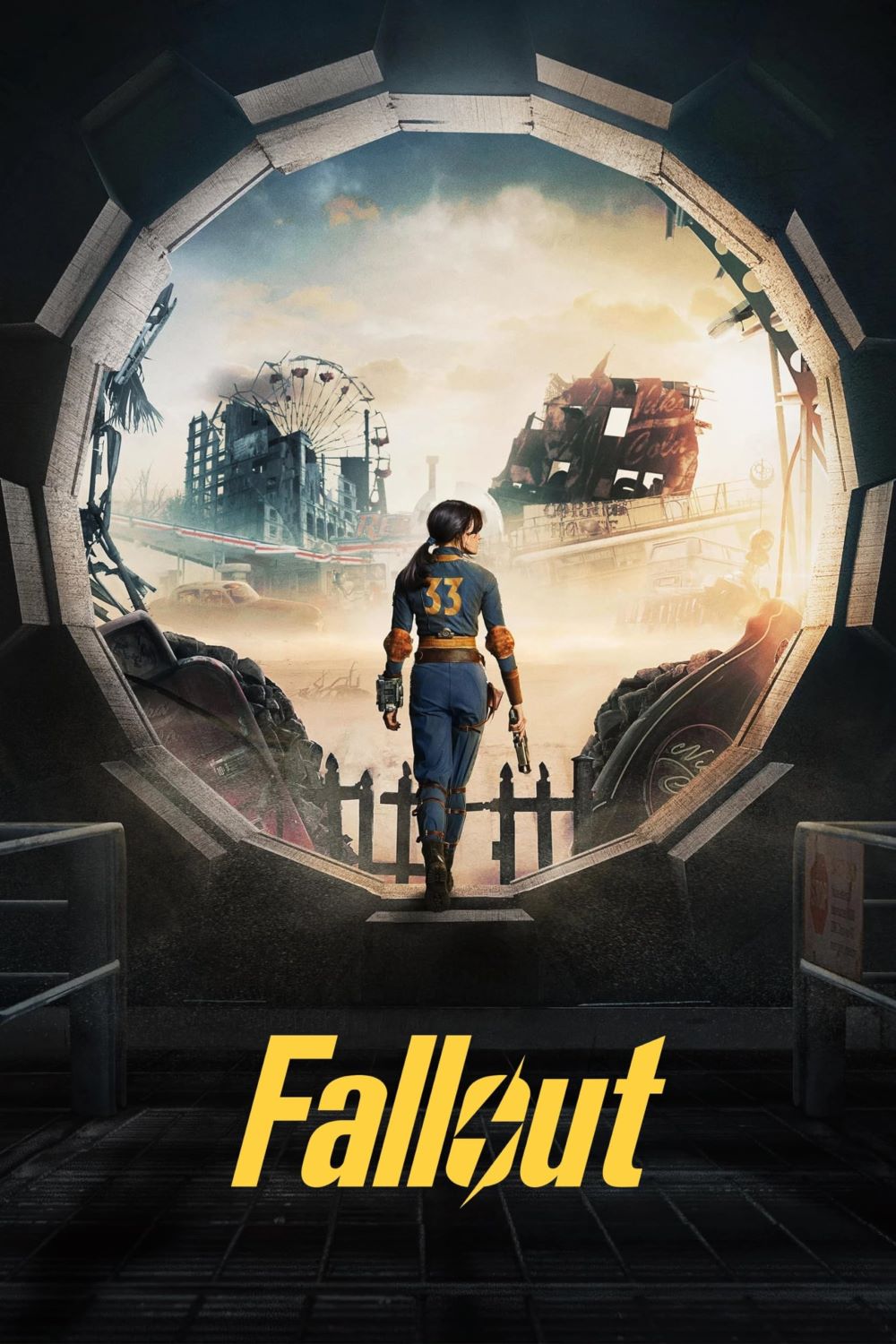
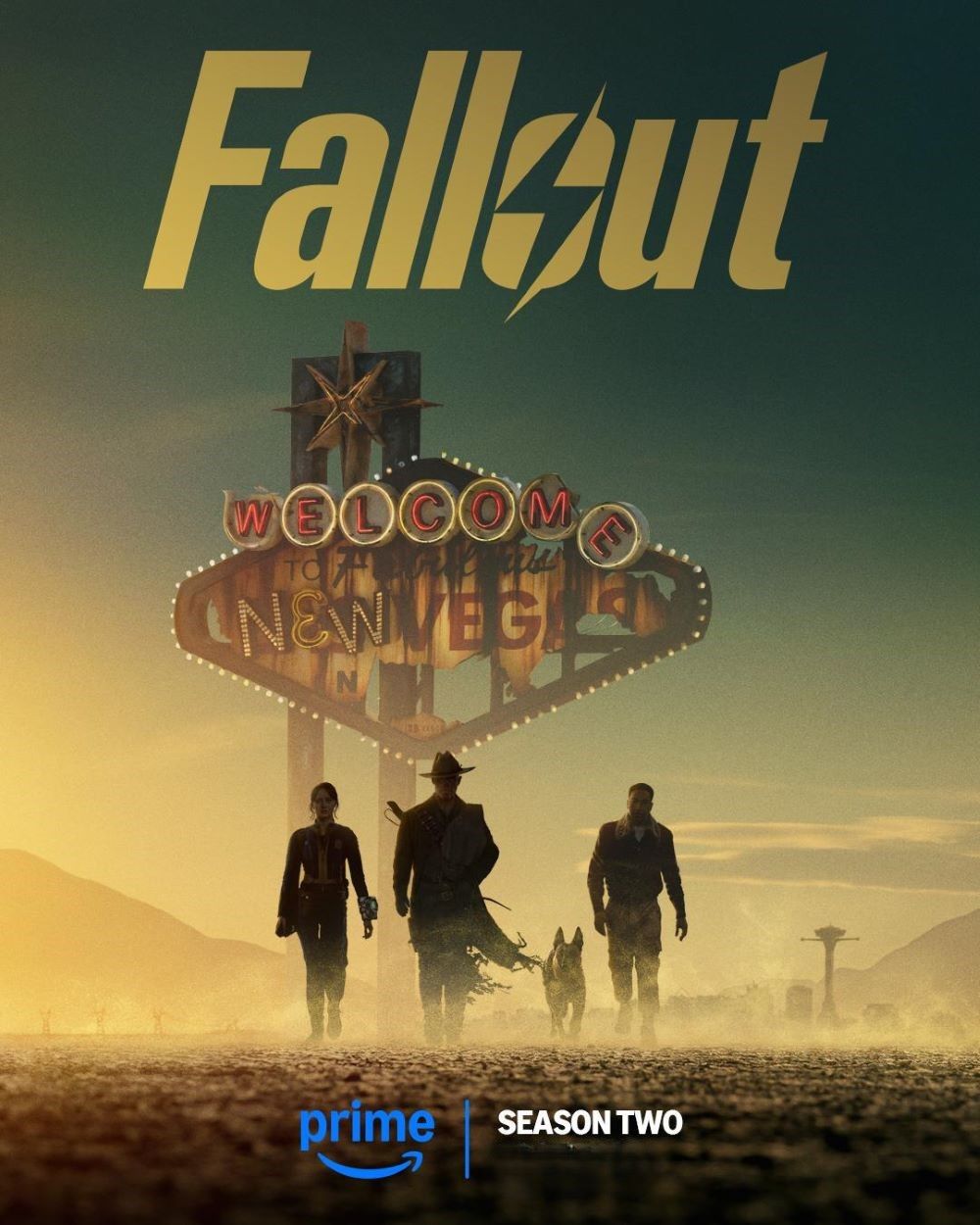
Episode 1 of Fallout Season 2 eases us back into the irradiated chaos with a deliberate pace that prioritizes atmosphere over non-stop action, reminding everyone why this show’s wasteland feels so lived-in and unpredictable. Titled something along the lines of a nod to foresight amid apocalypse, it shifts the spotlight toward the glittering promise of New Vegas while weaving in threads from the vaults and the open road, all without feeling like it’s just recapping old ground. The result is a premiere that builds quiet dread and dark laughs in equal measure, setting up a season that promises to dig deeper into the franchise’s corporate nightmares and personal vendettas.

Right from the jump, the episode grabs attention with a slick demonstration of pre-war tech gone horribly right—or wrong, depending on your perspective. Justin Theroux as Robert House commands the screen as a slick-suited mogul, his magnetic performance dripping with oily charisma and precise menace as he demos a mind-control gadget on skeptical workers, his unhinged glee peaking in a catastrophic head-explosion that hilariously exposes tech’s lethal limits. It’s peak Fallout absurdity: blending high-tech horror with retro-futurist flair, like if a 1950s infomercial took a fatal detour into Black Mirror territory. This opener not only hooks you visually but plants seeds for how old-world ambition fuels the post-apoc mess, tying neatly into the larger puzzle of who pulled the triggers on those bombs.

The core trio gets prime real estate here, each storyline humming with tension that advances their arcs without rushing the reveals. Lucy (Ella Purnell), still clinging to her vault-bred optimism, teams up with The Ghoul (Walton Goggins) for a Mojave trek that’s equal parts banter and brutality. Their pit stop at a rundown motel turns into a classic role-playing moment—talks fail, bullets fly, and suddenly you’re knee-deep in the kind of chaotic shootout that screams video game roots, but with character stakes that make the gore hit different. The Ghoul’s gleeful savagery clashes beautifully with Lucy’s reluctant humanity, sharpening their odd-couple dynamic into the show’s emotional engine, where every kill or quip peels back layers of trauma and growth.

Meanwhile, flashbacks to the days before the flash illuminate the cowboy’s (Walton Goggins) haunted past, dropping him into a high-stakes conspiracy involving energy breakthroughs and power grabs that could rewrite history. These segments pulse with moral ambiguity, showing how one man’s vision—or hubris—shapes the ruins we roam today, all delivered through sharp dialogue and tense standoffs that avoid info-dumps. It’s a smart way to expand the lore, making the pre-war era feel as treacherous and satirical as the wasteland, while hinting at butterfly effects that ripple straight to the present-day action.

Back underground in Vault 31, Norm (Moisés Arias) faces a grueling isolation game, rationed and rationed until desperation breeds rebellion. Pacing a sterile corridor lined with frozen execs, he grapples with the cold calculus of survival versus unleashing corporate ghosts, culminating in a choice that’s as chilling as it is inevitable. This thread underscores the series’ knack for turning confined spaces into pressure cookers, where ideology and instinct collide, and it mirrors the surface-level horrors in a way that unifies the episode’s split timelines. No capes or saviors here—just raw human (or post-human) frailty amid institutional rot.

What elevates this opener beyond fan service is its thematic cohesion: progress as the ultimate wasteland monster, whether it’s mind-bending devices in hidden labs, faction wars over scraps of the old world, or vaults masquerading as utopias. The production design shines, from neon-drenched ruins evoking casino glamour turned grim to grotesque experiments that nod to the games’ darkest quests without aping them beat-for-beat. Humor lands in the margins—snarky one-liners amid mayhem, visual gags like branded apocalypse merch—keeping the bleakness palatable and true to the source material’s satirical bite.

Pacing-wise, it unfolds like a slow-burn fuse: the front half reacquaints us with players and places, building investment through intimate beats, while the back ramps up with visceral twists that leave you hungry for more. A few moments drag if you’re craving instant explosions, but that’s by design—this isn’t a rollercoaster start; it’s a deliberate march toward war, factions aligning, and secrets cracking open. Lucy’s pursuit of family truth intersects with tech terrors in ways that feel organic and ominous, promising escalations that blend personal drama with world-shaking stakes.

Visually and sonically, Fallout Season 2 flexes harder, with practical effects that make every mutant skirmish or gadget malfunction pop off the screen, backed by a score that mixes twangy guitars with synth dread for that signature retro-punk vibe. Layered atop that is the inspired use of 1950s-era music—crooning ballads and peppy tunes playing ironically over carnage and corporate horror—anchoring the show’s aesthetic in its ironic nostalgia for a “better” past that led to ruin. The leads ooze chemistry, stealing scenes with micro-expressions that convey volumes, while supporting turns add layers of menace and mirth. It’s not flawless—the multi-threaded structure demands attention, and some setups tease bigger payoffs down the line—but as a launchpad, it nails the balance of homage, innovation, and binge bait.

Ultimately, this episode thrives on Fallout’s core irony: in a world built on fallout from unchecked ambition, our survivors scrape by with grit, guns, and grudging alliances. It honors the games’ sprawl while carving its own path through New Vegas’ shadows, teasing faction intrigue, tech horrors, and moral quagmires that could redefine the Mojave. If Season 1 proved the concept, Episode 1 of Season 2 whispers that the real radiation burns are just heating up—grab your Pip-Boy, because this wasteland’s about to get a whole lot wilder.

Review: Fallout (Season 1)


“War never changes. You look out at this Wasteland, looks like chaos. But here’s always somebody behind the wheel.” — The Ghoul

Fallout’s first season lands like a mini-nuke: messy around the edges, but undeniably powerful and surprisingly fun. It’s one of those adaptations that feels comfortable being both a love letter to the games and its own weird, often hilarious beast.

Set a couple of centuries after nuclear war, Fallout drops viewers into a retro-futurist wasteland where 1950s aesthetics collide with irradiated horror and corporate evil turned up to eleven. The show splits its focus between three main threads: Lucy, a bright-eyed vault dweller forced to leave her underground utopia; Maximus, an eager but insecure squire in the Brotherhood of Steel; and The Ghoul, a bounty hunter whose past life as a pre-war actor slowly bleeds through his charred exterior. The decision to juggle these perspectives is smart, because each storyline scratches a different itch: Lucy carries the emotional core and fish-out-of-water comedy, Maximus gives the militaristic, power-armor fantasy with a side of satire, and The Ghoul supplies the hard-boiled noir edge and moral ambiguity. The result is a season that rarely feels static; even when one plotline stalls a bit, another kicks in with fresh energy.

The tone is one of the show’s biggest strengths. Fallout leans hard into pitch-black humor without ever completely undercutting the stakes, which is harder to pull off than it looks. Limbs fly, heads explode, dogs get eaten, and yet the show keeps finding a way to make you laugh at the absurdity without turning the apocalypse into a joke. The violence is graphic and frequent, but it usually serves a purpose: to remind you that this world is brutal, even when the characters are cracking wise or bartering over chems. If the games felt like wandering into a deranged theme park built on the ruins of civilization, the series captures that same feeling of “this is horrible, but also kind of hilarious.” That balance, more than any specific lore reference, is what makes it feel like Fallout rather than just another grimdark sci-fi show.

Performance-wise, the casting is pretty inspired. Ella Purnell plays Lucy with this mix of optimism, naivety, and stubborn decency that could easily have been grating, but instead becomes the emotional anchor of the whole season. She brings just enough steel to the character that her idealism feels like a choice, not a default setting. Aaron Moten’s Maximus is a slower burn, and early on he risks fading into the background as “generic soldier guy,” but the more the show digs into Brotherhood politics, insecurity, and the pressure to be “worthy” of power armor, the more interesting he becomes. Walton Goggins, though, more or less walks away with the show. As The Ghoul, he’s vicious, funny, and weirdly tragic, and the flashbacks to his pre-war life give the season some of its most compelling dramatic beats. There’s a sense of continuity in his performance between the slick actor he was and the monster he becomes that keeps the character from feeling like a one-note cowboy caricature.

Visually, Fallout looks a lot better than a streaming adaptation of a video game has any right to. The production design leans into practical sets and tactile props where possible, and it pays off. Power armor has real heft, the vaults look lived-in rather than just glossy sci-fi hallways, and the wasteland feels like a place where people actually scrape out a living instead of just a CGI backdrop. The show has fun with the franchise’s iconography—Nuka-Cola, Pip-Boys, Vault-Tec branding, goofy radios—but it rarely pauses to point and wink too hard. The design team clearly understands that Fallout is basically “atomic-age corporate optimism weaponized into apocalypse,” and that theme is baked into everything from costumes to billboards rotting in the sand. Even the creature designs, like the mutated critters and ghouls, walk that line between unsettling and cartoonishly over-the-top, which fits the overall tone.

On the writing side, the structure of the season feels very much like an RPG campaign. Episodes often play like individual “quests” that build toward a bigger mystery: Lucy stumbling into a bizarre settlement, Maximus dealing with Brotherhood politics, The Ghoul chasing a lead that intersects with both of them. That quest-chain structure gives the first half of the season a propulsive, almost episodic energy, and it’s one reason the show is so watchable. At the same time, this approach has trade-offs. Sometimes character development feels a bit checkpoint-driven—people change because the story needs them to for the next “quest,” rather than as a smooth emotional progression. You can occasionally see the writers nudging the pieces into place, especially as the season barrels toward the finale.

Fallout sits in an interesting sweet spot when lined up against another prestige video game adaptation like HBO’s The Last of Us. Instead of treating the games as a sacred script that must be recreated line for line, it treats the Fallout universe as a shared sandbox—a tone, a style, a set of rules—rather than a fixed storyline that must be obeyed. Where The Last of Us is largely a faithful retelling of Joel and Ellie’s journey, Fallout seems far more interested in asking, “What else can happen in this world?” instead of “How do we restage that iconic mission?” It borrows the franchise’s black-comedy vibe, retro-futurist Americana, and corporate dystopia, then builds mostly original plots and character arcs on top.

That choice immediately gives the writers room to play. They’re not constantly checking themselves against specific missions, boss fights, or famous cutscenes; they’re free to jump around the timeline, invent new factions or townships, and reframe old ideas in ways that a beat-for-beat adaptation could never manage without sparking outrage. This approach also lets Fallout add to the lore instead of just reanimating it in live action. Because it’s not locked into recreating a particular protagonist’s path, the show can explore corners of the wasteland that were only hinted at in the games, complicate existing factions, or take big swings with backstory and world history. That kind of freedom inevitably creates some continuity friction for hardcore fans, but it also keeps the series from feeling like a lavish, expensive recap of something players already experienced with a controller in hand. Where The Last of Us excels by deepening and humanizing a story many already know, Fallout thrives by expanding its universe sideways, treating the source material as a toolbox rather than a template—and that makes it feel more like a genuine new chapter in the franchise than a live-action checklist.

Thematically, the show has more on its mind than explosions and fan-service, which is nice. Fallout keeps circling back to questions about corporate power, the illusion of safety, and how far people will go to preserve their own little slice of control. Vault-Tec’s smiling fascism is a blunt but effective metaphor for real-world systems that promise protection while quietly planning for everyone’s demise. The Brotherhood of Steel, meanwhile, becomes a vehicle for exploring militarized religion, hierarchy, and the dream of “owning” technology and knowledge. None of this is subtle, but Fallout isn’t a subtle franchise to begin with, and the series has enough self-awareness to let its satire stay sharp without slowing everything down for speeches. When it hits, it feels like the writers are asking, “Who gets to decide what’s worth saving when everything’s already gone?”

Where the season stumbles most is consistency. The pacing isn’t always smooth; some mid-season episodes are stacked with memorable set pieces and character moments, while others feel like they’re mostly there to set up endgame twists. The finale, in particular, is likely to be divisive. On one hand, it ties several plot threads together, drops a couple of bold lore swings, and sets up future seasons with a few big, crowd-pleasing reveals. On the other hand, it rushes emotional payoffs and leans heavily on explaining rather than letting certain developments breathe. The shift in tone in the last episode is noticeable enough that some viewers may feel like they suddenly switched to a slightly different show. It’s not a deal-breaker, but it does mean the season ends with more “wow, that was a lot” than a clean emotional landing.

As an adaptation, this freedom-to-expand strategy pays off by appealing to longtime fans and welcoming newcomers without getting bogged down in purist debates. Fans of the games will catch tons of details, locations, and tonal echoes that feel like affectionate nods rather than empty easter eggs. At the same time, the show isn’t just re-skinning existing game plots, which is a good call. It feels like a side story in the same universe rather than a strict retelling. That said, the lore choices late in the season—especially around the broader timeline and certain factions—are bound to spark arguments. If someone is deeply attached to the canon of the older games, some of the retcons and reinterpretations might play like a slap in the face. If someone is more relaxed about canon and just wants an entertaining, coherent story in that world, the show will probably land much better.

The writing of individual scenes shows a lot of care, especially in the way humor and dread coexist. Some of the best moments aren’t the big action beats but the small conversations: a strange, tense chat in a ruined diner, a piece of pre-war media resurfacing at the worst possible time, or a casual bit of wasteland banter that suddenly turns threatening. The dialogue sometimes leans too modern for the retro setting, but the rhythm feels natural enough that it rarely jars. When the show is firing on all cylinders, it nails that specific Fallout flavor: characters staring at incomprehensible horror and responding with a joke, a shrug, or a desperate sales pitch.

If there’s one area where the season could improve going forward, it’s in fleshing out the secondary cast and giving certain arcs more emotional weight. Some supporting characters are memorable and sharply drawn, while others feel like they exist mainly to be lore-delivery devices or cannon fodder. The world feels rich enough that it can absolutely sustain more side stories and slower, character-focused detours. A little more breathing room for relationships—whether friendships, rivalries, or romances—would help the big twists land harder and keep the show from occasionally feeling like it’s sprinting from spectacle to spectacle.

Overall, Fallout’s first season is a strong, confident debut that understands what made the games stand out without being slavishly beholden to them. It’s funny, brutal, stylish, and surprisingly character-driven for a show that spends so much time reveling in bloodshed and nuclear kitsch. The missteps in pacing and the polarizing choices in the finale keep it from being flawless, but they also signal a series willing to take risks rather than play it safe. For viewers who enjoy genre TV with personality, and for gamers who have been burned by adaptations before, this season is absolutely worth the trip into the wasteland. It doesn’t just survive the jump to live action; it stomps into it in full power armor, flaws and all.

Retro Television Review: The Love Boat 5.3 “Two Grapes On The Vine/Aunt Sylvia/Deductible Divorce”


Welcome to Retro Television Reviews, a feature where we review some of our favorite and least favorite shows of the past!  On Wednesdays, I will be reviewing the original Love Boat, which aired on ABC from 1977 to 1986!  The series can be streamed on Paramount Plus!

This week, The Love Boat hosts a special event!

Episode 5.3 “Two Grapes On The Vine/Aunt Sylvia/Deductible Divorce”

(Dir by Bob Sweeney, originally aired on October 17th, 1981)

This week, the Love Boat is hosting a wine tasting competition!

Basically, the contestants sit in the ballroom.  They take a sip of wine.  They then write down what type of wine they think they just tasted.  All of the members of the crew and the majority of the passengers watch them.  Seriously, it looks like the most boring thing ever.  I mean, I get why the competitors are into it.  The winner gets a lot of money.  But why would you want to watch people drink?  I mean, if you’re crazy into wine, it seems like you’d want to drink it yourself.  What fun is there in watching other people drink something?  I’ll just say that, if I was on a cruise, I would want to do other things.  I would want lay out by the pool or look at the ocean or maybe solve a murder.  What I would not want to do would be to spend hours watching other people drink and then spit.

Also, I have to wonder about the wisdom of hosting a wine tasting competition on a ship that’s captained by a recovering alcoholic.  Did the show forget this key part of the captain’s character?  Merrill Stubing is a recovering alcoholic and he lives his life with the rigorous discipline of someone who is trying to avoid falling back into old habits.  It would seem like Captain Stubing would at least mention his alcoholic past in this episode, especially after Vicki says that she wishes she could take part in the contest.  Wouldn’t this be a good time for Stubing to explain that an addictive personality can be hereditary?

I know, I know.  I’m overthinking.  It’s just because I found this episode to be remarkably dull.  I mean, I love The Love Boat but this episode was just boring.  The whole wine tasting thing just put me to sleep.

It didn’t help that the three stories weren’t particularly interesting.

Robert Guillaume and Leslie Uggams played the two finalists in the wine tasting competition.  They each lied to the other about why they needed the money.  Then they fell in love and they each threw the competition so the other could win the money.  But since they both got the last wine wrong, no one won and no money was awarded.  Wow, wine tasting is a harsh sport!

Tanya Tucker and Michael Goodwin played a married couple who got divorced every year so that they could get a tax break.  This time, they sailed to Mexico for a quickie divorce.  Tucker’s ex-boyfriend, Robert Walden, was on the cruise and Tucker was tempted to stay divorced.  However, she and Goodwin eventually decided to get married a sixth time and to never get divorced again.  I liked this story solely because it was about screwing over the IRS.

Finally, Betty White wanted to marry Douglas Fairbanks, Jr. but he instead fell for Betty White’s friend, Carol Channing.  No worries though!  Fairbanks gave Betty White a job so that she would no longer have to marry for money.

It was all pretty boring.  As I said, I love this show but this episode tasted as flat as a French wine from 1178.

Retro Television Review: The Love Boat 4.20 “Quiet, My Wife’s Listening/Eye of the Beholder/The Nudist from Sunshine Gardens”


Welcome to Retro Television Reviews, a feature where we review some of our favorite and least favorite shows of the past!  On Wednesdays, I will be reviewing the original Love Boat, which aired on ABC from 1977 to 1986!  The series can be streamed on Paramount Plus!

This week, The Love Boat makes history.

Episode 4.20 “Quiet, My Wife’s Listening/Eye of the Beholder/The Nudist from Sunshine Gardens”

(Dir by Harry Mastrogeorge, originally aired on February 21st, 1981)

This episode contains a historical first.  It features the first interracial romance to ever be featured on The Love Boat.  It took them three and a half seasons to feature one but, at the same time, in 1981, it still probably took some courage for a primetime television show to feature white David Hedison falling in love with black Leslie Uggams.  Today, of course, we tend to take it for granted that every movie, TV show, and advertisement is going to feature at least one interracial couple.  It’s easy to forget that this is actually a rather recent development.  Consider this:  I’ve reviewed over a hundred episodes of Fantasy Island and The Love Boat and this is the first episode to feature an interracial romance.

It should be noted, of course, that Leslie Uggams plays a blind woman.  At first, I thought the episode was trying to hedge its bets, by assuring any racists in the audience that Uggams didn’t know she was falling in love with a white guy.  But then, David Hedison asked Leslie Uggams to marry him and come live with him on his ranch.

“I am a blind, black woman,” Uggams replies, before asking Hedison how he’s going to handle the reactions of the “people in that small town” to him marrying her.

This, of course, would have been a great chance for Hedison to declare that he didn’t care what anyone else had to say and that love is love.  Unfortunately, he doesn’t say that.

Instead, Hedison jokes, “We’ll just tell people that you’re the new housekeeper.”

AGCK!  Oh, Love Boat, you were so close!  That truly unfortunately joke aside, it was a good story and David Hedison and Leslie Uggams had a likable chemistry together.  It was nice to see them leave the ship together.

(Incidentally, Leslie Uggams herself married a white man in 1965, at a time when interracial marriage still illegal in many States.  They’re still married today.)

As for the other two stories, they were pleasantly bland.  Barbie Benton played a nudist who was determined to sunbathe on the ship.  Though Doc Bricker volunteered to deal with the problem personally, Gopher instead declared that it was his duty — as purser — to convince her to cover up.  Peter Haskell played the ACLU lawyer who threatened to sue Gopher for violating Benton’s first amendment rights.  Haskell and Benton fell in love, despite the fact that Benton was 20-something while Haskell appeared to be close to 70.

Meanwhile, Dick Martin boarded the ship with his mistress (Judith Chapman) but he was so paranoid about the possibility of his wife bugging his cabin that his mistress got frustrated and left him.  Martin then fell in love with Mary Ann Mobley, an electronic expert who offered to de-bug his cabin.  Of course, Mobley was actually a detective sent to catch Martin with his mistress but she fell in love with Martin so I guess it just sucks for Martin’s wife.

The Barbie Benton storyline had some funny moments.  The Dick Martin storyline reminded me how hard it is to have sympathy for someone who would cheat on his wife with two different women on one cruise.  Overall, this was a pleasant — and historically significant — cruise.

Film Review: Deadpool 2 (dir by David Leitch)


“From the studio that killed Wolverine!” the poster proclaims.

“Directed by the man who killed John Wick’s dog” the opening credits announce.

Deadpool 2 is so meta that it even opens with a close-up of a figurine of Hugh Jackman impaled on a rock or a branch or whatever it was that finally killed him at the end of Logan.  Deadpool, the irrepressible and nearly indestructible mercenary played by Ryan Reynolds, announces that he’s willing to accept the challenge posed by Logan‘s tragic ending.  Deadpool promises us that, in the movie we’re about to watch, he’ll die as well.  Deadpool then proceeds to blow himself up.

Of course, those of us who have seen first Deadpool film know better than to panic when Deadpool’s severed head flies at the camera.  Deadpool heals so quickly that, as long as his powers are working, he can’t be killed.  If he gets shot or stabbed, the wound heals almost immediately.  Broken bones mend themselves in record time.  When Deadpool literally gets ripped in half, he promptly starts to grow new legs.  Without his powers, of course, Deadpool would have died a long time ago.  He has cancer, a fact that the film doesn’t dwell upon but which still adds a bit of unexpected depth to the character and his trademark dark humor.

Of course, Deadpool is not just unique because his near-immortality.  Deadpool is also unique in that he, and he alone, understands that he’s a character in a movie.  Even more importantly, he understands that he’s a character who is being played by an actor named Ryan Reynolds.  (Some of Deadpool 2‘s best jokes — which I won’t spoil here — are at the expense of some of Reynolds’s earlier career choices.)  While everyone else in the film is taking things very seriously, as characters in comic book films tend to do, Deadpool is pointing out all of the clichés and even the occasional plot hole.  When Cable (Josh Brolin), a cyborg warrior from the future, offers up a hasty explanation for why he can’t just use time travel to solve all of his problems, Deadpool dismisses it as “lazy writing.”

With the monster success of Wonder Woman, Infinity War, and Black Panther, Deadpool is the hero that we now need.  I mean, let’s be honest.  Comic books movies can be a lot of fun and, right now, we’re living in the golden age of super hero cinema.  At the same time, these films can occasionally get a little bit pompous.  Think about the unrelenting grimness of the DC films.  Think about all the sturm und drang that made up the undeniably effectively ending of Infinity War.  It in no way detracts from those films to say that Deadpool’s refusal to take either himself or the movie too seriously often feels like a breath of fresh air.  Deadpool is the one hero who is willing to say to the audience, “Yes, it’s all ludicrous and silly and occasionally a little bit lazy.  Isn’t it great?”

And yet, even with all that in mind, Deadpool 2 has a surprisingly big heart.  Even while it encourages us to laugh as its excesses, the sequel makes clear that it has a bit more on its mind than the first film.  Deadpool 2‘s plot deals with the efforts of both Deadpool and Cable to track down an angry mutant who goes by the somewhat regrettable name of Firefist (Julian Dennison).  Cable has come from the future to kill Firefist and prevent him from eventually destroying the world with his anger.  As for Deadpool, he feels that the spirit of someone he loved wants him to save Firefist.  As for Firefist himself, he’s an escapee from the Essex Home For Mutant Rehabilitation, a Hellish orphanage where the hypocritical headmaster and his perverted staff attempt to torture young mutants into being normal human beings.  The parallel to conversion therapy is an obvious one and there’s always just enough outrage underneath the film’s humor.

Deadpool 2 is a fast-moving and quick-witted sequel and Ryan Reynolds is, once again, perfect in the role of the demented lead character.  The jokes are nonstop and fortunately, so is the action.  There’s a lengthy fight between Cable and Deadpool that’s destined to go down as a classic.  Another exciting scene opens with parachutes and ends with … well, I can’t tell you.  I won’t spoil it, beyond to say that sometimes, being a hero is all about good luck.  Deadpool 2 is an ultra-violent, ultra-profane action-comedy with a heart of iron pyrite.  It’s not a film to take the kids too.  Deadpool himself points that out.  (He also points out that the babysitter is probably stoned by now.)  However, Deadpool also says that this sequel is a film about family and, amazingly enough, it turns out that he’s not lying.

So far, 2018 has been the year of the comic book movie and Deadpool 2 is a welcome addition.

The Deadpool 2 Full Trailer


Unless we’re dealing with a story like The Lord of the Rings, where the second film is just a placeholder for the more epic finale, a sequel usually comes with a great deal of responsibility. It has to be larger in scope, with more of everything. If we’re lucky, the audience will be fully invested in the story arc as we watch our favorite characters return to face greater challenges.

Or sometimes, a sequel just needs more of what worked for the first film.

Deadpool 2 ups the ante, building on 2016’s promise to include Cable (played by Josh Brolin, doing a lot of work for Marvel these days), more gunfire, swordfights and explosions. Ryan Reynolds returns as our favorite Merc with a Mouth, with a new trailer free of unfinished special effects.  If the first movie made DMX’s “X Gonna Give It To Ya” or Salt ‘N’ Pepa’s “Whatta Man” its theme songs, this new trailer will do the same for LL Cool J’s classic “Mama Said Knock You Out”. YouTube is already chock full of “Deadpool 2 brought me here.” comments for the song.

Reynolds and Company know what they’re doing.

This time around, it appears that Deadpool has to protect a child (much like Logan) pursued by the time travelling mutant Cable. Though we don’t know the reasons behind this, we see Deadpool is forced to create a fighting team of his very own in X-Force. I can imagine Deadpool’s creator, Rob Liefield, is definitely proud of seeing his characters from the 1991 comic series finally brought on to the big screen.

In addition to Brolin, Deadpool 2 adds Atlanta’s Zazie Beetz as Domino. Most of the cast from the first film are back – Morena Baccarin (Vanessa), TJ Miller (Weasel), Leslie Uggams (Blind Al), Brianna Hildebrand (Negasonic Teenage Warhead), and even Karan Soni (Dopinder, who I hope has progressed in his relationship with his love interest, Gita).

David Leitch (John Wick, Atomic Blonde) takes over the directing duties from Tim Miller. I’m personally excited for that, having enjoyed his previous films. This should give the movie a different feel from the original.

Deadpool 2 premieres in cinemas on May 18th, 2018, giving audiences enough time to come off of their Avengers: Infinity War highs and enjoy.


Deadpool, Meet Cable (A Teaser)


“Well, that’s just lazy writing.” Ah, good old Wade Wilson.

Fox just dropped a teaser trailer for the Deadpool Sequel (which doesn’t really have a name at this point other than maybe Deadpool 2). This one focuses on Cable and shows off some of his combat abilities. It looks like everyone’s back on board here, with Deadpool breaking the 4th wall, as usual.

Deadpool 2 will be in cinemas this May.

Film Review: Deadpool (2016, directed by Tim Miller)


Deadpool_posterWade Wilson (Ryan Reynolds) is a mercenary with a sense of humor and a heart of not quite gold.  When he is diagnosed with terminal cancer, he leaves his girlfriend, Vanessa (Morena Baccarin), and agrees to allow a secret organization to experiment on him.  They will cure his cancer but, in return, they expect him to serve as a super powered slave for their own clients.  After being severely disfigured by the sadistic Ajax (Ed Skrein), Wilson develops a super human healing ability.  Eventually, Wilson escapes but now fears that he’s too twisted to return to Vanessa.  Taking on the identity of Deadpool, Wilson tries to track down and get his revenge on Ajax (real name: Francis).

From the moment I heard that 20th Century Fox was producing a Deadpool film, I had only one request: “Don’t fuck it up.”

After all, there is a reason why Deadpool is one of the most popular characters to come out of Marvel’s later period.  He’s certainly the best thing that Rob Liefeld has ever had a hand in creating.  First introduced in New Mutants and subsequently used in the various X-books before getting his own ground-breaking series, Deadpool has earned the right to be known as “the merc with a mouth.”  Deadpool was popular because, out of all the characters in the Marvel Universe, he alone understood that he was in a comic book.  He would frequently break the fourth wall and talk about how ridiculous life as a comic book antihero was.  At a time when almost all other super powered characters were presented as being grim and troubled, Deadpool was the often vulgar antidote to comic books that took themselves too seriously.

(My favorite Deadpool moment was when Deadpool had been once again incorrectly assumed dead.  When Blind Al told Weasel that Deadpool was dead, the footnote at the bottom of the panel read, “Guess the series is over!”)

dp

I saw Deadpool last weekend.

They did not fuck it up.

My biggest fear was that the Deadpool movie would present a neutered or toned down Deadpool but there was no need to worry.  Though the film’s plot may be a standard origin story with a revenge subplot tossed in, Deadpool distinguishes itself by staying true to the character’s anarchistic and self-referential humor.  This is not a case of Dolph Lundgren putting on a trenchcoat, driving a motorcycle, and calling himself the Punisher.  And it is certainly not a case of the strange character that Ryan Reynolds played in X-Men Origins who was supposed to be Deadpool but definitely was not.  Deadpool allows Deadpool to be Deadpool, right down to the red uniform, the broken fourth wall, and the R-rated humor and violence.  Deadpool earns its R rating and wears it as a badge of honor  This is not a movie for children.  Everything that most heroes do and say off-camera, Deadpool does and says for the entire audience to see and hear.

That's not Deadpool!

That’s not Deadpool!

That's Deadpool!

That’s Deadpool!

Deadpool ends with the promise of a sequel, perhaps one that will include Cable.  Since Cable is one of my least favorite Marvel characters, I hope that the sequel will at least see the return of Colossus (rendered by CGI and voiced by Stefan Kapicic) and Negasonic Teenage Warhead (Briana Hildebrand), both of whom make welcome appearances here.  Negasonic Teenage Warhead especially deserves her own spin-off film.  Let her blow up shit for two hours.  I’ll watch.

Also, if the sequel has to feature Cable, I hope it will also include Dr. Bong.  Deadpool needs all the help he can get!

1988445-doctor_bong_diagnosis_deadpool_26

A Very Red Band Deadpool Trailer for Christmas


Deadpool

Twentieth Century Fox has had a stranglehold on the film rights to one of Marvel Comics’ biggest properties: the X-Men and every character associated with them. So far, the studio has only taken the core X-Men and Wolverine properties and adapted them onto the big-screen to mixed results. Some fans of the properties have even come to see the Fox vision for these mutant characters as tame and water-down version of the classic comic book characters.

One such mutant character which had languished in development hell within Fox was the character of Deadpool. The so-called “Merc with a Mouth” had an off and on development cycle throughout the years. The character finally appeared in the forgettable Wolverine stand-alone film, X-Men Origins: Wolverine. The character was played by Ryan Reynolds and just like another superhero film (this time for DC as the classic character of Green Lantern) he starred in, this one bombed and he was starting to be seen as a curse on superhero projects his named gets attached to.

If there was one major effect that Marvel Studios’ success with their Marvel Cinematic Universe has had with the rest of the Hollywood studios was to force them to treat their comic book property licenses seriously. They had to embrace the comic book nature of the properties they held the license to and work with it instead of against it.

It looks like Fox might be doing just that with their R-rated attempt at the Deadpool live-action adaptation starring the star who campained long and hard to produce and star as the title character: Ryan Reynolds. If the tone we’ve seen with the Comic-Con trailer and this latest red band trailer is any indication then the Ryan Reynolds superhero curse could be ending in early February of 2012.

Deadpool is set for a February 12, 2016 release date.