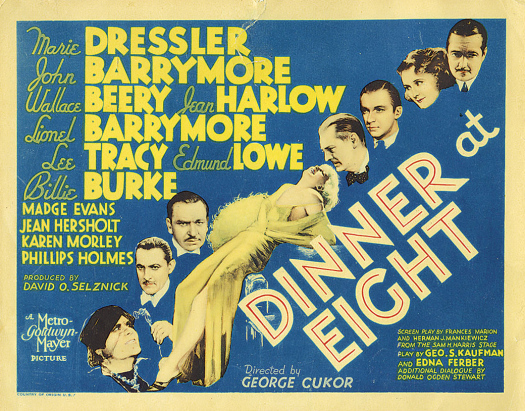
After the success of 1932’s all-star GRAND HOTEL, MGM studio boss Louis B. Mayer kept his sharp eyes peeled for a follow-up vehicle. The answer came with DINNER AT EIGHT, based on the witty Broadway smash written by George S. Kaufman and Edna Ferber. Mayer assigned his newest producer (and son-in-law) David O. Selznick, fresh from making hits at RKO, who in turn handed the director’s reigns to another MGM newcomer, George Cukor. Both would have long, prosperous careers there and elsewhere. Frances Marion and Herman Mankiewicz adapted the play to the screen for the studio with “more stars than there are in heaven”, and those stars truly shine in this film (in the interest of fairness, the stars will be presented to you alphabetically):
John Barrymoreas Larry Renault
The Great Profile plays aging, alcoholic former silent star Larry Renault in a role that surely hit close to home.
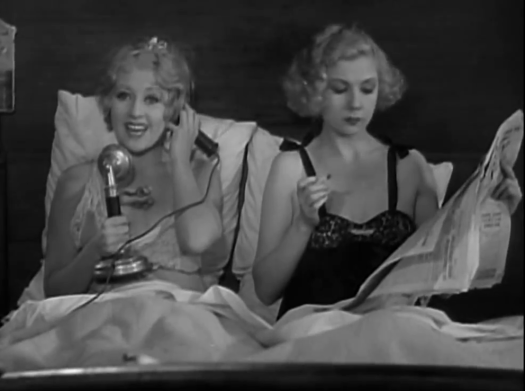
I know all of you, like me, will be watching tonight’s 89th annual Major League Baseball All-Star Game, and… wait, what’s that? You say you WON’T be watching the All-Star Game? You have no interest in baseball? Heretics!! But I understand, I really do, and for you non-baseball enthusiasts I’ve assembled a quartet of Pre-Code films to view as an alternative, starring some of the era’s most fabulous females. While I watch the game, you can hunt down and enjoy the following four films celebrating the ladies of Pre-Code:
DAUGHTER OF THE DRAGON (Paramount 1931; D: Lloyd Corrigan) – Exotic Anna May Wong stars as Princess Ling Moy, an “Oriental dancer” and daughter of the infamous Dr. Fu Manchu (Warner Oland)! When Fu dies, Ling Moy takes up the mantle of vengeance against the Petrie family, tasked with killing surviving son Ronald. Sessue Hayakawa (BRIDGE ON THE RIVER KWAI)…
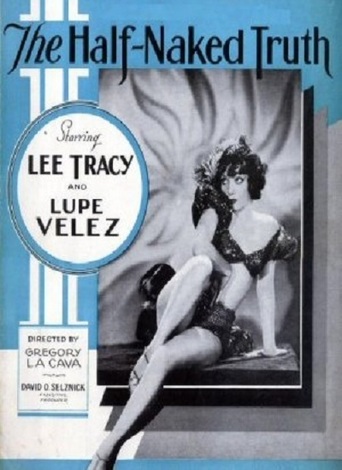
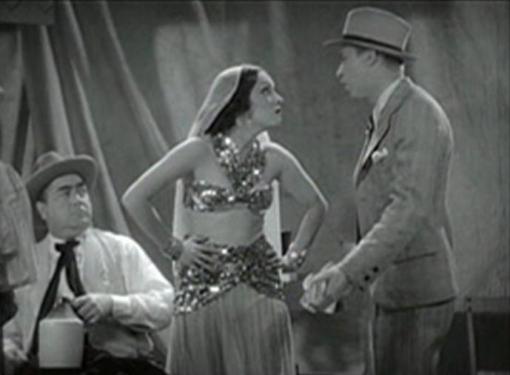
Director Gregory LaCava is remembered today mainly for a pair of bona fide classics: MY MAN GODFREY and STAGE DOOR. LaCava, who started his career in early silent animation, was also responsible for THE HALF-NAKED TRUTH, a Pre-Code screwball comedy begging to be rediscovered. It’s a crazy, innovative, pedal-to-the-metal farce headlined by fast-talking Lee Tracy and “Mexican Spitfire” Lupe Velez as a pair of carny con artists who work their way up to The Great White Way in grand comic style.
Tracy does his rapid-fire spieling schtick as a carnival barker promoting hot-tempered tamale Lupe, a hootchie dancer who spends most of the movie wearing next to nothing. Together with pal Eugene Pallette , they leave the carny life behind (with the law on their tails!) and head for Broadway, where Lee promises Lupe he’ll make her a star. The trio pawn Lupe off as Turkish Princess Exotica (with Tracy pawning off an unwitting…
“Does The Best Man Always Get To The White House?” asks the poster for the 1964 film, The Best Man.
Of course, nowadays, that question seems incredibly naive. Of course the best man doesn’t always get to the White House! Some of my friends are Republicans and some of my friends are Democrats and a lot of my friends are Libertarians but they all have one thing in common: the belief that at least half of the past 4 elections were won by the wrong man.
But, as anyone who has done their research can tell you, 1964 was a far different time from 2015. In general, people had greater faith in both government and their elected leaders. Ineffective leaders and corrupt authority figures were viewed as being the exception as opposed to the rule. We’re a lot more cynical now and, when we see political movies from the early 60s, all of that optimism and idealism often make them feel very dated.
Another big difference between the middle of the 20th Century and today is that, when it came to presidential nominating conventions, there was actually the potential for some suspense regarding who would win the nomination. Occasionally, it took more than one ballot for a candidate to be nominated. Last minute deals often had to be made and convention delegates were actually selecting an ideology along with a candidate. Political conventions were contests and not coronations.
Again, it’s obvious that times have changed and, as a result, a film like The Best Man, which may have seemed very provocative and shocking in 1964, feels a bit like an antique today. That doesn’t mean that it’s a bad film. In fact, The Best Man is an interesting time capsule of the way things used to be.
The Best Man takes place at a presidential nominating convention. The party is not specified but it feels like a Democratic convention. There are several candidates competing for the nomination but the two front-runners are former Secretary of State William Russell (Henry Fonda) and Senator Joe Cantwell (Cliff Robertson).
Much like the character that Fonda played in Advise & Consent, Russell is an intellectual, a calm and rational liberal. Much like Spencer Tracy in State of the Union, Russell is separated from his wife (Margaret Leighton) but the two of them are pretending to be a happy couple for the sake of the campaign.
Meanwhile, Joe Cantwell is a paranoid and ruthless opportunist, a former war hero who will do anything to win. The only person more ruthless than Joe Cantwell is his brother and campaign manager, Don (Gene Raymond).
(For those who enjoy history, it’s interesting to note that John F. Kennedy was a war hero-turned-senator who had a ruthless brother who doubled as his campaign manager.)
Both Cantwell and Russell come to the convention hoping to get the endorsement of former President Art Hockstader (Lee Tracy). While the pragmatic Hockstader cannot stand Cantwell personally, he also views Russell as being weak and indecisive.
However, both Russell and Cantwell have secrets of their own. When Cantwell discovers Russell’s secret and threatens to leak it, Russell has to decide whether or not to reveal Cantwell’s secret.
The Best Man was based on a stage play by Gore Vidal and the actual film never quite escapes its theatrical origins. And, in many ways, it feels undeniably dated. But it’s still a well-acted film, one that will probably be best enjoyed by political junkies and students of history. Before watching the movie, be sure to read up on the 1960 presidential election and then see if you can guess who everyone is supposed to be.


 I know all of you, like me, will be watching tonight’s 89th annual Major League Baseball All-Star G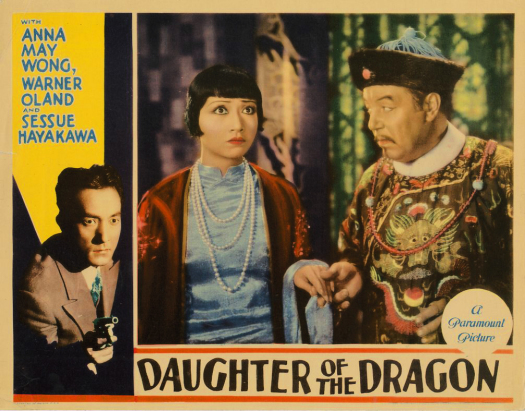

 Through the Shattered Lens