 In 1930, in response to claims that its movies were corrupting the youth of America (The more things change, the more they remain the same and all that…), Hollywood adopted the infamous Production Code. In the days before ratings, the Code told studio filmmakers what they could and could not put on screen. The Code told Hollywood that all crime must be punished, the only good sex was unseen married sex, that the clergy must be respected, and that the American way of life must be celebrated. Audiences could get rest assured that, if a film had managed to pass the Code, then that film was safe for impressionable minds.
Though the code was written out in 1930, it was not enforced in 1934. During those four years (known as the Pre-Code era), filmmakers responded to the looming reality of censorship by directing some of the most outlandishly sordid films that were ever made. Knowing that they would soon be forced to “play nice,” filmmakers decided to embrace as much sex, violence, suggestive dialogue, and as many tawdry situations as possible. The end results may have scandalized contemporary audiences but, for those of us today, these Pre-Code films can both be a lot of fun and continue to surprise us with just how far some of them went when it came to embracing the melodrama.
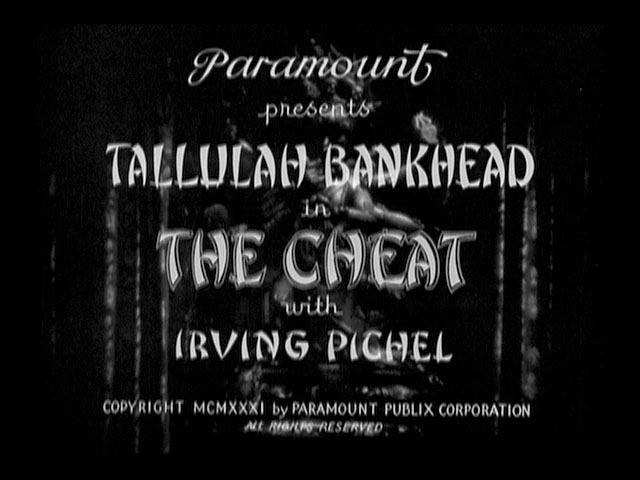
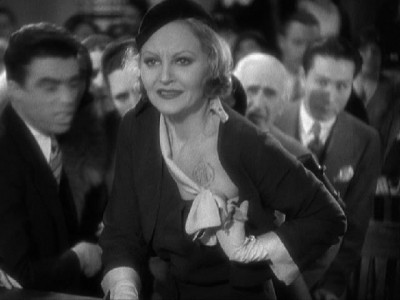
Take for example 1931’s The Cheat. Tallulah Bankhead plays Elsa Carlyle. Elsa is married to a boring but decent man named Jeff (Harvey Stephens). Jeff makes money and then Elsa spends it. Elsa is also a compulsive gambler and, after making one ill-fated bet at a local casino, Elsa finds herself owing more than she can pay.
That’s when the wonderfully sinister Hardy Livingstone (Irving Pichel) steps into the picture. Livingstone is a rich man who has spent the last few years living in Japan. As Livingstone explains after inviting Elsa back to his shadow-filled mansion, he is obsessed with Japanese culture, especially the idea of having his own personal geisha. (Admittedly, the film itself promotes the simplistic western assumption of just what exactly a geisha is. The truth is far more nuanced but — in the film’s defense — the brutish Livingstone doesn’t exactly come across like someone who would be smart enough to perceive or appreciate things like nuance.) Hardy agrees to pay Elsa’s debt if Elsa agrees to become his personal sex slave. Rather than tell her husband that she lost their money, Elsa agrees.
However, once Elsa returns home, she discovers that one of Jeff’s business deals has paid off. They’re rich! And Elsa now has more than enough money to pay back her gambling debts. Elsa goes back to Hardy and tells him that the deal is off. Hardy responds by declaring that Elsa is now his property and, to prove it, he literally brands her in a scene that is all the more disturbing because it is seen almost entirely in silhouette.
(Seriously, this was a pretty intense scene! Eli Roth has nothing on George Abbott!)
As often happened in the 1930s, all of this leads to Elsa shooting Hardy and Jeff confessing that he did it and being put on trial for attempted murder. The trial itself is pretty much a standard courtroom drama but it is memorable for the scene in which a bunch of courtroom observers are so offended by one witnesses’s testimony that they spontaneously respond by beating the crap out of the accused.
You can find The Cheat (along with 5 other films) on one of my favorite DVDs, the Pre-Code Hollywood Collection. It’s a film that I highly recommend to anyone who wants to see just how sordid a Pre-Code Hollywood film could truly be. Along with appealing to our historical curiosity, The Cheat also features an excellent lead performance from the legendary Tallulah Bankhead and a perfectly villainous turn from Irving Pichel. Finally, like many Pre-Code films, The Cheat serves as an interesting walking tour through the usually hidden recesses of the American psyche. In short, it’s a valuable portrait of the type of worldview that the Production Code was supposed to banish from existence.
 Through the Shattered Lens