 The first 20-30 years of the 20th century was an ever-changing time for the burgeoning film industry not just in North America but in Europe. Many filmmakers in Europe began to take the motion picture camera and began to use them in ways which went beyond just capturing motion and sound then selling them to the masses as a new form of entertainment.
In Germany, we had the rise of German Expressionist movement with such luminaries as F.W. Murnau, Robert Weine, Fritz Lang and Paul Wegener. Over in France the 20’s saw the rise of a new movement in cinema that would quickly become the Surrealist movement which would include such filmmakers as Jean Cocteau, Germaine Dulac and René Clair. There is one filmmaker who made a major impact on French Surrealist cinema during the 20’s and he was actually a Spaniard whose first film became a major sensation then and continues to be one to this day: Luis Buñuel.
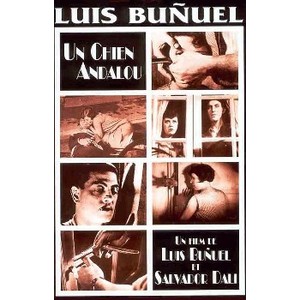
Buñuel’s first film was actually a short film he had made with the help of Spanish surrealist painter Salvador Dalí. Un Chien Andalou (An Andalusian Dog) is a 16-minute film well-known for Buñuel’s use of disjointed chronology to give the film that very surreal quality we tend to attribute to our dreams. The film has Dalí’s influence in almost every scene and one of which would go down in film history as one of the more shocking visual sequences ever put on film. I would describe it but it’s better to just see it for yourself below.
Un Chien Andalou doesn’t really make much sense when one tries to watch it in a purely structured narrative. The film’s inherent genius comes from the fact that it’s chaotic in how it unfolds with scenes chronologically moving back and forth with no impact on the characters within them. Some have called this film a perfect example of dream logic in that while the scenes in themselves do not make any sense when looked at individually they do seem to share particular traits when seen as a whole.
It’s difficult to say whether this film was entertaining. For someone looking to learn more about the craft of filmmaking, especially the part on storytelling, then Un Chien Andalou is quite an eye-opener. But In the end, Luis Buñuel’s first film has less to do with trying to entertaining and more of one filmmaker’s attempt to put into film the very intangible quality and nature of one’s dreams.
Un Chien Andalou is what I’d call the anti-Inception. Where Nolan’s film about dreams still retained a surreal quality to them they were still very much structured with order in mind. Buñuel’s short film is all about the chaos nature of dreams and no one has done it better since the day he released this classic in 1929.
 Through the Shattered Lens