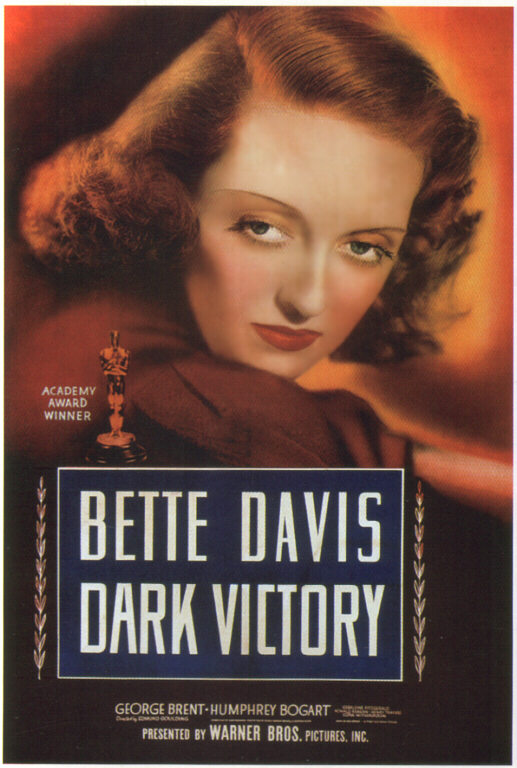
For our next melodrama, we take a look at the 1939 best picture nominee, Dark Victory.
Well, with a name like Dark Victory, you can probably guess that the story told be this film isn’t going to be a cheerful one. Bette Davis plays Judith Taherne, a spoiled and self-centered socialite whose life revolves around hanging out with her constantly inebriated friends (one of whom is played by future President Ronald Reagan) and riding horses. When Judith starts to suffer from double vision and headaches, she initially ignores the problem but, as her condition worsens, she finally agrees to see a doctor.
Well, as you can probably guess, the news is not good. Dr. Parsons (Henry Travers, who is best known to us classic film lovers as Clarence Oddbody, the angel from It’s A Wonderful Life) refers her to Dr. Steele (George Brent), a brilliant neurosurgeon. At first, Steele is reluctant to treat Judith. He, after all, had been planning on giving up his New York medical practice so he can move to Vermont and spend his time doing research. Judith, for her part, resents having to see him and treats him rudely. However, when Dr. Steele discovers that Judith has a malignant brain tumor, he decides to put off moving to Vermont so that he can treat her (and, needless to say, fall in love with her as well).
After getting Judith to agree to surgery to remove the tumor, Steele discovers that the entire tumor cannot be removed and that Judith has only a few months to live. Though Judith won’t feel any pain, she will die shortly after experiencing total blindness. Hoping to make Judith’s last few days pleasant, Dr. Steele tells her that the surgery was a complete success and he also conspires with Judith’s loyal secretary, Ann (Geraldine Fitzgerald), to not allow Judith to find out about her terminal condition.
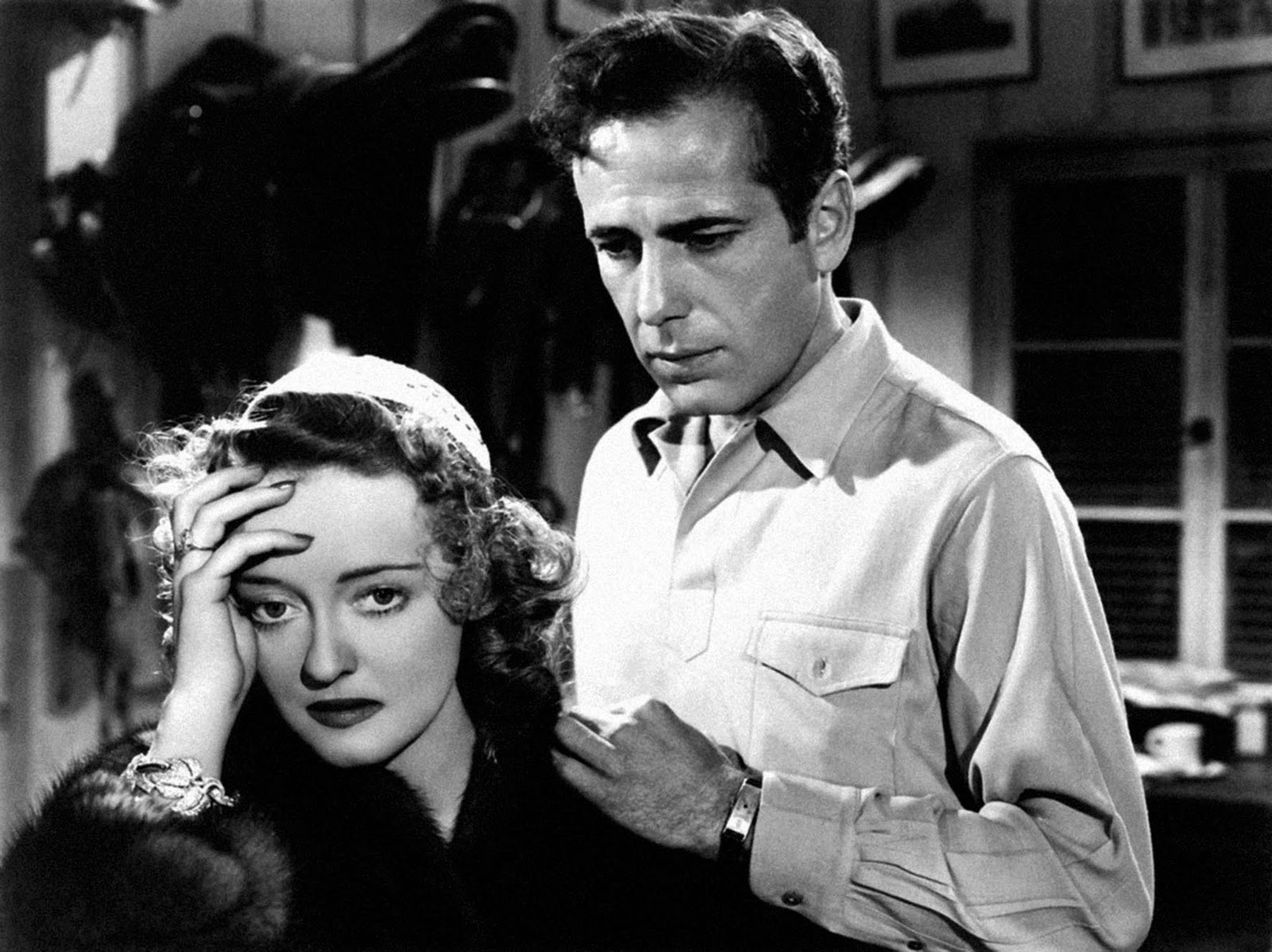
Steele also asks Judith to marry him and move to Vermont with him. Judith agrees but, when she discovers Steele and Ann’s deception, she breaks off the engagement and returns to her decadent and wild ways. Can her Irish stablehand (played by Humphrey Bogart) talk some sense into Judith before it’s too late?
If you want to nitpick, you certainly could do that with a film like Dark Victory. Yes, the film is predictable and yes, Humphrey Bogart is a bit miscast and yes, this film probably did set a precedent for movies about independent women being both punished and redeemed by terminal illness. Nitpick away but none of it really matters because Dark Victory works almost despite itself.
Whatever flaws the film may have, it also has Bette Davis delivering one of her best performances and making even the most overdramatic of events feel plausible and real. Bette Davis gives a performance that runs the gamut from A to Z and then keeps running until it discovers letters that you didn’t even know existed. (Okay, I didn’t come up with that description on my own. A reviewer named DJ Kent said it on the IMDB but it was such a perfect description for what Bette Davis does here that I simply had to repeat it.) Dark Victory is often described as being a “tear jerker” and, by the end of the film, I was in tears. If even as lively and strong a character as Judith Taherne can’t beat death, what hope do the rest of us have?
But, at the same time, the film is not just about the dark. There’s also a victory to be found in the darkness and that victory comes from the fact that even if Judith can’t beat death, she can at least face it under her own terms. By the end of the film, you’re sad because Judith is going to eventually die but you’re also happy because she lived.
 Through the Shattered Lens