Film Review: Portrait of Jason (dir by Shirley Clarke)


The 1967 film, Portrait of Jason, is one of the most fascinating documentaries that I’ve ever watched.  It’s also one of the most exhausting.

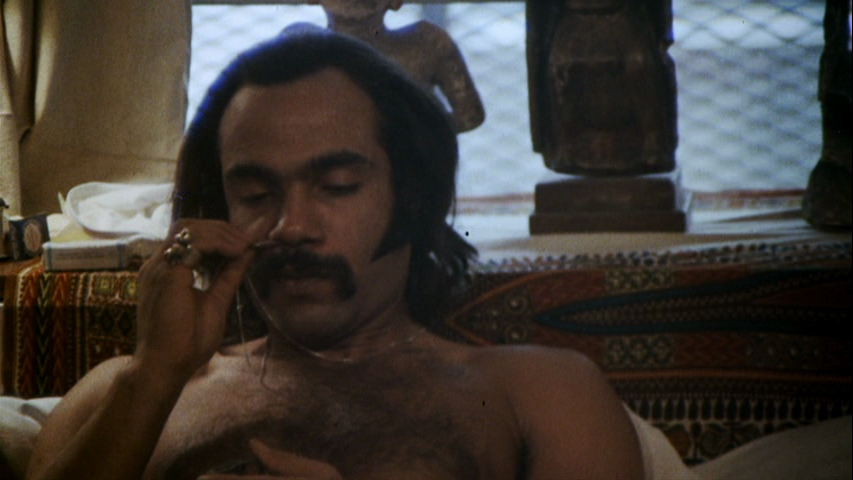
Directed by Shirley Clarke and filmed over the course of 12 hours in Clarke’s apartment, Portrait of Jason is, at its most basic, an interview with a self-described “hustler” who goes by the name of Jason Holliday. Holliday starts things off by explaining that he was born Aaron Payne but that he was renamed Jason Holliday by a friend of his in San Francisco.

“Jason Holliday was created in San Francisco,” he explains, “and San Francisco is a place to be created.”

The entire film is Jason either standing or sitting in front of a fireplace and talking about his life as a gay black man in America in the 1960s.  (Occasionally, voices are heard off camera, asking him questions.)  From the start of the film, it’s obvious that Jason is a great talker.  He has a way with words and it’s almost impossible not to get swept up in his stories, even if they are frequently hard to follow and sometimes contradict themselves.  As Holliday admits from the start, he is a man playing a role.  Over the course of the film, he smokes, he drinks, and he gets stoned.  He talks about being both a cabaret performer and a prostitute.  He wraps a feather boa around his neck and, when he sings, he takes on a totally different persona.  In fact, it can be argued that the entire film is about Jason taking on different personas.  Over the course of his marathon interview, he is sometimes happy, sometimes angry, sometimes sad, sometimes manipulative, and sometimes defiantly honest.  He admits to using people but, at the same time, when he suddenly very coldly announces, “I can make you feel like the most desirable human being on Earth,” you can’t held but admire his honesty.

In the beginning, Jason laughs.  Jason’s high-pitched giggle almost becomes a separate character, we hear it so often.  He uses the laugh in the way that some people use a period to end a sentence.  The laugh comes out when a story is over.  And yet, over the course of the film, we come to realize that the laugh is Jason’s left defense.  Whenever he feels that the story is getting too personal or that he might be revealing too much of what’s underneath the surface, Jason laughs.  The laugh is what Jason Holliday uses to keep Aaron Payne from coming out.

And yet, as the film progresses, the laugh is heard less and less.  Drunk and stoned, Jason starts to let down his defenses just a little bit.  The off-screen voices, which originally had been so encouraging of Jason, starts to become vaguely hostile.  They ask him about specific instances that Jason has used all of the unseen people in the room.  And Jason starts to change.  His tone becomes sarcastic.  When he breaks down crying, the camera gives us a close-up of his face and it’s hard to watch.  You realize not only how exhausted Jason is but also how exhausted you are as well.  And yet, at the same time, you wonder if Jason is really crying or if this is just a part of his extended performance.

To be honest, this is one of those documentaries that raises all sorts of ethical questions.  Jason’s a fascinating character but it’s obvious that he was set up by the filmmakers.  Much as the film will leave you with mixed feelings about Jason Holliday, it will also leave you with mixed feelings about the people who got him drunk and then filmed his subsequent breakdown.

At the end of the film, we hear Shirley Clarke telling Jason, in almost comforting tone, “That’s it, that’s the end.”  When I first saw this film, I was happy to hear that it was over because I didn’t how much more of Jason’s breakdown I could take.  However, at the same time, I found myself looking forward to the next time that I would watch Portrait of Jason so that I could search for more clues as to just who Jason Holliday actually was.

Long thought to be a lost film, Portrait of Jason occasionally shows up on TCM Underground.  Keep an eye out for it.  It’s not always an easy film to watch but it’s worth the effort.

Film Review: The Connection (dir by Shirley Clarke)


1961’s The Connection opens with a title card and voice over from someone identifying himself as being J.J. Burden.  Burden explains that what we are about to see is the last known work of an aspiring documentarian named Jim Dunn.  Burden explains that, after he and Dunn filmed the footage that’s about to be shown, Dunn disappeared.  It was left to Burden to put the footage together and he swears that he has gone out of his way to stay true to Dunn’s intentions.

Of course, if you’ve watched enough old movies, you might recognize Burden’s resonate voice as belonging to the distinguished actor, Roscoe Lee Browne.  And, once the film starts, you may also notice that you’ve seen Jim Dunn in other movies.  That’s because Dunn is played by William Redfield, a character actor who specialized in playing professional types.

The Connection takes place in a New York loft.  A group of jazz musicians are waiting for their drug dealer.  Sometimes, they play music.  Sometimes, they look straight at the camera and answer questions about what it’s like to be a heroin addict.  While Burden always remains behind the camera, Jim Dunn occasionally steps in front of it and scolds the men for not being dramatic enough.  Dunn is attempting to stage reality.  Leach (Warren Finnerty), the most verbose of the addicts, taunts Dunn over never having done drugs himself.  Dunn jokingly says that maybe he could start with some marijuana.

This is no Waiting for Godot.  The dealer does eventually arrive.  His name is Cowboy and he’s slickly played by Carl Lee.  (Carl Lee was the son of Canada Lee, who appeared in Hitchcock’s Lifeboat.  Sadly, 25 years after filming his role in The Connection, Lee would die of a heroin overdose.)  He’s accompanied by a flamboyant woman named Sister Salvation (Barbara Winchester).  As Burden films, the musicians enter a small bathroom one-by-one, so that they can shoot up.  Music is played.  Overdoses are dealt with.  And Dunn, who was originally so detached, becomes more and more drawn into the junkie life style…

Was The Connection the first mockumentary?  To be honest, I’m really not sure but it definitely has to be one of the first.  The beginning title card (and Burden’s narration) feels like it could easily be used in front of any of the hundreds of found footage horror films that have been released over the last few years.  The film itself makes good use of the found footage format, though it’s also trapped by the genre’s limitations.  With all of the action taking place in just one room, there’s no way that The Connection can’t feel stagey.  (And, indeed, it was based on a play.)  Along with detailing the lives of those on the fringes of society, The Connection makes some good points about the staging of reality, though it never goes quite to the lunatic extremes of Ruggero Deodato’s Cannibal Holocaust.

(The Cannibal Holocaust comparison is not as crazy as it may sound.  Much as how the arrogant filmmakers in Deodato’s film attempted to exploit the cannibals, Jim Dunn attempts to exploit the addicts.  When the addicts and Cowboy start pressuring Dunn to try heroin, it’s not that much different from the cannibals eating the cameraman in Cannibal Holocaust.  The exploited are getting their revenge.)

The Connection was the first dramatic film to be directed by documentarian Shirley Clarke and, like many of Clarke’s films, it struggled to find an audience.  (Both the film and Clarke would have to wait several decades before getting the recognition that they deserved.)  The subject matter was considered to be so sordid (and the language so shocking) that the film was originally banned in New York.  The filmmakers actually had to file a lawsuit to get the film released.  The New York State Court of Appeals ruled the film was “vulgar but not obscene.”

Seen today, the film seems to be neither vulgar nor obscene.  Instead, it seems like a time capsule of the era in which it was made.  We tend to think of the early 60s as a time of beach movies, drive-ins, early rock and roll, and Kennedy optimism.  The Connection reveals that there was a lot more going on than just that.

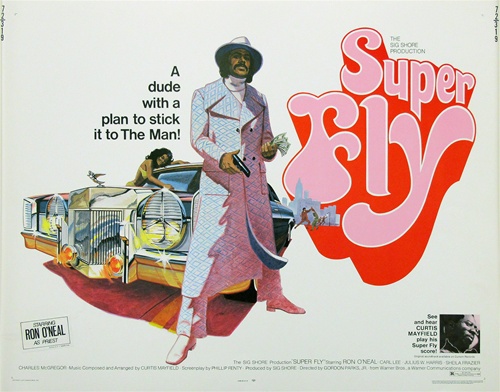
That’s Blaxploitation! 8: SUPER FLY (Warner Brothers 1972)


gary loggins's avatarcracked rear viewer

superfly1

Pimpmobiles, outrageous fashions, and the funkiest score in movie history are only part of what makes SUPER FLY one of the best Blaxploitation/Grindhouse hits of all time. This low-budget film by director Gordon Parks Jr. captures the grittiness of 70’s New York in a way few larger productions ever could in its portrait of a street hustler yearning to get out of the life.

superfly2

Priest is a New York City coke dealer with all the outward trappings of success. As his partner Eddie puts it, he’s got “8-Track stereo, color TV in every room, and you can snort a half piece of dope every day… that’s the American dream, nigga! Ain’t it?”. To Priest, the answer is no. He’s tired of the hustle, the rip-off artists, and the deadbeats like Fat Freddie, and he’s got a plan to get out for good by scoring 30 keys through his mentor Scatter, selling…

View original post 635 more words