4 Shots From 4 Films is just what it says it is, 4 shots from 4 of our favorite films. As opposed to the reviews and recaps that we usually post, 4 Shots From 4 Films lets the visuals do the talking!
Today, we celebrate the birth of Gene Kelly! It’s time for….
4 Shots From 4 Gene Kelly Films
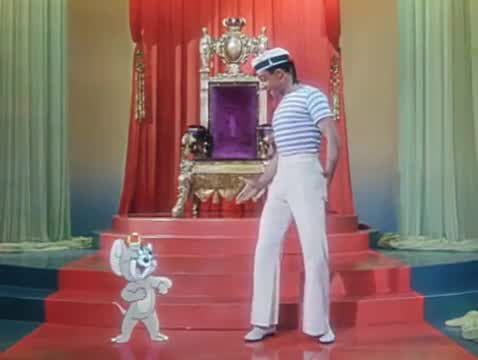
Anchors Aweigh (1945, dir by George Sidney, DP: Charles Boyle and Robert Planck)
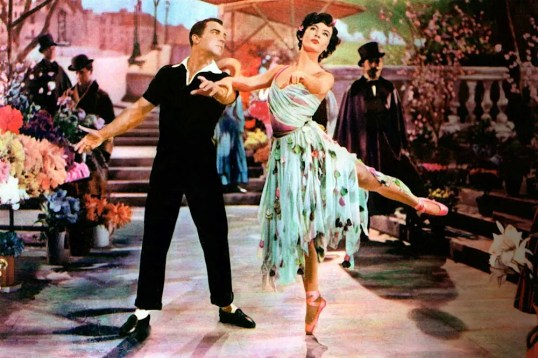
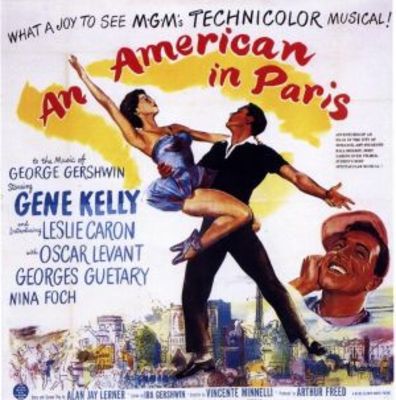
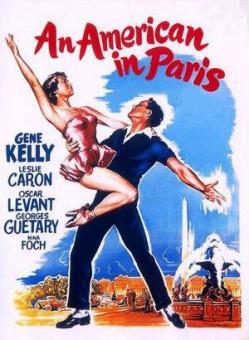
An American In Paris (1951, dir by Vincente Minnelli, DP: Alfred Gilks)
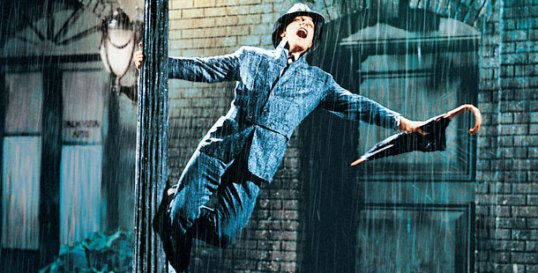
Singin’ In The Rain (1952, dir by Gene Kelly and Stanley Donen, DP: Harold Rosson)
Xanadu (1980, dir by Robert Greenwald, DP: Victor J. Kemper)
Today is the 117th birthday of the great director, Vincente Minnelli!
While Minnelli actually made films in several different genres, he’s best remembered for his many musicals. It’s been said that Minnelli was one of the directors for whom technicolor was invented and his musicals certainly prove the truth of that statement. Minnelli made films that not only celebrated music and dancing but which left audiences wanting to sing and dance themselves.
Several of Minnelli’s films were honored by the Academy. Two of his films won the Oscar for Best Picture and today’s scene that we love comes from the first one to do so, 1951’s An American In Paris. In this scene …. well, the why is not important. What’s important is the way the Gene Kelly and Leslie Caron move and the way that Minnelli captures and celebrates every movement.
(For those following at home, Lisa is attempting to clean out her DVR by watching and reviewing 38 films by this Friday. Will she make it? Keep following the site to find out!)
I can’t believe it took me this long to see the Oscar-winning 1951 film, An American In Paris. Seriously, I love dancing. I love Paris. I love Gene Kelly. Though this film was made decades before I was born, it still feels like it was literally made for me. And yet, until last night, I had never seen it. Thank God for TCM (and thank God for the DVR that I used to record the movie when it aired on TCM).
Gene Kelly plays Jerry Mulligan, an American veteran of World War II who, now that he is out of the army, is making his living as a painter and living in Paris. (The real Paris is only seen in a few establishing shots. Most of the film takes place on sets that were clearly designed to look more theatrical than realistic. This is the Paris of our most romantic fantasies.) Jerry’s roommate is Adam (Oscar Levant), a pianist who fantasizes about playing before a huge audience.
When the movie begins, Jerry gets his first patron, the wealthy and lonely Milo Roberts (Nina Foch). Though Milo is in love with Jerry, Jerry falls in love with an innocent French girl, Lise Bouvier (Leslie Caron). Although Lise falls in love with Jerry, she feels obligated to marry French singer Henri (Georges Guetary) because Henri helped to keep her safe during the Nazi occupation. And, of course, Henri is friends with Adam who is the roommate of Jerry who is in love with Lise who is engaged…
It sounds a lot more complicated than it actually is. If anything the plot of An American In Paris is too simple. (Just compare An American In Paris to Singin’ In The Rain.) But ultimately, An American In Paris is not about the story. It’s about George Gershwin’s music and Gene Kelly’s dancing. It’s a triumph of pure style. It was said that Fred Astaire made love through dancing and that’s even more true of Gene Kelly, who is literally a force of masculine nature in this film. So impressive was his choreography that it received a special, noncompetitive Oscar.
Check some of this out:
It all eventually ends with the incredible 17-minute The American In Paris Ballet, which sees Gene Kelly and Leslie Carson dancing through a series of sets that were modeled on Impressionist paintings. It’s one of those great movie moments that simply has to be seen.
How impressed were the members of the Academy with An American In Paris? They were impressed enough to name it the best film of 1951. I don’t know if I would go that far because I’ve seen both A Streetcar Named Desire and A Place In The Sun. (And An American In Paris‘s victory is considered to be one of the biggest upsets in Oscar history.) But, with all that said, An American In Paris is still an incredibly enjoyable film to watch.
As part of my mission to see every film ever nominated for best picture, I watched George Stevens’ A Place In The Sun this weekend. A Place in the Sun was released in 1951. It was a front-runner for best picture but in an upset, it lost to An American In Paris. (Another best picture loser that year: A Streetcar Named Desire.)
Montgomery Clift plays George Eastman, a poor man with a religious fanatic mother and a wealthy uncle. Looking to make his fortune (i.e., to find his “place in the sun), George gets a job working in his uncle’s factory and quickly starts a romance with one of his co-workers, the shy and insecure Alice (Shelley Winters). However, even as he and Alice settle down to a life of dreary romantic bliss, George discovers that the Eastman name also allows him to mingle with (if never truly belong to) high society. He meets the rich (and shallow) Angela Vickers (played by Elizabeth Taylor) and soon, he’s also romancing her. Neither Angela or Alice is aware of the other’s existence and for a while, George has the best of both the world he desires and the world in which he actually belongs. Eventually, George decides that he wants to marry Angela and become a part of her world. However, there’s a problem. Alice is pregnant and demanding that George marry her or else. The increasingly desperate George quickly decides that there’s only one way to get Alice out of his life…
A Place in the Sun was based very loosely on Theodore Dreiser’s 1925 novel, An American Tragedy. While the movie remains (more or less) faithful to the novel’s plot, director Stevens jettisons most of Dreiser’s heavy-handed Marxism and instead concentrates on the more melodramatic elements of the story. The end result is a glorious soap opera that is occasionally a bit tacky and heavy-handed but always watchable and entertaining.
Stevens is helped by the three lead performances. As Angela, a stunningly beautiful Elizabeth Taylor manages to be both calculating and clueless, seductive and innocent. As her counterpart, Shelley Winters gives a really brave performance as Alice. The film is structured that its impossible not to feel sorry for Alice. The genius of Winters performance is that she (and director Stevens) allowed Alice to become a real, flawed human being as opposed to just a symbol of victimization. However, the film is truly dominated by Montgomery Clift. Clift is in just about every scene and his own rather fragile persona translates wonderfully in the role of George. Was Montgomery Clift ever as handsome as he was in A Place In The Sun? He gives a perfect performance as the type of guy that every girl has known, the guy that we fell in love with not because of who he was but who we thought he could be. These are the guys who always end up breaking our hearts, they’re the ones who we still can’t help but think about years later, always wondering “why?”
Unlike a lot of older films, A Place in the Sun remains remarkably watchable and relevent today. Perhaps its most famous scene involves a capsized rowboat and oh my God, that scene freaked me out so much. Admittedly, a lot of that had to do with the fact that I have this morbid fear of drowning (and, like one of the characters in this film, I can’t swim) but director Stevens also does a great job building up the scene’s suspense. He makes brilliant use of sound especially, in much the same way that Francis Ford Coppola would later use that roaring train in The Godfather. Seriously, I watched that scene with my hands literally over my eyes, just taking an occasional peek until it was all over.
One last note — there’s an actor in this film who plays a detective. You’ll see him if you play the trailer at the top of the post. His big line is “You’re under arrest.” I have no idea who this actor was but he had one of the most authentic and memorable faces that I’ve ever seen in a movie, regardless of when the movie was made. He had the type of presence that reminded me why I love character actors.

 Through the Shattered Lens