Throughout the 2000s, Agalloch unleashed a series of albums that have influenced countless bands across the metal spectrum. Not only did Ashes Against the Grain (2006) play an enormous role in ushering in the era of post-black metal, but Pale Folklore (1999) pioneered the folk metal aesthetic for a nation whose traditional genres stood leagues apart from the metal scene. (It would be another decade before Austin Lunn nailed a metal interpritation of bluegrass.) Most American folk metal bands carry Agalloch’s stamp of influence with them, and why not? Pale Folklore perfectly captures a sense of melancholy mystery that reflects a land whose native sons were slaughtered, leaving their secrets only a faint whisper in the air.
Gimmicks don’t always work out as intended. When I heard that Ghost Bath were not, as they once claimed, Chinamen from Chongqing Municipality, but rather well-mustached American hipsters, I believe my first question was “who?” But if this band’s efforts to fool fans before they actually had any comes off a bit less clever than stupid, my negative points end there. Moonlover is a pretty interesting work from its cover all the way to the closing track. Hailing from the far more obscure and frostbitten wasteland of North Dakota, Ghost Bath have forged a really solid sophomore LP that should stand among the better metal albums we hear this year.
Track: “Golden Number”
After a brief, haunting intro track that definitely lends credence to their name, Moonlover makes an awkward but forgivable transition into a really uplifting number that has everyone on the internet comparing them to Deafheaven. With one of those explosions of emotional, half-heartbroken half-triumphant post-black metal glory that sounds more familiar every year, followed by a kind of punk lick underlined by passionate, poppy drumming straight off Amesoeurs’ Ruines Humaines and unearthly vocal shrieks, “Golden Number” is certainly in line with the trend of the day. It kind of feels like someone drug Woods of Desolation out of their basement and shoved them into a top-notch recording studio, and yes, the comparisons to Sunbather have their merit too. But if Ghost Bath are not necessarily pioneers, they are definitely refining the machine.
Much like post-rock, where you had a whole bunch of totally distinct bands making waves while everyone else ripped off Mono–and we could hardly complain about that–post-black metal is definitely developing a “standard” sound. “Golden Number” is that sound to a T, and I absolutely love the clarity with which Ghost Bath pull it off. This is a genre born of static noise. It was the realization that you could invoke a lot of emotion by hiding something pretty in an aural cesspool that really kicked off the scene, and even Deafheaven’s “Dream House”, for all its ability to swoon foreign audiences, was really heavily distorted. The noise carried the passion, but it was also limiting. Moonlover is a surprisingly clean album, and because of it the band can do subtle things that I don’t often hear. The tremolo at the beginning of “Golden Number”, for instance, is complemented by a second, barely audible guitar that’s tapping instead of picking. Maybe post-bm has gone that route before, but if so I never noticed it. The clarity on this song, at least relative to its genre, allows me to detect these things, and the end product feels so much more full of life for it.
“Ghost Number” ends with two minutes of piano, and “Happyhouse” picks the metal back up with a totally different feel from the song before it. Three minutes of melancholy plodding lead into a fresh vision of that ghostly guitar we heard in the intro track, and Dennis Mikula treats us to more of his otherworldly screams. Amesoeurs again comes to mind, and I have to believe Neige was an inspiration on this band in more ways than one, but to me Mikula’s vocals sound most reminiscent of Ygg, a short-lived but brilliant Ukrainian trio featuring former members of Nokturnal Mortum and Helg from Khors. “Happyhouse” erupts into black metal for only a passing burst of intensity before returning to its moody plod. Post-rock guitar ultimately defines the song’s direction, while Mikula’s outstanding vocal performance brings the depth. “Happyhouse” could be a cookie-cutter bore, but the band’s keen execution and knack for making their short repeated phrases consistently catchy turns it into something I can really embrace.
10 minutes go by before you hear another ounce of metal, but I would hardly call it a wait. “Beneath the Shade Tree” and “The Silver Flower pt. 1” are both dreamy guitar-driven visions of forests and streams, feeling perhaps a cross between Agalloch and Alcest. The nature effects on the latter track especially brought to mind the intro and outro to Alcest’s “Le Secret”, though I’m sure you could name a dozen other bands that might have played an influential hand here. The origins are quite irrelevant; these two songs only beg identification because they are so vivid and beautiful. The sound is ultimately the band’s own.
Track: “The Silver Flower pt. 2”
When Moonlover‘s heavier half does return, it feels infused with the spirit of the instrumental tracks before it. “The Silver Flower pt. 2” floats along with no edge to speak of beyond the first minute, drifting on the dream that came before. If it weren’t for Mikula’s persistently tormented vocals–a bit out of place now, I must admit–it could pass as a moody but up-tempo rock song. The style feels strikingly familiar, yet I can’t put a finger on it. It’s sort of equivalent to how Katatonia were playing around with the metal sounds of their day in the late 90s, and it calls the whole “black metal” label for this band into question. Moonlover incorporates so much more, riding a dozen different stylistic approaches to take us on a journey. We started out with a burst of passion–a sense of fulfillment and life–on “Golden Number”, then road down a path into depression with “Happyhouse”. The commune with nature in “Beneath the Shade Tree” and “The Silver Flower pt. 1” revitalizes, moving the album from positive and negative extremes to an even-keel, smooth ride on “The Silver Flower pt. 2”. The final track, “Death and the Maiden”, sort of brings us around in a circle. The equilibrium of “pt. 2” picks up its pace here, growing in excitement until the return of a black metal sound breaks it. We’re back to highs and lows, and we end on the latter. The album trickles out in a dark depressing grind back into the haunting sounds of the introduction, and that opening melody repeats, now made even more ghostly through a synth whistling tone.
I like it. Moonlover feels like a complete package, flushing out a musical narrative that consistently develops from track to track. It might not match up precisely to the picture it painted in my mind, but a progression is definitely there. Ghost Bath refuse to restrict themselves to one genre, incorporating a wide array of styles into a really coherent whole. The drums are tight, the guitarists can pull off some neat noodling but know when to keep it simple, and the album is book-ended by its two best tracks. I don’t think it would have hurt Dennis Mikula to chill out on the screaming for a bit on “The Silver Flower pt. 2”, but over all I love his vocals. There’s not much I can complain about. And since I want to start making a point to link where you can purchase the albums I ramble about: go adopt a moon on Bandcamp.
I don’t think a New Years rolls by that I don’t say something amounting to “odd-numbered years produce better music”. The trend inexplicably holds true once again. I actually listened to a good bit of new music this year–far more than I did last year at least–but when it came time to recap, my options felt… a bit lacking. The best of the best are still grand indeed, but the quality drifts away rapidly if I dig beyond a top 10. I’m pretty happy with the list I ended up with though, and I hope you’ll find something new and inspiring in the tracks I’ve sampled below:
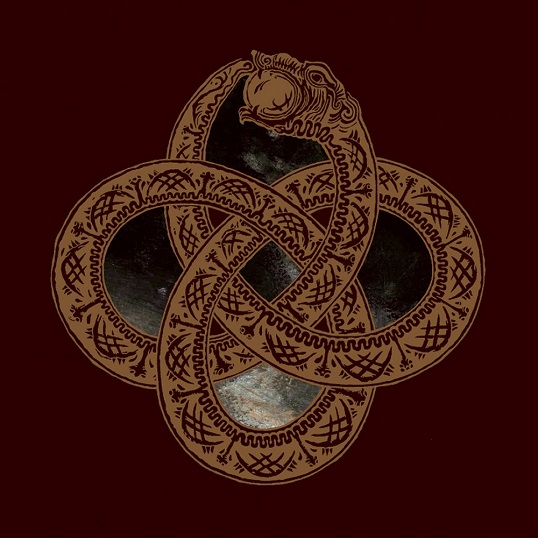
10. Agalloch – The Serpent & the Sphere (track: The Astral Dialogue)
Marrow of the Spirit was a pretty bold divorce from everything we’ve come to expect out of Agalloch over the years, for better or worse. On The Serpent & the Sphere, the band make a return to a more direct evolution of their regular sound. The album offers a nice mix of vintage Agalloch and further dabblings into the post-rock/metal sphere. It didn’t grab me by the balls and thrash me upside the head like say, Pale Folklore or Ashes Against the Grain, but it’s definitely a solid entry in the band’s formidable discography.
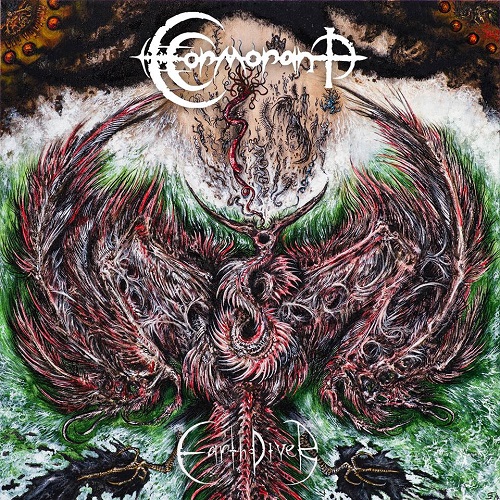
9. Cormorant – Earth Diver (track: Daughter of Void)
I was a bit more critical than complementary of Earth Diver when I reviewed it a few months ago, but that mostly boiled down to the feeling that it could have done with better production. Honestly, if I don’t own the cd proper I have no business speaking of such things, because for all I know my copy is just a bit lossy. The raw songwriting on this album is stellar, and I hope to hear more out of this band in years to come.
8. Bast – Spectres (track: Outside the Circles of Time)
I am not sure where Spectres would have placed on my year-end list had I had a bit more time to listen to it, but it could only have moved up from here. I’ve only had about two weeks to check this out and make a call, but I was dead convinced that it belonged somewhere in my top 10. The freshman album by this dirty doom trio does it all, and better than your band. With ease they develop a post-rock build-up into a bassy doom dirge, bust into a stoner metal rockout, and then fuse it into some pretty sinister black metal sounds. When black metal leaks its way into headbanging rock, really awesome things happen. Case in point: “Outside the Circles of Time”.
7. Blut Aus Nord – Memoria Vetusta III – Saturnian Poetry (track: Clarissima Mundi Lumina)
A bit more down to whatever planet these guys hail from than the 777 trilogy, Saturnian Poetry is still a bizarre journey into another dimension that only Blut Aus Nord can seem to access. Its constant whirlwind of motion blasts us into a haze of celestial chaos, wherein the band’s synth chords and clean vocals command us to stare in awe and reverence. Few black metal bands on the market can claim to have forged as unique a sound within the genre as Blut Aus Nord, and they’re still breaking my brain in 2014.
6. Saor – Aura (track: The Awakening)
I tend to think of Aura as a straight-forward album that serves its purpose beautifully. Top-notch woodwinds and string paint a majestic Scottish landscape where the old gods still tread in all their glory, at one with the earth and its people. Without ever really breaching any new territory beyond the tried and true boundaries of pagan metal, Andy Marshall has managed to craft what is probably the most grand Gaelic/Celtic variant of the genre I have ever heard.
5. Boris – Noise (track: Melody)
I fucking love Boris. You know that. They could literally shit on an LP and I’d claim it shear brilliance. But thankfully, they keep pumping out one masterpiece after another instead. Noise is so layered in the band’s two decades of perpetual evolution that I don’t think you could begin to grasp what the hell is going on here if you didn’t already know half their discography by heart. It’s a little bit of everything they’ve done before all crammed together in yet another novel new way. No other band in existence sounds anything like this, and at the same time few bands have borrowed more liberally and diversely from other musical scenes than the bastion of badass that is Boris. Boris Boris. Boris! God damn, this is awesome.
4. Woods of Desolation – As the Stars (track: Unfold)
As the Stars is 2014’s Aesthethica, albeit of more modest proportions. If the obscure Welshman known simply as “D.” could append to his public image anything approaching the epic douchiness of Hunter Hunt-Hendrix, it might even be popular. (Ok, I’m one of the few people who’ve actually read Hunter’s writings and think he makes some valid points, but whatever.) This album is a bloody mess in the least figurative of ways, and it’s exactly the sort of raw sincerity that I love about post-black metal. In a new scene that divorces black metal’s brink-of-the-abyss soundscape from its machismo closet-bound harbingers, the bands that play with their hearts on their sleeves tend to touch closest to home. As the Stars offers neither the epic intensity of Liturgy nor the refined sound quality of Deafheaven, and the metal world is sure to forget it in time, but my brief love affair with Woods of Desolation will be remembered fondly. Its humble reach is part of what makes it endearing.
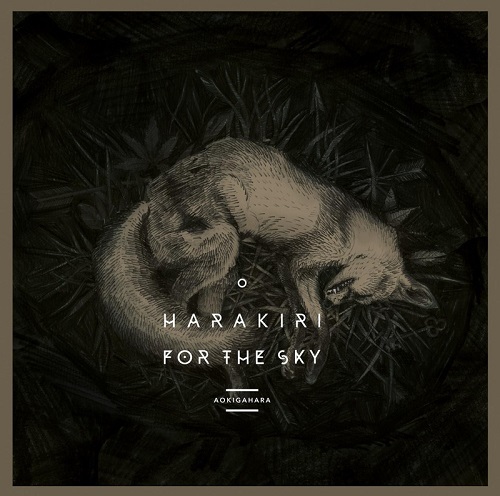
3. Harakiri for the Sky – Aokigihara (track: Jhator)
I hold my top three choices for 2014 in a league far above the rest. Aokigihara is an absolutely enormous bastion of sound that presses the weight of its world on your shoulders from start to finish. And that world is heavy indeed, because it is firmly rooted in reality. Harakiri for the Sky doesn’t play that tried and true metal game of glorifying violence. It shoves some real modern nightmares in your face and says “this is really, really terrible, and there’s nothing we can honestly do about it.” I can see this album attracting a “DSBM” label, which is typically shorthand for “wallowing in self pity”, but Aokigihara is the real deal. If it doesn’t leave you feeling a little sick inside, you aren’t paying enough attention.
2. Spectral Lore – III (track: The Cold March Towards Eternal Brightness)
At more than a dozen listens through this album, I am still not sure what to make of it. 87 minutes of music crammed into seven tracks is pretty hard to swallow, and to make matters worse, the first two tracks are its weakest by far. I find it next to impossible to commit myself to a full attentive listen from start to finish, and it’s not an album that offers much on the surface. Yet, I can’t escape the feeling that something really special is going on here. My mind may drift away for three or four minutes at a pop, but I am always drawn back into some beautiful synergy that dances on the brink of euphoria. 2014 might be at an end, but I haven’t finished listening to III by a long shot. I am going to keep plugging away until I’ve got it fully within my grasp, and when I do I think I might regret passing it by for the #1 spot.
1. Panopticon – Roads to the North (track: The Long Road Part 3: The Sigh of Summer)
The first time I heard Roads to the North, I was routing a rather lossy early leak through my Droid into the particularly horrendous sound system of my wife’s Mazda 6. (My 2006ish Nissan Sentra has godlike audio and the car was half the price. What’s up with that?) I definitely did not think on that initial listen that it would end up my favorite album of the year. With a properly purchased copy through my headphones, it’s easy to tell why an album as subtly mixed as this would translate to crap when pushed through crap. I am absolutely captivated by the melding of sounds on this album. It’s simply beautiful, and you couldn’t ask for a more conscientious artist to craft its folk, post-rock, black metal, and melodic death metal melodies than Austin Lunn. The lyrical and thematic content of Kentucky showed him to be one of the most honest musicians in the metal scene. On Roads to the North, he translated the spirit of Kentucky into sound. Kentucky is the album I think about. This is the one I actually listen to, over and over and over again.
If someone asked me what the most significant metal band of the past decade was, I am not entirely sure which name I would ultimately drop, but the elite circle of finalists would definitely include Agalloch. Pale Folklore (1999) and The Mantle (2002) pretty much defined America’s brand of folk metal, influencing countless bands to come as that global musical movement picked up steam. Ashes Against the Grain (2006) gave us one of the earliest incarnations of post-black metal on record. It might not sound much like what that term conjures to mind today, but in its day it was monumental, and time has not lessened the epic weight of tracks like “Limbs”.
But then there was Marrow of the Spirit (2010). This album was ugly. I can’t think of any better word for it. I won’t go so far as to say it was bad, but it was sufficiently displeasing to my senses that I never engaged it long enough to responsibly draw that conclusion. I didn’t want to listen to it, and it left enough of a bad taste in my mouth that I didn’t really want to listen to The Serpent & the Sphere either.
Agalloch – Birth and Death of the Pillars of Creation, from The Serpent & the Sphere
But I did listen to The Serpent & the Sphere. I listened to it quite a lot, actually, in the background as I worked or played games. It was pushing a dozen on my last.fm charts before I got to thinking “Hey, I ought to give that new Agalloch album a spin and review it.” Wait, have I heard this before? “Birth and Death of the Pillars of Creation” had been lulling me into such a passive state that I must have forgotten I was listening to anything at all by the time its ten minutes ran their course.
It’s the antithesis to Marrow of the Spirit‘s “Into the Painted Grey”, in a way. Where that track summoned in me the instant urge to rip my headset off my ears and put on something else, “Birth and Death of the Pillars of Creation” dug its way into the back of my skull and set its roots where I would barely notice them. It didn’t just get tuned out; it etched itself in my subconscious. And it’s no wonder. On my first really attentive play through, with the volume blaring, I find the track completely enthralling. It’s a brooding neofolk masterpiece best experienced without anticipation. If you listen wondering where it might lead, you are bound to grow impatient. If you just embrace it in the moment and let it consume you, you’re in for a treat.
Agalloch – The Astral Dialogue, from The Serpent & the Sphere
The next track, “Serpens Caput”, is a gorgeous and rather brief acoustic instrumental, and then “The Astral Dialogue” kicks off like Pale Folklore was just released a year ago. The many inattentive listens before had engrained the melody in my mind without my knowing, and the familiarity was so strikingly similar to their 1999 debut that I found myself shocked to realize I had only first heard the song a few months ago. A dubious avant-garde interlude at 3:14 aside, “The Astral Dialogue” is old school Agalloch to a T. At least, I should say, the composition is. The feel is a bit different. Where Pale Folklore was as crisp as a cold winter sunrise, The Serpent & the Sphere has a much fuller sound. (Youtube, as usual, can’t hope to capture it all.)
The Serpent & the Sphere feels a bit frontloaded, with the opening 20 minutes being the most compelling, but “Dark Matter Gods” and “Celestial Effigy” carry on the Pale Folklore mid-tempo folk metal tradition. “Cor Serpentis” offers another fabulous acoustic interlude track much like “Serpens Caput”. I think the album loses steam a bit on “Vales Beyond Dimension”. We get a catchy hook at the beginning and near the end, but the plod in between feels a bit contrived.
Agalloch – Plateau of the Ages, from The Serpent & the Sphere
“Plateau of the Ages”, the final track before a brief acoustic outro, more than makes up for any second thoughts about “Vales Beyond Dimension”. It kicks along in the Pale Folklore tradition we are by now thoroughly reacquainted with until 4:20, when we hit a wall of post-rock. It switches back after a two minute taste of things to come, and we get the real grand post-rock exit from 9:30 to the end. It might not be the most breathtaking use of the genre that you have ever heard, but I love the way Agalloch take it and make it their own, masterfully fusing it to the sound that has defined them for years.
I have actually read a lot of comments suggesting that Agalloch lost their touch on The Serpent & the Sphere. It’s hard for me to see any grounds for that. I suppose it is not much like Ashes Against the Grain really, and not at all like Marrow of the Spirit, but I don’t regard those albums as Agalloch at their best. Ashes might have been their most significant work, but my heart was always for Pale Folklore. The Serpent & the Sphere feels like that album, more than anything they’ve released since it. Oh, it might not be quite as catchy, and it’s certainly not as raw or black metal infused, but it’s a pleasant blast back to the Agalloch I loved most.
Cormorant are a 4-piece San Francisco Bay band formed in 2007. They released their third studio album, Earth Diver, back in April of this year. Lacking major ties to any other band I have heard of, it’s probably no surprise that they stayed off my radar until now, but this is a band that definitely deserves some attention. Their well-crafted mix of folk, progressive rock, post-rock, and black metal sets a high standard at the cutting edge of metal today. While Earth Diver may possess a fatal flaw, it offers a world of potential that few bands can hope to realize.
Cormorant – Daughter of Void, from Earth Diver
Earth Diver opens with “Eris”, a two and a half minute instrumental folk guitar track with a bit of a Spanish flare. As nice as the song sounds in and of itself, I am not convinced that it was the ideal choice for their opener. The second track, “Daughter of Void”, kicks off acoustic as well, and with the two tracks combined, the intro just seems a bit overdrawn. Don’t worry though; that’s the last time I’ll be complaining about the album’s structure. The acoustic portion of “Daughter of Void” sets the stage nicely and gets us straight to the point without much delay, kicking the metal side of the song off theatrically. We start with a nice metal groove lacking any of the repetitiveness you might expect from a band with the “black” tag, and at two minutes their prog tendencies start to show. Black metal vocals give way to something reminiscent of Opeth or Mastodon, and the song shifts through a variety of genre norms without really breaking from the overall feel. The song hits a peak at 4:05 with an Amorphis-esque vocal melody and a really catchy rhythmic hook. The bending tremolo behind the vocals starting at 5:35 is sick, and they build on it further at 6:25. The song is just packed with little standout moments that never last long enough to seem like overkill. (The youtube video ends early, but you’re only missing eight seconds.)
This is the sort of track you could easily remember from start to finish, if you could get in to it enough to care. If. The down side to “Daughter of Void” is a fairly mediocre production job that fails to really pull me in. I can hear everything clearly enough, but I can’t really feel it. They are going for classic low-key grit over big, booming sounds, and I get that, but it feels pretty washed out. The sort of sound Agalloch accomplished with Ronn Chick on Pale Folklore could have pushed this song from above average to outstanding.
Funny fact I didn’t realize until I wrote this: Cormorant actually do share some production history with Agalloch. They work with Justin Weis, who did a notoriously shitty job on Marrow of the Spirit. Go figure.
Cormorant – Sold as a Crow, from Earth Diver
“Sold as a Crow” has a very different feel about it. We kick off with some delicious post-black metal. A pretty tremolo melody warps into a desperate cry as the distortion and blast beats kick into gear. The snare does not always feel quite on point with the guitar, but Lev Weinstein might just have me spoiled in that department. This is the kind of black metal I live for. I love the single-beat stop at 1:46 and 2:00. I love the harmony at 1:50 and 2:05. I love the octave shift at 1:52. I love the three seconds of guitar flare at 1:55. This constant barrage of subtle nuances tends to distinguish post-black metal from its ancestor, and it’s the reason I can recall every note of a 15-minute Krallice composition while an Immortal track might fade into the back of my mind in seconds.
At 2:36 the main melody returns with a sort of flowing, jazzy feel, and then the majority of the song repeats. We get some new variation at 4:03 as build-up to a minute of soloing to close out the track. Maybe because the ending doesn’t appeal to me quite as readily, the production of the album starts to eat at me again. It still feels a bit of a wash, lacking depth or crispness without a good reason. I can appreciate “Sold as a Crow”. I can love listening attentively to every note from every instrument, especially in the first two and a half minutes. But I’m left without that desire to hear it again, right goddamn now. I can never listen to a whole Krallice album at once, because I always get stuck on a track and set it to repeat ad nauseam. “Sold as a Crow” could have been a song like that, but its beautiful structure is not matched by compelling tonal quality.
Cormorant – Broken Circle, from Earth Diver
What you’re not going to hear on Earth Diver is more of the same. This isn’t the sort of album where I can describe two or three tracks and feel like I’ve summed the collective up well. Every song is a masterfully complex beast unto its own. With Opeth always on the tip of my tongue, peppered by Amorphis, Agalloch, and Krallice, Cormorant manage to remind me of a lot of the most unique bands in metal without ever paralleling any of them for long or losing its own unique flavor. “Broken Circle” has jazzy acoustic guitar a la My Arms Your Hearse Opeth, straight-up in-your-face black metal, a break to a distinct Orchid-era Opeth sound at 3:29, brief allusions to math rock, and a world in between. When the singer isn’t barking in classic black metal fashion, he might be pulling off his best Pasi Koskinen or Mikael Åkerfeldt impression, letting out a bellowing roar, or even shouting at the top of his lungs (2:04). You can often catch the bass running wild, sounding especially like Johan De Farfalla during the Orchid moment (why oh why did Mikael fire that man?). But as many band references as I can throw out there, the majority of “Broken Circle” sounds like Cormorant’s own unique creation.
And yet. And yet I can’t pull this album in and hold it close for long. What struck me as mediocre production from the start begins to feel like a travesty in the face of such absolutely brilliant compositions. This album was robbed of its well-deserved glory by a quality of sound that totally ostracizes me. I keep cranking the volume up louder and louder, hoping that I am just not experiencing it immersively enough to feel the pull. But it’s never there. Oh, it doesn’t sound half as bad as the transcoded garbage you’re hearing in these youtube samples. It would be fine for an average, run-of-the-mill album. But Earth Diver is not that. It deserved above-average attentiveness–something carefully crafted to showcase their sound in all of its uniqueness. I can’t help but think that if Colin Marston had gotten his hands on this raw potential it would have been molded into the best album of 2014.
There are two reasonable places to start with Aokigahara. One is to point out that that album cover is going to give me serious nightmares. The other is to state that this is an album of contradictions, its Austrian origins being only the most trivial. It is the most over-the-top emo cheese ball of lyrics you could hope to stumble across, with lines like “I’m losing friends and above all, I’m losing confidence,” and “I feel so fucking lonely.” Yet it succeeds in making me feel really, really sad time and time again. And in spite of track titles like “Nailgarden” and “Gallows (Give ‘Em Rope)”, it is really quite beautiful.
Harakiri for the Sky – My Bones to the Sea, from Aokigahara
As one of my first reviews in ages, you could have easily guessed that it would fall firmly in the post-black metal category. But where my last review, Woods of Desolation, showcased a sort of innocent jubilee with limited care for production value and plenty of homage to Explosions in the Sky and Alcest, Harakiri for the Sky’s Aokigahara offers exquisite attention to detail and a “post” sound rooted more in the Agalloch side of the spectrum. The opening track’s plodding dirge offers a lavish soundscape that wants to encompass you in vibrations without ever upping the tempo to a blast-beat driven daze. Don’t worry; there is plenty of that to come. But this is an album meant to be swallowed from start to finish, and not a second of its 60+ minutes feels unwarranted or out of place.
I don’t know much about mixing or production, but I have to think it doesn’t get much better than this. (Youtube bit rates do not come close to doing it justice.) The most immediate and consistently striking feature of the album to me is how well all of the instrumentation melds together. The bass manages to wrap itself around everything and remain distinct no matter how much activity is layered over top of it. The percussion is pleasantly quiet (a modesty so many black metal bands lack) and offers a faint echo that seems to reverberate back into the bass and make the two whole. V. Wahntraum’s vocals maintain their depth even when he rises to the point of an all-out scream (6:20, for instance), and he picks his words to emphasize with care. You might not know what he’s saying, but he manages to convey a sense of sincerity regardless. The guitar seems to bleed into the middle of it all with no distinct range, fading into the doomy haze at its extremities. The end effect is a warm blanket of a sound that wraps around you gently, letting you experience every aspect of it as a unified force.
Harakiri for the Sky – Jhator, from Aokigahara
I must have listened to twenty new albums passively while I worked over the last two days, and my back-of-the-mind impression of Aokigahara was “that one that made me feel cozy”. It wasn’t until I engaged it with no distractions that the darkness of this album really set in. The album cover should have been my first hint. You see the baby fox–an endearing little thing, bathed in warm, fading color–lying dead on a bed of nails and arrows, a grimace of pain across its face. You want to pull it out of the image and hold it close. You want to comfort it. But even if you could reach it, get ahold of yourself. It’s dead. There is nothing you can do. It evokes your most altruistic instincts and denies their use.
The sound of Aokigahara is that same kind of warmth. It is the kind you feel but cannot share, though every ounce of your body aches to. Matthias Sollak and V. Wahntraum let you know this in subtle ways. My first question about the band was “what’s with all this Japanese nonsense if they’re two white dudes from Vienna?” It begs you to hop on Wikipedia. Maybe “Harakiri” isn’t as well known of a word in Austria as it is in America. If it isn’t, “for the Sky” might have given you a positive vibe until you looked it up. I googled “Aokigahara”. I got “Suicide Forest”, a location at the base of Mount Fuji where hundreds of Japanese go every year to end their lives.
So I took a second look at the track titles to this “warm” album of mine. Track two was “Jhator”. Wikipedia: “Sky burial”. Jhator is a Tibetan practice of giving one’s body up for food to sustain the life of others in death. The closing lyrics to the song are “There is only one decision in our lives we can choose on our own: vultures or worms?” That sick knot in my stomach doubled.
Harakiri for the Sky – Burning from Both Ends, from Aokigahara
And then I thought about the track title that had intrigued me the most before I started this little investigation. “69 Dead Birds For Utøya”. I didn’t know what Utøya was, conveniently. The track title kind of already had that simultaneous warm and disturbing feeling to it. Kind of. I think it was the “69” that threw me off at first though, before I started giving the album a serious listen. I instinctively thought it was one of those “when heavy metal efforts to offend get downright weird” moments like Spear of Longinus’s hit classic “YHWH Penis Abominator”. So I googled Utøya. …It’s the fucking island in Norway where Anders Behring Breivik gunned down 69 children and camp organizers.
With the present track blaring in the background, I stared into the album cover in a thoughtless haze, an overwhelming sense of sorrow creeping over me. I wanted to puke, or cry, or put my fist through my monitor, and all from a track title and a melody. Truly great art digs into us and unlocks our deepest, most powerful emotions, whether we want to feel them or not. It plants the seed and screams our reaction louder than anything we can muster on our own. This was no attempt to be “heavy” or “brutal”–no boast about abstract violence or atrocities long relegated to the subject of myth–no Elizabeth Bathory or Vlad Tepes to keep us cool and edgy. This was art doing its job, and while the experience might not always be pleasant, it is always something beyond what we can safely allow ourselves to feel on a constant basis. We forget, we ignore, we desensitize, but the feelings are still there within us. An elite few bands like Harakiri for the Sky have mastered the art of bringing them back to the surface.
Harakiri for the Sky – Nailgarden, from Aokigahara
I definitely started throwing around “best of the year” boasts too early in my last post. I should have kept my mouth shut until I’d done a good dozen or so reviews and not based my opinions on a bunch of superficial background noise listens, because Aokigahara has already struck me deeper than the last album I had a go at. The music is excellent from start to finish without a doubt, but it’s the underlining theme and presentation that tips it on the scale of greatness. From the song writing to the production to such typically afterthought factors as track titles and cover art, Aokigahara bleeds a common creative agenda. The warmth you feel and think and see is real, but any time you try to take it beyond yourself, you find only loss that you are helpless to counter. “I feel so fucking lonely, although I am never alone,” might be a cheesy lyric in and of itself, but Aokigahara manages to imbue it with substance. Real, brutal substance, like being totally impotent to stop a gunman from slaughtering helpless kids. Maybe the lyrical conclusions are flawed; there seems to be a hint of indifference in the end of every song–a resolution that life just isn’t that important. But it is not convincing. The overarching focus is the helplessness, not the apathy. It’s a 63 minute ball of compassion that you simply cannot share. And let’s be honest, who listens to black metal with their friends?
Decade of last.fm scrobbling countdown:
46. Agalloch (653 plays)
Top track (147 plays): Odal (Demo), from The End Records Sampler: At the End of Infinity [Echoes & Thoughts of Wonder] (2002)
Featured track: Limbs, from Ashes Against the Grain (2006)
Throughout the first decade of this century, Agalloch stood at the forefront of some of the most progressive movements in metal. They were the product of a new generation of musicians exceptionally well informed on musical trends happening outside of their own genre. Citing such diverse influences as Katatonia, Ulver, and Godspeed You! Black Emperor, they endowed their first major release, Pale Folklore in 1999, with an entirely unique sound. Bleak neofolk guitar and piano merged with black metal as the two most dominant styles to paint a beautiful and desolate snowy landscape that demands the listener’s full attention from start to finish. The folk felt, to me at least, just as influenced by neofolk artists far beyond the metal spectrum like Current 93 and Death in June as by Ulver’s Kveldssanger.
The Mantle in 2002 took this diversity a step further, incorporating post-rock proper as a central structural theme for most of the album. But it was Ashes Against the Grain, in 2006, that really solidified their place as one of the most significant metal bands of the era. It got back to the heavier influences that The Mantle had left behind, offering a seamless fusion of folk, post-rock, and metal that would inspire dozens of bands in the years to follow. As a band first born of black metal, their developed sound helped pave the way for a new era in experimental bm that broke the restraints of the 1990s. These restraints, of course, had long been shattered by Ulver, with Enslaved and ex-Emperor frontman Ihsahn following close behind, but these artists’ credentials as legendary musicians were well established while formulaic black metal was still the norm. Agalloch, alongside Alcest, appeared to me as the next generation, born into a much broader gene pool of music and taking full advantage of their situations. As the seven years since Ashes Against the Grain have shown, progressive and post-black metal was the new wave–and perhaps one of the most outstanding waves in the history of metal in general. I can’t tell you whether Agalloch directly influenced the bands that followed them or not, but their open-minded ability to appreciate black metal for its unique sensory qualities without giving in to the corpse-paint drenched exclusiveness of its accompanying culture drastically expanded the genre’s exposure.
I would say today that Pale Folklore is my favorite Agalloch album, though Ashes struck me the most when I first heard it. The version of the song I’ve played the most in Agalloch’s library though does not appear on any of their albums. It was the first track I ever heard by the band–an edited pre-release version of Odal from The Mantle that The End Records had featured on a free sampler cd. The song is not appreciably different from its studio album variant, but it cuts out sizable chunks of the intro and outro to create a much more repeatable track. Odal immediately struck me as deliciously similar in atmosphere to Matt Uelmen’s Tristram from the Diablo series, and I am often inclined to put the two on repeat together. I’ll leave you with a video of the finalized cd version of the song:
I heard this band before you did. No, really. It was completely by accident, to be honest. I had just found out about Agalloch bassist Jason William Walton sideproject and indisputable worst band in existence Especially Likely Sloth. Youtube didn’t exist yet so I had to actually go to the Vendlus Records website, where they were really pushing preorders of Wolves in the Throne Room’s debut album. It was only like $8 so I threw it in the cart. Two years later I almost saw them live, opening for Jesu on their 2007 US tour. I thought it would be kind of cool, being the one kid in the house who had actually heard of them (I had no idea Southern Lord picked them up), but they made the mistake of scheduling all their Texas stops the exact same areas/days as Finntroll, and the opportunity to see the latter two days in a row won out.
Next thing I know they’re the most popular black metal band in the world. Go figure.
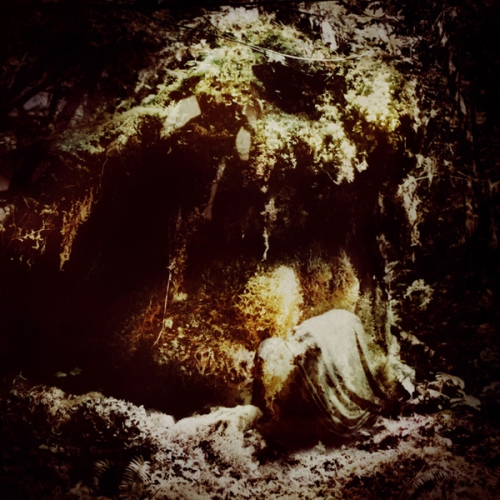
Thuja Magus Imperium
I guess what shocked me most about that was I never thought they were very good. I mean, I had heard Diadem of 12 Stars plenty of times, and to me they were just another black metal band, with no distinguishing features to speak of.
By the time I found out about their success though, they had just released a third album. I hadn’t heard about the second, I didn’t remember the first (because it is very forgettable), and I was not feeling up to the task of attentively engaging three albums which I didn’t have high hopes for. All of the hype was coming from outside of metal circles, and sure, Pitchfork has pushed good metal before (Mastodon for one outstanding example), but nine times out of ten their selections are borderline arbitrary–the first metal experience of ‘experts’ completely foreign to the genre or maybe even just the newest release from a record label helping to pay their bills. No, when metal bands become popular in non-metal crowds, it usually has nothing to do with their music.
Last week though, I heard Liturgy. Hyped by all of the same dubious sources, it was comparisons to Krallice and Hunter Hunt-Hendrix’s outlandish interview that ultimately compelled me, but in light of the fact that Aesthethica is fucking amazing, I thought it high time I gave a few other “Pitchfork metal” bands a try. For obvious reasons both in fame and personal experience, Wolves in the Throne Room were the first casualty.
I had Celestial Lineage on repeat for two solid days trying desperately to derive something, anything special and significant out of it. I couldn’t. At the surface they were the same generic status quo black metal act I heard demo recording samples of back in 2005. But as it always goes, when it came down to actually spelling out what in particular I found boring about them I finally found myself noticing some of the appeal. Not much, mind you, but a little bit.
Let’s look at this opening track. I hear a chick singing to some simple piano and synth, some basic tremolo lurking in the background–a mood setting introduction, like 50% of the genre. Nothing in particular sets it above average. I’m not really feeling it yet, still just hearing a recording studio session. The black metal fades out of the ambiance rather than exploding, and I like that. Once again, it’s nothing unique, but always an effective way of stating your intentions up front. There’s an obvious Agalloch influence, most distinct in the guitar solos, and by the time they end I’m definitely getting a dark, reflective vibe–nature themes, something really earthy. The transition back into a female chant, a synthy night sky with chime-spawned stars, a slow resurrection of guitar painting the celestial horizon in different shades of black, blotting out the stars in an auroral haze… It’s exceptionally visual, and it’s visual in a distinctly American way. You know: earth spirituality; something native to the soil; American folk metal, which possesses virtually no stylistic commonality with its pantheon-laden European namesake.
The second track is a two minute ambient piece, and I find it irritably overdone. It is accented by a vocal chant which just doesn’t fit the picture, and I think if they’d left that out it would have been perfect. At any rate, the third song explodes back into black metal.
Subterranean Initiation
This is what I remember forgetting about their first album: really generic black metal. A mix of second wave and Ukrainian sounds, it is moody and scene-setting only to the extent that all black metal is, and offers absolutely no leads as to what the band had in mind beyond “Ok dudes at this part let’s sound like Emperor or Drudkh or some shit, it’ll be cool.”
A little over 4 minutes in the song comes to a standstill, and the residual distortion and drums kind of scrape along in a not particularly coherent mishmash. Out of it emerges a shamefully obnoxious guitar hammering the same meh chords over and over and over (and over) and I would probably have shot myself at this point, but beneath it all the drummer is actually tearing it the fuck up with subtly accented blast beats that I found simultaneously intense and relaxing. The guitar eventually goes post-rock kind of out of nowhere and ends a mostly boring song on a pretty good note.
Astral Blood
I kind of wanted to end this on Woodland Cathedral, a 5+ minute ambient track that impressed me in ways similar to the latter half of the opening song, but since it’s mainly their black metal that I’ve been bashing, Astral Blood is probably the better choice. Here they do it right, and I never need to question their originality because I’m already too caught up in it to care. The mood sets in instantly, unleashing black metal’s potentially soothing effects–the sort of feel good in the cold contemplative darkness track that I like having on as a background piece. When the ambiance returns it’s gorgeous, and the song doesn’t really go down hill until 5:30 (at which point the guitar repeat is once again merely obnoxious), periodically recovering and digressing through to the end.
So, what’s the final verdict? On the surface, generic. In depth, too diverse for its own good. The first track, Thuja Magus Imperium, is really brilliant, but it is perhaps the only track I can say such things about. There is a fine line between meditative repetition and a broken record, and Wolves in the Throne Room seem pretty oblivious to it. What’s more, their fastest metal moments lack emotion and intensity, and their slowest lack subtlety. Their ambient tracks are nice, but they have a habit of overdoing them, especially vocally (including the female vocals at times), where once again a little subtlety could have saved the day. I was pretty impressed by the drummer the few times I tuned in to him, and perhaps another listen as attentive as the few I put in writing this would position me to praise him more thoroughly, but I am out of time and patience.
It’s because Celestial Lineage does possess a few moments of brilliance, however, that a thorough critique is even possible. The album as a whole is not at all generic in the sense of say, the new Demonaz album, and, while I might enjoy listening to that one slightly more, it’s got a lot less to appreciate. Celestial Lineage is only generic in its methods for creating complexity; it’s not generic at its core. But it is also nothing special, as I’d originally perceived.
Wolves in the Throne Room have reportedly claimed that their music is meant to be meditative rather than aggressive, and that they play black metal on their own terms. They’re fooling themselves with the latter claim, and while I’ll grant that it’s meditative, those non-metal fans who think it is exceptionally so simply have not experienced much of the genre.
Here is an album that should appeal first and foremost to fans of Agalloch. Waldgeflüster is a rather recent creation. The one-man project was started by Winterherz in Germany in 2005 and released its second full length this past May. I can’t speak for his first album, but Femundsmarka definitely deserves more attention than it’s bound to get. A product of that marriage of black metal and ambient folk that has become rather common these days, it might not reach the very top but it certainly rises above the status quo.
Interlude II: Night
Unfortunately most of the folk and ambient tracks of the album aren’t available on youtube. This one, as much as I love it, is my least favorite of the four. Just consider that while the vibe this track offers is present throughout the album, the musical styles creating it vary. The intro and outro make use of acoustic guitar, and the first interlude is a beautiful ambient piano piece.
The concept of the album is pretty self explanatory, but requires a bit of German translation. Femundsmarka is a national park situated in the mountain range separating Norway from Sweden, and the album is a musical retelling of the artist’s travels there, translating literally as “Femundsmarka: A Journey in Three Chapters”. The track list, roughly, translates to:
Prologue: Departure
Chapter 1: Lakeland
Interlude: Rest
Chapter 2: Stony Deserts
Interlude: Night
Chapter 3: Spruce Grove
Epilogue: Homecoming
Generally speaking, the main chapters are black metal and the in-betweens are folk, but there is plenty of cross-over both ways.
Chapter 1: Lakeland
So if many of the metal portions of the album are as reminiscent of Drudkh as the folk bits are of Agalloch, it should come as no surprise that all three bands highlight nature as their main theme. I could go about comparing them all, but I don’t think it would be entirely fair. This isn’t some monumental standard-setting album like Swan Road or Pale Folklore, nor does it strive to be.
And any first impressions that Winterherz is just copying other artists’ styles should vanish around the 2:30 mark anyway. It commences the most descriptive movement of the album, as you can hear the traveler begin to comprehend the beauty that surrounds him, exploding in a final triumphal realization around 4:20.
The work certainly isn’t perfect. I struggled at times in Chapters 2 and 3 to remember that Winterherz was trying to show me something and not just writing another metal album. But its high points are pretty great, and the only standard you might say it falls short of at times is its own–it’s consistently good, just not consistently visual. The introduction, interludes, and outro are my favorite moments, and give the album a higher degree of stylistic variance than most metal of its kind. The more subdued entries aren’t sparse, either, filling up nearly half of the album.
In the absence of a full track list on youtube, someone took the effort to compile an eight minute sample of the album that covers a lot of ground without revealing too much. I’ll leave you with this. If you have to buy it to hear the rest, well, your money will be well spent. Not an album of the year contender, but a pleasant surprise from an artist you’ve probably never heard of.


 Through the Shattered Lens