The Florida Project : Ross Jackson’s “Sticky Sweets”


Ryan C. (fourcolorapocalypse)'s avatarRyan C.'s Four Color Apocalypse

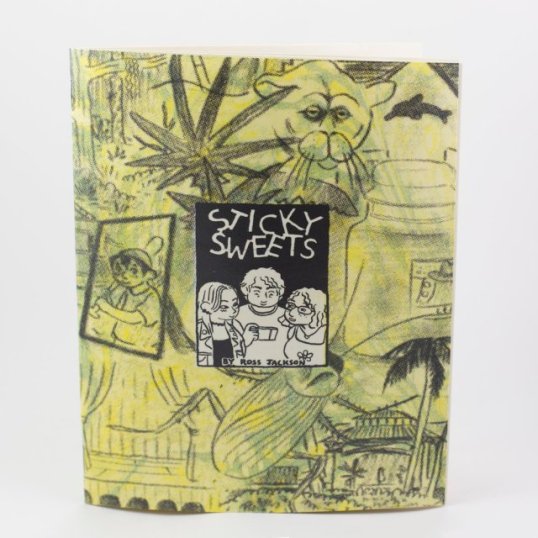
If life in suburbia constitutes a kind of long, drawn-out soul death on the installment plan — and I’d contend there’s probably no need to start that sentence with an “if” — then what must life in suburban Florida be like? The mind shudders at the prospect of such a barren cultural wasteland, and yet — either enough people simply don’t care where the hell they live, or don’t see a problem with the idea of chugging gas-guzzling SUVs from one monstrous “cookie-cutter” chain business to another that the so-called “Sunshine Stare” is literally loaded with suburbs. And, like anywhere else, the kids who live there need to do something for fun.

In Portland cartoonist Ross Jackson’s 2017 Cold Cube-published mini Sticky Sweets, a pair of bored (of course) young teens decide the best way to while away part of their ample free time is to fuck off at…

View original post 621 more words

Scribbling Down Some Thoughts On “Scribbles” #2


Ryan C. (fourcolorapocalypse)'s avatarRyan C.'s Four Color Apocalypse

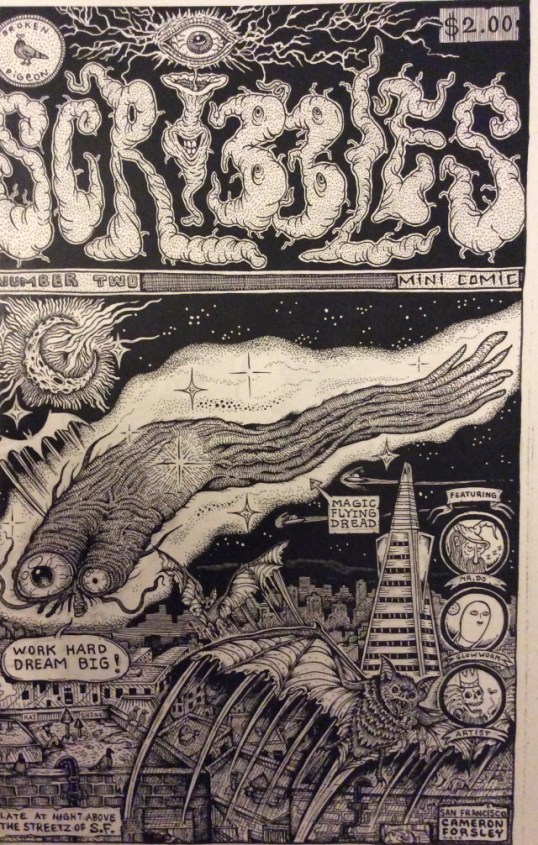
One of the reasons I keep this blog going, despite having a fair number of other writing commitments and a distinct lack of time, is that around here I can write about whatever I want. And while I highly doubt that any cartoonist expects that they’ll get more than a 75- or 100-word “capsule” review for a 10-page mini they’ve made that sells for two bucks, reviewing stuff that nobody expects to see full-length reviews for, including the book’s creator, is one of those “whatever I want” things that I love doing. And you know what? A lot of those things nobody else is gonna review actually offer a fair amount to discuss and dissect.

All of which brings us to Scribbles #2, the latest (I think, at any rate) self-published mini from Bay Area “ink stud” Cameron Forsley, this time flying as a solo act without a story assist…

View original post 644 more words

Catching Up With “Ley Lines” : Simon Moreton’s “The Lie Of The Land”


Ryan C. (fourcolorapocalypse)'s avatarRyan C.'s Four Color Apocalypse

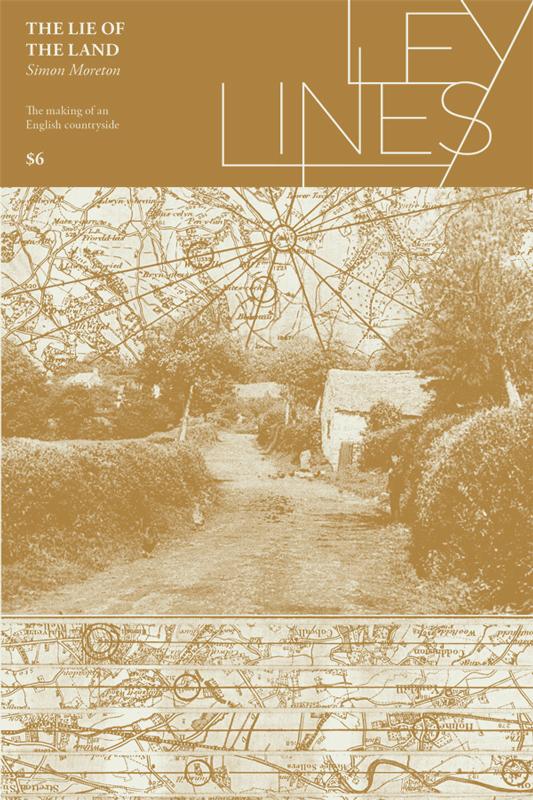
The rural British countryside has always held a certain mystique to those who aren’t from there — and to those who are, as well.  The supernatural and the entirely natural seem to have a way of converging in this “green and pleasant land” — from the stone circles to the crop circles to the fogous to the hill figures to, of course, the rumored  lines in the Earth from which the Czap Books/Grindstone Comics visual poetry series Ley Lines derives its name. Hypothesized by antiquarian/photographer/entrepreneur Alfred Watkins in three tracts he wrote in the 1920s to have been literally straight lines which connected many of the ancient mysteries just mentioned with hills, lakes, rivers, and villages, and to have served purposes both mystical (hidden energy grids) and mundane (trade and transportation routes), the Ley Lines remain an intriguing enigma, even if they might be complete bullshit — hell, maybe even

View original post 591 more words

Catching Up With “Ley Lines” : Victor Martins’ “Cabra Cabra”


Ryan C. (fourcolorapocalypse)'s avatarRyan C.'s Four Color Apocalypse

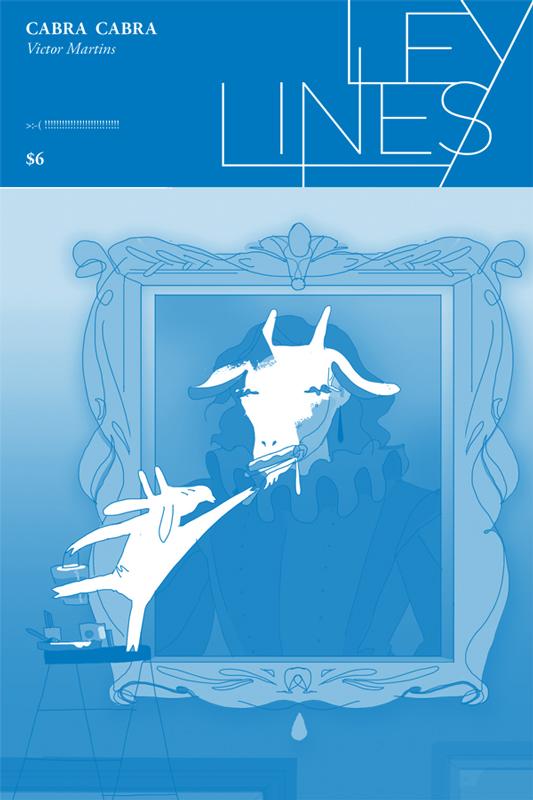
Separating art from artist has always been a tricky proposition, but it’s doubly so when the artist in question is a symbol of liberation and subjugation both. Many artists from various media whose work I generally respect hold or held views I absolutely abhor, from Steve Ditko to Jim Steranko to Douglas Pearce to Peter Sotos, but it’s not all that difficult to say “their worldview’s repugnant, but I like their stuff” without coming off as a hypocrite. Respect for one facet of a person’s life isn’t a tacit endorsement of all of it. But what do you do with Virginia Woolf, who’s justly lauded for her trailblazing feminism and fearlessness in dealing with overtly queer subject matter and themes literally decades before such things were discussed in “polite” (as in, bigoted) company — but was also a fairly pronounced racist?

Cartoonist Victor Martins tackles that very conundrum in…

View original post 676 more words

Catching Up With “Ley Lines” : Alyssa Berg’s “Forget-Me-Not”


Ryan C. (fourcolorapocalypse)'s avatarRyan C.'s Four Color Apocalypse

There’s no more natural a fit for the Czap Books/Grindstone Comics visual poetry series Ley Lines than Alyssa Berg — as anyone who’s been fortunate enough to get their hands on her self-published Recollection and Soft Fascinations can tell you — so now that she has, in fact, gotten “on board” with the title, so to speak, my only question is : what took so long?

Admittedly, it’s unusual to see Berg’s soft watercolor work rendered in black-and-white, but prospective readers needn’t fear : Ley Lines #21, Forget-Me-Not, is absolutely gorgeous and shows that she’s every bit as adept with inkwashes as she is with paints. Every page has a lyrical rhythm that flows into the next, and that’s true before taking her sparse and emotive verse into account. This is Berg firing on all creative cylinders — but then, she never does anything halfway.

The historical figure…

View original post 451 more words

Catching Up With “Ley Lines” : Gloria Rivera’s “Island Of Elin”


Ryan C. (fourcolorapocalypse)'s avatarRyan C.'s Four Color Apocalypse

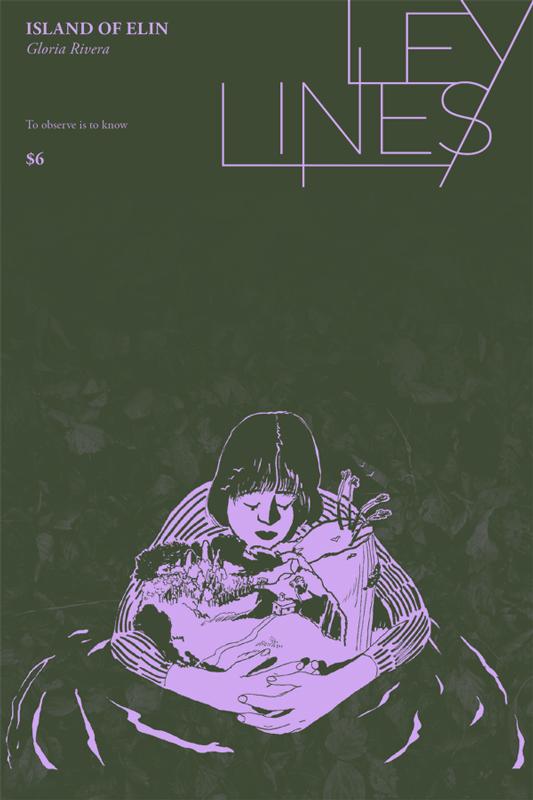
At first glance, issue number 20 of the Czap Books/Grindstone Comics series Ley Lines, Gloria Rivera’s Island Of Elin, is one of the most narratively straight-forward entries into this ever-developing “canon” — I mean, for the most part, it looks and reads very much like a “standard” (whatever that even means anymore) comic book. But don’t let its appearance deceive you — this is every bit as multi-faceted and interpretative a work as we’ve come to expect from these books.

Incorporating, as these things do, a variety of non-comics influences, Rivera — who is a uniquely perceptive and emotive cartoonist, using an economy of lines to communicate a wealth of visual fact and feeling — leans into the works of Jean Audubon, John Muir (especially), and the so-called “Hudson Valley painters” to tell the story of Plover the bird, his friend who’s on their last legs (err —…

View original post 499 more words

Catching Up With “Ley Lines” : Diana H. Chu’s “Trance ‘N Dance”


Ryan C. (fourcolorapocalypse)'s avatarRyan C.'s Four Color Apocalypse

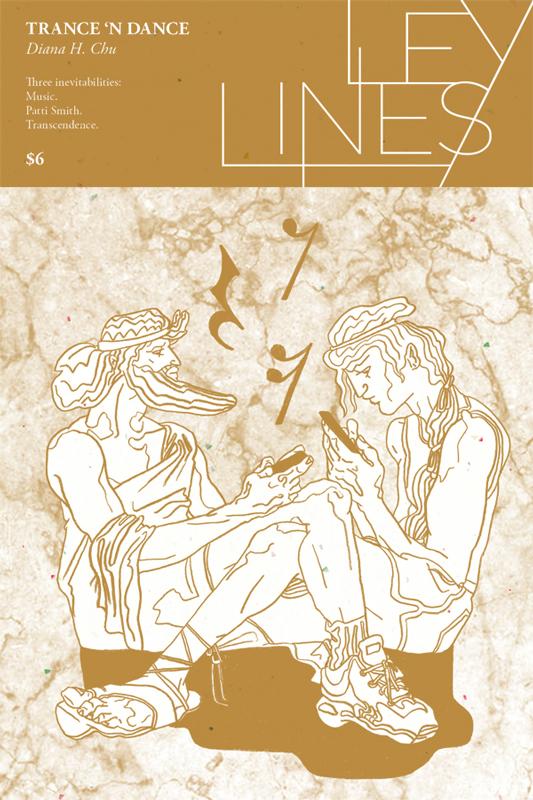
All that glitters may not be gold — but Diana H. Chu’s Trance ‘N Dance, number 19 in the Czap Books/Grindstone Comics visual poetry series Ley Lines, is — although the riso printing doesn’t, in fact, glitter. So where does that leave us, besides with an admittedly gorgeous-looking mini?

I’m still in the process of answering that question myself, but there’s no question that Chu has created a de facto visual “museum guide” like no other here. The rub is that the exhibit that she’s offering up for display has a lot more to do with many more things than the book’s back-cover blurb would perhaps, at first glance, lead one to believe — but that may not be a bad thing. It’s up to you decide — it always is with this series, that’s one of the best things about it — so consider my role here…

View original post 586 more words

Catching Up With “Ley Lines” : W.T. Frick’s “One & Three”


Ryan C. (fourcolorapocalypse)'s avatarRyan C.'s Four Color Apocalypse

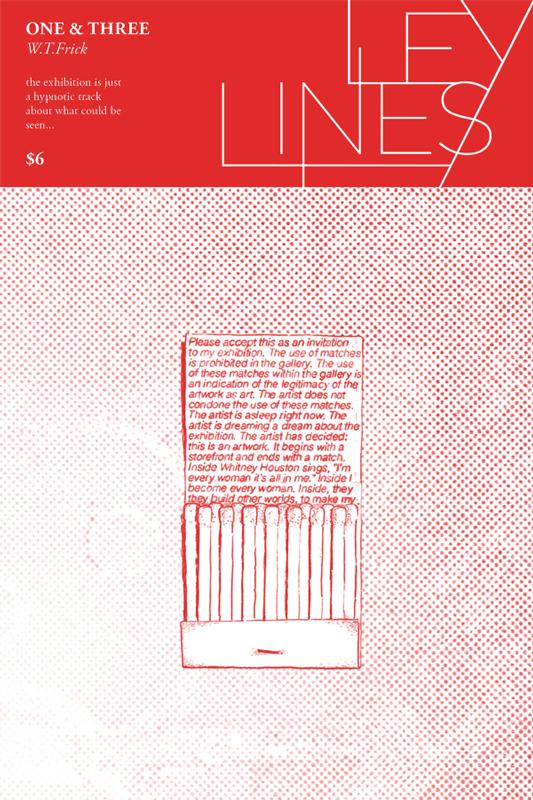
It occurs to me that I’ve been remiss in my responsibilities around these parts to keep you all up to date on the comings and goings of Ley Lines, the long-running visual/comics poetry ‘zine from Czap Books and Grindstone Comics that explores the intersections between this beloved medium of ours and other forms of art/culture by presenting a different cartoonist’s take on the work of somebody else with each issue, so we’re going to be playing a bit of catch-up around here in the coming days until I’m a) all caught up, and b) consequently feeling a lot less guilty. First up on this journey : Ley Lines #18, W.T. Frick’s One & Three, which came off the riso in late 2019.

Taking the form of a vicarious tour through a multi-media conceptual art show inspired by the works of legendary author Ursula K. Le Guin — specifically

View original post 587 more words

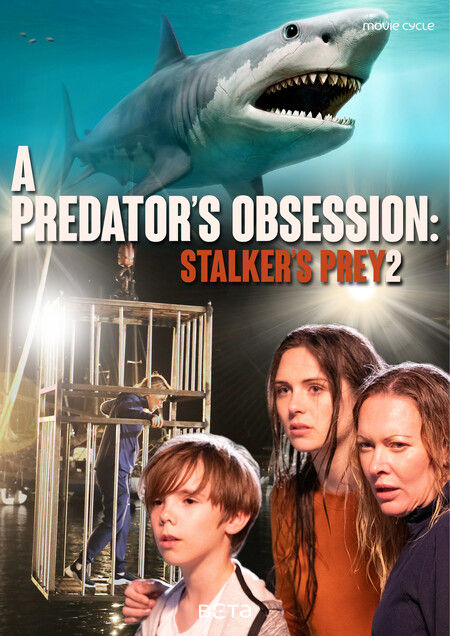
Lifetime Film Review: A Predator’s Obsession: Stalker’s Prey 2 (dir by Colin Theys)


Look who’s back!

At the end of the 2017 Lifetime film, Stalker’s Prey, it appeared the psycho Bruce had been eaten by a shark.  Normally, that’s not a fate that I wish on anyone but Bruce ….. well, Bruce really was a psycho.  In fact, Bruce even fed several people to the sharks so it seemed kinda appropriate that a shark would eventually take him out.  Like a lot of Lifetime movie psychos, Bruce was also the obsessive type.  He was the type who would save your life (after, of course, arranging the accident that put you in danger in the first place) and then decide that you belonged to him.  Bleh.  Go, shark, go!

However, amazingly enough, Bruce apparently survived that shark attack.  A Predator’s Obsession finds Bruce — now known as Daniel and played by Houston Stevenson — working at a local marina.  He looks a bit different now, which I guess would make sense after everything that he’s been through.  He’s got a few scars from being attacked by that shark but he also has all of his limbs.  Most importantly, Bruce still loves sharks and they apparently love him.  I guess it makes sense, seeing as how he’s named after the shark that starred in Jaws.

When Bruce saves a child named Kevin (Brayson Goss) from a shark, the media proclaims him a hero.  Kevin’s family invites Bruce over for dinner.  When they find out that Bruce has just gotten kicked out of his apartment and doesn’t have anywhere to live, they open their house to him.  It’s supposed to only be a temporary thing but Bruce has no intentions of leaving.  Bruce has fallen for Kevin’s older sister, Alison (Julia Blanchard).  Despite the fact that her rich, no-good boyfriend, Carson (Jackson Dockery), is not happy about her living with another man, Alison tries to make Bruce comfortable.  She even sets Bruce up on a date with her fun-loving best friend, Rhiannon (Sarah Wisser).

(It wouldn’t be a Lifetime film without a fun-loving best friend!)

However, Bruce is only interested in Alison and you know what that means.  It’s time for Bruce to start feeding people to the sharks.  It’s kind of sad, really.  Bruce is handsome, charming, athletic, and he’s a good swimmer.  It seems like he should be able to get a date without having to resort to feeding people to sharks.  But I guess Bruce has his issues and, as a result, he never really got beyond the “feed my enemies to wild animals” stage of personal growth.

I absolutely loved Stalker’s Prey and I enjoyed the sequel as well.  The great thing about A Predator’s Obsession is that it doesn’t take itself seriously at all.  It fully embraces the shark-filled melodrama and the resulting action is just as over-the-top and joyfully outlandish as you could possibly hope for.  In the previous film, Bruce was content to just push people over the side of a boat.  In this film, he uses a crane to suspend someone over the water.  He traps another person in a cage.  The film understands that a good sequel has to be bigger than the original film and it’s so entertaining that I can’t wait for Stalker’s Prey 3.

I mean, with SyFy no longer showing original movies, there’s a whole lot of shark fans out there looking for a new home.  Go get ’em, Lifetime!