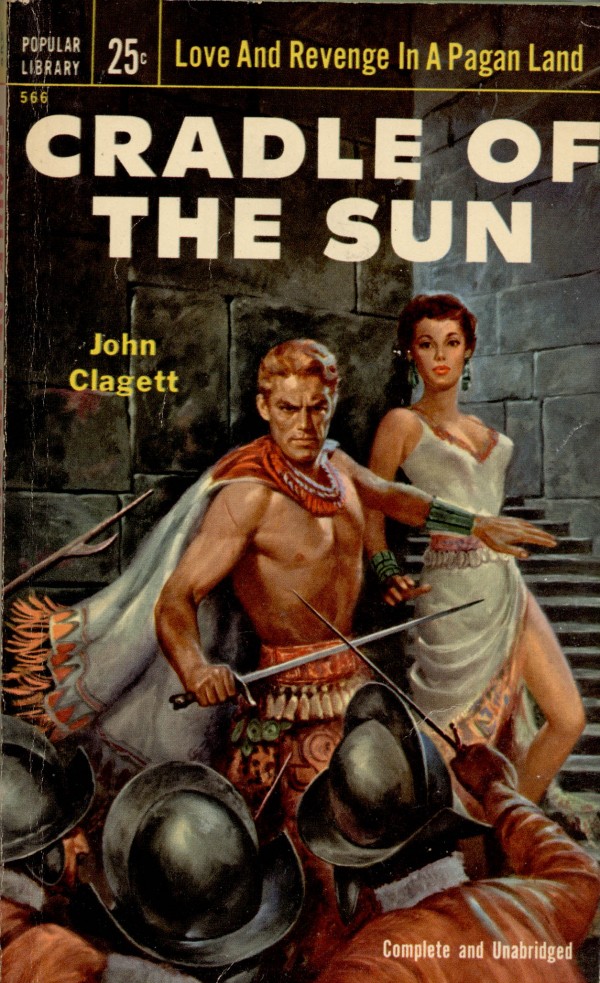
Love and Revenge in a Pagan Land! That man doesn’t even need armor or a big sword to fight off an army!
This edition of Cradle of the Sun was published in 1954. The cover is by Robert Stanley, who has been featured many times on this site.
Love and Revenge in a Pagan Land! That man doesn’t even need armor or a big sword to fight off an army!
This edition of Cradle of the Sun was published in 1954. The cover is by Robert Stanley, who has been featured many times on this site.

In this picture from 1954, Audrey Hepburn holds the Oscar that she won for Roman Holiday. Happy Oscar Sunday!
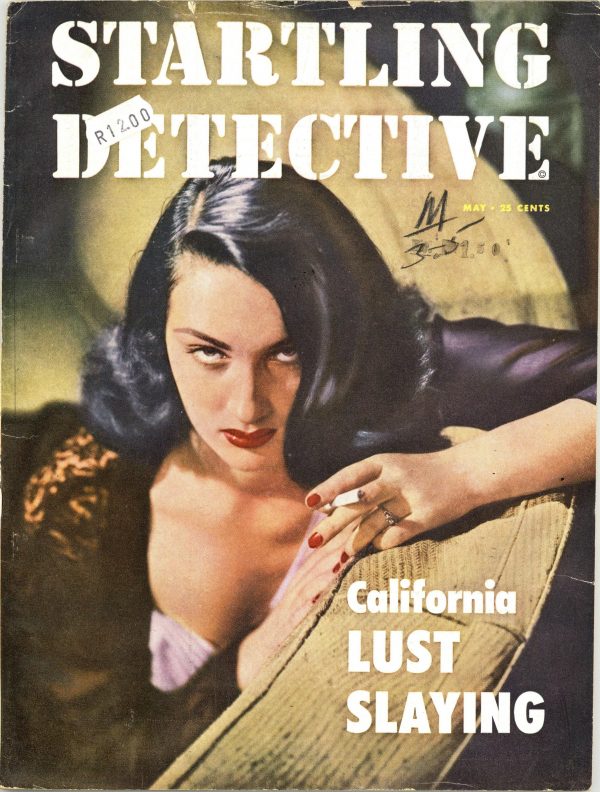
This is a great cover, full of attitude and menace. Unfortunately, I don’t know the name of the artist responsible for it. Startling Detective was a true crime pulp. It started in the 30s and ran for 6 decades. The cover is for the May, 1952 issue.

This cover is from 1951. I like Nyoka’s boots but I don’t know if I would use a spear for self-defense when I’ve got a gun right there. I haven’t spent that much time in the jungle, though.
Nyoka first appeared in a short story written by the creator of Tarzan, Edgar Rice Burroughs. She then starred in several movie serials in the 40s but eventually, she migrated to comic books like this one.
Unfortunately, we do not know the name of the artist responsible for this cover.
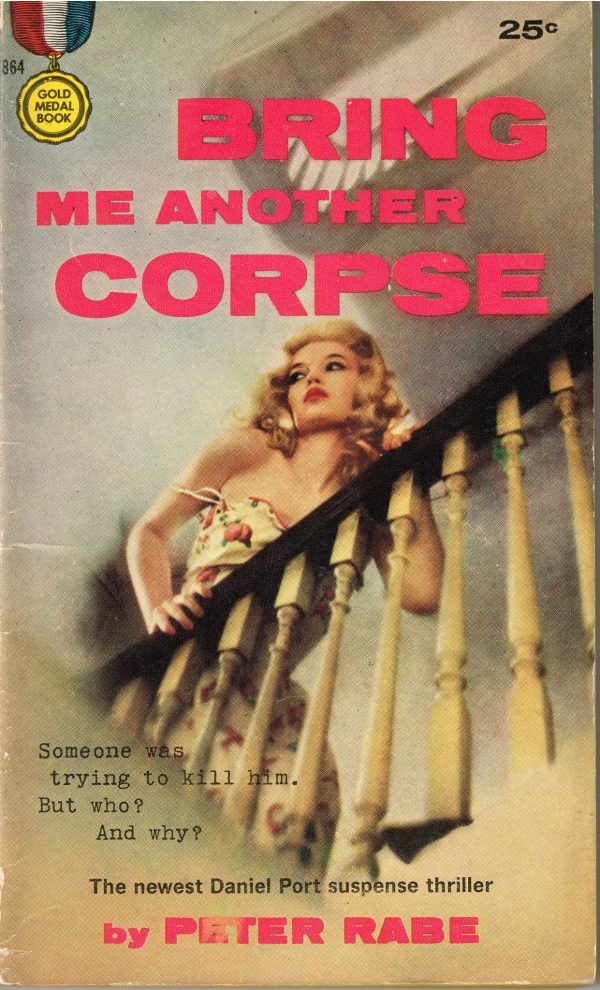
This book was originally published in 1959. I wish I knew who to credit for this cover because it’s one of my favorites. Why is she on the stairs and who is looking up at her?
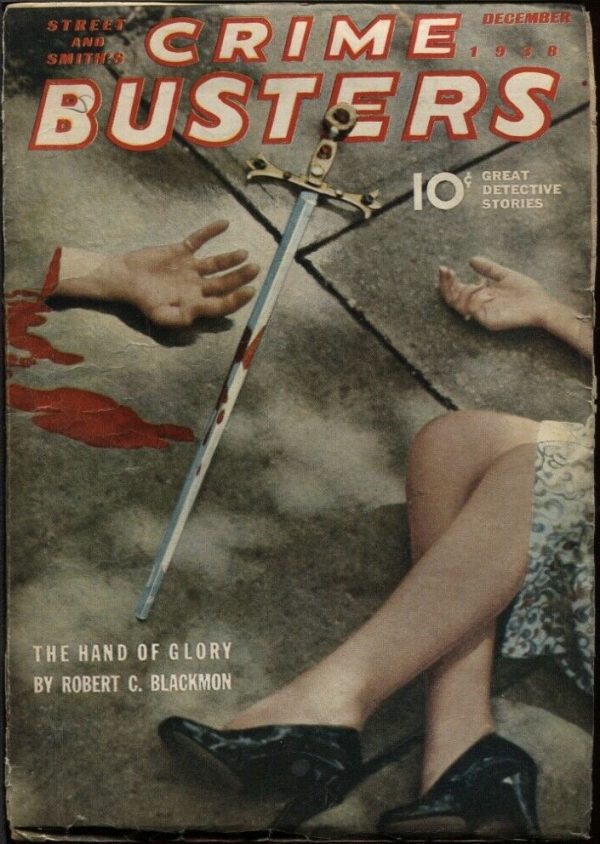
This is from 1938. Crime Busters was a pulp magazine that featured stories about several different recurring characters. It lasted for two years before it was renamed Street & Smith Mystery Magazine. Like a lot of pulp magazines, Street & Smith Mystery Magazine eventually fell victim to the World War II paper shortage. While Americas were fighting overseas, the resources for printing up salacious magazines were often hard to come by.
I don’t know who did this cover but I do like that the photo is apparently illustrating a story called The Hand of Glory.
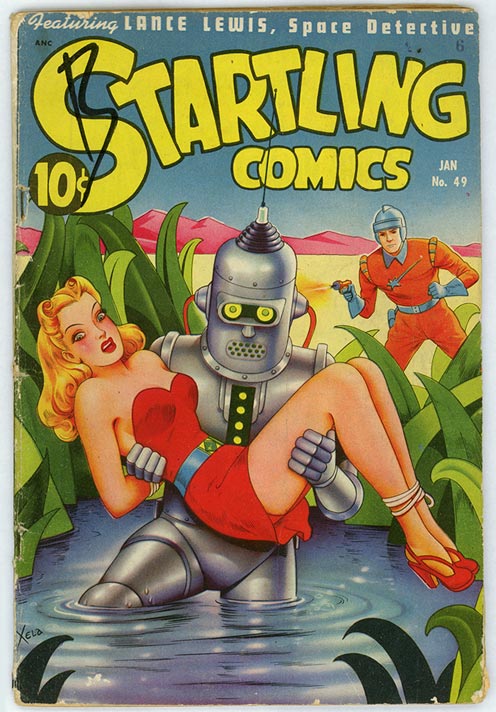
That robot’s in love! Never take your date to a swamp. A human would have understood that.
This is from 1949. The cover was done by Alex Schomburg. This issue had become very popular with collectors both because of Schomburg’s artwork but also because some people think that the robot on the cover was the inspiration for Futurama‘s Bender.
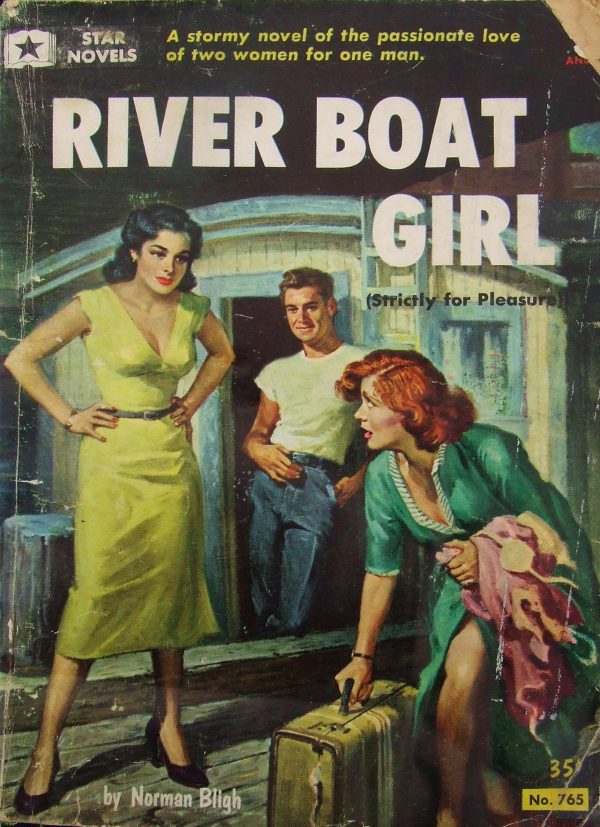
Someone’s in trouble! The man on the boat seems to be enjoy it, though.
This book was published in 1957. The cover is by Rudolph Belarski, whose work has appeared many times on this site.

This book was first published in 1963. Dallas Mayo was a pseudonym for Gilbert Fox, who was the founder of Midwood Books. Midwood Books published “adult” reading.
On many sites, this cover is credited to Paul Rader, who did do quite a few covers for Midwood Books. However, I’ve also seen a lot of comments from people saying that Rader didn’t actually do this cover. It looks like Rader’s work to me but I’ve seen enough differing opinions that I’m not confident crediting this to anyone. If you know who did this cover, let us know in the comments!
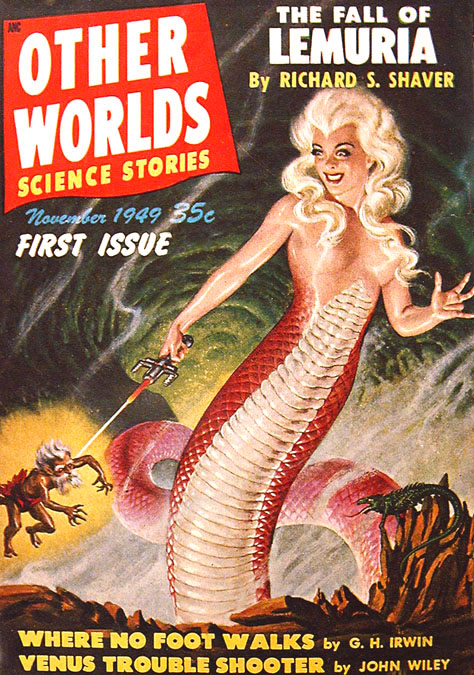
I think this cover speaks for itself. The artwork was done by Malcolm H. Smith, whose work appeared on the covers of several pulp magazines. Eventually, he left the pulps and was hired to work as an illustrator for NASA, where he helped engineers turn science fiction into reality.
The story highlighted on the cover, The Fall of Lemuria, was written by Richard Shaver, an author who claimed that all of his stories were based in fact. He wrote that there was a sinister civilization living underneath the Earth’s surface and that it had developed advanced technology. Shaver said that he had first discovered the civilization when, while working on an assembly line, he picked up a welding gun that allowed him to hear the thoughts of others and eventually to hear the conversations of people living underground. Shaver said that he had visited “the cavern world” many times. He wrote many stories about these people living underground, the majority of which were published in Amazing Stories.
There were many people who believed Shaver and who wrote letters to his publishers saying that they also heard voices coming from underground. Others thought that Shaver was suffering from schizophrenia and claimed that he was being exploited by the editors who published his stories and promoted them as being fact. When the pulp era ended, Shaver faded into obscurity, though he and his wife continued to publish a magazine about his theories, Shaver Mystery Magazine.
 Through the Shattered Lens