Catching Up With “Ley Lines” : Victor Martins’ “Cabra Cabra”


Ryan C. (fourcolorapocalypse)'s avatarRyan C.'s Four Color Apocalypse

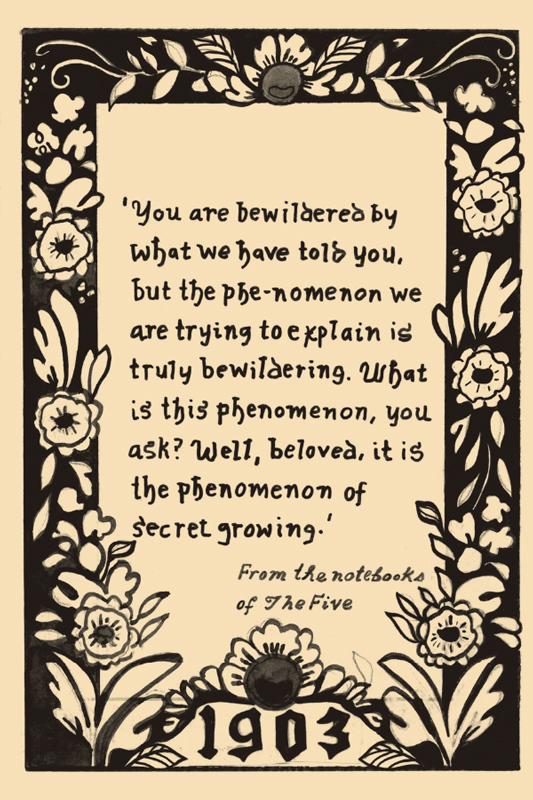
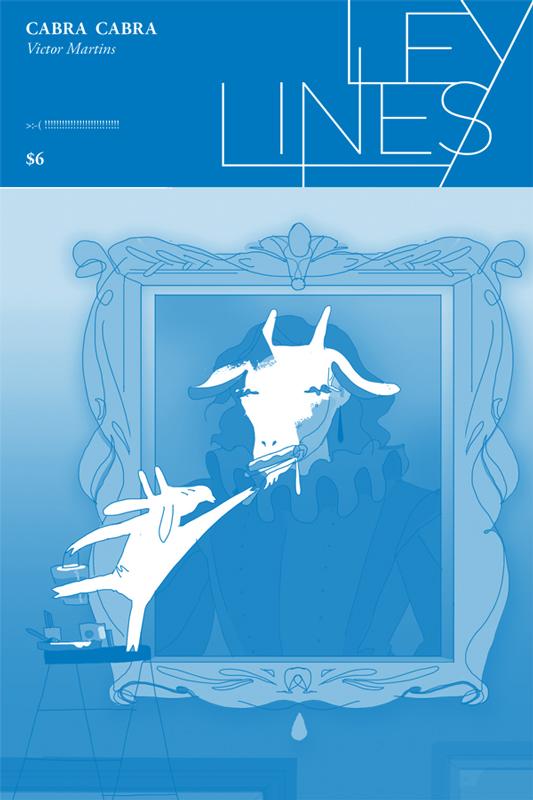
Separating art from artist has always been a tricky proposition, but it’s doubly so when the artist in question is a symbol of liberation and subjugation both. Many artists from various media whose work I generally respect hold or held views I absolutely abhor, from Steve Ditko to Jim Steranko to Douglas Pearce to Peter Sotos, but it’s not all that difficult to say “their worldview’s repugnant, but I like their stuff” without coming off as a hypocrite. Respect for one facet of a person’s life isn’t a tacit endorsement of all of it. But what do you do with Virginia Woolf, who’s justly lauded for her trailblazing feminism and fearlessness in dealing with overtly queer subject matter and themes literally decades before such things were discussed in “polite” (as in, bigoted) company — but was also a fairly pronounced racist?

Cartoonist Victor Martins tackles that very conundrum in…

View original post 676 more words

Catching Up With “Ley Lines” : Alyssa Berg’s “Forget-Me-Not”


Ryan C. (fourcolorapocalypse)'s avatarRyan C.'s Four Color Apocalypse

There’s no more natural a fit for the Czap Books/Grindstone Comics visual poetry series Ley Lines than Alyssa Berg — as anyone who’s been fortunate enough to get their hands on her self-published Recollection and Soft Fascinations can tell you — so now that she has, in fact, gotten “on board” with the title, so to speak, my only question is : what took so long?

Admittedly, it’s unusual to see Berg’s soft watercolor work rendered in black-and-white, but prospective readers needn’t fear : Ley Lines #21, Forget-Me-Not, is absolutely gorgeous and shows that she’s every bit as adept with inkwashes as she is with paints. Every page has a lyrical rhythm that flows into the next, and that’s true before taking her sparse and emotive verse into account. This is Berg firing on all creative cylinders — but then, she never does anything halfway.

The historical figure…

View original post 451 more words

Catching Up With “Ley Lines” : Gloria Rivera’s “Island Of Elin”


Ryan C. (fourcolorapocalypse)'s avatarRyan C.'s Four Color Apocalypse

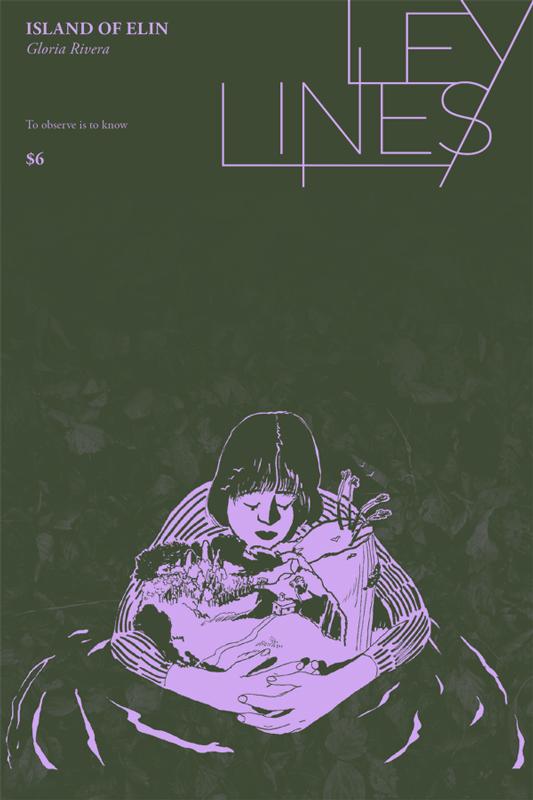
At first glance, issue number 20 of the Czap Books/Grindstone Comics series Ley Lines, Gloria Rivera’s Island Of Elin, is one of the most narratively straight-forward entries into this ever-developing “canon” — I mean, for the most part, it looks and reads very much like a “standard” (whatever that even means anymore) comic book. But don’t let its appearance deceive you — this is every bit as multi-faceted and interpretative a work as we’ve come to expect from these books.

Incorporating, as these things do, a variety of non-comics influences, Rivera — who is a uniquely perceptive and emotive cartoonist, using an economy of lines to communicate a wealth of visual fact and feeling — leans into the works of Jean Audubon, John Muir (especially), and the so-called “Hudson Valley painters” to tell the story of Plover the bird, his friend who’s on their last legs (err —…

View original post 499 more words

Catching Up With “Ley Lines” : Diana H. Chu’s “Trance ‘N Dance”


Ryan C. (fourcolorapocalypse)'s avatarRyan C.'s Four Color Apocalypse

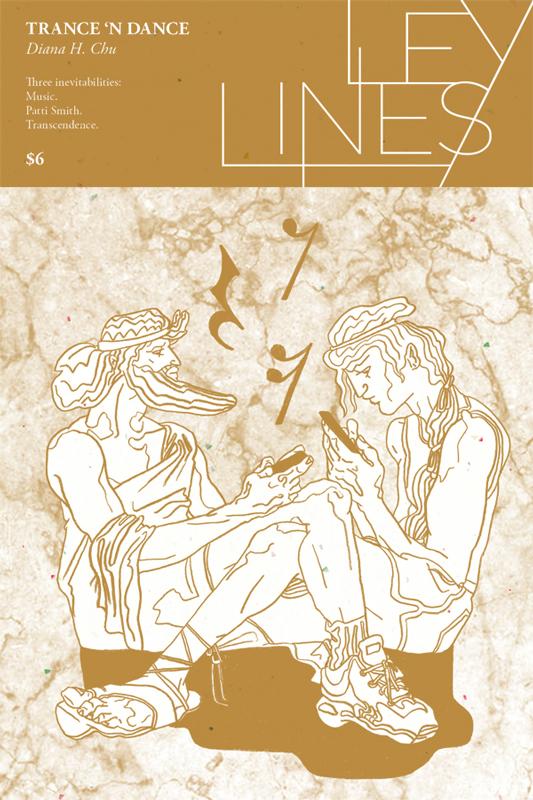
All that glitters may not be gold — but Diana H. Chu’s Trance ‘N Dance, number 19 in the Czap Books/Grindstone Comics visual poetry series Ley Lines, is — although the riso printing doesn’t, in fact, glitter. So where does that leave us, besides with an admittedly gorgeous-looking mini?

I’m still in the process of answering that question myself, but there’s no question that Chu has created a de facto visual “museum guide” like no other here. The rub is that the exhibit that she’s offering up for display has a lot more to do with many more things than the book’s back-cover blurb would perhaps, at first glance, lead one to believe — but that may not be a bad thing. It’s up to you decide — it always is with this series, that’s one of the best things about it — so consider my role here…

View original post 586 more words

Catching Up With “Ley Lines” : W.T. Frick’s “One & Three”


Ryan C. (fourcolorapocalypse)'s avatarRyan C.'s Four Color Apocalypse

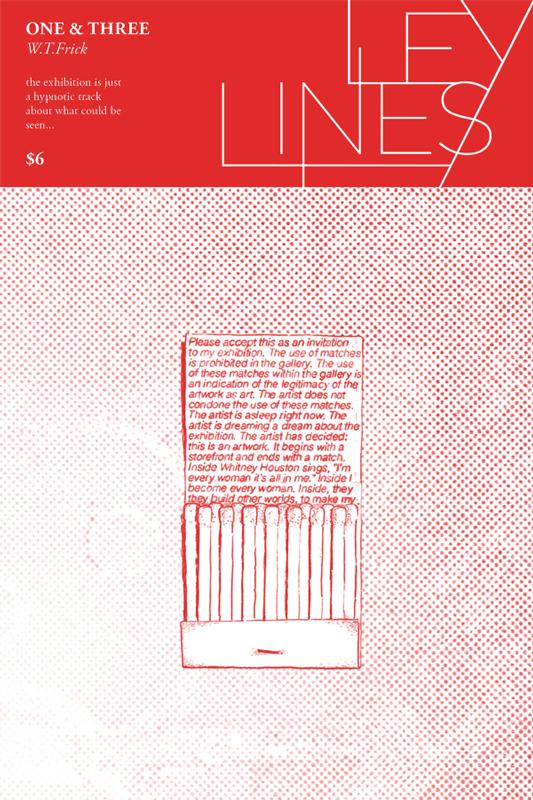
It occurs to me that I’ve been remiss in my responsibilities around these parts to keep you all up to date on the comings and goings of Ley Lines, the long-running visual/comics poetry ‘zine from Czap Books and Grindstone Comics that explores the intersections between this beloved medium of ours and other forms of art/culture by presenting a different cartoonist’s take on the work of somebody else with each issue, so we’re going to be playing a bit of catch-up around here in the coming days until I’m a) all caught up, and b) consequently feeling a lot less guilty. First up on this journey : Ley Lines #18, W.T. Frick’s One & Three, which came off the riso in late 2019.

Taking the form of a vicarious tour through a multi-media conceptual art show inspired by the works of legendary author Ursula K. Le Guin — specifically

View original post 587 more words

What’s That? “Whisnant”!


Ryan C. (fourcolorapocalypse)'s avatarRyan C.'s Four Color Apocalypse

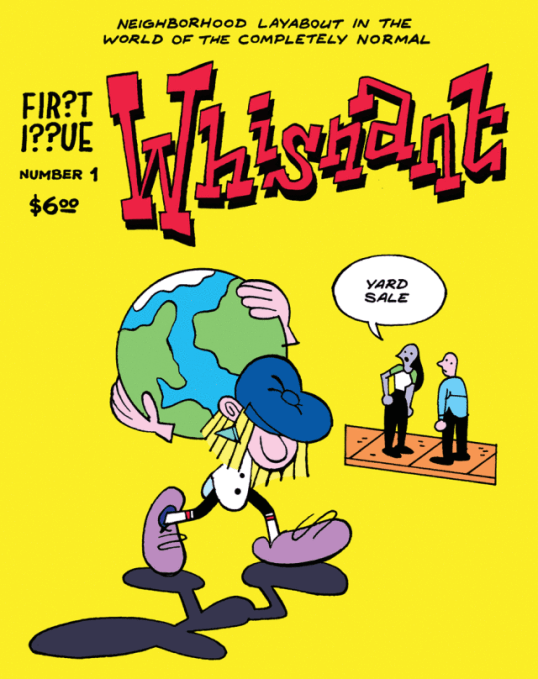
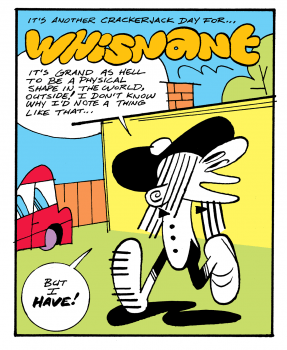
No matter how you look at it, you don’t know how to look at Max Huffman — nor what to expect from him. Which means, of course, that he’s unquestionably one of the most interesting and surprising of the true auteurs working in comics today — but even with that in mind, his latest self-published mini, Whisnant #1, is something well and truly out of left field.

As deliberately and overtly “cartoony” as anything Huffman has done, this thing reminded me more than a bit of Bud Blake’s old syndicated strip Tiger on the margins — only it’s actually, ya know, good, and has something to say about actual existential concerns. I think, at any rate.

So, what have we got here? Cubism, a black-and-white protagonist in a full-color world who inexplicably becomes full-color himself, an ice cream truck that sells gems and crystals, “people” that aren’t people, family…

View original post 528 more words

The Start Of Something Big : Tana Oshima’s “Pulp Friction”


Ryan C. (fourcolorapocalypse)'s avatarRyan C.'s Four Color Apocalypse

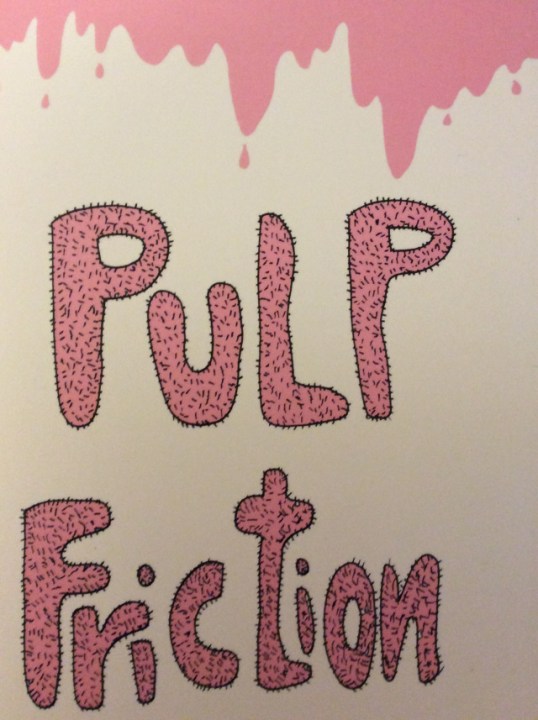
I find it downright fascinating that Tana Oshima has gone back to press with her first self-published mini, Pulp Friction, not only because I’d never had the pleasure of reading it before, but because it frankly takes a certain amount of guts for an artist in any medium to draw attention to their “warts and all” earlier work at a point in their career ouevre when they’re in a really confident creative groove — and, as regular readers here already know, I think Oshima’s been in the midst of a very solid groove for some time now.  Which isn’t my roundabout way of saying that this debut effort is necessarily lacking, mind you — in fact, the “lower dose” of refinement with which she tackles subjects that are still very much at the heart of her ongoing artistic project lends this comic an extra degree of immediacy which…

View original post 843 more words

“The Funnies” Lives Up To Its Name


Ryan C. (fourcolorapocalypse)'s avatarRyan C.'s Four Color Apocalypse

Remember when comics were kinda nuts?

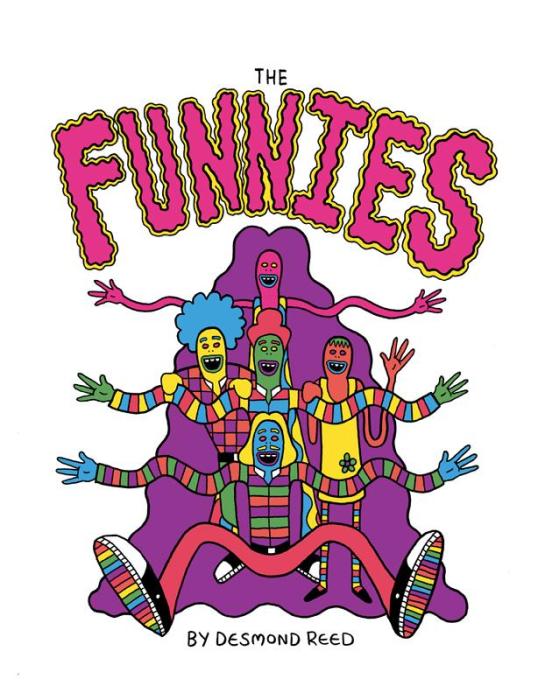
Okay, fair enough, plenty of them still are, but too many are self-consciously nuts, and if there’s one thing we could all do with a bit more of in these trying and uncertain times, it’s comics that are naturally nuts in the truest, and most unforced fashion. Comics that are nuts because they don’t know how to be anything else — and because there’s no real reason for them to be anything else. Meet Desmond Reed’s The Funnies.

Revolving around a quintet of spaghetti-limbed characters named Ralph Jonathan, Wallace T.J., Henrietta Susan, Gil Christopher, and Mona Gertrude, the vignettes in Reed’s magazine-sized comic are simple, straightforward and, yes, funny, whether they tell “stories” per se or simply function as jokes in and of themselves, and while there’s a stylistic through-line to all of Reed’s art — one that, in fairness, borrows elements…

View original post 469 more words

“Big Punk” Proves You Really Are As Young As You Feel


Ryan C. (fourcolorapocalypse)'s avatarRyan C.'s Four Color Apocalypse

Her name may be better known in the punk and DIY ‘zine scenes than it is among the comics community writ large, but Janelle Hessig has been at it for a long time. A foundational figure in the 1990s East Bay DIY movement, Hessig’s seminal Tales Of Blarg was more than a product of its times, it’s proven to be downright timeless, and in recent years she’s introduced the broader public to the talents of Liz Suburbia, among others, via her Gimme Action publishing imprint — which has also been home to some of her own cartooning.  In other words, she’s been around — but her work never gets old.

As evidence for this assertion I offer Big Punk, her latest uniquely-formatted (it’s more, shall we say, horizontally-oriented than you’d typically expect) ‘zine that comes our way courtesy of Silver Sprocket Bicycle Club, a publisher that’s helped…

View original post 538 more words

A Couple More For The Cat Lovers Out There : “Bernadette”


Ryan C. (fourcolorapocalypse)'s avatarRyan C.'s Four Color Apocalypse

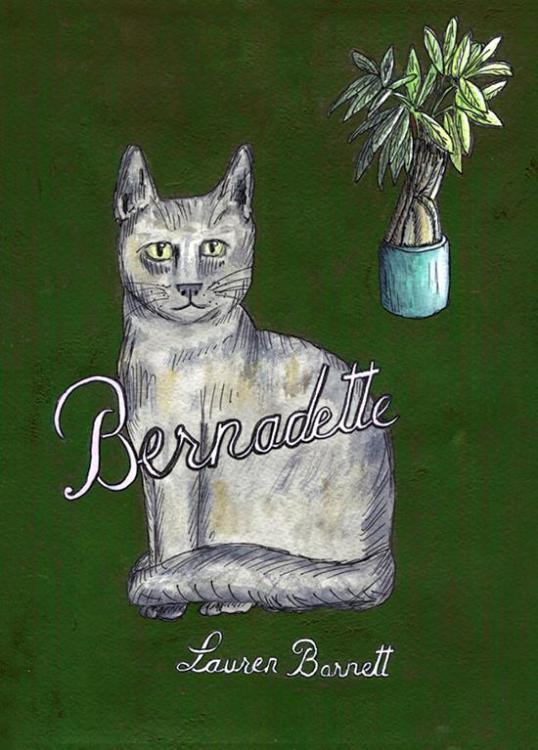
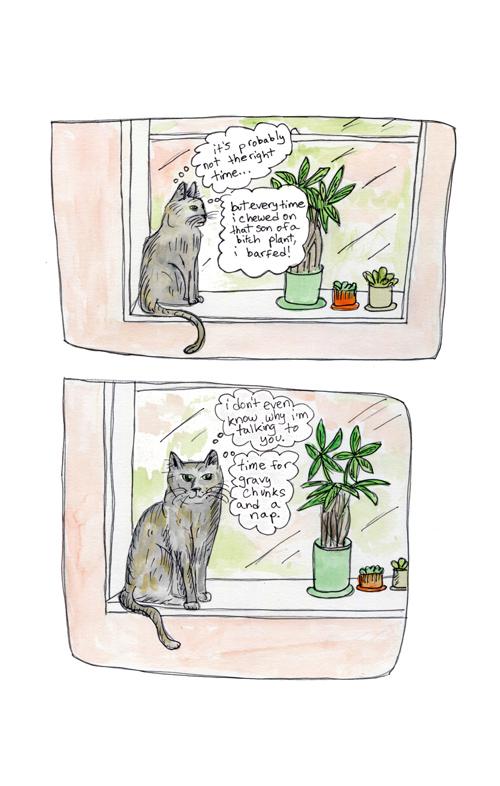
Do your cats hate plants? Ours certainly do, to the point that we can’t keep them any more — plants, that is. As if you were even wondering. But the feline protagonist of cartoonist Lauren Barnett’s 2019 Tinto Press-published Bernadette takes plant hatred to a whole new level.

Okay, I’ll be the first to admit that this probably sounds like a threadbare premise to carry over the course of 42 pages, but it’s not like Bernadette just sits around stewing about her owner’s new houseplant the whole way through. Like any cat, she also likes to eat, sleep, jump around a bit, and — well, that’s about it. So, is all of that, then, enough to fill out 42 pages? I guess that’s the real question.

In the hands of most artists, the answer to that would, of course, be a pretty unequivocal “no,” but Barnett is a special…

View original post 477 more words