Satoshi Kon R.I.P (October 12, 1963 – August 23, 2010)


It’s been awhile since I’ve posted any updates, and while I’ve always meant to get something written up, I always found excuses not to. But with the recent passing of Satoshi Kon, it would be remiss of me not to post up my thoughts of the career of one of the truly great anime directors. First I’ll give a brief rundown on his works as director, along with my thoughts of each and then I’ll end with some closing thoughts on his career in general.
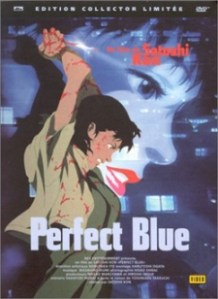
Perfect Blue (1998)

This was my first experience with the directing talents of Mr. Kon, as well as his directorial debut.  Back in 2001 when I was just starting to get into actually buying DVDs of anime, I asked around which titles I should own.  Among the responses, Perfect Blue kept coming up, so I decided to give it a shot.  Back then I didn’t really follow anime websites or magazines, nor was torrenting really a driving force, so this was a complete blind buy for me.  What I got really opened my eyes to what anime could be like.  Before this, anime to me largely was giant robots blowing things up, or martial arts masters powering up for 20 episodes and blowing things up.  Never did I think that anime would be an effective means for bringing me a psychological thriller that so blurred the lines between reality and fiction.  Plus, it tells a tale of obsession for idols in Japan that rings just as true today as it did back in 1998, as one can see happening between Aya Hirano and the degenerates of 2ch.
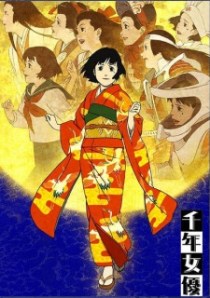
Millennium Actress (2001)

Next up for Mr. Kon was Millennium Actress.  A popular, recurring theme in most of his works is the blurring of the lines between reality and fiction and this movie brought it to an even higher level than Perfect Blue.  The biggest difference between the two is Millennium Actress is a lot more light hearted in tone than the fairly dark Perfect Blue was, even if the argument can be made that it doesn’t necessarily have a happy ending.  Throughout the film, we are brought through the life of an actress as she recounts her career and her search for the love of her life.  However, it’s shown by placing the people telling the tale into the movies of her career and then popping back into reality, sometimes leaving one to wonder what was real and what was scripted.  Such a directing technique does come with the risk of turning viewers off if it gets too convoluted, but Satoshi Kon knew just the right amount of tweaking to do to keep one thinking, but turn into outright confusion for the sake of confusion.
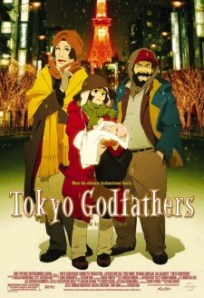
Tokyo Godfathers (2003)

For his third film, Satoshi Kon put the blurring of reality and fiction on the back burner and instead focused more on the human relations.  Tokyo Godfathers looks at the lives of three homeless people and a baby they find on Christmas Eve.  While the story told here is a bit more straightforward than his other offerings, it has a lot more emotional impact as you find out what led each of these three to where they are, and also what led the baby to being abandoned.  Rest assured, the story doesn’t get to its conclusion without a couple twists and turns along the way, but this one has the closest to a happy ending as any of his movies.  The fact that it manages to tell a compelling tale without having to use his psychological tool shows why Satoshi Kon was such a respected director.
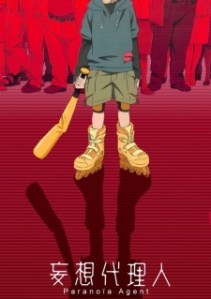
Paranoia Agent (2004)

This marks Satoshi Kon’s first and only foray into directing a television series, and if Tokyo Godfathers was him taking a break from the psychological aspect of his stories, Paranoia Agent more than makes up for the lost time.  The show centers upon a police investigation into a series of attacks on people by a boy with a golden bat.  But, as I said, this is a return to form for Mr. Kon, and so there’s much more to this than merely some attacks.  Plus, add in the fact that in each case after the attacks, the people feel almost grateful for it as it seemed to help them fix their various stresses in life and you have a story that will keep you wondering right up until the end.  Admittedly, there are times when it seems like the story is going to get out of control, and it’s easy to see that Mr. Kon is much more comfortable creating feature length films rather than regular television series, but the fact that it still manages to work shows the true talents of the man.  I feel confident that had he lived longer, we would have seen another series from him, and since he already had the experience under his belt, he could have done an even better job than the already fine showing he did here.
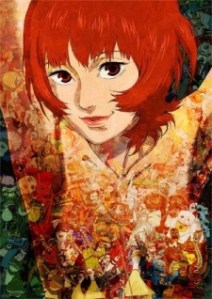
Paprika (2006)

His most recent completed work was 2006’s Paprika.  A big theme in this movie is dreams, so as you can imagine the lines between reality and fiction get blurred once again.  In fact, they’re so blurred, that they often wind up breaking the fourth wall within the context of the movie to the point where dreams and reality become one and the same.  While personally not my favorite movie of his, it shows that even though he uses the same theme throughout most of his works, he still is able to tell a compelling story each time without it feeling predictable and tired.

Satoshi Kon was working on a new film set to release in 2011 called Yume Miru Kikai, or The Dream Machine.  Sadly, due to his untimely death, the status of the film is now unknown.  One would imagine that production will continue, and hopefully Mr. Kon shared his vision of the film with others so that it may be completed as he would have wanted it to be.  The head of Madhouse Studios, for which Mr. Kon was working, stated it was a sudden death from cancer, although Japanese entertainment firms are notorious for their privacy and the privacy of their talent so just how long Mr. Kon had been afflicted with the disease is hard to say.  Whether or not this film sees the light of day, one of the shining lights of the anime industry has sadly been extinguished far too early.  With the dearth of talented young anime directors, this loss will be felt all the more acutely.  Rest in peace, Mr. Kon, you will be sorely missed.

Top Anime of 2001


So, by now you’ve no doubt figured out that I’m pretty lazy.  Then again, I never made any promises that I’d get these lists up very quickly.  Anyways, without further ado, here are my picks for the top anime of 2001.

1. Angelic Layer


Don’t let this title fool you.  When you first start watching it and see that it features a young girl playing with dolls, you could be forgiven if your immediate thought was it was a girly shoujo anime.  However, you would be mistaken.  At its heart, it’s definitely a series aimed at boys, with plenty of combat action, and a good mix of comedy.  There is a small amount of romance, but it’s such a minor area and isn’t given a whole lot of screen time.  The real meat of the show is in Misaki’s growth, both as an Angelic Layer duelist and as a person, coming to terms with her abandonment as a young child.  By and large the anime follows along with the manga, although there are a few minor difference and one larger difference in that the ending takes the opposite way to get to the same conclusion.  The style of this show is a bit different from most CLAMP titles.  They had not yet adopted the long limbed look like in their current series’, but it’s also not quite the same as their Card Captor Sakura series.  While this isn’t their best series, it’s a very solid offering, but it really comes down to personal taste.  CLAMP isn’t for everyone.  You’re either a fan, in which case you won’t be disappointed with this, or your not, in that case you probably won’t get much enjoyment from this.

2. Bible Black

If you remember back with my first post, I mentioned that I would include titles that are excellent representations of their genres.  That includes hentai.  Bible Black is quite possibly the most famous hentai of all time.  The animation quality is far and away better than the majority of other hentai out there.  Actually, the animation quality is far better than a lot of non-hentai anime.  But there’s more to Bible Black than just flashy pictures.  There is actually a rather compelling story to it.  However, fear not, this isn’t like those cheesy pornos that try too hard to have a story.  This knows what it is and it doesn’t disappoint.  There’s plenty of extreme action with a lot of fetish material mixed in.  Easily the most obvious one is their use of the D-girl, or chick with dick if you will.  For me, the most memorable scene is the scene with the sex demon.  I don’t wish to go into too much detail, but it all comes down to DP plus oral.  It’s something you have to see to properly appreciate.  Some things go a bit far, but if you’re looking for something to watch on a lonely night, look no further than this title.

3. Cowboy Bebop The Movie

Cowboy Bebop is one of those series that if you’re starting out and ask people what you should watch, they’ll inevitably suggest it.  As long as you don’t have to hear about it every day, then it certainly can live up to expectations.  Imagine a mix of westerns, film noir, and jazz and you’ve got Cowboy Bebop.  With the movie, you just have to imagine the tv series, but with a much bigger budget.  I would certainly recommend having watched some of the tv series first before tackling the movie.  It’s not because the movie is a continuation of the series end, for that would be impossible.  But it would definitely be to your advantage to have some familiarity with the characters, since the movie makes the assumption that you do.  Of course, another big plus for the movie is the soundtrack.  Each piece perfectly complements the mood of the moment.  It is largely because of this that Yoko Kanno had risen to such promience.  While she had several hit soundtracks from shows like Macross Plus and Visions of Escaflowne, most Americans are more familiar for her work on Cowboy Bebop.  This movie is a great addition to the series, and helps people who cannot accept the ending to the series find a bit of closure to things.

4. Fruits Basket

While I’m sure the above image has tipped people off, this is definitely a shoujo, or girl’s anime.  But, just because that’s the target audience does not mean that guys should steer clear.  To do so would be to deprive yourself of one of the better anime out there.  Each of the characters in this have some sort of tragic past.  Normally this could come across as way too heavy handed, but they manage to keep it from getting that way.  In fact, it’s awfully tough not to feel something for them, especially the ever optimistic Tohru.  Here’s a girl who would have every right to snap at people from time to time, yet she’s always ready with a smile, even if it’s a bit of a sad smile from time to time.  My main complaint with this is that they ended the series at the midway point.  At the time the anime finished, the manga was only halfway done, so instead of just inventing an ending for the anime that felt forced, they wrapped it up there.  It was an alright ending point, but it left so much undone that it prevents this title from reaching true greatness.  Especially considering what happened in the manga after the anime ended.  It’s a real shame that they haven’t ever made a second season to properly wrap up the series.  The drama gets ramped up but it comes to such a wonderfully satisfying conclusion that it just seems unfair that is hasn’t gotten the animated treatment.  But the likelihood of a property getting a second season 9 years after it last aired is virtually none.  Still, while it’s not fillet mignon, it’s definitely a Porterhouse, and that ain’t bad.

5. Hellsing

There’s no gay, sparkling vampires here.  This is vampires as vampires should be.  Arucard would rip Edward’s head off and jam it down Belle’s throat just for kicks.  And Seras can drink my blood any day.  Right from the get go, you get violent vampire action, and it rarely lets up.  The ending was poorly handled, and the animation quality starts to suffer, but the new version of this seems to be fixing the shortcomings of this version.  Still, even though it has its flaws, they’re mostly only noticeable if you’ve read the manga.  If you’re just an anime watcher, then you’ll probably be able to enjoy this just fine as it is.

6. Hikaru no Go

An anime about Go, which is this fairly complex board game possibly requiring more thought than chess, is supposed to be good?  I know it sounds like it would be as dull as watching paint dry, but you’d be very wrong.  Hikaru does indeed start off as a bit of a whiny little brat, but as the anime progresses and as his skills and love for Go increase, Hikaru no Go just draws you in.  It’s almost as if you too are in Sai’s shoes as he watches over Hikaru.  The main thing is, that other than the presence of a ghost of the greatest Go player in history, the show comes across as believable.  For a shounen title, this is no small feat.  Usually shounen is all about having super powers, and inventing new attacks to save the day.  Here, there are no magic powers helping Hikaru improve, other than the aforementioned ghost.  But even after awhile, Sai is pushed more and more into the background as Hikaru comes into his own.  Hikaru wins (and loses!) with his own abilities.  There’s no super special unknown Go move that saves the day for him.  This is an anime where your patience through the early episodes will definitely be rewarded.

7. Mahoromatic

This is a title that for me marked Gainax’s return to their roots.  After the over-hyped stinkfest that is Evangelion, and the horribly handled His and Her Circumstances anime, Gainax went back to a title that has good fanservice to complement a surprisingly good story.  Honestly, Suguru is one lucky little SOB.  Oh sure, his parents are dead, but he has three cute female friends fawning over him, an oversexed teacher with a penchant for young boys, and add in the mix a cute maid willing to dedicate her life to him.  But this is no ordinary maid, oh no.  It’s a butt-kicking android maid to boot!  The only downside to her is her distaste for anything perverted, hence Suguru’s porn stash is constantly in danger, but with all these girls around, I’m not sure why he’d need it.  But even though this is a harem title, you can tell that not everything is going to have a happy ending.  Mahoro, you see, only has just over a year left to live, and at the end of each episode we’re reminded of this fact by it counting down the days until she expires.  Plus, it isn’t a simple fact of just having X amount of days left.  If Mahoro has to use up her energy faster by engaging in combat, her lifespan decreases more rapidly.  And of course, with an invading alien race to fight off, her days are far from relaxing.  This first season though is much more lighthearted than the second one, so most episodes maintain an upbeat feel to them.  The ending foreshadows the mood that’s to be set in the second season, but it still ends on a positive note.

8. Millennium Actress

Every now and again, you come across a director that just plain makes good films.  Hayao Miyazaki is of course the first name that comes to mind for most anime fans, but another big name in the anime film industry is Satoshi Kon.  His movies just have a way of drawing you in with engaging characters and interesting story.  This movie chronicles the life of a prolific actress throughout her career, not only showing her roles, but how many events in her personal life helped her to draw inspiration for the characters she played.  This is told from the point of view of a journalist who is interviewing her, but he finds as he is conducting the interview, he is practically being drug into the worlds in which she helped create.  Much like in Miyazaki films, Kon’s films don’t use the cutsey, moe style that pervades most anime today.  I wouldn’t call the character style to be real, but it’s a more natural look.  Certainly a refreshing change from the modern day look.  Here, there’s no enemies to defeat, no mysterious powers to be had, just good storytelling.  And really, what more can one ask for from their anime?

9. Read or Die

Read or Die gets points for using a very unique power.  The power to control paper.  Yup, with just a few sheets of paper, Yomiko can make an arrow, a blade, even a hang glider, all while working for the British library.  Of course, just like with the real Britain, you can’t trust these guys fully.  There’s a good story behind it all, and even though some aspects come across as a bit predictable, it can be forgiven since it executes it very well.  One could be forgiven for getting very annoyed with Yomiko, since she’s the oblivious bookworm type that just needs a good smack to get her to wake up.  But, her innocence is a good contrast to the backstabbing colleagues of hers.  Also, it’s a short OAV, only comprising 3 episodes, but the story doesn’t feel too rushed, so it’s well paced.  It’s the perfect anime for when you just want some quick, good entertainment.

10. Spirited Away

The inclusion of this should come as a surprise to absolutely no one.  Spirited Away is arguably the most famous anime among non-anime fans due to it having won an Oscar, the first anime to ever do such.  One can argue that this isn’t the best film Miyazaki has ever made, but it’s hard to argue that it isn’t worthy of its recognition.  From a technical standpoint, this is a fantastic example of the genre.  It does rely on some of the usual Miyazaki plot elements, but the man knows his movies well so even though it’s familiar, it’s an enjoyable familiar.  I don’t feel that there’s a lot that really needs to be said about this, due to its fame it has gotten enough exposure to where most who are interested have seen it, and those that aren’t probably wouldn’t read this anyways.

So, that wraps up the top 10 for 2001.  I make no promises as to when 2002 will come out, whenever I get bored enough to do so would be my bet.  So hold your breath waiting, I could use a good laugh as you pass out.

Top Anime of 2000


I was invited on to this blog pretty much to write up my thoughts on anime, so I figured the best way to kick things off would be to make up a list of my favorite anime for each year of the decade from 2000-2009.  I originally thought of just doing a top 20 list for the decade, but soon came to realize that I would be forced to leave off a lot of worthy titles.  This doesn’t necessarily mean that every title listed is of masterpiece quality, but rather they are titles that were very good for what they were trying to accomplish.  For example, I don’t think anyone would compare any hentai to the quality of a Miyazaki title, but that doesn’t mean that there aren’t hentai that came out that were not excellent examples of their sub-genre.  I will be limiting these lists to 10 anime for each year, however if I feel that there were not 10 quality releases for any given year, then I won’t go up that far.

The criteria for what is to be selected is simply anime that was originally released in the given year set, so if it started on one year and continued in to another, I could include it in the first year’s list, but not the next year’s list.  This is based upon the release date in Japan as well, so while it may have first come out on DVD or TV in the US in one year, it almost certainly had been released several years prior in Japan.  Finally, while I have watch an awful lot of anime in my time, it’s impossible to have seen everything, so this list is not the definitive end-all be-all of anime lists.  That said you are more than welcome to disagree with me on any inclusion or exclusion, however, you will still be wrong.

So, without further ado, and in alphabetical order, rather than perceived ranking order, I give you the top anime of 2000.

1. Ah! My Goddess: The Movie

At the time, the AMG franchise was just getting established, having just released the OAV series, and with the reception it had, this movie was made.  What I think makes this such a fan favorite is the fact that while Keiichi isn’t the most manly of men, nor the most proactive, he’s not a completely spineless whimp like a lot of male leads in romantic comedies or harem shows.  He just takes things very slowly, but still continues to make progress.  I mean, he is dealing with a goddess after all, so perhaps the slow and steady approach is the way to go.  At it’s core, it follows the usual conventions of the romance genre, with slowly blossoming love and trials for the couple.  But, the production values of this are very good even to this day, incorporating both CGI and traditional cel animation to make an excellent addition to the franchise.

2. Blood: The Last Vampire

This was a fairly short film, coming in at just under an hour, but what it brought was some of the best animation of the year.  While it wasn’t the first to do so, it still wasn’t very common at the time to see anime done entirely digital, and the way it presented itself no doubt helped usher in the digital age.  The basic synopsis of this is that Saya is a vampire, tasked with killing other vampires during the time of the Vietnam War.  This takes place on Okinawa, near the US military base.  There is plenty of bloodshed here, but not quite to the ridiculous levels that some anime take.  It presents itself a little more realistically, and is a great way to sample the series before getting involved in the Blood+ tv series which came out several years later.

3. Cardcaptor Sakura Movie 2: The Sealed Card

Cardcaptor Sakura is generally the title that everyone can agree upon as being one of well known group CLAMP’s finest works.  It mixes good action with touching drama, and sprinkles some budding romance in there as well.  This movie actually gives full closure to the TV series, which ended with things being just a bit up in the air.  Sakura has captured all the Clow Cards and converted them to Sakura Cards, but it turns out there was one more left.  This card is causing all her other cards to disappear, so not only does she have to seal this away, but she also has to come to terms with her feelings for Syaoran.  The ending to this gives perfect closure to a great series, and definitely should not be missed.

4. FLCL

This is Gainax doing a series right.  Forget the overrated steaming turd that is Evangelion, if you’re looking for a good anime from them that requires a bit of thought, then FLCL is what you should pick up.  It’s easy enough to get through, only having 6 episodes in the series, but they manage to get everything they need to in those 6 episodes without making it feel rushed or cluttered.  Plus the kid has robots coming out of his head.  That’s rather cool in my book.  Plus it doesn’t all end with everything being resolved happily.  Not every immature brat grows up and gets what he wants after all.

5. Love Hina

From a story standpoint and technical merit, Love Hina is pretty average, however what it is is one of the best known harem shows out there.  It may not have started the whole harem genre, but if you ask most anyone what harem show they remember the most, odds are that they’ll respond with Love Hina.  In fact, this pretty much made the career of Ken Akamatsu.  While I believe that Negima will overshadow Love Hina (at least between the manga, the anime was a pile a shit) he still has good name recognition despite only having done 3 series.  The voice acting was quite good though, and Megumi Hayashibara can really do no wrong, so it’s certainly worth watching, if for nothing more than to see what all the fuss is about.  It seems there’s little middle ground, either one likes it, or hates it.

So that pretty much wraps up what I consider notable and worthy in 2000.  This was early on in my viewing career, so there may have been some treasures from the year that I just haven’t seen, but by and large these are the ones you’re likely to hear about.  Next year will be better, I promise!