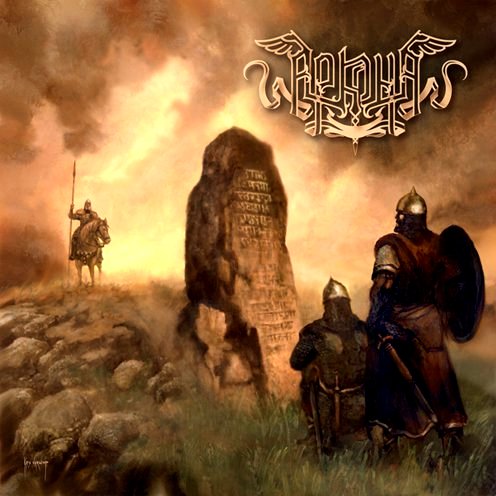
Review: Аркона – Слово (Arkona – Slovo)


I would like to believe that Аркона, or Arkona for you non-purists, is a band requiring little introduction. They did not create the Slavic brand of folk metal, nor are they necessarily the best of their kind, but I would argue that they are the most accessible. Eschewing the common pagan metal dependence on raw production, Arkona deliver directly, presenting a full sound pervaded with folk and ferocious intensity.

At least, that is how I think of them. My ability to relate to the band is a bit narrow. I have somehow only ever listened to Возрождение (Vozrozhdeniye) and От Сердца к Небу (Ot Serdtsa K Nebu), but I’ve listened to both countless times. I am in no position to describe what precisely has changed here since Гой, Роде, Гой! (Goi, Rode, Goi!), but 2007 isn’t that far removed.


Азъ/Аркаим (Az’/Arkaim)

Following their best introduction track to date, Slovo kicks off in standard Arkona form, exploding briefly and then opening up to Masha’s breathtaking vocals. The instrumentation employed differs little from the past–bagpipe and woodwinds driving over epic synths and intense pagan aggression, with slow, tense interludes setting each stage. In the details though, much has changed.

The first difference that caught my eye was the introduction of a violin to accentuate the tension. This application (not its use in general), as it turns out, is more a feature of the opening track than the album as a whole, but the mood it aims for is a recurring theme: expect softer, subtler means to distinguish Slovo’s dynamics shifts.

The other thing I immediately noticed was a diminishing in the intensity of Masha’s metal vocals, and this, unfortunately, is consistent throughout the album. Oh, she can still belt them out better than just about any female metal vocalist out there, but that Slavic shrillness behind the gutturals seems to be gone, degrading into something a bit deeper and a bit more typical to metal in general.


Никогда (Nikogda)

When I returned to a few Ot Serdtsa K Nebu tracks to confirm this latter observation, a lot of other disappointments surfaced. Masha’s mellowing out from a violent she-wolf to a standard death metal growler is only the tip of the iceberg, though her clean singing might be as good as ever. The entire album is really a step down in ferocity. Primitive folk transitions have been replaced by a more consistent reliance on synth and whispered interludes to create a sound that is perhaps fuller but not nearly as inspiring. The track at hand is a bit of a counterexample, but consider it among the heaviest Slovo has to offer, not par for the course.

Don’t get me wrong though. I consider Ot Serdtsa K Nebu one of the best albums of all time, and that’s a pretty high standard to maintain. On Slovo, Arkona continue to produce absolutely solid pagan/folk metal, they’re just complacently maintaining the genres rather than redefining them. The specifically Slavic sounds of pagan metal are here sharing the stage with a more universal approach to the genre.

The album still brings a lot of uniqueness to the table. The guitar on Nikogda manages to maintain a constant tension that never bores in spite of (or even perhaps specifically because of) its simplicity, and it pairs up with the vocals perfectly. The song Леший (Leshiy) delightfully converts a border-line cheesy, carnival accordion into convincing metal. And though no hammer dulcimer is mentioned in the album’s credits, a sound I can describe as nothing else (perhaps very convincing keyboards?) peppers many tracks like falling snow, giving them a decidedly wintery vibe. (I can’t resist pointing out, to the complete apathy of anyone potentially reading this, a peculiar reminiscence I perceive in this last feature to Midwinter Land, the Sindar Ruins theme of Suikoden III, by Michiru Yamane, Keiko Fukami, and Masahiko Kimura.)


Слово (Slovo)

As for my gripes about intensity, the title track does manage to rise to the level I’d come to expect from Ot Serdtsa K Nebu, and might bring to light the stylistic change I had in mind. What springs to life here around 3:30, THAT is what I was looking for on this album. If brief, it demonstrates the intensity hedging on insanity that Slavic folk can offer to metal. That the sort of impact I got from Ot Serdtsa K Nebu in its entirety can only be compared to a passing phrase in Slovo speaks against the album, but in all fairness, that’s a pretty high measuring stick. Slovo is a really enjoyable album throughout, and it’s taken no effort on my part to keep it on perpetual repeat these last few nights. It’s more mellow than what I’d come to expect, in its folk features even more so than in the metal, and the overuse of whispered/spoken introductions and filler tracks is a mild annoyance, but it’s still a cut above much of the competition. If you’re new to the band and these sample tracks left you unimpressed though, do acquire a copy of Ot Serdtsa K Nebu before you write them off altogether.

Review: Arckanum – Helvítismyrkr


I am not overly familiar with Arckanum. I associate the one-man act more with Johan “Shamaatae” Lahger’s peculiarity than with his music. From releasing a music video frequently featured among metal’s cheesiest to releasing an album absurdly titled ÞÞÞÞÞÞÞÞÞÞÞ, his minor exploits will perhaps always incline me to regard Arckanum with an eye towards the ridiculous. ÞÞÞÞÞÞÞÞÞÞÞ did, however, receive some pretty gushing reviews (I never got around to listening to it enough to judge one way or the other), and when I saw that he’d released a new one I thought it due time to give him a shot.


Helvitt

Arckanum has a somewhat odd history musically as well. After releasing three full-length albums between 1995 and 1998, he took a decade long hiatus, not reappearing until 2008 and releasing a full length album every year since. (Sviga Læ, which was never brought to my attention, came out between ÞÞÞÞÞÞÞÞÞÞÞ and Helvítismyrkr.)

In the meantime, Shamaatae has been an active writer on the subjects of “Chaos-Gnosticism” and “Anti-Cosmic Satanism”. A scholar in his field I’m sure. Whatever all that means, it apparently falls into a similar boat as the rituals practiced by fellow Swedes Dissection and Watain. Jon Nödtveidt took his own life in proclaimed accord with such teachings, and though I can never resist a tasteless joke that he had listened to the final studio cut of Reinkaos for the first time moments before his death, suffice to say these guys take themselves seriously.

One might expect that sort of intensity and personal conviction to be reflected in the music.


Nifldreki

Throughout Helvítismyrkr though, I’m not really hearing it. The album is in no sense bad, but it rarely surpasses the generic. Neither the song writing nor the atmosphere in which it is presented conjure for me much beyond a decent musician’s create outlet. He fails to take me beyond himself.

The album does have some catchy feature riffs however, Nifldreki being a prime example, and, the slow grind In Svarta aside, Shamaatae maintains a breakneck pace throughout the majority of each track, giving Helvítismyrkr a particular coherence and consequent appeal. Again, there is absolutely nothing bad about this work, I just had higher hopes.


Svartr ok Þursligr

Helvítismyrkr’s high point almost beyond debate is Svartr ok Þursligr. The breaks in the opening riff come in hard rock fasion that really drive the song, if in a peculiarly fun sort of way. Given the background, I was expecting the best tracks to be more on the esoteric side, but Shamaatae seems to be in his prime on Helvítismyrkr when he’s rocking out.

What propels the song from being merely more fun than the rest to being something really outstanding follows the transition about 3 minutes in. He incorporates a woeful, weeping violin that, aside from completely catching me off my guard, pairs up with the tremolo guitar with astounding success. It’s something I’ve never heard before in black metal, and the effect is a sort of tragedy in the positive sense–maybe not the vibe he intended to deliver, but one that certainly appeals. I can’t imagine it being sustained throughout an album without sounding over the top, so I wouldn’t encourage him to push for more of it in the future, but as a single instance it works exceptionally well.

I am not sufficiently well-versed in Arckanum’s catalog to personally recommend better efforts, but if the sparks of talent you’ve heard in these sample tracks entice you, ÞÞÞÞÞÞÞÞÞÞÞ seems to be popularly regarded as his best work. As for Helvítismyrkr, it is a decent effort but nothing to brag about.

Review: Thantifaxath – Thantifaxath EP


Thantifaxath are a new black metal band out of Toronto. They released their debut ep this year in cassette format on Dark Descent Records, and I think you will like it.


10,000 Years of Failure / Violently Expanding Nothing

The amount of diversity they’ve managed to cram into a five and a half minute long song (excluding the introduction here merged) is pretty amazing. The track, and most of the ep really, isn’t so much moody as thematic. It’s got a sort of sci-fi horror vibe throughout, apparent right from the bass riff introduction, and the ample mingling of melody in between epic black metal explosions almost gives the song a plot line. Even the choice of album cover, Nicéphore Niépce’s La cour du domaine du Gras (supposedly the first photograph ever taken), resembles something of an extra-terrestrial sighting. If the track title is any indication, this was likely their intent, and they pull it off well. Outer space and black metal are an uncommon mix, and one usually attempted through an emphasis on slow-moving, vast atmospherics. Violently Expanding Nothing (the youtube label “Violently Expanding Emptiness” is wrong; I’m taking the track title from the actual packaging) is, in contrast, gritty and abrasive, and all the more effective because of it.


Freedom is Depression

Thantifaxath definitely lay down their best card first, but the album’s other two tracks (both under five minutes long) carry much of the same appeal. Freedom is Depression, peculiar title aside, continues to give me that sort of b-side horror flick vibe, especially with its low production atmospheric guitars. The main riff following the introduction calls to mind recent Enslaved, and that might be the only clear comparison I can make of this album to anything else in particular. It’s among the most unique black metal I’ve heard in a while, and it makes excellent use of relatively low production value to create an eery, unearthly vibe.

Keep an eye out for these guys. They’re brand new, and I suspect their best is yet to come.

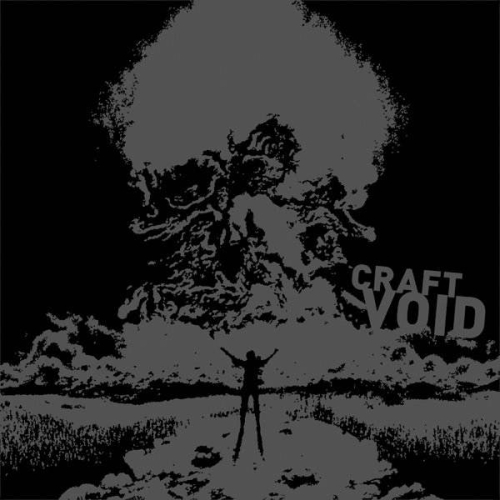
Review: Craft – Void


Here it is five days into October and I haven’t covered a black metal album yet. I ought to be ashamed. Allow me to belatedly kick off my favorite season in good proper satan-worshiping style.


Serpent Soul

Craft’s new album kicks ass. I might go on long analytic rants right and left about modern black metal hybrid bands standing at the forefront of innovative new metal today, but when it comes time to dig out the really sinister shit, tradition still carries the flag. Craft have spent the last ten years proving that corpse paint and spiked bracers still have a legitimate roll in black metal.

Void starts out by punching you in the nuts, then Mikael Nox gets about an inch from your face and compliments your tears with spittle while John Doe plants his foot on your chest and breaks out the tremolo. By the two minute mark they’ve finished chalking a pentagram around you and the ritual begins. If this transition strikes you initially as a disappointment, leaving the opening brutality behind too soon, just give it some time. As the three minute mark approaches, the tremolo guitar invokes a brief vision of awe and terror, soon to be lost in a chaotic haze. If you haven’t moved by now, you’ll probably find your intestines dangling from the ceiling beams.

The only real disappointment in the entire song is the fact that it ends.


The Ground Surrenders

It’s not that Serpent Soul, or any other track on the album for that matter, is aesthetically above standard. As song writers they follow the black metal status quo, and if you don’t like this genre of music they’re not the sort of band you’re likely to make an exception for. Rather, what makes Void as a whole so great is all in the details of delivery. The vocals, guitars, and drums all merge perfectly to create a single solid sound in which nothing seems out of place. It’s all so tight that every dynamic shift delivers; the impact never falls short of their intentions.


Succumb to Sin

Granted plenty of black metal bands have preferred moderate tempos, it’s one of Craft’s great consistencies on Void to always take maximum advantage of the sort of heaviness a slow and steady plod can offer. It’s almost as if the tension of each track is measured, with the opening brutality as the measuring stick. Any time it cuts back you’re practically guaranteed a return. Whatever’s built up is always properly released, whether it be in the form of the explosion at the end of The Ground Surrenders or through the more subtle bursts employed on Succumb to Sin. Add a quick guitar solo at the end to let out the leftovers, and here you’ve got an exceptionally well-formed song.

I’ve talked this album up quite a lot, but let me be clear as to why. It’s not great in any of the ways I usually get fired up about; it’s pretty plain and simple black metal. Like Total Soul Rape and Terror Propaganda (I never actually knew Fuck the Universe existed until I started writing this), it will probably be a fall staple for me when I’m itching for good black metal with no trappings, but the only thing I’m really going to remember is that I liked it. I’ll forget the intricacies of the songs that I’ve picked up on while writing this pretty quickly. But what really struck me when I paid attention to it (and what might subconsciously continue to draw me to their first two albums) is not ingenuity but the quality of their musicianship. This album shines because every member of the band does the right things at the right times every time, feeding off of each other’s performance to create a really tight, unified sound. It’s just really well crafted music, no pun intended.

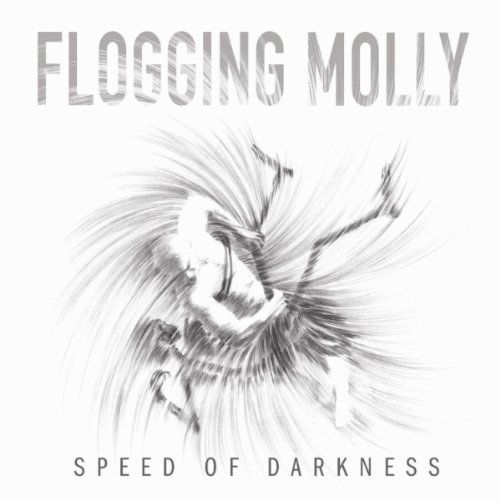
Review: Flogging Molly – Speed of Darkness


Dave King, the frontman to Flogging Molly, is going to turn 50 in two months, and the band’s debut studio album is barely a decade old. King has a long musical history pre-dating Swagger, playing in various bands that included former members of Motörhead and Krokus, and he was actively involved in writing and performing Irish folk music by at least 1993. So while Speed of Darkness might only be the band’s fifth studio album, spanning only six years, it’s something of a late career effort.

Float disappointed me. It had nothing of the immediate appeal of Swagger, Drunken Lullabies, or Within a Mile of Home. Though the music and lyrics might have been appealing after a few reflective listens, I never felt compelled to put in the effort. What I liked most about the band was missing and I frankly didn’t have the time in 2008 to dig deeper. The thought immediately came to me that their first three albums had been the product of a lifetime of creative creations that had simply not been fully developed into recorded songs, and that on Float, in contrast, for the first time Flogging Molly had to produce new material from scratch. Given King’s age, perhaps the four years between Within a Mile of Home and Float just weren’t sufficient to really develop something noteworthy.

But again, 2008 was an off year for me in general. Speed of Darkness I am at more liberty to assess.


Speed of Darkness

What I noticed immediately was a more explosive sound. The opening song kicks off with a sort of energy that I never picked up on passively listening to Float. It definitely grabbed my attention. But while a part of me was excited by this return, the actual content of the song had me worried. It seemed a bit too heavy for its own good. That the song is meant to be a little more dark than usual might be implied by its title, but really, what Irish folk song isn’t dark? In a style so permeated by a morbid sense of humor, the song’s serious tone just felt shallow. The folk takes second stage to the punk/hard rock, and the sort of anger King expresses is neither particularly poignant nor encased in music sufficiently care-free to drive its point home.

It lacked the means by which Irish folk conveys such a heightened feeling of sincerity. I didn’t feel like whatever King had to say got through. This sort of shallowness, not of thought necessarily, but at least of its conveyance, would be my watchword for the rest of the album.


Revolution

I didn’t have to look far. Revolution probably wasn’t the best choice of songs to follow up Speed of Darkness, because it only served to confirm my suspicions. The whole power to the proletariat theme permeating the album is presented so narrowly that it seems a century distant from reality, never mind that the issues they wish to confront are quite active. This song attempts to tap into sentiments that may have stood strong in the industrial age, but I question whether their target audience, in spite of being able to relate to the problems King addresses, really view their hardships in terms of a simple class struggle. Americans aren’t starving in the streets of Detroit, reading Marx, and forming up political discussion groups. Times are tough, but the issues manifest elsewhere, and “I lost my job, it’s time for a revolution,” is an absurdly shallow (if anything counterrevolutionary) solution to modern concerns.

I’m not picking sides or calling Flogging Molly out on anything, I’m just saying that the lyrical theme which appears on Revolution and continues to surface throughout the album isn’t nearly so inspiring as they would like it to be, and as, given another year of brainstorming before entering the studio, I think they could have made it.

Hand in hand, the music is a bore.


The Power’s Out

But my negative remarks take precedence only because their previous albums were so good and because they seem to be trying so hard. Speed of Darkness is not a dead weight; it’s a mish-mash. That initial impression on the opening song–that feeling that something of their old energy was back–was not a complete illusion. The Power’s Out is at least one song entirely on par with their old material. The sort of shallowness I sense in the album’s overarching message is entirely forgiven when given to lyrics and music that are effectively moving. What I hear in this song that Speed of Darkness and Revolution lack is earnest conviction. This is the sort of song where you can feel King’s passion. He’s speaking from the heart, not just regurgitating rhetoric, and the whole band seems to feed off of it. The lines are better composed, the music better written, the delivery more convincing… There’s a central spark igniting their real talent.


A Prayer for Me in Silence

And while I think it safe to call Speed of Darkness their most rock-oriented album to date, snubbing the folk side of their sound far more than I would have liked, there are a number of nice little acoustic numbers filling the gaps that serve well to warm an otherwise bleak collection of songs.

Speed of Darkness is one of those textbook average albums. It’s never “bad” but frequently bores, pays ample homage to the generic, struggles lyrically to live up to its own standards, but does occasionally break into something above the bar. As I said, Dave King is about to turn 50, and to call it a disappointment would overlook the fact that he has a long, successful career behind him. It can be hard to accept this, given that they’ve only released five albums, but in context it’s perhaps unfair to even compare this to the likes of Swagger. I mean no one says of a new Iron Maiden album “It’s got nothing on Number of the Beast,” or refuses to enjoy it on those grounds. There comes a certain point in an artist’s career where average becomes appreciable, and you have to respect him for at least trying to keep it real.

But this is a band, not a one-man project, and furthermore I have no insight into King’s state of mind. If he still feels like his musical peak has yet to come and he has something to prove, and the rest of the band is with him, then I challenge him to do better. If they’re just out there having fun and aren’t trying to surpass their finer hours, then Speed of Darkness is a respectable work. Just nothing special.

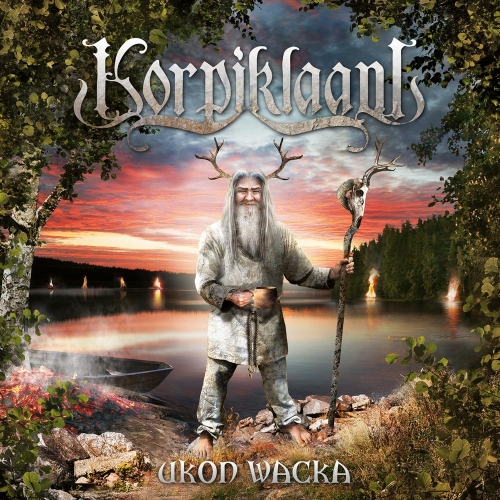
Review: Korpiklaani – Ukon Wacka


I just found out that Jaakko Hittavainen Lemmetty left Korpiklaani last month. According to the band’s official statement, “his personal health issues made the constant touring and recording impossible.” That might come as no surprise, considering Korpiklaani are one of the most prolific bands on the market. During his tenure they managed to release seven albums in nine years, and in 2010 alone they performed live approximately 100 times. I know I certainly wouldn’t be able to keep up.

His departure lends a sort of heightened significance to Ukon Wacka. Hittavainen might not have been their frontman, but he was responsible for all violins and woodwinds on all seven albums. In other words, half of what really made Korpiklaani folk metal is gone, and however well his replacement, Teemu Eerola, fills the void, their next album is bound to be different. Ukon Wacka might be the last of its kind.

Change is a pretty foreign concept to Korpiklaani, both in their sound and in their line-up. That is a point I’ve always appreciated about them. If it’s not broke, why fix it?


Louhen Yhdeksäs Poika

Ukon Wacka is no different. As always, the album makes no attempt at an introduction. It just kicks off from the get-go as quintessential Korpiklaani. Jonne Järvelä goes on rolling out incomprehensible lines at a break neck pace to a constant melody of accordion and violin, brought to life by standard metal instrumentation that’s designed to accent the folk, not compete with it. Throw in an awesome violin solo towards the end, and you’ve got a song that’s entirely unique to the band and entirely to form with everything else they’ve written. The stylistic monotony is hardly a fault, what with nearly all of their 80+ songs accomplishing a distinct and addictive melody. I probably get more Korpiklaani songs stuck in my head than any other band out there; I just might be at a loss to put a name or album to them.


Tequila

One of many long-standing traditions Ukon Wacka upholds is the booze track. Not that every song isn’t designed for copious consumption, there’s always been at least one song that requires no knowledge of Finnish to convey its lyrics. With Wooden Pints on Spirit of the Forest, Beer Beer on Voice of Wilderness, Happy Little Boozer on Tales Along This Road, Let’s Drink on Tervaskanto, Vodka on Karkelo, and now Tequila, Korven Kuningas remains the only album that doesn’t really fit that mold. And like all of those others, Tequila stands out as one of the album’s most memorable songs.


Surma

When it comes to closing songs, the band has been a little more diverse in their selection. But, aside from on Tales Along This Road, they’ve always seemed to save their most reflective or otherwise inspiring song for the end. Surma might not match Karkelo’s Kohmelo or Tervaskanto’s Nordic Feast, but it’s certainly the high point of Ukon Wacka as far as I’m concerned.

There’s not much I can say about the album really, because it sounds just like all of their others. I suppose Korpiklaani might be regarded as a bit shallow, at least in so far as most of their songs, especially in the absence of any understanding of the predominantly Finnish lyrics, are just fun and fairly thoughtless numbers about partying and getting drunk. But there’s also a sort of authenticity to that which renders them significantly more enduring than comparable acts like Finntroll. While I don’t think any particular Korpiklaani album holds a candle to Nattfödd or even Nifelvind, in the long run I always end up listening to them more. A lot of folk bands that don’t take themselves very seriously can only really be appreciated in their own right. Korpiklaani, on the other hand, extend beyond themselves, presenting a sort of continuity. I can’t really speak of them imitating or incorporating Finnish folk because, much like Irish punk and metal bands, they’re more the modern continuation of a long-standing tradition than an attempt to resuscitate it. I’ve never seen them live (they’re about to kick off a North American tour with Arkona that I might give in to a five hour drive across the state for), but I imagine their show incites a lot more dancing than headbanging, if you know what I mean. Authentic folk really implies community participation, and that’s the sort of thing Korpiklaani cater to, on Ukon Wacka as strongly as on anything else.

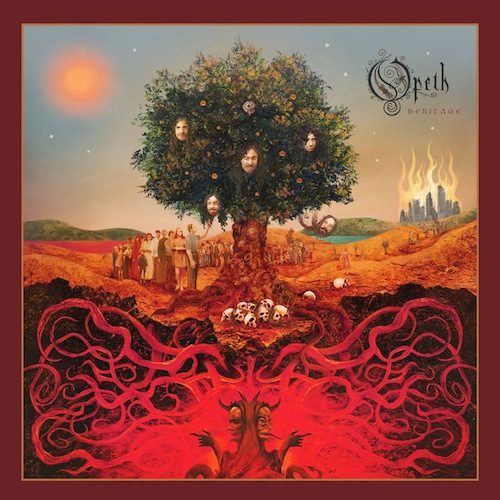
Review: Opeth – Heritage


It’s been about a month now since I first acquired a copy of Heritage. I rather wish I’d reviewed it sooner, since my opinions ultimately never really changed. I really liked it on my first listen, and I like it to about the same extent, or perhaps slightly more, for about the same reasons now. Its reception hasn’t really changed either. Labeled pretty much from the start as Opeth’s worst album to date, it continues to wrack up impressively low scores across the board. (The average Encyclopaedia Metallum review is 54%, where no other Opeth album has failed to break at least 75%.) Either popular opinion has placed my presumed disposition towards good taste in dire jeopardy, or else I’m just approaching this from a wildly different perspective than the average listener. I am inclined to believe the latter.

Unfortunately, I cannot treat this as a normal Through the Shattered Lens review. That is, I cannot showcase particular songs via youtube and describe which elements really stand out to me for better and for worse. The band has been pretty forceful lately about preventing any and all means to experience their studio albums without first paying them. I’ll spare you a rant on antiquated copyright laws and record label monopolies, but suffice to say a musician’s attitude towards listeners will always be reflected in some capacity in the music. Whether Akerfeldt (signing to a notorious record label is no excuse) is too selfish or simply too oblivious to respect the means by which he became a celebrity in the first place, there is an over-inflated ego at work here.

But that wasn’t news to me. Really it shouldn’t be news to anyone who’s listened to Roundhouse Tapes and endured the six minutes of dialogue wrapping up the live version of Blackwater Park. (It’s always lame and cliche to mock-hype yourself up to be a celebrity, but it ceases to be tongue in cheek when you really are a celebrity.) At any rate I started losing interest when they released Deliverance, and by Ghost Reveries they were one of those “I really respect them, I just can’t get into their new sound” bands.

So I guess the first big difference between me and, well, pretty much everybody else, was my only thinly-veiled conviction that Opeth were no longer very good. I had absolutely zero expectations, so any mediocrity apparent in Heritage burst no bubbles for me. Rather, it being immediately clear that Heritage was not the sort of album I expected to hear, I ended up listening to it almost as though they were a brand new band. As such, I really can’t find fault in it. Sure, it’s not groundbreaking. It’s unlikely (though not out of the realm of possibility) that it will make my top 10 of the year charts when all is said and done. But damnit, this is a fun, creative, thoroughly entertaining album, and under any other band name I think it would earn fairly positive reviews. Unfortunately, urging people to listen to it with an “open mind” would be pointless, because it’s Opeth. There is no getting around its place in history. If you really liked Watershed it’s unlikely you will enjoy it.

If I could sample the songs here like usual I would treat this whole article differently. I would completely ignore the fact that it’s Opeth, point out all of my favorite bits and pieces, maybe make passing references to the cheesy lyrics and the possibility that they could have done away with a few unnecessary transitions which fail to fit the big picture, and save any mention of the band behind the album until the very end. Hell, maybe I’d say nothing at all and save a rant such as this for a completely separate follow-up article, just to make a point. But since that is not an option, and traditional reviews aren’t my style, the rant will stand alone.

One review I read quoted Akerfeldt as saying “I think you’ll need a slightly deeper understanding of our music as a whole to be able to appreciate this record.” The reviewer’s relative point was not particularly kind, and perhaps mine won’t be either, but I honestly find the quote precisely on the mark. Akerfeldt isn’t some rock solid icon of metal, unyielding and impervious. He’s no Lemmy, no Bruce Dickinson. Perhaps his last few albums were heavy and aggressive enough to make people think otherwise, but what they reflected for me was something quite the opposite–a sort of susceptibility to musical trends, overbearing producers, and well-deserved fame. It was a softness, almost a sort of frailty, that made Orchid, Morningrise, and My Arms Your Hearse so breathtaking, and the more he matured and rose to stardom the more that authenticity faded away, to be replaced eventually by dynamic-driven death metal of the popular sort that only excelled in perfecting a genre with little to no redeeming value to begin with. I think some of his original spirit has resurfaced on Heritage, albeit only slightly and in a very different form. Akerfeldt dumped off a lot of baggage when he chose to create Heritage the way he did, and from what I’ve gathered in interviews, he doesn’t intend to turn back. In retrospect, I’m pretty excited to see what will follow as the leech of popularity upon his creative genius begins to contemplate younger blood. But that wasn’t my first impression. Initially, abandoning all expectations, I just heard something pretty groovy and got into it.

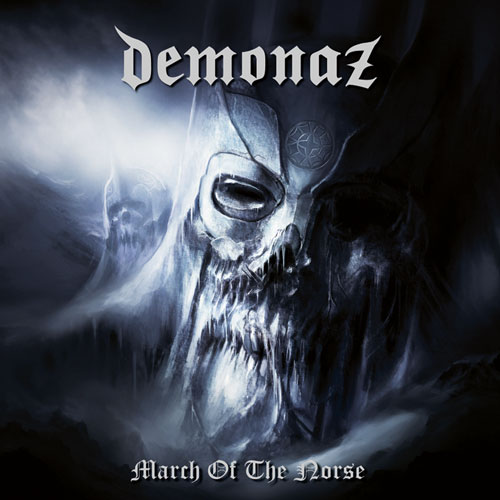
Review: Demonaz – March of the Norse


Unlike Abbath’s awkwardly titled sideproject I (which I haven’t actually heard yet), Demonaz Doom Occulta left little to the imagination in naming his new band. According to a lot of reviews I’ve read, he left little to his imagination in writing songs for it too. I don’t know that I can develop much of a case to the contrary, but March of the Norse is still more than capable of entertaining. I enjoy it.


Northern Hymn / All Blackened Sky

It’s definitely not a black metal album. If anything, you might say it’s an Immortal minus black metal album. In a lot of ways it has marks of the generic. The tempo and beat are pretty homogenous throughout, and what you hear is what you get; there’s not really anything buried beneath. There are a few slow moments that harken to Bathory, and a lot of plodding along in a way that characterizes stereotypical viking metal. But if you accept that Demonaz set out to create something pretty standard, I don’t think the results are bad at all. The songs never drag, and despite all sounding quite similar I did start to get pretty familiar with each individual song after a few listens, not just the sound as a whole. At the same time, the similarity with which each song starts gives it a lot of continuity. There aren’t many major transitions. In fact, I didn’t even notice when All Blackened Sky ended and the title track began my first listen through it. Don’t misconstrue that as a decidedly bad thing; it’s not that I missed it for lack of interest. The songs just flow together nicely.


Where Gods Once Rode

Now don’t get me wrong, aside from some pretty cool solos there is absolutely nothing “special” about March of the Norse. If you look for merit beyond face value you’re not going to find much, and I subsequently don’t have much to say about it. But it has value as a background piece. Because it’s neither very enticing nor unpleasant I can really put it on repeat all day long and never have to worry about being distracted from whatever I’m focused on, for good reasons or for bad. When I choose to tune in I always like what I hear, and I can tune right back out with no real effort.

I guess that’s all I have to say. I like this album, and I find it useful. It’s not the sort of thing I would go around recommending, but neither is it so base that only a die hard Immortal fan can enjoy it, as I’ve seen some people claim. Once something new crosses my path to replace March of the Norse as my sort of background album of the week I might never remember it again. But until then, well, I’ve got my $11 worth out of it. It’s certainly not the sort of thing I only listen to once and put back on the shelf. Sometimes generic done well is refreshing.