‘Her’ (dir. Spike Jonze)


*Disclaimer…I haven’t posted a review in like 4 months [holy crap] so I think I am a bit rusty…but sometimes a film comes along that you just can’t help but want to write about…so here goes.*

poster

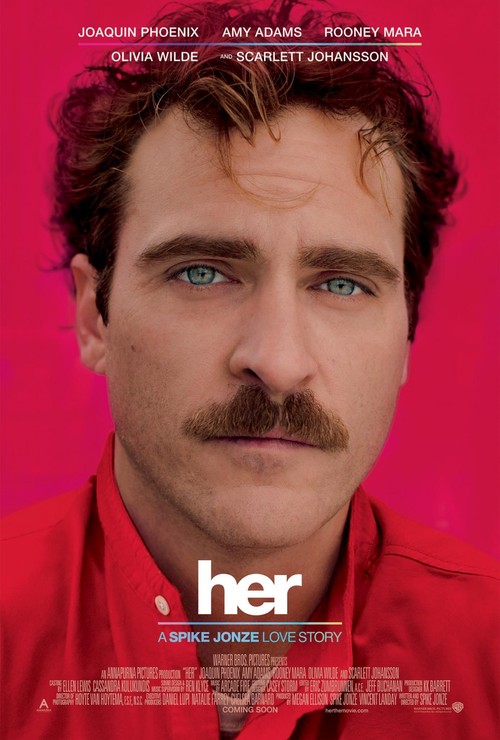
“Her”, Spike Jonze’s latest creation, stars Joaquin Phoenix as a writer who falls in love with his operating system. It is the sort of synopsis that would make anyone do a double take, and for good reason. There is a cheesy B-horror movie in there somewhere. However, in the hands of Jonze, who approaches the story and its characters with just the right level of serious sentiment and carefree whimsy, this tale of man and machine not only feels less ridiculous than it sounds, but is also arguably the most fitting romance for a society that is nose deep in the dawn of a technological revolution.

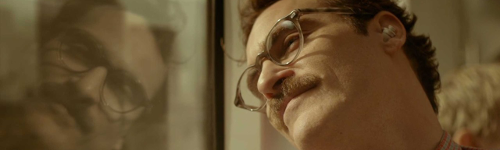
Her review picture 1

Phoenix plays Theodore, a quiet man left emotionally detached following the divorce with his childhood sweetheart. The only emotions he can seemingly express now are artificial, literally created to write love letters for other people as part of his job. So it comes as no surprised then that the first real connection he makes in over a year is with an artificial intelligence, a new OS by the name of Samantha. She is generated based on a quick questionnaire to be his perfect “other half” and do everything from helping him organize his life to keeping him company at night. Because she offers intimacy, with few complications beyond not having a physical body, Theodore soon finds himself attracted to her ever evolving intelligence and the sense of wonder she expresses in experiencing the world for the first time.

​In a sense, Samantha becomes his “rebound”, but because of her unique existence she does not just reawakening Theodore’s interest in love and relationships, allowing him to simply move on. Instead, her personal growth and struggles with discovering emotion also give Theodore a whole new perspective on what it actually means to love and be loved.

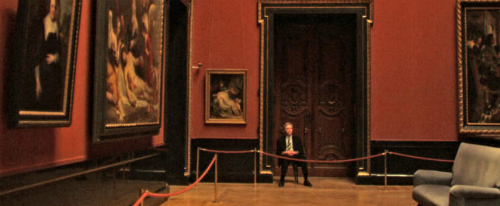
Her review picture 2

Love, like Samantha, is an ever evolving state, one that takes time, devotion and can make us do crazy things. How we love is often based on the things that made us who we are, like the relationships we had with our mothers; a question asked when Samantha is created. Love is, as one character puts it, also “a socially acceptable form of insanity”. As love changes so do we, and vice versa. Often, these changes happen faster or sooner than expected, or in ways we might not have imagined or ever saw coming. We often blame ourselves when love fails, or avoid it all together in fear of that failure. But, love isn’t something that can so be so easily controlled, explained or forgotten. The person you’ve loved and shared your life with since an early age might grow distant and hateful. Or, maybe you will develop affection for a voice inside your computer. What becomes important then, through all life’s trials and adversities, is that you never lose that ability to love.

This has become harder and harder. As technology has advanced over the years, as clichéd as it may sound, we have become more connected virtually and more disconnected socially than ever before. “Her” seems to explore how this has had an effect on how we are able to handle our emotions or express ourselves to one another without some sort of filter. Samantha in the beginning, in all her virtual glory, can easily love and be loved. However, as she evolves and discovers things such as physics and philosophy, even she finds emotions far more complicated than maybe even Theodore could imagine them being. Therefore, he is left as witness to the full evolution of love, for that is what Samantha is, pure love. Eventually it grows beyond his control and it is up to him to take the next steps.

I guess what I am trying to say is maybe all we need to do is unplug – forget about how love does or should work, stop wishing for it and everything else to be so damn perfect and simply embrace the insanity.

Of course it isn’t all as simple as that, and it would require spoiling the film to go any deeper.

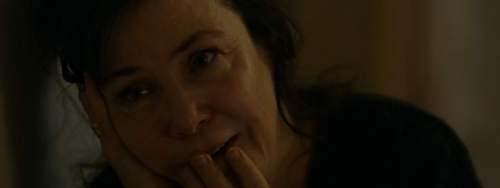
Her review picture 3

Visually, the film has a subtle beauty. A lot of thought and detail clearly went into the design of the film, from the awkward looking clothing to the muted color scheme, enough to make a second viewing necessary to truly appreciate all the imagery. What I loved most about the future Jonze envisions, is that there are no cars, smog, steaming vents or flashing lights. This isn’t a future of excess. It is quite the opposite actually, as if our inability to express has seeped its way into the city streets.

The performances are superb. Joaquin Phoenix is perfect for the role, bringing equal amounts of reserve and raw emotion. Scarlet Johansson is truly brilliant as Samantha. I honestly feel like she expressed more with just her voice than many other actors have done with their entire bodies this year. Whether it is sultry flirting, heartache, or a child-like enthusiasm, each emotion comes across clear and with depth. Amy Adams also plays a small, but rather important role, as Theodore’s friend and neighbor. This is Adams at her most loving and adorable, the polar opposite of her role in “American Hustle”; a perfect example at just how talented she is.

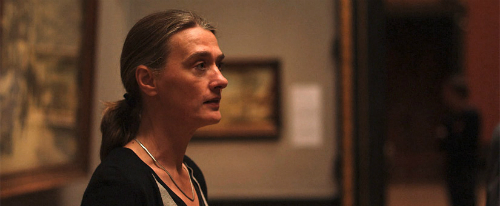
Her review picture 4

As it stands, and probably always will, this is my favorite film of 2013. “Her” is on the same wave-length as “Lost in Translation” and “Eternal Sunshine of the Spotless Mind”. Fans of those two films will find Jonze’s work strikes the same emotional chords, but also remains its own unique work of art, one of pure bliss and enlightenment. Go see it if you have the chance. 

‘Museum Hours’ (dir. by Jem Cohen)


“Museum Hours” is an absolutely beautiful and hypnotic film; one that depicts the idea of life as art, and vice versa, while examining how we have become disconnected from this notion and from one another; and how it is through the smaller more intimate details in both life and art that this connection is re-established.

mh

This is explored through a week or so of the life of Johann, a guard at the Kunsthistorisches Art Museum, who enjoys his quiet life amongst the artwork. He spends most of his day pondering the meaning of the paintings around him, as well as ruminating over the visitors who are either transfixed by the images or as he points out “seem to be competing over who can be the most bored”.

Early in the film Johann befriends a Canadian woman named Anne. She is visiting Vienna to care for her comatose cousin who she hasn’t seen in years. The burden of being in a country she has never been before and tasked with the care of an unconscious cousin she barely knows weighs heavily on her. She appears lost, an outsider disconnected from the people and culture around her.

mh2

Luckily for her Johann agrees to play tour guide and the two spend most of their free time together as Johann brings her around the city. It is in exploring Vienna with Johann, and seeing not the tourist attractions but the small shops, pubs and flea markets that she begins to feel connected again not just with the cities culture but also with her cousin. The joy of her time with Johann awakening memories long lost.

For Johann there is a similar revival. All these old places he once visited in his past seem new again. Not simply because he hasn’t been to them in years but because they have changed in such subtle ways that the experience feels new again. For both of them, it is the small things, the details we usually overlook, that reestablish a connections with family, country and friends.

This is reflected in the works of Pieter Bruegel whose art is the center piece of the film. He was a Dutch artist who made richly detailed paintings in which, as Johann explains, someone might find something new hidden within the frames with each viewing. You could easily say the same thing of “Museum Hours”. For director Jem Cohen, the film is his canvas and the streets, museums and pubs of Vienna his subjects. He plays observer, like a visitor in a museum, finding and capturing the intimacy of a city and its people. Inspired by art and human nature, he paints a richly detailed picture of the world we live, seeing details one might usually miss.

mh3

The importance of all this is expressed in one of the best scenes from any film this year as we watch an art scholar lead a group of tourists around the museum’s Bruegel exhibit. Here she points out that although many of his paintings depicted important religious tales, the focal point of the imagery is not the central religious figure but a bystander or object that gives the piece a meaning more important than that central figure. It is a powerful moment. At first glance we might all think we are seeing the same things creating a false sense of inter-connectivity. But ultimately it is how the smaller details affect us that truly matter. It is through this that the connections between life and art are reestablished, in ways that the bigger more seemingly important aspects of life can’t. A great artist can capture this. Cohen has done so here, by making the familiar feel new.

‘Europa Report’ (dir. by Sebastian Cordero)


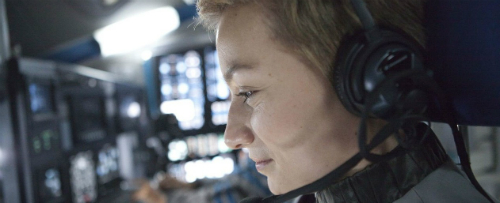
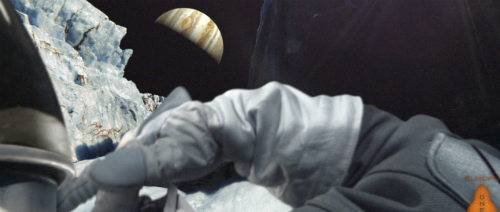
“Europa Report”, which is available to rent on VOD, is a sci-fi gem that has me conflicted. On one hand, it does what many similar films have not – it delivers a unique story, rooted in actual science, that examines the sacrifices some are willing to make in the name of exploration and discovery…but on the other hand, it is a film weighed down by a format that begins to overshadow the human element and the themes mentioned above.

er

The film follows a crew of astronauts on their two year journey to Europa, an ice covered moon around Jupiter that scientist believe contains an ocean of water right below the surface; and as one scientist in the film points out, where there is water there is also usually life. The possible discovery of that life is the crew’s mission. They are to explore the ocean below the moon’s surface in hopes of finally discovering that we are not alone.

To tell the story the film is played out like a documentary. It consists mostly of archived video footage of the ship’s crew, as well as interviews with the earth based mission control members who organized the operation. It is this format that on one hand is a brilliant way of documenting the crew’s journey, but on the other really hampers the themes and suspense of the film.

er2

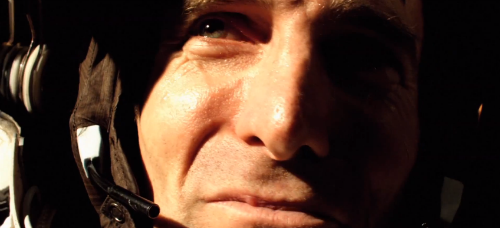
Through these recordings, we get to see the crew bonding and encountering tragedy on their journey to and on Europa. It turns out to be a really wonderful human tale of a group of people who without any hesitation or pretensions are willing to give anything and everything in order to make a discovery that could change the way we view ourselves, life and the universe. This portion of the film is a wonderful thing to behold, especially when their treacherous journey has some truly thrilling moments, including one gut wrenching scene played beautifully by Sharlto Coley. This is made all the better by the fact that unlike other similar sci-fi films (“Sunshine”), it doesn’t cop-out in the end and actually contains a third act that is tonally in tune with everything that comes before it.

er3

Sadly, this documentary style also means that the story is broken up by interviews with scientist and mission control members on earth explaining the crew’s goal. The issue here being that everything these individuals say in their interviews is simply exposition that is already clearly expressed through either the words or action of the mission’s crew in the recordings. So although the video footage and central story and themes are pretty clear cut, the addition of the interviews makes it feel like the filmmakers are trying to beat you over the head with them. It just ends up feeling unnecessary and breaks up the tension which is really disappointing.

Luckily, for me at least, this didn’t ruin my viewing experience. In the end the film still works, with a core story and themes that are still expressed and earned that lead to a brilliant ending; where the result of their mission is made clear and as ridiculous as it initially may seem, everything really comes into perspective and it ends up having an emotional punch and staying power one wouldn’t expect. Because of this I highly recommend this ambitious little gem of a film. If you can look past the interviews, and focus on the central story as I did, then you are in for a real treat.

LeonTh3Duke’s Favorite Films of 2012


20) Rust and Bone (dir. Jacques Audiard)

Rust

19) Oslo, August 31st (dir. Joachim Trier)

Oslo

18) The Grey (dir. Joe Carnahan)

TheGrey

17) Django Unchained (dir. Quentin Tarantino)

Django

16) Killer Joe (dir. William Friedkin)

KillerJoe

15) Les Miserables (dir. Tom Hooper)

LesMis

14) Argo (dir. Ben Affleck)

Argo

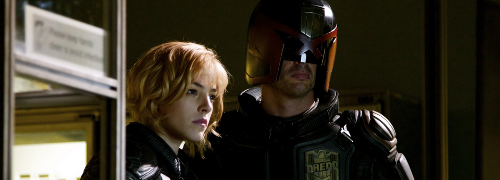
13) Dredd (dir. Peter Travis)

Dredd

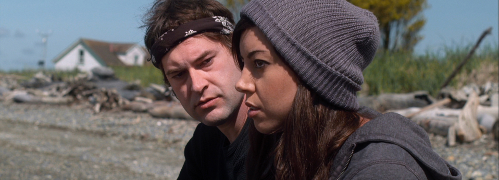
12) Safety Not Guaranteed (dir. Colin Trevorrow)

Safety

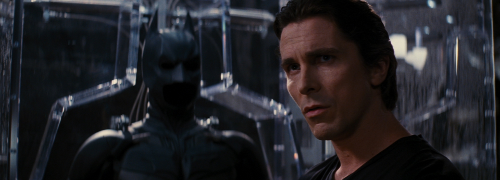
11) The Dark Knight Rises (dir. Christopher Nolan)

DarkKnight

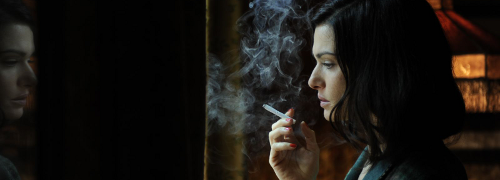
10) The Deep Blue Sea (dir. Terence Davies)

BlueSea

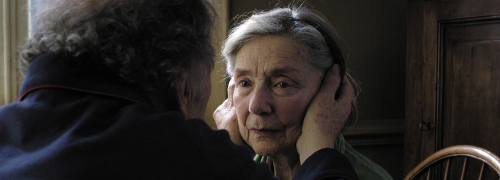
9) Amour (dir. Michael Haneke)

Amour

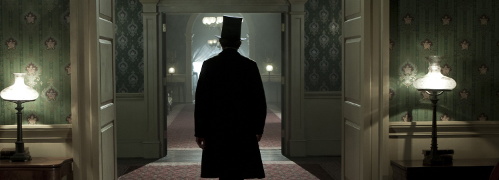
8) Lincoln (dir. Steven Spielberg)

Lincoln

7) Silver Lining Playbook (dir. David O. Russell)

Silver

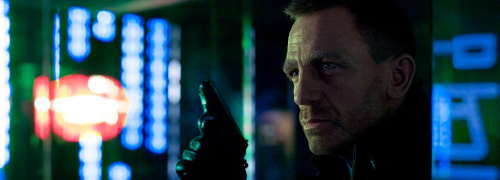
6) Skyfall (dir. Sam Mendes)

Skyfall

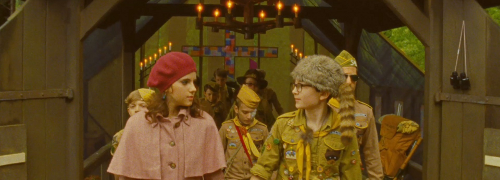
5) Moonrise Kingdom (dir. Wes Anderson)

Moonrise

4) Beasts of the Southern Wild (dir. Behn Zeitlin)

Beasts

3) The Kid With A Bike (dir. Jean-Pierre Dardenne, Luc Dardenne)

Bike

2) Looper (dir. Rian Johnson)

Looper

1) Zero Dark Thirty (dir. Kathryn Bigelow)

Zd30

(Still need to see: Life of Pi, Holy Motors, The Master, Anna Karenina)

——————————————————————————————————

Favorite Performances:

Best Actor:

  1. Daniel Day Lewis (Lincoln)
  2. Hugh Jackman (Les Miserables)
  3. Bradley Cooper (Silver Lining Playbook)
  4. Matthew MCConaughey (Killer Joe)
  5. Jean Louis Trintignant (Amour)

Best Actress:

  1. Jessica Chastain (Zero Dark Thirty)
  2. Jennifer Lawrence (Silver Lining Playbook)
  3. Emmanuelle Riva (Amour)
  4. Marion Cotillard (Rust and Bone)
  5. Quvenzhane Wallis (Beasts of the Southern Wild)

Best Sup Actor:

  1. Tommy Lee Jones (Lincoln)
  2. Dwight Henry (Beasts of the Southern Wild)
  3. Robert De Niro (Silver Lining Playbook)

Best Sup Actress:

  1. Anne Hathaway (Les Miserables)
  2. Sally Field (Lincoln)
  3. Jacki Weaver (Silver Lining Playbook)

—————————————————————————

Best Song or Score:

Maya on a Plane (Zero Dark Thirty)

I Dreamed A Dream (Les Miserables)

Skyfall (Adele)

Ma Ma’s Requiem (Dredd)

Once There Was a Hushpuppy (Beasts of the Southern Wilds)

‘Zero Dark Thirty’ Review (dir. Kathryn Bigelow)


“Zero Dark Thirty” opens with the sounds of frantic emergency calls from people trapped inside the World Trade Center. Their cries for help to dispatchers, played over a black screen, is a shocking reminder of the horrors of 9/11, and sets the tone for what is to come – the brutal and riveting retelling of the dark paths and dead ends this country traveled in the hunt for Osama bin Laden, the man responsible for those attacks.

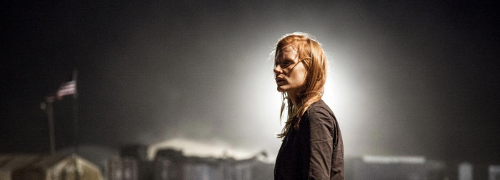
What makes “Zero Dark Thirty”, a film with an ending we all already know, so effective is how tautly it depicts the events that led up to bin Laden’s death in such an intellectually and morally challenging way. There is no flash, no melodrama, no varnished surfaces or sanded edges to make the material more bearable or ‘entertaining’, it simply tells it as it is. This is done with meticulous detail by Kathryn Bigelow and Mark Boal. They tell this story through the eyes of a female CIA operative, played by Jessica Chastain, whose obsession with finding bin Laden was the driving force that led to his death. This performance by Chastain, who carries the film, is quite astonishing. She displays such a wonderful level of assurance, confidence and determination but also the weight of her obsession – doing most of this with her eyes. We know nothing about her character other than the work she did to find bin Laden but we still root for her the whole way. It is one of those subtle but powerful performances that will be remembered for much longer than any other performance this year.

Now, at this point in time, it would be impossible to write a review without addressing some of the criticisms the film has drawn. Honestly, I have to say that I find it quite disheartening that morally insecure and intellectually lazy people have tried to bring the film down for not making moral decisions for them. I am disgusted by the claims that the film is pro-torture for not taking a side as to whether such techniques as water boarding are right or wrong. The simple fact is it doesn’t have to. It isn’t the films responsibilities to do such things. All it wishes to do is relay the facts, as it knows them. It is then up to the audience, based on what they see, to make these decisions.

It is true that in doing so it reveals some truths, many we might not like, that makes us reexamine the past decade of American history. But this is what makes the film more than just a masterfully crafted thriller. There is no arguing this country has had some very dark moments over the past decade  – Abu Ghraib – and the search for revenge to capture or kill those responsible for 9/11 was the driving force of most of this. In making “Zero Dark Thirty” Bigelow and Boal aren’t trying to say whether any of this was right or wrong, but rather they looked to remind us that it did happen and challenges us to question how it truly effected us all and make the decisions ourselves as to the moral nature and effectiveness of torture and war; while at the same time allowing us to appreciate and honor the hard work and sacrifice of those who gave so much in trying to protect this country.

This is made quite clear at the end of the film with its final shot, which I think is perhaps one of the most important in any film in recent years. After the films harrowing opening and what comes after – the remembrance of the horrors of 9/11, the journey down the dark paths revenge took us, including torture and the horrors of war – we are disgusted by what happened, but like the films main character we knew it was happening yet we kept moving forward because we had our ‘eyes on the prize’. In the end, after all was said and done, it is hard to truly rejoice when the full weight of what had happened is realized. Chastain’s face in the films final moment sums this up perfectly. A sort of “what now…was it worth it…what parts of ourselves were lost to accomplish or fight this war on terror?” We killed the man who essentially started this war, a sliver of justice was delivered to those who have lost family and friends, but that war didn’t end with his death, and it will always haunt us no matter how many body bags we fill. The implications of this scene, and the whole film, are bigger than any scene or any film in recent memory.

Thinking back, it is quite amazing how well the whole emotional trajectory of the film so well mirrors the emotional trajectory of this country in the last ten years. From its black screen opening to the close up of Chastain before the credits, “Zero Dark Thirty” intimately reflects on the sadness and shock, that led to anger and war, that was followed by frustration, that led to apathy, which ultimately ended with rejoice…only to quickly then be overshadowed by the full weight of post-9/11 America and where the past decade has left us. It is because of this that I think “Zero Dark Thirty” is not only the best but also the most important film of 2012, or even in recent years. It is a masterfully and tautly crafted thriller that challenges the viewer in ways that will leave us talking about it for years to come. Its moral ambiguity and apolitical stance reveal truths usually overshadowed by preachy, overtly political films of the same nature. If that isn’t the formula for a modern masterpiece, then I don’t know what is.

*Read Arleigh’s comment below for his perfect expansion on the feelings towards the criticisms the film has drawn*

‘Looper’ Review (dir. Rian Johnson)


‘Looper’, the mind bending and smart new time-travel film by Rian Johnson is one of the most effective and balanced science fiction films to be released in the last few years. Its mix of realism and sci-fi elements bring a level of emotion and heart to its own unique and complex universe in a way that reminded me of classics such as ‘Blade Runner’ and ‘Twelve Monkeys’.

The film takes place in a futuristic, though familiar, 2044 city where the buildings are bigger, poverty is more prevalent and organized crime seems to hold much of the power. The focus of the story is Joe (Joseph Gordon Levitt) who is a “Looper”, a specialized assassin hired and trained to kill individuals from the future.

We are told early on through narration that time travel has not yet been invented in the story’s present but it will be in thirty years. In that time it will be outlawed; but criminal organizations who have to deal with increased technological advances in solving murders use “black market” time travel devices to send their living victims back to the present. There they are killed by assassins like Joe, who dispose of the bodies. This leaves no trace of the person’s death in the future, and the Looper is killing and disposing of a body that technically should not exist in his present.

Joe, like other Loopers, is paid well and lives a fairly extravagant lifestyle that includes lots of drinking, drugs, women and nice cars. The only down side of being a Looper is that a provision in their contract states that in the future their older selves will be sent back in time, to be disposed of, by their younger self. This is to “close the loop” as the film explains, a way of disposing of those individuals still around who are no longer needed but have knowledge of these criminal acts.

The main narrative of the story kicks off when Joe’s older self, played by Bruce Willis, is sent back in time to be killed. Joe hesitates when the time comes and ‘Old Joe’ escapes, causing Joe to be hunted by his bosses for this mistake. At the same time Joe tries to track down his older self in an attempt to “make things right”. The situation is made all the more complicated because Old Joe has plans of his own, turning what most going in expecting to simply be an action thriller into a much more complex and emotional story.

The thing that I loved most about Johnson’s “Looper” is how grounded it managed to feel while also still containing some very interesting fictional elements. There is a level of detail in the story to support a whole series of films; but Johnson smartly decided to focus more on the human element. Much of this comes in the second half, and some people will certainly begin to lose interest as the pace slows and the story takes a turn most wouldn’t expect. But for me, this is where the film really comes into its own. This is where they take all the exposition and style that came early in the film and use it to support that much more relatable, and honestly much more interesting, human element. Yes, Johnson could have easily copped-out and turned this into nothing more than a straight forward action thriller but instead he slows down enough to contemplate the themes of regret, sacrifice and loss that most time-travel films tend to ignore.

Of course, whenever anyone makes this sort of film there are continuity and logic issues that tend to pop up. With “Looper”, although one could try to nit-pick and question the logic of this FICTIONAL time-travel film (a rather pointless endeavor if you ask me), most of what occurs works within the narrative. Films such as this, no matter how absurd their stories may at times be, only need to work within the universe created by the writer and luckily it works brilliantly here. Johnson plays around with the ideas of paradoxes and time lines, but the film doesn’t take itself too seriously. Smartly even its own characters acknowledge the “over-complicatedness” of time travel logic.

What it does establish is that things are not fixed. Time, and life in general, is much more ‘cloudy’ and unclear than we might think. And yet, it also hints at the idea that changes in the present don’t have as big of an effect on the future as long as other timelines continue down the path they initially started. In this sense Johnson could make major changes to his character’s present and still promise them that their futures could still be the same. For some this prospect drives them to do unspeakable things. For others this loop that we are caught in, always heading towards the same future, might not be worth the effects it has on those they come in contact with. These questions and ideas, and how the characters choose to approach them, lead to what I felt was a very powerful ending.

Besides the intelligence and heart of the script, the other big surprise here is the wonderful acting across the board. Joseph Gordon Levitt, with the help of prosthesis, truly becomes his character and at times I forgot it was even him. Emily Blunt managed to help anchor much of the story’s heart and her performance truly sold the more emotional moments of the story, which was key to the film’s success.

The true stand out, in my opinion, was Bruce Willis. He brought so many layers to his character, something I haven’t seen him do this well in this sort of film in many years. (He did give another great performance this year in the much different ‘Moonrise Kingdom’). Willis managed to make it so you can not forgive but could at least empathize with his character’s terrible actions. He not only expressed the pains of what he has done, but also sells the ‘necessity’, at least from his perspective, of what is to come. Credit again must also be given to Johnson for providing just enough develop of these characters to support their emotion, motivations and decisions.

I could not end without mentioning the score by Nathan Johnson. A perfect mood setter and at times quite beautiful. I don’t think it gets nearly enough recognition and so I had to mention it. Other than that I’d have to say that ‘Looper’ not only lived up to my expectations, but surpassed them. It did it in a way that reminded me of ‘Drive’ last year. I had a lot of anticipation going in for both but really didn’t know what to expect. What I got from each was a lot of style, great performances, smart scripts and stories that deviated away from the norm; stories that took the risk of focusing on character more than anything and although the end results were totally different than what I expected going in, I could not be more happy with what I got. Because of that I’d say ‘Looper’ is one of the best films of its kind, a soon to be classic, and also one of the best films so far this year. I’d highly recommend this great movie going experience to all.

Quick Review: ‘Expendables 2’ (dir. Simon West)


‘Expendables 2’, the “last blockbuster of the summer” as some advertisements have put it, was set to be the explosive and testosterone filled ending to this blockbuster season. Like its predecessor, it once again contains Sylvester Stallone, Jason Statham, Dolph Lundgren and Terry Crews; but with extended performances by Arnold Schwarzenegger and Bruce Willis who appeared briefly in the first film, as well as the addition of Chuck Norris and Jean-Claude Van Damme. From the cast alone one would expect a lot of mayhem, death and one liners. Well I can assure you that it delivers on all fronts but I’m sad to report I still sit here feeling pretty unsatisfied with the final product.

The film starts off some time after the events of the first film, with our group of brawny mercenaries for hire doing what they do best, which is of course mowing down an army of rebel soldiers causing chaos in some village in the middle of nowhere. The only addition to the group is a young sniper with a few years in Afghanistan under his belt. This opening scene is one of the highlights of the film, and contains enough death and explosions to match that of the typical modern action flick.

When the mission is over they head back home to relax, well to drink and ride motorcycles which seems to be all they do on their off time, but this is cut short when an old ‘friend’ comes calling and orders them to go retrieve a package in the middle of some plane crash site in the mountains of Albania. They do, things don’t go as planned and the package is stolen by a ruthless group of ‘super rebels’ led by a man named Vilain (no I’m not joking, the films main villain is named Vilain), and in the process one of our ‘Expendables’ gets killed. Well this leads to someone swearing revenge, and they go off to crack some skulls, get their vengeance and while they’re at it possibly save the world.

If that all reads like something you’ve seen before it is because you have. Now you might be saying “well that isn’t necessarily a bad thing” and I agree, but the problem is that even if it isn’t meant to be Oscar worthy or original, even if those involved were looking to just produce an over the top action flick, you’d think at least something from it would stick out. You’d think when all was said and done it would not be so easily forgotten. Sadly, for me, that isn’t the case. Within an hour of leaving the theater I had already gotten over any post-viewing enthusiasm, and just felt rather empty about the whole experience. Sure there were some moments worth remembering, like Arnie ripping the door off of a smart car, but the action was just so devoid of any style or coherence, the story was so dull and predictable, and even the main cast of characters just seemed to be rehashing what they previously did in their first outing. Perhaps its biggest mistake was that for a film that seemed to be trying so hard to emulate all those great action films of the past, it did it so well that it doesn’t stand out enough to be anything “special”.Yeah, it has a pretty awesome cast but what was once a novelty for the first film now just felt like more of the same.

That isn’t to say it is bad because it isn’t. It does what it needs to do in terms of entertainment, it kicks a whole lot of ass and you’ll enjoy yourself while you watch it. I sure did. There  is enough action and laughs, along with great references, and an awesome performance by Jean-Claude Van Damme that warrants not only an initial viewings but revisits. I just hope that when the inevitable third film is made, that they do more than just throw in a bunch of action stars of yesteryear and maybe make an attempt to be a bit more creative, stylish and add just a tad bit of substance, which I would hope isn’t asking too much.

‘Beasts of the Southern Wild’ Review (dir. Behn Zeitlin)


“Everybody loses the thing that made them. The brave men stay and watch it happen. They don’t run” young little Hushpuppy tells us. It is this defiance against disaster, in its many forms, that is the core of the joyous’Beasts of the Southern Wilds’. It is director Behn Zeitlin’s first feature film, and with it he has created a mesmerizing and beautifully poetic surrealist fable of love, strength, childhood and innocence; a fable whose fantastical atmosphere, universal themes and a stunning performance by then six year old Quvenzhane Wallis make it one of the year’s best films.

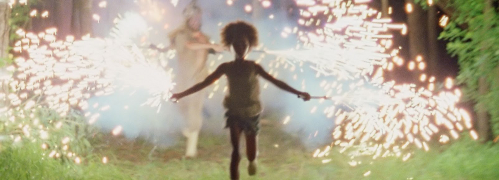
The story follows a young girl named Hushpuppy (Wallis), who lives with her father Wink (Dwight Henry) in a small commune called the Bathtub located in a New Orleans bayou on the Mississippi delta. The Bathtub is inhabited by a group of individuals cut off from the world, south of the levees, dependent on nature and each other. Hushpuppy calls it “the prettiest place on Earth”, though in reality they live in squalor. This simple living doesn’t phase the residents of the Bathtub who are survivors, living amongst the beauty and harshness of nature for generations. They celebrate their existence with wild parties, fireworks and drinks; not caring about the world north of the levee’s, or the potential dangers of nature’s fury. They consider themselves adaptable, able to find a way to go on no matter what the world throws at them. This is something Hushpuppy is just learning as the films begins. She is still naive and curious about everything, and spends much of her time listening to the heartbeats of baby chicks, while imagining they speak to her in code.

Like the other children of the Bathtub, Hushpuppy learns about the world from her father and a makeshift schoolhouse run by an eccentric ‘medicine woman’. Here she it taught that the universe is held together by very intricate and delicate pieces, and one disruption could tear it all apart, cause the ice caps to melt, the waters to rise and an ancient boar- like beast known as the Auroch’s to be reborn. It is meant to be more metaphorical than anything and scare the children right, but for Hushpuppy it causes her imagination to run wild. She is still at an age where the world around her, though often confusing, is a place of wonder still open for exploration.

Her father Wink has outgrown such thinking and the Bathtub has made him a rough and often disgruntled man, who isn’t against striking his daughter. But his tough ways stem from his desire to make sure Hushpuppy is hardened and able to survive when he is gone. It hasn’t been easy for him raising her alone ever since her mother “swam away”, as we are told, though it is unknown if she is dead or just gone. However, Hushpuppy believes her mother is somewhere across the water, near a light that flickers across the bay, reminiscent of the green light in ‘The Great Gatsby’.

One day Wink goes missing, leaving Hushpuppy to care for herself. When he returns he is dressed in a hospital gown and we slowly come to understand that he is sick but doesn’t want to tell her. Angry at him for disappearing Hushpuppy hits him in the chest causing him to fall over in a great deal of pain; an effect of his secret illness, but she thinks it is all her doing. Suddenly thunder erupts, a storm is coming. Soon after a hurriance bares down on the Bathtub, flooding the place they call home, leaving its resident’s displaced, hungry and struggling in way that only their ancestors would have ever experienced. Being the naive little girl she is Hushpuppy believes that she has disrupted the natural order of things, broken one of the pieces holding the universe together and everything is now falling apart. She envisions the ice caps cracking, and the Auroch’s springing back to life, coming to get her.  She holds a lot of this emotional weight on her shoulders but it doesn’t stop her. No, instead as she puts it “the entire universe depends on everything fitting together just right…if you can fix the broken piece, everything can go right back.” So she sets out to reverse whatever mistake she has made, help her father and in doing so possibly find her mother.

What made me fall in love with ‘Beasts of the Southern Wild’ is how in the first few minutes, before the title screen, Zeitlin creates the world of the Bathtub with such great detail. It is liking jumping head first into this whole new world we have never seen, a slice of Americana with an aura of mysticism; and from their he builds upon the characters, their relationships and the emotions that flow through every scene. Zeitlin handles everything with such great delicacy, like he truly believes the Bathtub and its residents are intricate pieces of a larger cosmos and by showing that they are just small pieces of a much bigger puzzle the emotions they express, the love and the struggles they share, are all the more profound. It helps to reaffirm that even in the great expanse of space and time it is love, imagination and determination through whatever adversary that ends up meaning the most.

This is something Hushpuppy ends up learning first hand. “Somtimes you can break things so bad, they can’t be put back together” she says, which is all too true. People get sick, people leave us, people die; storms come, water rises, towns are destroyed, homes are lost forever and nothing can be done to stop it. But this isn’t a film about lost, no it is one of hope. Even after all the hardship the people of the Bathtub and young little Hushpuppy go through, it is love and family that ultimately persevere. In this sense Hushpuppy realizes that the pieces that hold the universe together aren’t all physical, that there is more to the world than just what we see or could ever imagine; and even in death the ones we love stay with us. In this way it was very reminiscent of ‘The Tree of Life’ from last year. Which isn’t the only thing it has in common with Malick’s films. Both also share similar sense of wonder in its observations of man and nature, intoxicating visuals, and even voice over narrations to let us listen to the most inner thoughts of the main characters.

With that said, the most fantastic aspect of the film is definitely the performance by the young Quvenzhane Wallis, who is deserving of an Oscar nomination. This is her first role, and she really makes the character her own. Not only is she able to carry the burden of the heavy emotions that run through the story, but on the physical side she is in every way as rough and capable as Hushpuppy, who with her dazzling smile, courage and fierceness would give Katniss a run for her money.

Dwight Henry, a New Orleans resident, baker, father and first time actor, also really adds a lot to the character of Wink that another actor couldn’t. He lived in New Orleans through Katrina. He knows first hand the struggles and life style of residents of Louisiana and he brings that experience to the character. As with Wallis, he also handles the emotions of the story so well, and together the two have a chemistry that makes watching their struggles all the more heartbreaking.

The last thing I need to mention is the score, which is in every way a part of the soul of the film. It is moving and whimsical, propelling the tone and emotions of the story with every beat. It adds to what is already a very sensory film whose emotions, through visuals, performances and sound just flow off the screen. So much so that by its end you’re standing it puddles wondering if the ice caps are really melting; until you realize the water is just your own tears. Honestly, when the credits began to roll no one in the theater got up. It was a rather remarkable sight to behold, and the first time I have experience such a thing. It was like everyone was letting it all sink in, wiping the tears from their faces, and not wanting to leave the Bathtub.

It is this ability to so fully engross the viewer that makes ‘Beasts of the Southern Wild’ perhaps the best film I’ve seen so far this year. From its beautiful beginning, where it sets up the world of the film with delicacy and great detail, to the profound, often heart-wrenching, but ultimately joyous ending, you won’t want to walk away from the story and characters of this modern fable. In this way it is an absolutely magical, ambitious and unique movie going experience. One that can not be missed.

My Take On ‘The Dark Knight Rises’ Hate


A week has passed since the release of ‘The Dark Knight Rises’, and as the initial reactions have begun to subsided what we are left with are opinions a bit more polarizing than I would have expected. Yes, there is still a very strong fan base of people who loved the film, but there is also an ever growing number of people taking issue with even the most miniscule issues the film possess.

Now I’d like to acknowledge that I personally can understand a lot of the negative criticism thrown towards the film. I have a few issues with it myself, which I addressed in my review. But that is not why I’m writing this post. This is in response to those that have begun a level of nit-pickery that I’ve rarely seen. Maybe it is because the film didn’t meet people’s expectations but the level of hate being directed towards the film’s script issues is a bit much. Furthermore, what has really bothered me is how people are still praising ‘The Dark Knight’ as if it is a masterpiece, yet criticizing this film for issues that can be applied to the very film they think was so flawless.

So yes, this is going to be one of those posts. You might have seen a few already, but I personally just wanted to clear some things up. It happens a lot when you write reviews. A week goes by, you read other peoples opinions and all the sudden you feel the urge to say all these new things. Typically it would just result in me writing up a longer review, but considering everyone else has been compelled to write up one of these “best/worst” lists about the film I figured I’d give it a shot as well. So what follows is my personal take on a few of the criticisms of ‘The Dark Knight Rises’ that I’ve read. Warning, many spoilers ahead…

HOW BLAKE KNEW* BRUCE WAS BATMAN:

So to start I’d like to address the whole situation surrounding Blake and Wayne, and how he figured out who Batman really was. Now as you can see I put an asterisk next to ‘knew’ above, simply because he didn’t actually know for a fact the true identity of Batman, yet some people seem to think he did.

All Blake said was that given their similar backgrounds and personal/intuitive feelings experienced when he first met Bruce made him believe he was Batman. Tell me, is assuming someone might be Batman a crime? I mean, Wayne never said he was correct. All Blake could do is assume he was right. His reason for expressing his assumptions to Bruce was to show he believe and hoped that if he was right, that maybe he could talk Batman into returning. He could have been dead wrong for all he knew, but he just had to get it out there. I fail to see anything wrong with that.

Plus, people spend so much time wondering how no one has figured out who Batman is and finally someone mentions he think, not knows, but thinks he has figured it out and all the sudden the reaction is “HOW THE HELL IS THAT POSSIBLE!!”. A reaction that is completely unwarranted in my opinion.

HOW BRUCE’S BACK HEALED SO QUICKLY:

This is another thing I’ve heard people complain about and I admit it is a reasonable thing to take issue with. Yet, like with most things in this film, or any film with a few holes in its plot, there are enough ‘plausible’ assumptions that could be made to explain how or why it happened. In this case my defense would be we never fully know Wayne’s condition. One fellow inmate in Bane’s prison says it’s a dislocated vertebrate, but we have no idea the full severity of the injury; people just assume it is seriously broken because of the ties that sub-plot has to the comic story line. However, in the context of the film all we know is that something is dislocated, he needs to suspend his body to stretch his spine, create space and have the bone pushed back into place.

Was a few months too quick of a healing time? Possibly, but it is a FILM. Even if people want to believe it is Nolan’s more “realist” universe these same people are fine believing Harvey Dent could somehow manage to be perfectly burnt down one side of his face, be in a hospital with a few small bandages even though his muscle and bone is showing, then be up and around killing people and getting into car crashes and be totally coherent. That is perfectly fine to them but Bruce recovering rather quickly in ‘The Dark Knight Rises’ is something they can’t accept. I just don’t understand why people are so willing to accept the “realities” of one film, but so quickly discard them in another.

HOW BRUCE GOT BACK INTO GOTHAM/THAT WHOLE FLAMING BATMAN SYMBOL:

I’ll start this section by asking, did people forget this is Bruce freaking Wayne we are talking about? A guy who has spent years dedicating his life to this sort of stuff. In ‘Batman Begins’ we see that he spent many years before becoming Batman traveling the world, taking on a life of crime, with no money or identification, but was still resourceful enough to makes his way around the world. So, after escaping Bane’s prison it wouldn’t be the first time he was on his own with little to nothing to get home. But as he did in the first film, he found a way. Not hard to believe, especially considering he had a few weeks to do it, and could have various connections outside of Gotham because of his financial status to turn to.

This is again a plot hole that could easily be answered if one bothered to think outside the box a bit by taking information from the previous films and prior knowledge of the character. It is also another example of people making complaints about something that happened in this film, yet overlook a similar plot hole in ‘The Dark Knight’. I would love for someone to fully explain how Wayne got into China, scaled a building with his armor, captured a man, hired a plane to extract him (Did he contract it as Batman?), then got back into Gotham with an illegal prisoner as if customs or the like were not issues. People have no problem with that scenario, yet here it is IMPLAUSIBLE to them that he could make it back into Gotham. Both are plot holes, but both can be answered by the viewer if they bother to put a bit of their own thought into it; but they didn’t. Instead they accepted these plot holes in ‘The Dark Knight’ and refuse to do the same here. Again, picking and choosing when to suspend their disbelief.

As for the flaming Bat symbol, well for me the answer is easy. Not only did he have time before the bomb was set to explode, but it was very important that he try to ‘rally’ Gotham, to give them a bit of hope, which we literally see the effects of. Yes it might have seemed redundant and a waste of time when all things are considered, but it had a purpose. I guess this is more of a personal issue for some, but I quite liked it.

BANE’S PRISON:

Speaking of the prison, many have issue with not only Bane bringing Bruce there but also the design and location of such a place. They don’t understand the purpose of locking Wayne away, or how the prison makes any sense, with it being open to the world.

My response to these issues are rather simple. First off Bane clearly stated he wanted to destroy Batman not just physically but emotionally as well. Locking him away and forcing him to watch the city he loves and tried to protect slowly destroyed is a perfect way to do such a thing. Plus, he had five months before the bomb exploded, so taking a few days to bring Wayne to the prison, especially considering how much Bane wanted to hurt him, isn’t that unrealistic. The real issue is how Bane was able to leave Gotham in the first place. Again I assume him and the rest of the league had escape routes and such plotted out well ahead of their take over, and I’m willing to over look this.

As for the prison and its location, this is another thing I had no issue with. It is clearly explained that the prison has been around for years and that only one person has escaped. Given that track record I fail to see why anyone would worry about other prisoners, even Wayne with an injured back, ever making it out. Plus I liked the design, the whole way in which it inspired false hope and the role it played in Wayne’s character development.

People also took issue with it being near a city, and question if they knew it existed. Obviously they did, but why did they not do anything about it? Well, are we really to believe that those people would not know that Bane, a ruthless and deadly mercenary controlled it? And in knowing this, does anyone really think they would dare venture over and help anyone inside? I surely wouldn’t, so I fail to see how it’s location was an issue.

BRUCE AND MIRANDA HOOKING UP WITH NO RELATIONSHIP DEVELOPMENT:

So another issue I keep reading is that people don’t understand why these two had sex, and say their relationship wasn’t developed enough. My response: What relationship? I honestly don’t really understand the criticism of him sleeping with her. There is this assumption that sex=love; that they could have only had sex if the two were a couple. In that sense then yes their development was weak…but the thing is, the idea that they are a couple or in love is totally false. Just look at the circumstances surrounding that moment. The guy had been “alone” for years, was in a very emotional state, Miranda had just done a lot to help him, and if you are alone, cold and wet in a dark mansion with Marion Cotillard your aren’t going to throw her out, and what else are they going to do, play chess? The guy is still constantly fighting to keep the image of a playboy billionaire and she had an obvious attraction to him, and wanted to get close and gain his trust. And again, people have sex, especially in specific emotional states. It happens all the time in life and film, and doesn’t mean there is a love or relationship involved. And it wasn’t like they held each other all night like two love birds. Wayne was up and out of there the moment she feel asleep. So, I think people have to stop making the connection between the two greater than it actually was.

As for her ‘betrayal’ in the end. Even if they don’t have that connection some think they did, the emotional impact on Wayne is still the same. People can trust and care for one another without having some deep, well thought out relationship; and when that trust is broken the pain can still hurt.

BANE’S PLOT:

The last criticism I want to comment on is the complaints about Bane’s plan, and why he didn’t just blow up Gotham when he had the chance. For me the answer is simple. The long occupation was meant to be an example to the rest of the world. Honestly, I think people forget that their is a world outside of Gotham.

Bane didn’t just want to destroy the city, though that was the ultimate end game considering that the bomb was set to blow anyway and that the trigger was more symbolic; but before he just leveled the city he wanted the world to watch as Gotham’s “citizens” rose up to over throw the “corrupt” government and it’s wealthy inhabitants. He wanted the world to see Gotham’s lowest citizens take control and for the city to consume itself; hoping it would inspire other cities to do the same. How do we know there was more to this plan than meets the eye? One just has to look back earlier in the trilogy.

Ra’s mentioned in ‘Batman Begins’ that they have tried devising new ways to cripple empires over the years. Economics was their first attempt to bring down Gotham but that failed, mainly due in part to Bruce’s father. Then in the first film they tried releasing gas to make the whole city go mad and destroy itself. Here a similar tactic is taken. The league never had plans for the quick destruction of Gotham, and Bane and Talia’s plan very much mirror’s what Ra’s tried to set in motion. Along with that, one must remember that not only did the two have eight years to devise this plan, but that the league was already well in place in Gotham even in the other films. Again Ra’s mentioned in ‘Batman Begins’ how they had infiltrated all levels of the cities infrastructure. Those individuals could have still been in place during the events of ‘The Dark Knight’ and so would explain how things like the league knowing Wayne’s identity, and more importantly the whereabouts of his weapons, was possible. Not only does this make sense and clear up a lot of the issues with Bane’s plot, but it also helps tie the whole trilogy together, where the events of the first film are felt in its conclusion.

Still, some have called the whole plan ‘silly’ but I must remind these people that it is not out of the ordinary in the world Nolan created, considering he directed ‘Batman Begins’ as well, the very plot of which involved releasing toxic gas to make the city go mad and destroy itself, which can be described as just as silly. People keep using the terms “grounded” or “realistic” when talking about Nolan’s trilogy, but in reality much of what he has done, maybe less so in ‘The Dark Knight’, but in the trilogy as a whole it still very much in the realm of typical “comic book” plots. It is just the seriousness for which he approaches them and the realistic characters he places around them, that gives it a more realist feel, at least compared to other comic book adaptations.

(Hey haters, how could you hate the film after this scene?)

So there you have it. Most people who love the film will probably agree or at least understand the points I tried to make. Those that don’t will still take issue with many of these plot holes, which is totally fine. I just wish that they would have enough integrity to apply the circumstances surrounding the issues they had here to others films as well. I mean, it is astonishing that popular film bloggers and reviewers can sit back and say ‘The Dark Knight’ was “almost flawless” but have problems with events in ‘The Dark Knight Rises’, problems that are clearly also present in the previous film. As I mentioned in the beginning, maybe it can all be explained by anger and disappointment stemming from the film not meeting someones personal expectations, but even then that is not an excuse for the sort of ‘pick and choosing’ and ‘nit-picking’ in the negative criticisms present since the films release. I think critics have a “duty” to be fair in their assessments of all films, and even though personal preferences and emotional reactions can get in the way, they must at least make sure they don’t go out of their way to target issues in one film that they completely ignored in others. Clearly some bloggers could care less, but it is something that personally bothers me…at least enough for me to write up this post!

‘The Dark Knight Rises’ Review (dir. Christopher Nolan)


I’m going to start this review by saying that I can not remember any time in recent years when I have had as much of a lack of anticipation for a film event such as ‘The Dark Knight Rises’. This is made all the more surprising given my hype and eventual reaction to Nolan’s last Batman feature ‘The Dark Knight’. I was at points uncontrollably ecstatic for it’s release back in 2008. To the point in which I had downloaded a windows widget countdown clock months before its release which I set to its midnight opening. In the weeks leading up to its screening I was changing the channel any time a TV spot appeared, for I not only didn’t want to see any more footage until the actual film but also because the way it increased my anticipation was probably not good for my health. Of course, once it was released I was head over heels in love with it. Saw it in theaters, including IMAX, more times than I can remember, and for over a year after its release I had thought of it as my favorite film of all time.

Now, times have changed and it no longer holds that title but it is still a film I really love. So why was I not as excited for its sequel? I mean one could make a fairly strong argument that ‘The Dark Knight Rises’ is one of the biggest movie events in the last few decades when you take into consideration the history of the trilogy, its financial and critical success, how it changed the way comic book adaptations are made and viewed, and how it even played a role in changing the format of the Oscars. This is the final movie in a trilogy that has cemented itself in film history for so many reasons. And yet, my anticipation was passive at best. Was it because I didn’t like what I had seen? Maybe. The trailers were never too well put together, the TV spots offered little to no insight on the story; and I was very worried that the plot and cast were just too big. From the beginning of its production I feared Nolan would try too hard to finish this series on a high note, and surpass the quality and success of its predecessor. This fear grew when all the casting began and early on-set images leaked. It seemed like this was going to be filled to the brim with too many characters and tons of action; because of this I worried that it would then lose all coherence and emotion.

So maybe that was it, maybe I just didn’t care because I felt it wasn’t going to be any good. But that is impossible right? I mean it is Nolan. You know, “In Nolan We Trust” as some fan-boys would say. So what was it? Was I just shielding myself from possible disappointment? Did I want it to so badly be good that I couldn’t risk hyping myself up to impossible expectations?

Either way you may be reading and wondering why the hell I’m even saying all this, but I just want to set up the mind set I had going into ‘The Dark Knight Rises’, one that does not match that of most who wanted to see it, and one which may or may not have had an influence on my final decision on its quality.

Now that I’ve actually seen it I will just come right out and say that on many levels I think it is better than ‘The Dark Knight’…now before I receive any hate or people questioning my sanity, let me explain.

After ‘The Dark Knight’ hit theaters I began wondering what I would personally want from a third and final film if Nolan decided to do one. The thing that always came to mind was I desperately wanted something a bit more ‘intimate’. I didn’t just want another flashy action-superhero flick. I wanted something that tackled serious and dark themes like ‘The Dark Knight’, but also one that would result in getting to really know who Batman was behind the mask. In the end that is what Nolan did here, giving us a much more detailed look at the character while still providing a spectacle on a grand scale that rivals its predecessor. I walked away not only thoroughly entertained, but also feeling like I learned more about what it means to be a hero, not just one behind a mask, than any of the films before it.

‘The Dark Knight Rises’ takes place many years after the events of the last film. With Harvey Dent gone the city has cracked down hard on organized crime. It is a time of ‘peace’ as one character put it. Even Batman, wanted for the murder of Dent, has little to do and Bruce Wayne has become a bit of a recluse. Being Batman was the only thing he had, the only life he knew, and with the city not needing their “Dark Knight” Wayne’s life is rather empty. But his ‘retirement’ was never going to last, and he finds himself needing to become Batman once again as a new threat makes its presence known. This one in the form of Bane (Tom Hardy), a muscular and ruthless mercenary, who is building an army to unleash some secret assault of Gotham.

Along the way Batman makes allegiances with some new characters. First, Selina Kyle (Anne Hathaway), a masked thief who doesn’t really seem to know which side she is on. And Officer John Blake (Joseph Gordon Levitt) who seems to know more about the masked vigilante than most other people. But even with the help of them, and a few old friends (Commissioner Gordon, Lucius Fox), Bane is too much for the aged and physically deteriorated Batman. This allows the brooding masked villain to unleash his rein of terror over the city, taking down the government, police force and wealthy in one quick swing of his fist and giving the “power to the people”.

I should warn everyone that this was not as fast paced, climatic or kinetic as ‘The Dark Knight’. Actually the first hour or so is incredibly slow. Also, it is not at times as funny, with really unique and shocking moments like the ‘pencil trick’ scene either. Still, the way it unfolds at a slow and meticulous pace, building to an explosive final act, resulted in a much more rewarding experience than the previous two films. The sort in which you don’t truly know how you feel until halfway through, as things start to come together, and you really realize how much you are enjoying what has played out. This has a lot to do with the way Nolan ties in the events of the two previous films. Both of which on their own had little to no connection outside of a few characters. But in his conclusion to the trilogy Nolan intertwines narratives, characters and themes from those films as he builds the story here making the trilogy feel like a whole.

At the same time he allows Bruce Wayne to take center stage. Where as in ‘The Dark Knight’ he just seemed to play the ‘good guy’ in a film about the Joker, here he actually must face emotional and physical struggles unlike anything he has ever faced before. In retirement he is lost, missing the love of his life, and unsure as to what to do with himself. When he becomes Batman again he faces a foe too powerful, physically and emotionally, to defeat. Now he must truly stare darkness and death in the face, embrace fear once again and rise from the lowest point we have ever seen this character reach in a feature length adaptation. We finally get to see him go through a struggle that makes him worthy of the cowl he wears.

Along with his development, the new characters around him receive more focus than other supporting roles have in the previous two films. Their relationships might not have been perfect, but Nolan took time to develop them and the story, which is why it is often slow and overall so long. But this is a good thing. For once their motivations, fears and what makes them who they are is presented to us. Because of this, all the eventual action and the grim and always present feeling of inescapable doom are made all the more threatening and powerful. This time around Gotham was truly on its last leg. Not by a nut-job in make-up whose mind was set on nothing but random acts of chaos; but rather a man and his army that turned the city on its head; and instead of the characters just being involved with the action and main plot, we actually see them feeling the effects of it on emotional and psychological levels. This was something I felt was missing from ‘The Dark Knight’. I never really thought anything or anyone was truly in danger in that film. The Joker, although at times terrifying, never really made me feel like he could be the end of Gotham. That isn’t the case here and when watching the film one might think evil could win the day. Plus, until the final moments of ‘The Dark Knight’ I didn’t feel like Batman, or the audience, learned anything about the importance of his character. However here throughout we truly understand why Gotham needs a hero.

I think that is important when considering the structure of the trilogy. The beginning (‘Batman Begins’) was a great origin story, providing a basis for Bruce’s rise to becoming Batman. The middle (‘The Dark Knight’) was the climax of the story, action packed and chaotic, facing a threat that was a direct result of his presence. The ending (‘The Dark Knight Rises’) is more focused on the full effects of everything that came before it, what it has done to the character of Batman, what his presence truly means to the city, and what his final sacrifice must be…which I can not get into without spoiling the ending, but I must say it is the most emotional and powerful conclusion to any superhero adaptation to date.

On a technical level it is about as good as one would expect from Christopher Nolan. The action and set pieces are at times fantastic. A few of the fight scenes, including one with Batman vs. Bane in his underground bunker, are as intense as they are thrilling. The cinematography, though nothing to write home about, is also very good but I can not fully comment on it until I see it in IMAX. I did have an issue with the score. It wasn’t as exciting as it was in the previous films, though I think it fit the tone of the story so it really didn’t bother me.

Performance wise I think we got the best out of Christian Bale and Michael Caine since the trilogy started. As Bruce’s demons reemerge in his life without Batman, and when he is struggling to save Gotham, Bale does a great job in portraying the inner turmoil and physical pain Wayne is put through. As for Michael Caine, I think he deserves some sort of award recognition. Honestly. His performance was so heart breaking. He makes Alfred so lovable, with his feelings for Wayne so potent, that when he has to watch Wayne struggle to move on in retirement or suffer the beatings of another thug you genuinely feel how much he cares.

Anne Hathaway was surprisingly perfect as Catwoman, though they never really call her that. She brought just the right amount of sexuality, humor and ass kicking ability to the role. Her character is also pretty well developed. We don’t get much back story but we understand her points of view and the motivations for many of her actions. Joseph Gordon Levitt, who played a bigger part than I expected, also gave a great performance. For a character that had no basis in Batman mythology he ended up being a rather well fleshed out and likable individual, which makes the ending all the better.

Tom Hardy as Bane was perfect casting in my opinion. The character was more threatening, punishing and thorough than the Joker, and Hardy’s performance and physical presence got that across nicely. Most of his face was covered but he did enough with his eyes to sell his determination and emotions. As for the character, he was just the right sort of villain to orchestrate the biggest threat Gotham has ever known.

Finally, I couldn’t end without saying that the film isn’t without its many, many flaws. Is it bloated? Hell yes. Nolan crams a whole lot of story and a ton of characters together at once and often they don’t get enough time to fully develop. Is it a mess? God yes. I wouldn’t say it has any more or less plot holes than ‘The Dark Knight’, but they are there, which doesn’t help in a story that is at times completely convoluted. One of the most jarring issue I personally had was early on in the film when so much of the exposition was done through not so subtle dialogue. This can all be blamed on the fact that Nolan wanted to tie so much of the previous films in with a plot worthy of an ‘epic conclusion’ and it doesn’t always work.

Still, even with all its flaws I just have to say that sometimes when you overreach as Nolan did, even if at times you fail and it gets messy, the result is still often worthy of a lot of praise which is the case here. As bloated as it was the result is still a coherent and at times deeply emotional story which, as I mentioned in the beginning of this post, was all that mattered to me.

So in the end I personally do feel on many levels it achieves so much more than the previous films, bringing the story back to something more attuned to ‘Batman Begins’ character wise but with the same spectacle and scale that we loved from ‘The Dark Knight’. It isn’t a masterpiece and is far from perfect, but it is an entertaining and smart conclusion to a brilliant trilogy that I couldn’t recommend more.