The Angst of Replaying Red Dead Redemption II


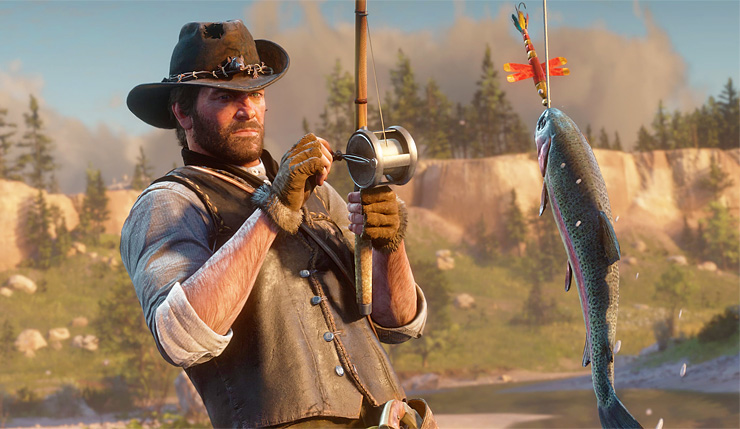
Last month, I started replaying Red Dead Redemption II and it’s been nice to be reminded of just how good this game actually is. I usually only play for an hour or two a night. Since I already finished the game the first time I played, I’m taking my time with this replay and I’m trying to enjoy all of the little details that I originally missed. After a long day at work, it’s relaxing to come home and just spend a while riding my horse through the countryside. I might stop to do some hunting or just to relax at camp. Red Dead Redemption II is a thoroughly immersive world and one of the great things about the game is just how easy it is to lose yourself in the world that it creates. Even if you don’t feel like doing the missions or following the game’s storyline, you can still just ride out and enjoy the scenery. Rediscovering the visual beauty of Red Dead Redemption II has been a wonderful experience.

At the same time, it has also been downright traumatic to rediscover just how easy it is to accidentally shoot people.

From the minute I started my replay, I promised myself that I was going to play Arthur Morgan as being a good guy. He may be an outlaw but he’s not a cold-blooded murderer. At least, that’s what I wanted to believe. Unlike the first I played, I wasn’t going to rob any strangers unless it was absolutely necessary. I wasn’t going to shoot any helpful shopkeepers. I was going to help everyone who needed help. Though the game may require me to play an outlaw, my goal was to promote peace in the wild west and to only fight when I had no other choice.

It hasn’t worked out that way, though.
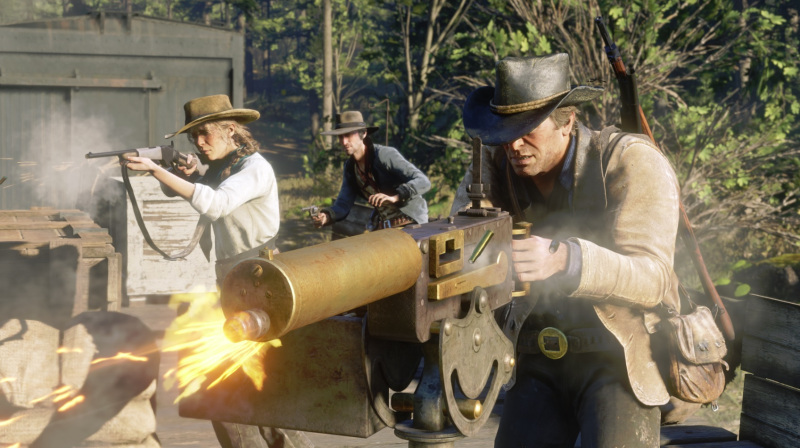
It’s not intentional. It’s just that it’s very easy to push the wrong button on your controller. Over the past few weeks, there have been so many times when I’ve thought I was pushing the “greet” button just to discover that I had accidentally pushed the open fire button. Just last night, I entered a cabin. The old woman inside the cabin asked me if I was delivering her groceries. I walked up to her, fully intending on telling her that I was the deliveryman and I’d help her in any way that I could. Instead, I hit the wrong and shot her in the face. I’ve felt bad about it every since. Tragically, it’s not the first time that I’ve shot someone while trying to do the right thing. Accidentally shooting the man who just wanted someone to help find his way back to the town of Strawberry is one of the biggest regrets of my Red Dead Redemption II life. I’ve even gone back and restarted the game a few times because I’ve felt so bad about shooting the wrong person.

The big difference between Red Dead Redemption II and a game like Grand Theft Auto is that when you kill someone in Red Dead Redemption II, they don’t come back. In Grand Theft Auto, you can run over a hundred pedestrians just to find them all resurrected as soon as you turn onto a new street. In Red Dead Redemption II, accidentally shooting the wildlife photographer means that you never see him again. It can be traumatic but, at the same time, it’s also emotionally rewarding when you manage to get through an entire mission without accidentally murdering anyone.

As I said earlier, I’m taking my time with my replay so I’m just wandering my way through Chapter Three right now. I’ve been busy exploring the towns and the countryside. There’s many more chapters and locations to come. Hopefully, I’ll remember to push the right buttons and the violence can finally come to an end.
Music Video of the Day: Far Away Eyes by The Rolling Stones (1978, directed by Michael Lindsay-Hogg)


“You know, when you drive through Bakersfield on a Sunday morning or Sunday evening, all the country music radio stations start broadcasting black gospel services live from LA. And that’s what the song refers to. But the song’s really about driving alone, listening to the radio.”

— Mick Jagger on Far Away Eyes in 1978, to Rolling Stone

The Rolling Stones do country!

Actually, the Stones were always heavily influenced by both the Blues and Country music. This song was written by Keith Richards and Mick Jagger and there’s a bootleg version of Richards singing the lyrics. The official version, with Jagger singing, was the sixth track on the Stones’s 1978 album, Some Girls.

The video, a clip of the Stones performing the song in an intimate studio, was directed by Michael Lindsay-Hogg, who did a number of videos for both the Stones and the Beatles. For instance, Lindsay-Hogg is the credited director on Let It Be.

Enjoy!

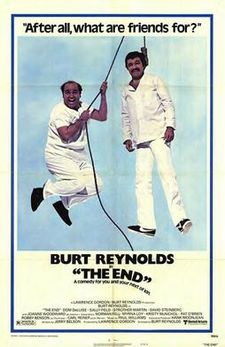
Film Review: The End (1978, directed by Burt Reynolds)


What if you were dying and no one cared?

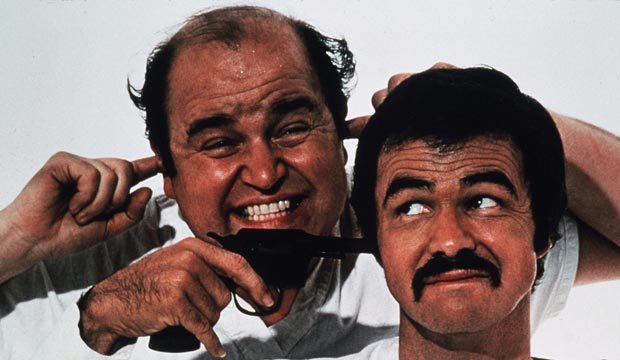
That is the theme of The End, which is probably the darkest film that Burt Reynolds ever starred in, let alone directed. Burt plays Sonny Lawson, a shallow real estate developer who is told that he has a fatal blood disease and that, over the next six months, he is going to die a slow and painful death. After seeking and failing to find comfort with both religion and sex, Sonny decides to kill himself. The only problem is that every time he tries, he fails. He can’t even successfully end things. When he meets an mental patient named Marlon Borunki (Dom DeLuise), he hires the man to murder him. Marlon is determined to get the job done, even if Sonny himself later changes his mind.

Yes, it’s a comedy.

The script for The End was written by Jerry Belson in 1971. Though Belson also worked on the scripts for Spielberg’s Close Encounters of the Third Kind and Always, he was best-known for his work on sitcoms. (Belson was an early collaborator of Garry Marshall’s.) The End was originally written with Woody Allen in mind but when Allen passed on it to concentrate on directing his own movies about death, the script spent five years in limbo. Reynolds later said that, when he eventually came across The End, he knew he had to do it because it was the only script that reflected “my strange sense of comedy.” United Artists was uncertain whether there was much box office potential in a film about a self-centered man dying and they required Reynolds to first make the commercially successful Hooper before they would produce The End.

The End was made for 3 million dollars and it went on to gross 40 million. That the film was a box office success is a testament to the late 70s starpower of Burt Reynolds because it’s hard to think of any other mainstream comedy that goes as much out of its way to alienate the audience as The End does. While watching The End for the first time, most viewers will probably expect two things to happen. First off, Sonny will learn to appreciate life and be a better person. Secondly, it will turn out that his fatal diagnosis was incorrect. Instead, neither of those happen. Sonny is going to die no matter what and he never becomes a better person. What’s more is that he never even shows any real interest in becoming a better person. The film’s signature scene comes when Sonny prays to God and offers to give up all of his money if he survives, just to immediately start backtracking on the amount. It’s funny but it’s also a sign that if you’re looking for traditional Hollywood sentiment, you’re not going to find it here.

Burt not only stared in The End but he also directed it and, as was usually the case whenever he directed a film, the cast is a mix of friends and Hollywood veterans. Sally Field plays Sonny’s flakey, hippie girlfriend while Robby Benson is cast as a young priest who fails to provide Sonny with any spiritual comfort. Joanne Woodward plays his estranged wife and Kristy McNichol plays his daughter. Myrna Loy and Pat O’Brien play his parents. Norman Fell, Carl Reiner, and Strother Martin play various doctors. The movie is stolen by Dom DeLuise, playing the only person who seems to care that Sonny’s dying, if just because it offers him an excuse to kill Sonny before the disease does. DeLuise was a brilliant comedic actor whose talents were often underused in films. The End sets DeLuise free and he gives a totally uninhibited performance.

Despite DeLuise’s performance, The End doesn’t always work as well as it seems like it should. Though Reynolds always said that this film perfectly captured his sense of humor, his direction often seems to be struggling to strike the right balance between comedy and tragedy and, until DeLuise shows up, the movie frequently drags. As a character, the only interesting thing about Sonny is that he’s being played by Burt Reynolds. That is both the film’s main flaw and the film’s biggest strength. Sonny may not be interesting but, because we’re not used to seeing Burt cast as such a self-loathing, self-pitying character, it is interesting to watch a major star so thoroughly reveal all of his fears and insecurities.

If you’re a Burt Reynolds fan, The End is an interesting film, despite all of its flaws. Burt often described this as being one of his favorite and most personal films. It’s a side of Burt Reynolds that few of his other films had the courage to show.

Music Video of the Day: (I Know I Got) Skillz by Shaquille O’Neal (1993, directed by ????)


Shaq, rap superstar! It’s a thing that happened. Briefly.

While Shaq’s rap career didn’t exactly set the world on fire and his attempts at film stardom didn’t go much better, he was fortunate enough to have another career to fall back on.

At least now you know what Shaq and the General are listening to while they’re driving around the country and telling people about car insurance.

Enjoy!

Music Video of the Day: Hard to Get by Rick James (1982, directed by ????)


I don’t have much to say about this video but then again, you don’t have to say much when it comes to Rick James. James was one of those artists who didn’t need an elaborate video to get people to realize that he rocked. All he had to do was get out there and perform.

I hope this song and music video serves as a good start for your weekend!

Enjoy!

Music Video of the Day: Under The Milky Way by The Church (1988, directed by ????)


“It’s not about anything. Like all my songs, it’s a portal into your own mind where I give you a guided meditation. It’s a blank, abstract canvas for people to lose themselves in.”

— Steve Kilbey on Under the Milky Way

Written while Steve Kilbey and his then-girlfriend were visiting Kilbey’s mother in New South Wales, Under The Milky Way would go on to become The Church’s biggest hit. Ironically, the other members of the band didn’t care for the song and had to be pressured to include it on their album, Starfish.

As Kilbey later put it, after the song became a hit:

 “It changed everything in our lives, it put me on a new level of temptation and opened more doors that maybe shouldn’t have been opened… and made a lot of money and so we did a lot of touring. But saying that, the guys in the band all hated each other and they all hated me. Instead of being grateful that I’d written this song which had dragged them into the spotlight they were sort of envious and miserable about it as well.”

Part of the problem is that audiences would show up to see Church play and then, once they had heard Under the Milky Way, they would promptly leave before the show was over. Eventually, the members of the band got so frustrated by what they called “Milky Way gigs” that they refused to play the song for several years in the 90s. I probably would have just played the song at the end of the show so the audience stayed for the whole show but still got what they wanted but I’m not a rock star.

Considering how much the band dislikes it, I almost feel guilty about liking Under The Milky Way. It is a really good song, though, and the video is a good fit.

Enjoy!

Music Video of the Day: Operation: Mindcrime by Queensrÿche (1988, directed by Chris Painter)


Operation: Mindcrime is the title track from Queensrÿche’s third studio album. The album was considered to be the band’s breakthrough album and, unlike a lot of heavy metal from the 80s, it still has a good critical reputation to this day. I’m not a huge Queensrÿche fan but I have to admit that the bass line in the title track is pretty awesome.

The album was a concept album, about a junkie named Nikki who was turned into an assassin by the evil Dr. X. (As with most concept albums, the plot was actually much more complicated but I’ve only got so much space for this post.) For the album, this song was about how Dr. X could program Nikki to kill simply by saying, “Mindcrime.” The video, while containing all of the themes from the overall album, simplifies things to two men playing Russian Roulette while sitting in an office that’s decorated with a portrait of Stalin.

This video was directed by Chris Painter, who directed several other Operation: Mindcrime videos and who also did the video for Rush’s Roll The Bones.

Enjoy!

Music Video of the Day: Ship of Fools by Robert Plant (1988, directed by ????)


Ship of Fools was the second single to be released from Robert Plant’s fourth solo album, Now and Zen. Now and Zen was the most financially and critically successful of all of Planet’s solo albums, though Plant himself has said that he feels that the album’s music “got lost in the technology of the time.” I would be disappointed if Robert Plant didn’t decry “the technology of the time” but, in this case, he’s being too hard on himself. Now and Zen is a very good album.

This song is mood piece, a love song. In the video, Plant appears to be singing in the rain and it works. The song was later used in “Freefall,” the final episode of Miami Vice, the show that epitomized the 80s and the technology of the time like no other.

Enjoy!

Charles Grodin, Rest in Peace


Charles Grodin could have been Benjamin Braddock.

It was a story that he told often, about how he was a struggling, 30 year-old actor with a few film credits to his name when he was offered the lead role in The Graduate. Even though producer Lawrence Turman said the role would make him a star, Grodin turned it down because of the low salary that Turman offered. The role was then offered to Dustin Hoffman, who went on to become a star and spend several decades as an unlikely box office draw.

It’s easy to imagine Grodin in the role of Benjamin Braddock. He probably wouldn’t have been as insecure as Hoffman was in the role. He would have been a less passive Benjamin. Grodin’s Braddock would probably have been more obviously frustrated with Mrs. Robinson and his parents. Nobody played frustration quite as well as Charles Grodin. Audiences might not have been as quick to sympathize with Benjamin if Grodin had played the role but I think he would have eventually won them over. Grodin was an actor with a talent for making unlikable characters somehow funny and relatable.

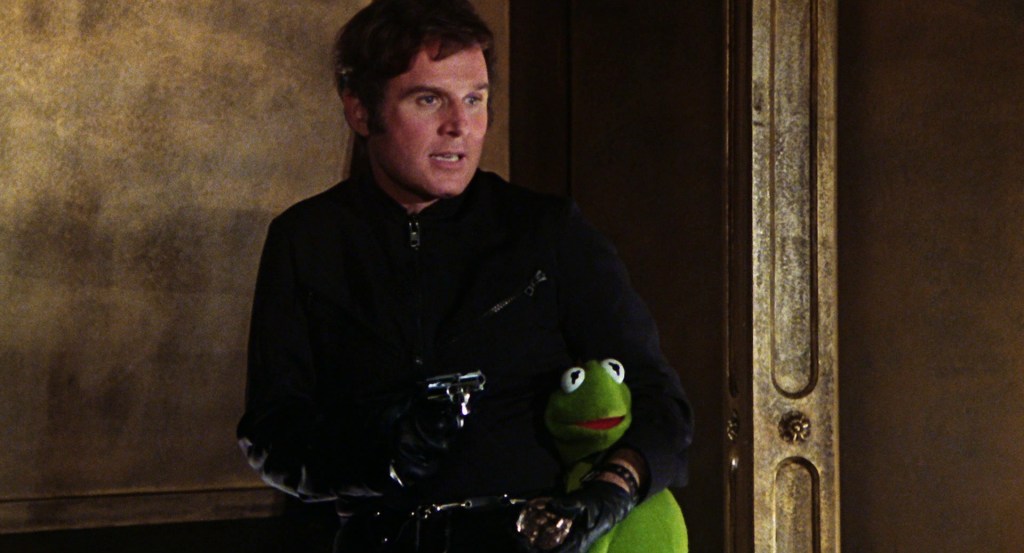
Though Grodin may not have played Benjamin Braddock, he still went on to establish himself as one of the funniest character actors in the business, a master of deadpan humor. He was often the best thing in the moves in which he appeared. In Heaven Can Wait, he was funny even while he was trying to kill Warren Beatty. In Real Life, he was a suburban father who found himself trapped in an early version of reality television. In Seems Like Old Times, he gets more laughs with one annoyed expression than Chevy Chase gets in the entire film. In The Great Muppet Caper, he fell in love with Miss Piggy and tried to kill Kermit. He was one of the few actors to make it through Ishtar with his dignity intact. In Midnight Run, he was the perfect comedic counterbalance to Robert De Niro. In Dave, he taught the government how to balance a budget. Though he was often cast in supporting roles or as a co-lead (as in Midnight Express), he proved that he could carry a film with his starring turn in The Heartbreak Kid.

A lot of people knew Grodin best as a late night talk show guest, where he always seemed to be annoyed about something. He would get into mock arguments with the hosts and leave audiences confused as to how serious any of it was. (According to David Letterman, none of it was.) He briefly hosted his own talk show, from 1995 to 1998. Legend has it that Lorne Michaels banned him from Saturday Night Live after he hosted the show, apparently because he was so difficult to work with. How much of that is true and how much of that was just Grodin doing a bit, no one knows. I’ve seen Grodin’s episode. It’s fine. He’s funny.

Charles Grodin died today of bone marrow cancer. He was 85 years old. I’m going to miss him.

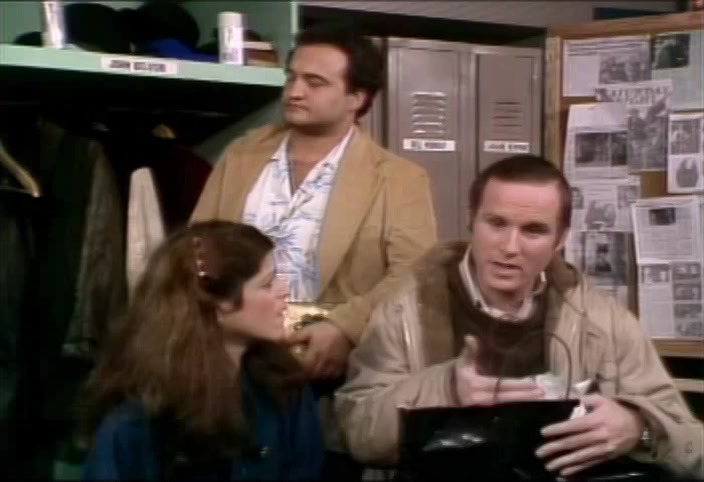
Gilda Radner, John Belish, and Charles Grodin on Saturday Night Live

Music Video of the Day: I Wish It Would Rain Down by Phil Collins (1990, directed by Jim Yukich)


This lengthy music video finds Phil Collins playing a drummer-turned-singer in the 1930s. With the help of his friend, a guitar player named Eric (and played, of course, by Eric Clapton), Collins auditions for a demanding theater owner (Jeffrey Tambor). While he auditions, he imagines what his life would be like if he becomes a success. He might even win an Oscar, probably for writing a song for a Disney film.

This video is more like a short film than a traditional music video, with over two minutes of “acting” before the singing even begins. This video came out at the time when Collins was still trying to make a career as an actor. I like the video but I wouldn’t be surprised to find out that, for some people, it probably represents everything that they didn’t like about Phil Collins back in the day.

This video was directed by Jim Yukich, who directed several videos for Collins. Yukich’s name can be spotted on a clapboard when Collins is imagining what it would be like to be a film star.

In the scenes in which Collins is acting opposite of Humphrey Bogart, Bogart is played by Robert Sacchi. Sacchi built an entire career out of his resemblance to Humphrey Bogart. Whenever a sitcom in the 80s or the 90s needed Humphrey Bogart to appear in a dream sequence, the call went out to Sacchi. Sacchi also appeared in several movies, playing characters with names like Sam Marlowe, Inspector Bogie, and The Bogeyman. According to the imdb, he also appeared in The Erotic Adventures of Three Musketeers as Athos. I’m not sure if I believe that.

Enjoy!