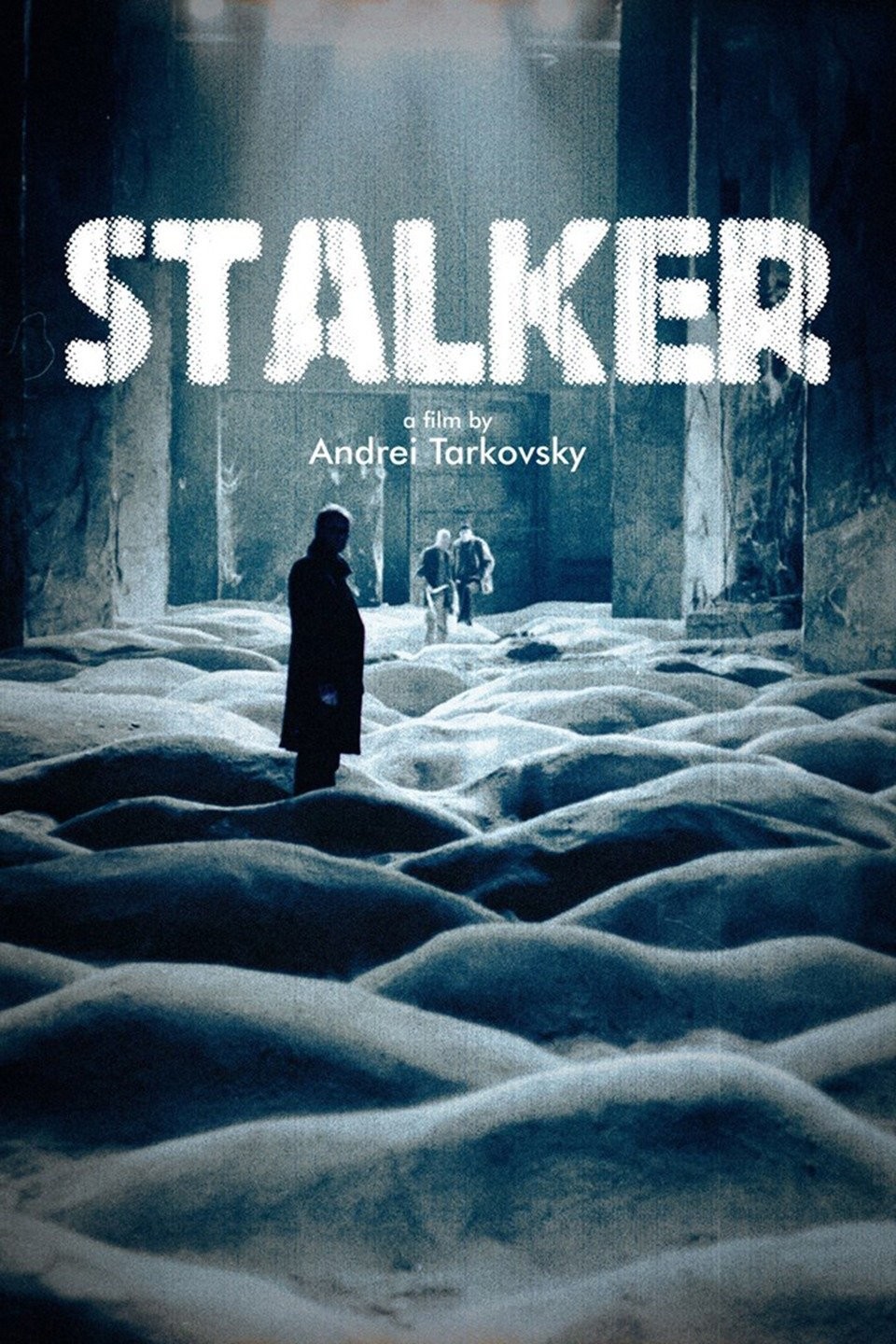
“May they believe. And may they laugh at their passions. For what they call passion is not really the energy of the soul, but merely friction between the soul and the outside world.” — the Stalker
Stalker is one of those films that feels less like a story you’re watching and more like a place you’re slowly drowning in. Directed by Andrei Tarkovsky in 1979, it’s a slow‑burn sci‑fi parable that spends most of its runtime trudging through damp, ruined spaces while three men argue about faith, desire, and whether any of it really matters. It’s not a movie you “get” on first watch; it’s the kind that lingers in your head for days, nudging you to rethink what you thought you wanted from life, and from cinema itself.
The basic setup sounds like genre bread‑and‑butter: a mysterious forbidden area called “The Zone” is guarded by the state, and only a few people—called “stalkers”—can safely guide visitors through it to a fabled Room that can grant a person’s deepest wish. Our guide is simply called the Stalker, played by Alexander Kaidanovsky with a mixture of haunted reverence and exhausted humility. He leads two men into the Zone: a jaded Writer who’s lost his inspiration and a cynical Scientist, each with their own idea of what they’re hoping to find. The tension in Stalker doesn’t really come from the physical danger of the Zone, though it’s full of traps and inexplicable phenomena; it comes from watching these three slowly peel open their own lies to themselves.
Tarkovsky’s visual strategy is almost perversely patient. He lingers on long, static shots of corroded metal, flooded tunnels, and overgrown railway tracks, while the camera glides in smooth, hypnotic movements that feel both weightless and heavy. The Zone is shot in a washed‑out sepia‑like palette, which makes it look like a half‑remembered dream or a charcoal sketch of a ruined world. The real world outside the Zone, in contrast, is the one that’s actually in sepia, while the Zone itself briefly shifts into color. This flip is a quiet but brutal joke: the thing everyone fears and wants to escape from—the decaying, post‑industrial wasteland—is actually more vivid and alive than the “safe” world, which feels duller, flatter, and spiritually dead. The longer you stay inside Stalker, the more you start to suspect that the Zone is less a physical location and more a mirror for the characters’ inner lives.
The central idea driving the film is the Room: the chamber that supposedly grants desires. The Writer and the Scientist have different theories about what the Room is doing. The Writer thinks it can expose the truth of what people really want, not what they claim to want. The Scientist rattles off more technical explanations, wondering if the Room is some kind of psychic field or natural anomaly. The Stalker, meanwhile, approaches it with a kind of religious awe; he believes the Room is a kind of judgment, a place where the universe reaches inside and shows you the core of your being. The film deliberately keeps the mechanics vague, so the focus stays on the question of human desire itself. It asks, in a very quiet way: what if the thing you want most is the thing that would actually destroy you—or worse, is the thing you’re too afraid to admit?
This is where the echoes of Dune start to creep in, even if Tarkovsky never admits it directly. Frank Herbert’s Dune is built around similar ideas: a mystical, hostile landscape (Arrakis) that tests and reshapes whoever tries to cross it, and a system of belief that promises transcendence if you’re willing to face the full, terrifying complexity of yourself. Both stories center on a guide figure—Stalker in the Zone, Paul Atreides in the Fremen’s desert—who leads outsiders into a place that follows its own rules and punishes arrogance. In Dune, the desert is a kind of crucible for destiny; in Stalker, the Zone is a crucible for the soul. The difference is that Herbert leans into prophecy and chosen‑one narrative, while Tarkovsky keeps the prophecy hazy and even mocks the men who fetishize it. The Zone doesn’t care about “chosen” people; it just quietly reflects what’s already there.
The payoff of Stalker is also the opposite of a heroic fantasy. In Dune, the protagonist’s journey to the heart of the desert culminates in a decisive, mythic confrontation that rewrites the future of an empire. In Stalker, the group actually reaches the Room, but the film refuses a conventional resolution. Instead, they argue about whether they’re even capable of deserving what they desire. The Scientist, who claims he wants to protect humanity from the Room’s power, is exposed as someone who fears losing control of his own fate. The Writer, who thinks he wants “truth” or “inspiration,” is quietly terrified that the Room might reveal how shallow his motives really are. The Stalker, in his idealism, is the closest to pure faith, but that faith is also fragile, constantly battered by the cynicism of the men he’s guiding. The Room doesn’t magically fix anyone; it just sits there, neutral, until the characters decide if they’re willing to confront the consequences of their own hearts.
Another way Stalker feels Dune‑adjacent is in its treatment of desire as a kind of test. Both works suggest that the deepest desires of human beings are not just personal wishes but political and moral statements. In Dune, the messianic fantasies of the Fremen and the machinations of the Empire reveal how easily spiritual yearning can be weaponized. In Stalker, the possibility of the Room is already politicized by the state that tries to seal it off, and by the figures who claim to want to “use” it for the greater good. The film’s closest hint at Herbert‑style mythology is in the legend of Porcupine, the Stalker’s mentor who supposedly used the Room to wish for riches and then hanged himself out of guilt. That story, told by the Writer, suggests that the Room doesn’t just grant desire—it interprets it, exposing the gap between what people say they want and what they secretly crave. It’s a more intimate, less epic version of the Bene Gesserit’s manipulation of destiny.
Philosophically, Stalker is far more pessimistic about human nature than Dune ever is. Herbert’s universe is full of grand schemes, hidden lineages, and cosmic prophecies; Tarkovsky’s world is modest, shabby, and claustrophobic. The film’s conversations are long, meandering, and sometimes self‑indulgent, but they also reveal the quiet desperation of people who feel spiritually stuck. The Writer confesses he’s tired of being celebrated for his work, the Scientist quietly fears being obsolete, and the Stalker agonizes over whether his faith is just a delusion that keeps him from a normal life. Their journey through the Zone is framed as a kind of pilgrimage, but the film undercuts the idea that pilgrimage guarantees enlightenment. The final scenes, returning to the Stalker’s home and his sickly daughter, complicate the idea of “fulfillment” even further. The Zone may have changed them, but it doesn’t heal them in the way a simpler hero’s‑journey narrative would pretend it does.
Tarkovsky’s approach to pacing and atmosphere also feels like a spiritual cousin to the way later sci‑fi filmmakers try to balance spectacle with contemplation. Directors like Denis Villeneuve, who has openly admired Stalker, use long, slow shots and carefully composed landscapes to give weight to inner psychological states. Dune (2021) and Dune: Part Twoborrow from Tarkovsky’s bag of tricks—long silences, oppressive sound design, and an almost religious reverence for the environment—but they still wrap that atmosphere around a more conventional plot and character arc. Stalker, by contrast, barely clings to plot at all. It’s closer to a walking meditation, where the real action is happening in the pauses between lines of dialogue, in the way the camera hovers over a puddle or a rusted pipe as if it’s discovering something sacred in the mundane.
In the end, Stalker feels less like a straightforward sci‑fi film and more like a religious parable wearing the costume of genre. It asks the same questions that Dune subtly raises—what do we truly want, what are we willing to sacrifice for it, and how much do we actually understand ourselves—but it answers them with hesitation, doubt, and a kind of exhausted tenderness. The Zone isn’t a promised land; it’s a confession booth. The Room isn’t a magic button; it’s a mirror. And the Stalker himself isn’t a fearless explorer, but a broken man who keeps leading others into the dark because he can’t stop believing that, somewhere in that darkness, there might be a flicker of grace that could make it all worth it. If Dune is about the myth of destiny, Stalker is about the fragile, uncertain labor of faith in a world that keeps looking more like a ruined factory than a cathedral.
 Through the Shattered Lens