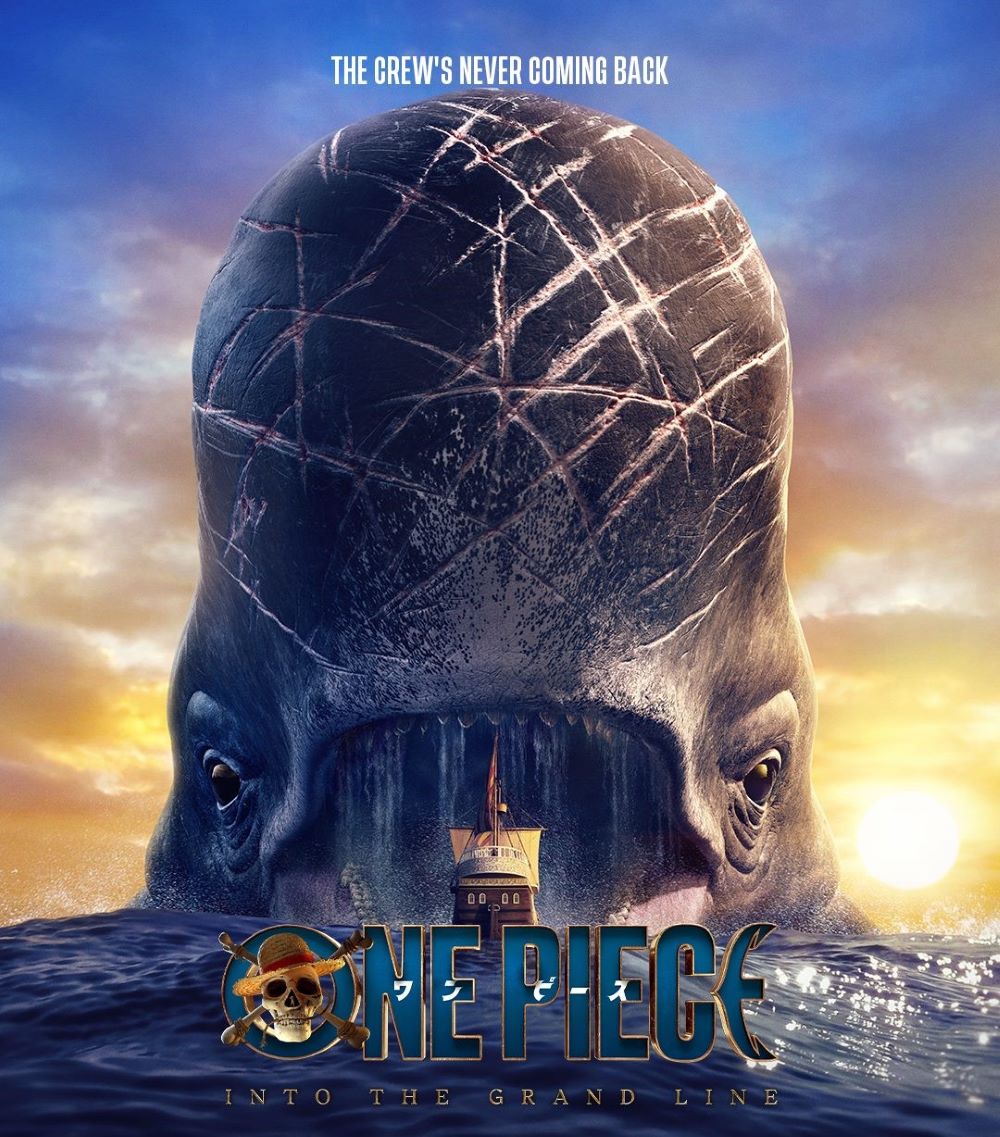
“That whale’s been waiting over 50 years for pirates who ain’t coming back.” — Crocus
One Piece’s second season doesn’t ease you back in so much as fire you out of a cannon straight into the Grand Line, and Good Whale Hunting is where it really clicks that this show still knows exactly what kind of emotional rollercoaster it wants to be. Coming right after a premiere that’s busy setting up new Marines, new wanted levels, and the general sense that the East Blue training wheels are off, episode 2 narrows its focus to a single iconic manga arc and treats it with a surprising amount of patience and sincerity.
The season 2 opener (“The Beginning of the End”) is basically the big hand‑off episode: a Loguetown victory lap, a check‑in with Smoker and Tashigi as the new Marine threats, and a reminder that the Straw Hats are now sailing with real eyes on them. It’s longer, busier, and a bit more sprawling, juggling the execution platform legacy of the Pirate King with Luffy’s usual chaotic optimism and a few early‑teased antagonists the anime took its time introducing. As a premiere, it gets the job done—stakes are sketched in, the world opens up—but it can feel like it’s compressing two finales and a soft reboot into one hour‑plus block. The upside is that when episode 2 hits, the show finally breathes.
Good Whale Hunting is the first time this season where you can feel the adaptation relax into a single, weird, very One Piece idea: Reverse Mountain as a death trap, and a lovesick kaiju whale with abandonment issues. The sequence of the Going Merry grinding and climbing up the Grand Line’s infamous entry ramp is shot like a disaster movie: broken steering, a ship that’s very clearly outmatched by the environment, and a bunch of pirates who suddenly remember they’re not exactly seaworthy professionals. It’s a smart way to underline that, for all their wins in season 1, this crew is still held together with duct tape, vibes, and a rubber captain willing to literally turn himself into a human steering system just to survive the climb.
Once they crest Reverse Mountain and slam straight into Laboon, the episode goes full fairy tale without losing the slightly grounded texture the live‑action has worked hard to build. Splitting the cast—most of the crew trapped inside the whale while Luffy ends up outside on Twin Capes with Crocus—is a clever structural move because it lets the show alternate tones: goofy bickering and bafflement inside, melancholy exposition and quiet character beats outside. Clive Russell as Crocus brings that ornery performance the character deserves, playing him like the Grand Line’s grumpy lighthouse keeper therapist, always one snark away from sending these kids back down the mountain but clearly invested in both Laboon and their survival.
Laboon’s tragedy could have easily tipped into pure melodrama, especially in live action, but the episode mostly earns its feelings. The idea of a whale repeatedly smashing itself against a continent because it refuses to accept a broken promise is inherently big, almost mythic, and the show doesn’t overcomplicate it: Crocus explains the Rumbar Pirates’ disappearance, the Straw Hats process it in their own ways, and Luffy responds not with a speechifying monologue but with a mix of stubbornness and childlike logic. You can feel the writers leaning into what makes Luffy special as a live‑action protagonist—he doesn’t intellectualize the pain, he reframes it through action and a promise that’s simultaneously ridiculous and deeply sincere.
The Jolly Roger moment, where Luffy paints the Straw Hat symbol on Laboon’s head to give the whale a new “contract,” is the kind of scene that tests whether this adaptation can handle the manga’s emotional core. On paper, it’s almost absurd: the solution to suicidal grief is “don’t smash your head anymore or you’ll scuff my cool skull flag, and also, we’re totally coming back to have more adventures.” In practice, the actors sell the hell out of it—Luffy playing the clown and the knight in the same beat, Laboon responding like a giant, wounded kid, and the rest of the crew hovering between “this is insane” and “this is exactly why we follow this guy.”
As a follow‑up to the premiere, Good Whale Hunting also works as a mission statement for how season 2 plans to adapt the early Grand Line arcs. The pace is still accelerated compared to the anime, but not to the point where big emotional tentpoles get flattened into drive‑by cameos; Laboon and Crocus feel like a self‑contained short story inside a larger journey, not just obligatory canon boxes being ticked. The episode also builds up the Baroque Works roster by introducing Miss Wednesday and Mr. 9, which moves that plot point forward without derailing the Laboon storyline. The addition of these Baroque Works characters is done seamlessly, folded into the chaos of the Grand Line in a way that feels organic rather than forced.
Visually, the episode continues the show’s streak of making inherently cartoonish imagery feel tactile without draining it of personality. Reverse Mountain’s chaotic water physics, the internal “whale interior” sets, and Laboon himself all sit in that slightly heightened zone where you never fully forget you’re watching a fantasy, but you also buy the weight and texture of what’s on screen. Season 2’s budget seems to be focused in the right places too: the Grand Line feels bigger and more dangerous, and the effects work on Laboon gives him enough expressiveness that you’re not just staring at a big grey blob while the humans emote around him.
Performance‑wise, the core cast continues to feel more settled in their roles than they sometimes did back in the earliest episodes of season 1. Iñaki Godoy’s Luffy benefits a lot from material like this; you can see how much more comfortable he is playing the captain as both earnest idiot and moral center when the script gives him contained, character‑driven scenarios instead of just bouncing from fight to fight. The supporting Straw Hats get smaller individual spotlight moments here—this isn’t a huge Zoro or Nami showcase hour—but their reactions to Crocus, Laboon, Miss Wednesday, Mr. 9, and the sheer insanity of the Grand Line add warmth and humor that keep the episode from sinking under its own sadness.
The main fair criticism of both the premiere and Good Whale Hunting is that, because the season has to blaze through multiple arcs in eight episodes, some of the build‑up can feel like it’s happening off to the side. Loguetown’s significance as a turning point in pirate history, Smoker’s introduction as a real force of nature, and the mounting Marine pressure on the Straw Hats are all present but slightly undercooked compared to how much emotional space the anime gave them. For viewers who live and breathe the source material, that compression will always sting a bit, even when individual episodes like this one land emotionally.
Still, as a package—season 2’s two‑episode opening stretch capped by Good Whale Hunting—this is a strong re‑entry into the world of One Piece. The premiere lays the geopolitical and Marine groundwork, while episode 2 reminds you that this series survives or dies on whether you care about a whale with a broken heart and a captain who thinks the answer is a paint job and a promise. If you were worried the jump to the Grand Line would sand down the series’ weirder, more sentimental edges, this episode is a pretty clear sign the live‑action is still willing to get strange, sincere, and just a little bit corny in exactly the right ways.
One Piece: Into the Grand Line Season 2 Episodes
 Through the Shattered Lens
Pingback: One Piece: Into the Grand Line (Season 2, Episode 3 “Whiskey Business”) Review | Through the Shattered Lens
Pingback: Lisa Marie’s Week In Review: 3/9/26 — 3/15/26 | Through the Shattered Lens
Pingback: One Piece: Into the Grand Line (Season 2, Episode 4 “Big Trouble in Little Garden”) Review | Through the Shattered Lens
Pingback: One Piece: Into the Grand Line (Season 2, Episode 5 “Wax On, Wax Off”) Review | Through the Shattered Lens
Pingback: One Piece: Into the Grand Line (Season 2, Episode 6 “Nami Deerest”) Review | Through the Shattered Lens
Pingback: One Piece: Into the Grand Line (Season 2, Episode 7 “Reindeer Shames”) Review | Through the Shattered Lens
Pingback: One Piece: Into the Grand Line (Season 2, Episode 8 “Deer and Loathing in Drum Kingdom”) Review | Through the Shattered Lens