Embracing the Melodrama Part II #41: Ciao! Manhattan (dir by John Palmer and David Weisman)


Ciao_posterI recently watched the 1972 film Ciao! Manhattan on TCM and it left me with incredibly mixed feelings.  The specific reason that I was watching Ciao! Manhattan was because it was the last film to feature the legendary model and actress Edie Sedgwick.  Tragically, at the age of 28, she died merely weeks after completing work on Ciao! Manhattan.  And while the film is dedicated to her memory and was apparently meant to be a tribute to her, it instead feels incredibly exploitive.  Watching the movie, I was aware that Edie was literally dying on screen and, as so often happened in her life, nobody was willing to step forward and help her.

In the late 60s, Edie Sedgwick was a model who was briefly the beautiful face of the underground.  Vogue called her a “youthquaker.”  She made films with Andy Warhol, she dated the rich and the famous and for a brief time, she was one of the most famous women in America.  But a childhood full of tragedy and abuse had left Edie fragile and unprepared to deal with the pressures of being famous.  She was fed drugs by those who claimed to care about her, she had numerous mental breakdowns, and, when she was at her most vulnerable, she was pushed away and rejected by the same people who had loved her when she was on top of the world.  Edie died because, when she asked for help, nobody was willing to listen.

Edie

I guess I should explain something.  I don’t believe in reincarnation but if I did, I would swear that I was Edie Sedwick in a past life.  Of all the great icons of the past, she, Clara Bow, and Victoria Woodhull are the ones to whom I feel the closest connection. (Edie is the reason why, for the longest time, I assumed I would die when I was 28.  But now I’m 29, so lucky me.)  When I watched Ciao! Manhattan, I felt as if I was watching myself (or, at the very least, a close relation) on-screen.

Ciao! Manhattan opens with Susan Superstar (Edie Sedgwick), standing topless on a street corner and hitchhiking.  She’s picked up by an aimless drifter named Wesley (played by Wesley Hayes).  Wesley gives Susan a ride back to the mansion that she shares with her mother (Isabell Jewell) and her servant, a rather disgusting guy named Geoff (Jeff Briggs).  Her mother hires Wesley to help take care of Susan.  It turns out that Susan used to be a world-famous model but now she spends her time sitting in an empty swimming pool, drinking and doing drugs.  While Wesley and Geoff listen, Susan talks about her past in New York.  While Susan talks, we see black-and-white footage of Susan (and Edie’s) past.

337224340_f1a0a57d44

Ciao! Manhattan began life in 1967 as an underground parody of a spy film.  When Edie had a nervous breakdown and was sent to rehab, filming was abandoned.  When she was finally released in 1970, filming began again.  The 1967 footage was now used for flashbacks to the wonderfully glamorous life that Susan (and Edie) had lost.

And, when viewed as a documentary of how Edie was exploited and then subsequently abandoned by everyone that she cared about, Ciao! Manhattan works.  The contrast between the happy and vibrant Edie of 1967 and the barely coherent and visibly unhealthy Edie of 1970 is heartbreaking.  Whereas the 1967 footage features an existence that is in constant motion, the 1970 footage shows us an existence that is slow and drenched in sadness.  The film makes no effort to pretend that Susan Superstar is anyone other than Edie Sedgwick and, when Edie talks about her past, no names are changed to protect the guilty.  And the film shows that, even after surviving a literal Hell, Edie Sedgwick was still a natural-born star.  Even when she’s slurring her words and staring at the world with poignantly sad eyes, Edie demands and gets the audience’s attention.
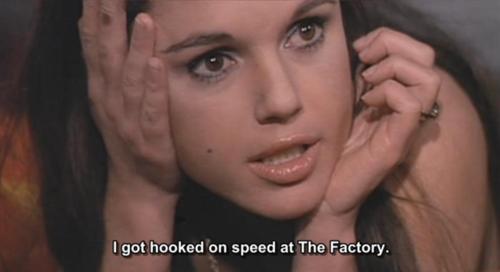
Edie2

When Ciao! Manhattan allows Edie to tell her own story, it works.  But, unfortunately, the film spends too much time with Wesley and Geoff, who are two of the most repulsive characters that I’ve ever seen.  Geoff is written to be offensive whereas the character of Wesley is done in by the very bad performance of the guy playing his role.  (Wesley Hayes was reportedly not a professional actor and it certainly shows.)

This is a film that provides evidence that, even in her last days, Edie Sedgwick was a talented and unique presence and, for that, I’m glad.  But, ultimately, it’s hard not to feel that Ciao! Manhattan was the final case of Edie and her tragic life being exploited for someone else’s profit.

Edie Sedgwick

Usually, I would end a review like this by including either a scene or the film’s trailer.  But, instead, I’m going to end this review with Edie Sedgwick’s silent Warhol screen test.  This is how I prefer to think of Edie Sedgwick — hopeful and curious with the promise of her entire life ahead of her.
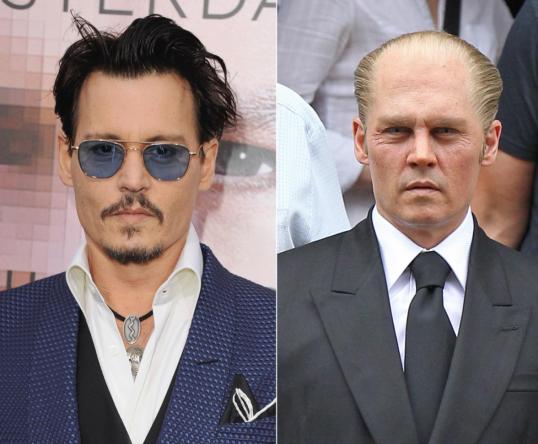
Johnny Depp Acts (!!!!) In This Trailer For Black Mass!


johnny-depp-black-mass

Here’s the first trailer for Black Mass, the upcoming film in which Johnny Depp plays notorious Boston crime boss and most wanted fugitive, Whitey Bulger.  Judging from this trailer, this looks like it might be Depp’s Oscar performance.

Seriously, check this out!

(And after you watch the trailer, read my review of a documentary about Whitey and his reign of terror.)

Going Crazy With Sam Peckinpah and Max Evans


At the beginning of The Wild Bunch, William Holden says, “If they move, kill them.”  That line became so associated with director Sam Peckinpah and his films that it was even used as the title of his biography.  Sam Peckinpah was known for both the violence of his films and the turmoil of his private life.  He fought studios and film critics and directed six classic films before destroying himself and his talent with drugs and hard living.  When he died in 1984, he was could not get a job in Hollywood but his legacy as a filmmaker has lived on.

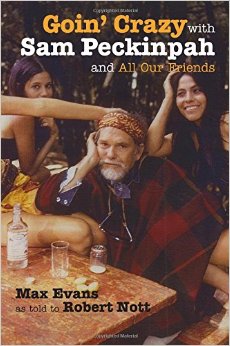
Goin Crazy With Sam Peckinpah And All Our FriendsIn his memoir, Goin’ Crazy With Sam Peckinpah And All Our Friends, novelist Max Evans takes a look back at his long and often contentious friendship with Peckinpah.  When Sam Peckinpah first met Max Evans, it was to buy the rights to Max’s western novel, The Hi-Lo Country.  Though Peckinpah never made the movie, he and Evans remained friends for the rest of Peckinpah’s life.  As Evans puts it, he and actor James Coburn were the only two to stay with Peckinpah until the very end.

When talking about Peckinpah, Evans does not pull any punches.  Much of the book details Peckinpah’s casual cruelty.  When Peckinpah’s son David wrote a script, Sam dismissed it as a “piece of shit.”  Evans interviewed Peckinpah’s girlfriend, Katy Haber, about the time that Peckinpah hit her and how actor Steve McQueen reacted when he found out.  Towards the end of his life, Peckinpah was told that he would die if he did not stop drinking.  Sam gave up liquor and turned to cocaine instead.  At one point, a paranoid Peckinpah even asked Evans for help in hiring a hitman to “take care of” a film producer that Peckinpah disliked.

Evans also talks about the other side of Sam Peckinpah.  According to Evans, the Peckinpah that visited him in New Mexico was a different human being from the Sam who threatened producers and shot guns at actors.  In Hollywood, Peckinpah felt had to prove he was a madman.  With Max, he could just be “Ol’ Sam.”  Max even suggests that Sam may have been a mystic and includes several stories about Sam’s “supernatural” abilities.

Along with writing about Sam Peckinpah, Evans also talks about his colorful encounters with actors like Lee Marvin, Burt Lancaster, L.Q. Jones, Woody Harrelson, and Sean Penn.  Evans is a natural storyteller and Goin’ Crazy With Sam Peckinpah is an engaging and breezy trip through the Hollywood of the 60s and 70s.

Film Review: True Story (dir by Rupert Goold)


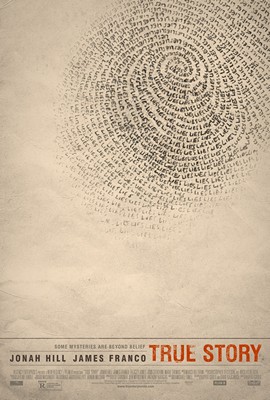
True_Story_poster

In 2002, a man named Christian Longo was arrested in Mexico.  Longo, who was on the FBI’s 10 Most Wanted List, was charged with murdering his wife and his three children.  When he was arrested, he was using the name of Michael Finkel, a real-life travel writer for the New York Times.  When asked why he had been using Finkel’s name, Longo explained that he admired Finkel as a writer.

At the same time that Christian Longo was getting arrested, Michael Finkel was in the process of watching his career fall apart, the result of his having fabricated part of a story.  Fired from the New York Times, Finkel found himself unemployable.  When he discovered that Longo had been using his name, Finkel arranged to meet with him.  Not only was he curious as to why Longo wanted to be him but he also saw Longo as potentially being the story that could relaunch his career.

During their initial meeting, Longo told Finkel that he was a long-time admirer.  Longo agreed to tell Finkel his side of the story in exchange for writing lessons and Finkel’s promise to keep the details of their conversations a secret until after the trial.  Finkel agreed and soon, the two men became unlikely friends.

At first, Finkel believed that Longo was innocent.  But then, on the first day of the trial, Longo was asked how he pled to four charges of murder.   Longo entered two pleas of not guilty and two pleas of guilty and Finkel found himself forced to reexamine everything that he had previously believed about his new friend…

Amazingly enough, that’s a true story.  It’s also the subject matter of a recently released film called True Story.

In True Story, Michael Finkel is played by Jonah Hill and Christian Longo is played by James Franco.  Both Franco and Hill (who, despite having 3 Oscar nominations between them, remain oddly underrated actors) give the type of excellent performances that can elevate an entire film.  Interestingly enough, they’re both playing dramatic versions of their own typically comedic personas.  Hill plays up his trademark nerdy aggressiveness while Franco brings his own deliberately ambiguous persona to Christian Longo.  Just as James Franco enjoys leaving people guessing about who he really is, Longo seems to get a perverse pleasure out of keeping Finkel guessing about whether or not he really killed his family.  When Longo takes the stand in his own defense and gives his version of what happened on the night of the murders, he does it with a perverse gleam in his eye.  Longo may be facing the death penalty but mostly, he’s just enjoying being in the spotlight.

Hill and Franco are famous for being off-screen friends and they bring a lot of their own real-life chemistry to their shared scenes.  As played by Hill and Franco, Finkel and Longo develop a relationship that is nearly co-dependent.  Longo wishes that he could be a writer like Finkel.  Finkel wishes that he could be as personable and outwardly confident as Longo.  When Longo writes Finkel an 80-page letter that’s full of crude drawings, Finkel responds by taping each page to the wall of his office until he’s literally encircled by Longo’s words, much as how someone like me may have once been tempted to tape pictures of James Franco to the wall of her college dorm room.

With Franco and Hill both giving great performances, it’s a bit disappointing that the rest of the film isn’t always as strong.  Director Rupert Goold makes his feature film debut here and, at times, it feels as if he’s struggling to keep up with his actors.  There’s a lot of slow motion scenes of people walking down hallways and getting out of cars.  As well, too much of Finkel and Longo’s relationship is portrayed via montage.  We see countless rapidly-edited montages of Longo and Finkel speaking but, instead of actually hearing what the two of them are talking about, we instead listen to Marco Beltrami’s score.  Goold gets a lot of perfectly lit visuals but True Story is a film that could have used a rougher edge.

Even more unfortunate is that the film totally wastes Felicity Jones.  Playing Finkel’s wife, she doesn’t get to do much beyond looking pensive and concerned.  It’s a role that anyone could have played and it’s frustrating to watch because Felicity Jones is capable of doing so much more than just playing a worried wife.  Towards the end of the film, there’s a great scene where Longo and Jill talk on the phone and, at that moment, Felicity Jones finally gets to show some strength and personality.  James Franco, as well, seems to be relishing the chance to play up Longo’s manipulative side.  (It’s interesting to listen to the perversely flirtatious tone that he takes with her as opposed to the passive aggressive flattery that he uses on Finkel.)  The scene works wonders but then, the film makes the mistake of having Jill face Longo face-to-face and it falls flat precisely because Jill isn’t deep enough a character for us to feel any real satisfaction in watching her tell him off.

In the end, True Story is worth watching.  James Franco and Jonah Hill both give great performances.  If you’re a true crime fan like I am, you’ll find a lot of True Story to be intriguing.  Ultimately, if True Story is frustrating, it’s because it’s a good film that should have been great.