We lost three legends this week.
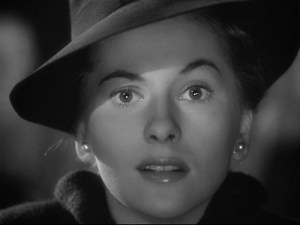
As I’ve mentioned on this site, I love the old Hollywood of the 30s and the 40s. It’s a period of time that I love both for the films that were made and for the unapologetic glamour of the people who made them. To me, the 30s and the 40s will always be the Golden Age of film because that was a time when actors and actresses felt no shame in looking good and living lives that literally seemed to be larger-than-life.
Joan Fontaine was one of the most beautiful actresses of the Golden Age, as well as one of the most talented. She was also one of my personal favorites. Whether she was playing the second Mrs. de Winter in Rebecca or a frightened wife in Suspicion, Joan Fontaine was a vibrant force on-screen. Off-screen, she was best known for a long-running feud with her older sister, Olivia De Havilland.
Joan Fontaine passed away on December 15th, at the age of 96. She was one of the last remaining stars of Hollywood’s Golden Age.
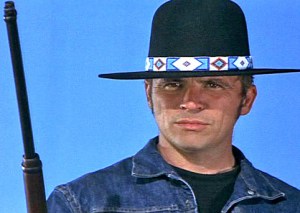
Tom Laughlin was an actor who wasn’t happy with the roles he was getting in mainstream films. He was a filmmaker who wasn’t happy with the way that the Hollywood establishment treated his films. The same can be said about a lot of filmmakers and a lot of actors over the years. The difference between them and Tom Laughlin is that Laughlin actually did something about it.
In 1971, Tom Laughlin produced, wrote, directed, and starred in a film called Billy Jack. Laughlin played Billy Jack, an American Navajo who is also a former Green Beret, a veteran of the Viet Nam War, a master of the martial arts, and the self-appointed defender of the Freedom School. When small town bigots and other assorted fascists try to destroy the Freedom School, Billy responds by kicking ass and reciting platitudes.
When the mainstream studios showed that they had no idea what to do with an anti-establishment film like Billy Jack, Laughlin released (and subsequently) re-released it himself. Billy Jack ended up making more than 40 million dollars and changed the film industry forever.
Laughlin went on to produce, direct, and write two sequels and an unrelated film called The Master Gunfighter. He also ran for President a few times but was never elected. (However, he did get to play a Senator in Billy Jack Goes To Washington.)
He died at the age of 82 on December 12th.
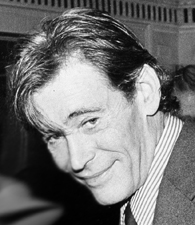
And finally, Peter O’Toole. How does one sum up Peter O’Toole in just a few sentences? As an actor, he appeared in everything from Lawrence of Arabia to Caligula to For Greater Glory. He was great in good films and good in bad films and he had a unique screen presence that no other actor will ever be able to duplicate. While it’s true that O’Toole had retired from acting in 2012 (and he was obviously frail in films like For Greater Glory and Venus), it’s still hard to believe that such a bigger-than-life character has passed away.
While there’s so much that can be written about Peter O’Toole’s life, career, and hell-raising reputation, I’m going to instead suggest that you watch Becket and The Lion In Winter and then wonder how Peter O’Toole could end his career with 8 Oscar nominations but no wins.
Peter O’Toole died on December 14th after a long illness. He was 81 years old.
To Peter, Tom, Joan — rest in peace. And thank you for the movies and the memories.
 Through the Shattered Lens