March 10, 2026 07:00
“Don’t hold a father’s sins against his son. Blood doesn’t dictate destiny—everyone chooses their own path on this sea.” — Gol D. Roger
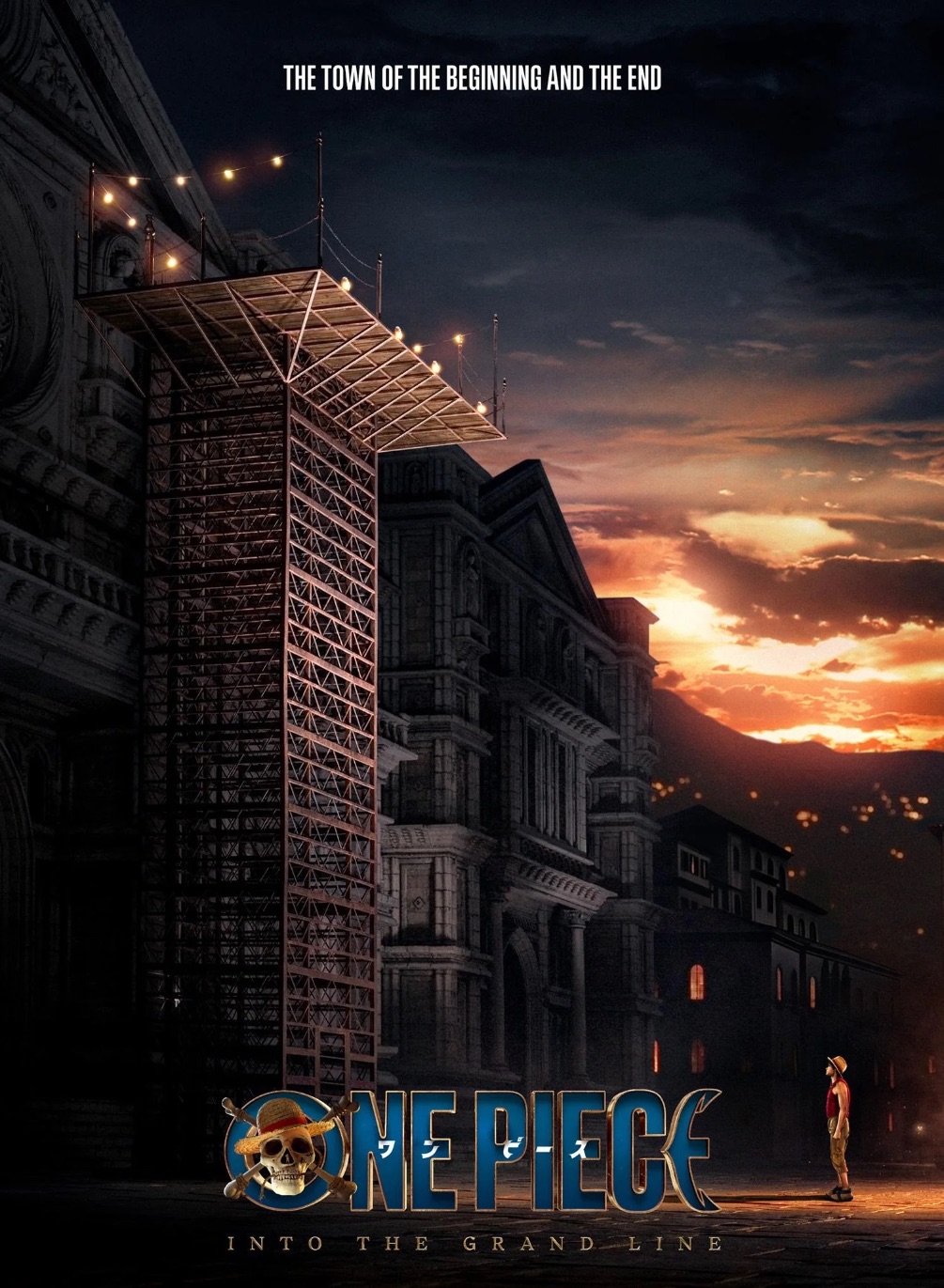
The Season 2 premiere of One Piece feels like a confident “we know what worked, and we’re doubling down” while also quietly admitting there’s still a long Grand Line of growing pains ahead. The episode is busy, sometimes overstuffed, but it’s rarely dull, and it mostly recaptures the scrappy charm that made Season 1 such an unexpected win for anime-to-live-action adaptations.
Season 2 picks up with the Straw Hats heading toward the Grand Line, and the show wastes no time reminding you how much the core ensemble carries this adaptation. Iñaki Godoy’s Luffy still feels like the glue: goofy, earnest, and occasionally dangerous in that “you can’t believe this idiot is a future legend” way that matches the spirit of the source without copying the anime’s louder extremes. Emily Rudd’s Nami and Mackenyu’s Zoro remain the show’s emotional and stoic anchors, respectively, and the premiere leans on their established dynamics rather than reinventing them. You feel like you’re hanging out with a crew that’s already lived together for a while, which is half the battle in making this world feel real.
The premiere’s biggest shift is structural. Season 2 is tasked with bridging Loguetown, Reverse Mountain, and the early Alabasta material, and you can feel the writers trying to thread a needle between faithfulness and streamlining. Instead of lingering on the smaller beats of each arc, the episode compresses them into a fast-moving chain of set pieces and character introductions. Loguetown becomes less a full-fledged arc and more a dense prologue to the Grand Line era, packed with Marines, pirate legends, and hints of the Revolutionaries. Depending on what you want from this adaptation, that’s either exciting or mildly frustrating.
On the positive side, the sense of scale is undeniably bigger. The Marines’ presence, especially with Smoker and Tashigi entering the mix, gives the premiere a sharper cat-and-mouse energy. Smoker arrives as a force of nature—less cartoonishly overpowered than in the manga, but still clearly the kind of threat that turns Luffy’s carefree adventuring into something riskier. The show smartly plays him as a guy who thinks he’s in a different, more serious story, which makes his clashes with the Straw Hats fun to watch. Tashigi, meanwhile, brings a softer, more idealistic edge that contrasts nicely with Zoro’s exhaustion with swordsmen who talk too much.
The premiere also continues the series’ habit of sliding in big-name players earlier than the manga did, and that’s where the episode gets more divisive. Nico Robin and Dragon show up as ominous presences in the larger world, giving you a clearer sense of the many factions circling this goofy rubber pirate. The upside is that it makes the One Piece universe feel interconnected sooner; casual viewers get a better roadmap of who matters long-term. The downside is that some of these appearances flirt with Marvel-style “universe building” more than organic storytelling. When every scene is either paying off an old setup or seeding three new ones, it can be tough to just sit in a moment and feel it.
Production-wise, Season 2’s extra time and budget show. The premiere gives Loguetown and the surrounding seas a lived-in, often cinematic atmosphere that outpaces Season 1’s more patchwork locations. Costumes continue to walk that tightrope between cosplay-accurate and functional; Smoker, in particular, looks like he walked straight out of a stylized military drama with just enough anime flair layered on top. The CGI still isn’t blockbuster-tier, but the show compensates with smart framing and selective use—powers and creatures are used to accent action, not dominate it, which keeps things from tipping into uncanny territory.
Action remains one of the adaptation’s better tools, even if it still doesn’t fully hit the insanity of Oda’s panels. The premiere emphasizes clarity over spectacle: you can actually follow where people are standing, how the fight geography works, and what the emotional stakes are. That’s a big improvement over a lot of modern genre TV. When Smoker crashes into the story or the Straw Hats get caught up in the chaos of Loguetown, the choreography sells impact even when the VFX can’t quite keep up with the wilder Devil Fruit abilities. You won’t mistake it for Hong Kong–tier action cinema, but it’s clean, readable, and character-driven, which matters more for this kind of swashbuckling adventure.
Where the episode stumbles most is pacing and tone. The premiere is under pressure to reintroduce the main cast, onboard new viewers, set up Loguetown, tease Reverse Mountain, and seed the Alabasta saga, all while dropping in cameos and lore nods for fans who know exactly where this is all heading. That leads to a few whiplash moments where the show jumps from lighthearted crew banter to life-or-death tension to ominous worldbuilding monologues in rapid succession. Season 1 sometimes had that problem too, but the stakes are higher now, and you can feel the strain.
Character-wise, the core Straw Hats come out of the premiere in good shape, but some of the supporting cast is still fighting for oxygen. Garp appears in a flashback, speaking to Gol D. Roger before he is sent to the gallows—a visit that teases the arrival of a future fan-favorite set for season 3. While it’s good to see that thread remain important, these cutaways occasionally feel like they belong to a spin-off series. That worked in Season 1 as a way to broaden the world; here, with even more plates spinning and new villains entering, it risks crowding an already packed episode. At the same time, those scenes help underline one of the show’s better instincts: it keeps asking what piracy and justice actually mean in a world this chaotic, rather than just treating the Marines as cartoon bad guys.
Thematically, the premiere starts nudging One Piece toward slightly heavier waters without losing its goofy heart. The looming Grand Line, the introduced Revolutionaries, and the presence of more morally gray Marines all hint at a story that will increasingly interrogate systems of power and inherited ideals. But the episode never forgets that this is, first and foremost, a story about a weird found family chasing impossible dreams. The crew’s conversations on the Going Merry, the small jokes, and the quiet beats where they process what lies ahead are what keep the whole thing grounded.
As a Season 2 premiere, this episode does its job: it reassures fans that the live-action experiment wasn’t a fluke, raises the narrative ceiling, and points the ship squarely at the Grand Line with confidence. It’s not flawless—worldbuilding occasionally overtakes character focus, the pacing can feel like a sprint, and not every early cameo lands as organically as it should. But if you liked Season 1’s mix of earnestness, scrappy visual ambition, and slightly awkward but heartfelt adaptation choices, this opener suggests you’re in for a bigger, messier, and still surprisingly sincere voyage. For a story built on the idea that chasing the horizon is worth the risk, that feels like the right kind of start.
Posted by Arleigh
Categories: TV, TV Review, TV Show
Tags: Callum Kerr, Camrus Johnson, Charithra Chandran, Clive Russell, Eiichiro Oda, Emily Rudd, Episode 1: The Beginning and the End, fantasy adventure, Iñaki Godoy, Ilia Isorelýs Paulino, Jacob Gibson, Jacob Romero, James Hiroyuki, Jazzara Jaslyn, Jeff Ward, Joe Manganiello, Julia Rehwald, Katey Sagal, Lera Abova, live-action adaptation, Mackenyu, Michael Dorman, Mikaela Hoover, Morgan Davies, Nahum Hughes, Netflix, One Piece, One Piece: Into the Grand Line, Rigo Sanchez, season 1, Taz Skylar, Tomorrow Studios, TV review, Vincent Regan
Mobile Site | Full Site
Get a free blog at WordPress.com Theme: WordPress Mobile Edition by Alex King.
[…] Episode 1: The Beginning and the End […]
LikeLike
By One Piece: Into the Grand Line (Season 2, Episode 2 “Good Whale Hunting”) Review | Through the Shattered Lens on March 12, 2026 at 10:30
[…] Episode 1: The Beginning and the End […]
LikeLike
By One Piece: Into the Grand Line (Season 2, Episode 3 “Whiskey Business”) Review | Through the Shattered Lens on March 14, 2026 at 11:00
[…] Ironwood, Into the Grand Line Episode 2.3, Whistle, Into The Grand Line Episode 2.2, Hellfire, Into the Grand Line Episode 2.1, and War […]
LikeLike
By Lisa Marie’s Week In Review: 3/9/26 — 3/15/26 | Through the Shattered Lens on March 15, 2026 at 21:04
[…] Episode 1: The Beginning and the End […]
LikeLike
By One Piece: Into the Grand Line (Season 2, Episode 4 “Big Trouble in Little Garden”) Review | Through the Shattered Lens on March 16, 2026 at 07:00
[…] Episode 1: The Beginning and the End […]
LikeLike
By One Piece: Into the Grand Line (Season 2, Episode 5 “Wax On, Wax Off”) Review | Through the Shattered Lens on March 18, 2026 at 07:00
[…] Episode 1: The Beginning and the End […]
LikeLike
By One Piece: Into the Grand Line (Season 2, Episode 6 “Nami Deerest”) Review | Through the Shattered Lens on March 19, 2026 at 07:00
[…] Episode 1: The Beginning and the End […]
LikeLike
By One Piece: Into the Grand Line (Season 2, Episode 7 “Reindeer Shames”) Review | Through the Shattered Lens on March 21, 2026 at 07:00
[…] Episode 1: The Beginning and the End […]
LikeLike
By One Piece: Into the Grand Line (Season 2, Episode 8 “Deer and Loathing in Drum Kingdom”) Review | Through the Shattered Lens on March 23, 2026 at 07:00