Late Night Retro Television Reviews: Nightmare Café 1.3 “Fay & Ivy”


Welcome to Late Night Retro Television Reviews, a feature where we review some of our favorite and least favorite shows of the past!  On Mondays, I will be reviewing Nightmare Cafe, which ran on NBC from January to April of 1992.  The entire show is currently streaming on YouTube!
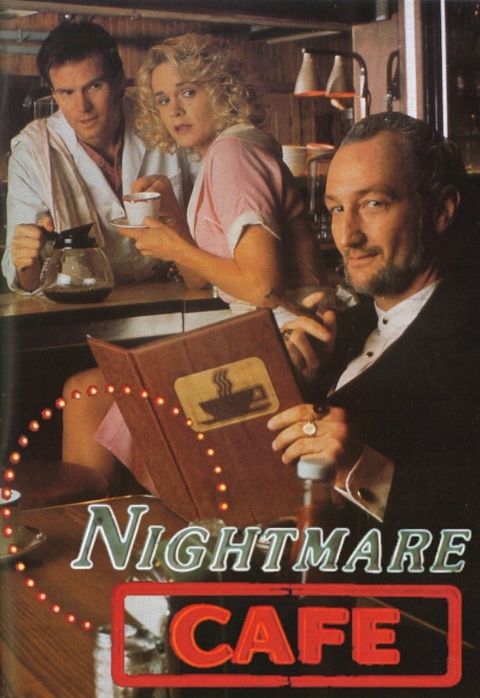
This week, Fay’s sister comes to visit!

Episode 1.3 “Fay & Ivy”

(Dir by Christopher Leitch, originally aired on March 13th, 1992)

The third episode of Nightmare Café opens with a young woman named Ivy (played by Molly Parker) coming to the big city with her boyfriend, Jesse (Peter Outerbridge).  Ivy is totally excited to be in the big city because she thinks that she’s going to finally track down her older sister.  Ivy’s sister left home ten years ago and Ivy isn’t even sure what she looks like.  However, for ten years straight, Ivy’s sister sent her letters about how great life in the city was.  The last of her sister’s letters invited Ivy to come out to the city herself.

Jesse is a bit less excited about the prospect of finding Ivy’s sister.  In fact, Jesse is a bit of a controlling jerk who “accidentally” drops one of the letters while he and Ivy are getting off the train.  Jesse is coming to the big city so that he can find new ways to make money, like robbing a convenience store while the clueless Ivy waits outside.

As for the dropped letter, it’s picked up by Robert Englund’s Blackie, who reads the letter, has a good laugh, and then speaks straight to the audience.  Blackie informs us that Ivy’s sister is Fay and that Fay probably doesn’t even remember inviting Ivy to come see her.

As Blackie puts it: “I wonder if she remembers issuing this invitation.  She’d just as soon forget.  You suppose the café will let her forget?  I don’t.”

And, sure enough, Ivy and Jesse eventually end up in the Nightmare Café. were Fay is the waitress and Frank is the cook.  Fay, who earlier was saying that she felt like there was still some things in her former life that she needed to take care of, is shocked to see Ivy.  For her part, Ivy doesn’t recognize Fay.  And, for Jesse’s part, he gets upset when Fay starts asking Ivy too many questions about her life back home.  Jesse grabs Ivy and the two of them leave the café.

Frank leaves the café to search for Ivy and Jesse, saying that he’s getting bored with being stuck in the building.  (In a mildly amusing subplot, the café actually gets offended by Frank’s comments and requires Frank to apologize before he’s allowed to later reenter the building.)  Ivy and Jesse, meanwhile, end up in a tattoo parlor where Jesse gets a tattoo from none other than Blackie himself.  (Robert Englund appears to be having a ball playing a tattoo artist.)

As for Fay, she uses the cafe’s phone to call her mother.  When Fay identifies herself, her mother (Penny Fuller) refuses to believe that Fay is calling.  Fay, realizing that her mother has never forgiven her for leaving home, tells her mom that Ivy is in the city and that she’s in trouble.  Fay then has what appears to be a café-inspired hallucination in which she finds herself talking to her mother face-to-face and the two of them discuss their strained relationship.  It’s a touching scene, well-played by Penny Fuller and Lindsay Frost.

In the end, everyone ends up back at the café.  Jesse returns to the café to try to rob it and he drags Ivy (who now knows that Fay is her sister) with her.  Frank returns to the café with Ivy’s mother, who says that she came to the city after having a weird dream in which Fay called her to tell her that Ivy was in trouble.  Finally, Blackie shows up so that he can zap Jesse into the back of a police car.

With Jesse gone, Fay, Ivy, and their mother have a cup of coffee.  While declining to mention that she’s actually dead, Fay does say that it’s a bit too late for her to fix her relationship with her mother.  But there’s still time for her mom and Ivy to talk and get to know each other.  Ivy and her mom, for their part, both think that Fay left home and disappeared because she works for the federal government.

This was kind of a sad episode, really.  Fay wants to heal her relationship with both her mother and her sister but, in the end, she’s forced to accept that she’s dead and they’re not.  Fay and Frank can help people live better lives but their own lives are pretty much over and they’re going to spend an eternity in the Nightmare Café.

I liked this episode, which was considerably more straight-forward in its storytelling approach than the previous two.  What it lack in surreal imagery, it made up for in genuine emotion.

Next week, the café helps a dying detective sold one last murder!

Horror Film Review: Population 436 (dir by Michelle McLaren)


https://www.youtube.com/watch?v=29J2-TqqUVM&t=10s

Hi, and welcome to the 100th remake of The Wicker Man.

In this version from 2006, our victim is played by Jeremy Sisto.  He’s a good actor but he’s no Nicolas Cage.  He played Steve Kady, who works for the U.S. Census Bureau so let’s all take a moment to boo the federal government.  Booooo!  Steve has been sent to the small town of Rockwell Falls, North Dakota so that he can count the citizenry and I guess help to determine whether North Dakota should get a second congressional district.

Anyway, Steve arrives in town and he quickly meets Deputy Bobby Caine, who is played by Fred Durst.  A town where Fred Durst is responsible for maintaining law and order?  It’s a madhouse!  Actually, it’s a bit of a exaggeration to call the town a madhouse but there’s definitely something a little bit off about it.  The people seem to be old-fashioned and very religious. Could it be that they’re Mennonites?  If so, Steve’s gotten lucky because we’ve got a lot of Mennonites in Texas and, for the most part, they’re the nicest people you could hope to meet.

Anyway, Steve does some research and he discovers that the town has a long history of losing people to a mysterious fever and that somehow the town has never had more nor less than 436 citizens.  It’s almost as if something’s being done to specifically make sure that the town’s population always remains at 436.  The people who live there can’t leave without falling victim to any number of mysterious accidents.  The people who show up — like folks from the Census Bureau, for instance — are expected to stay.  Is it a supernatural thing or is it just an amazing religious-based coincidence?

Steve is going to have to figure it out because he’s falling in love with Courtney Lovett (Charlotte Sullivan) and she apparently doesn’t want to spend the rest of her life in a small town in North Dakota.  Also, it turns out that Bobby Caine is also in love with Courtney and he’s not happy about losing her to someone who works for the Census Bureau.  I don’t blame him.  I guess this where I would insert a joke about some song written by Limp Bizkit but, to be honest, I haven’t thought about Limp Bizkit in nearly twenty years and I’m not going to start now.

Anyway, this is kind of a padded review because there’s really not a lot to say about Population 436.  It’s an okay horror movie but it’s not a particularly interesting one.  By this point, we’ve seen so many messed up little towns and so many weirdly old-fashioned people with strange religious beliefs that it’s hard to be shocked by any of it anymore.  Even the movie’s “shock” ending feels predictable.  On the plus side, the film does make good use of the inherent creepiness of living in a state that’s defined by wide open spaces.  The town of Rockwell Falls does look convincingly creepy.  On the negative side, the film is a bit superficial and never bothers to really explore any of the issues that it raises.  It’s content to just say, “Religious people are crazy,” and while many will agree with that sentiment, it’s hardly as subversive a statement as Population 436 seems to think that it is.

Of course, if Population 436 encourages just one viewer to be paranoid about census takers and government bureaucracy, it will have all been worth it.

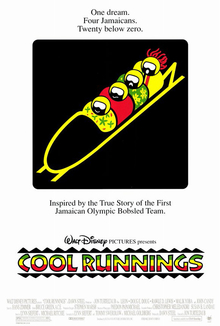
An Olympic Film Review: Cool Runnings (dir by Jon Turtletaub)


Like all good people, I am currently obsessed with the Winter Olympics.  Earlier this week, I asked some of my closest friends if they could recommend some good films about the Winter Games.  Almost everyone who replied recommended that I check out Cool Runnings, a film from 1993.

So, I did.

And I’m glad that I did.

Cool Runnings is one of those sports movies that’s based on a true story, though I imagine it’s probably a very loose adaptation.  Jamaica is a country with a long and proud Olympic history.  Since the 1948 Summer Olympics, Jamaican athletes have won a total of 77 medals, the majority of them in individual and relay sprinting events.  However, Jamaica didn’t compete in the Winter Olympics until 1988, when the Jamaican Bobsled Team made their debut.  According to contemporary news reports, the Jamaicans were folk heroes at the ’88 Winter Games and other teams would frequently help them out by lending them equipment.  Though the Jamaicans were never really a medal contender, they were personally popular and everyone was upset when their bobsled crashed during one of their qualifying runs.

That, of course, isn’t exactly the story that’s told in Cool Runnings.  In Cool Runnings, the Jamaican bobsled team is ridiculed by all of the snobs on the other teams, with the Germans especially going out of their way to be condescending.  Their first run is a disaster but their second run puts them into medal contention and causes people all over the world to spontaneously break into applause.  It’s a sports film, after all.  For a sports film to work, there has to be adversity before there can be victory.  Cool Runnings does stick close enough to the real story that the Jamaicans do end up crashing their sled.  However, in the film version, the team proudly carries their bobsled over the finish line while, again, people all around the world applaud.  Even a woman with a Russian flag claps.  And yes, it’s all pretty hokey but who cares?  It made me cry.

It’s a well-done film, one that is unapologetically sentimental and all the better for it.  Before I watched the film, I didn’t know anything about how the bobsled worked, beyond the fact that it involved four people and that everyone had to jump into the sled after launching it.  But, ultimately, it didn’t matter that I didn’t know much about bobsledding.  From the moment that film started, with scenes of aspiring Olympians running across sunny Jamaica, it had my attention.

When the film starts, Derice Bannock (Leon Robinson) is hoping to compete in the Summer Olympics but, at the qualifying trial, Derice and another runner, Yul Brenner (Malik Yorba), end up tripping over yet another runner, the likable and enthusiastic Junior Bevil (Rawle D. Lewis).  Out of contention for the Summer Olympics, Derice decides to try to find a way to go to the Winter Olympics.  Fortunately, there’s a former Olympic bobsledder, Irv Blitzer (John Candy), living nearby and Derice’s best friend, Sanka (Doug E. Doug) is a champion push cart racer.

The film follows Irv and the four Jamaicans on their unlikely journey to Canada.  It’s a comedy with a dramatic heart.  Yes, Sanka may need help getting his helmet over his hair (“Thanks, coach,” he says whenever Irv pounds down the helmet) but the film also takes the time to explore why it’s so important for these four to compete in the first place.  It might be tempting to make fun of Yul Brenner when he talks about how he wants to live in Buckingham Palace but the film makes clear just how important this improbable dream is for Yul and everyone else.  No one may give the Jamaican bobsled team a chance but Jamaica never stops believing in them.

It’s an incredibly sweet little movie, featuring likable performances and a heart-warming story.  I highly recommend it to anyone looking for a good sports story.