Today’s song of the day was not specifically written for the Kill Bill soundtrack but that’s still the film that I’ll always associate it with. Here is Tomoyasu Hotei and Battle Without Honor or Humanity.
Today’s song of the day was not specifically written for the Kill Bill soundtrack but that’s still the film that I’ll always associate it with. Here is Tomoyasu Hotei and Battle Without Honor or Humanity.
4 Or More Shots From 4 Or More Films is just what it says it is, 4 shots from 4 of our favorite films. As opposed to the reviews and recaps that we usually post, 4 Shots From 4 Films lets the visuals do the talking!
Today, the Shattered Lens wishes a happy 63rd birthday to director/screenwriter/cultural institution, Quentin Tarantino!
Here are….
4 Shots From 4 Quentin Tarantino Films
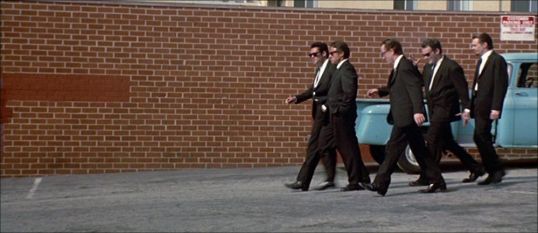
Reservoir Dogs (1992, dir by Quentin Tarantino, DP: Andrzej Sekuła)
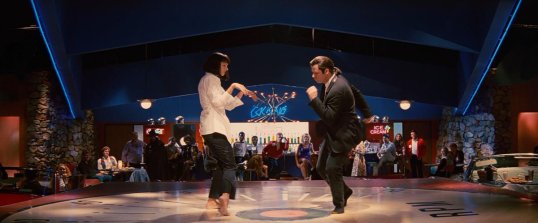
Pulp Fiction (1994, dir by Quentin Tarantino, DP: Andrzej Sekuła)
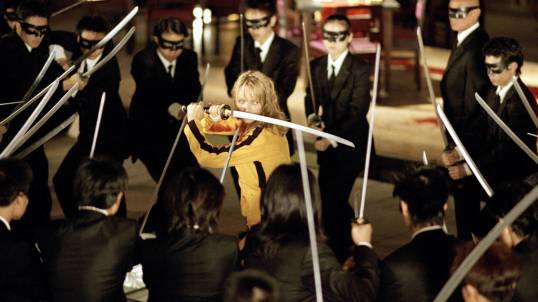
Kill Bill (2003, dir by Quentin Tarantino, DP: Robert Richardson)
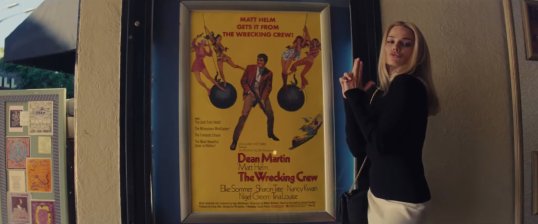
Once Upon A Time In Hollywood (2019, dir by Quentin Tarantino, DP: Robert Richardson)
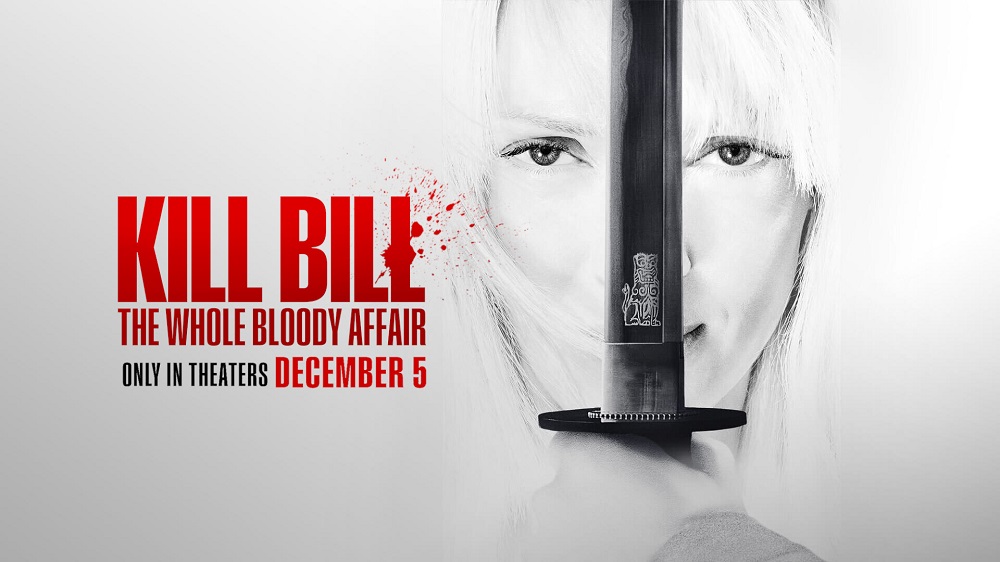
Anything new from Quentin Tarantino is a big deal at my house. When you consider that it’s been over six years since the auteur released his most recent film, ONCE UPON A TIME IN HOLLYWOOD (2019), I was understandably excited when I saw that the full “extended cut” version of the KILL BILL films, dubbed “The Whole Bloody Affair” was being released to theaters. Then, after seeing the trailer, I became really curious about the new scenes that were added, as well as the different presentations of the previous material. When I originally watched the separate volumes at the movie theater in 2003 and 2004, I enjoyed the first movie slightly more than the second based on the fact that it had more action. Now, I wanted to see how the two volumes flowed as one single film. My wife was working this weekend, so I had some time on my hands and decided to spend about four hours of that time watching KILL BILL: THE WHOLE BLOODY AFFAIR.
First, a quick summary of the film… on the eve of her wedding, a pregnant bride-to-be (Uma Thurman) and her entire wedding party is gunned down by the Deadly Viper Assassination Squad, commanded by her former lover, Bill (David Carradine). Somehow surviving the rehearsal massacre, the Bride, who was once a member of the same assassination squad, sets her sights for revenge on each of the members, beginning with O’Ren Ishii (Lucy Liu), and then moving on to Vernita Green (Vivica A. Fox), Budd (Michael Madsen), Elle Driver (Daryl Hannah), and finally Bill himself. It’s a simple premise, but Tarantino uses that premise as a springboard to share his love of kung fu movies, samurai cinema, spaghetti westerns and grind house fare and create something truly special. I loved the KILL BILL films when they were originally released, and the four hours seemed to go by very quickly today as I had a blast watching this definitive version with a relatively full theater of fans.
After watching KILL BILL: THE WHOLE BLOODY AFFAIR, my first thought is that it wouldn’t be that different if the theater just showed Volume One, had a 15-minute intermission, and then showed Volume Two. This isn’t putting down the new version in any way, but there are not a large number of changes that enhance the overall quality of the film itself, and screening the original volumes back-to-back would provide the context for the “big picture” of the story that was lacking when the movies were released in the separate years of 2003 and 2004. With that said, watching the film in this new version was a lot of fun for me, and it should become the norm moving forward as it is truly Tarantino’s vision. It does flow better, mainly by eliminating the unnecessary, late cliffhanger reveal of the daughter in Volume One, as well as the Bride’s “direct to the camera” update at the beginning of Volume Two.
For those who want to go see this new version, I did want to point out the significant differences I noticed while viewing KILL BILL: THE WHOLE BLOODY AFFAIR. The first sequence where I noticed obvious additions to the film occurred in the anime sequence that introduces the background of O’Ren Ishii. This extended version adds additional footage of the Yakuza assassin Pretty Riki to the sequence, and once O’Ren is a slightly older schoolgirl, we get to see her execute a plan of vengeance against him. I would guess somewhere between five and ten minutes of action was added to the sequence. I enjoyed it in Volume One, and I also enjoyed the extended anime sequence in this new version. Does the sequence really add to the overall quality of the film, though? Even though I enjoyed the new material and am glad it was added, I would say no. The next significant difference I noticed with this version concerns the addition of color to the fight sequence between the Bride and the crazy 88’s in the House of Blue Leaves, as compared to the sequence in Volume One that was shown largely in black and white. As a person who doesn’t enjoy a lot of gore in my movies, it never bothered me that the scene switched from color to black and white once the limbs and heads started getting lopped off. With that said, it was kind of fun watching all those limbs hacked off in glorious color this time around. Finally, there is a post-credits animated sequence called “The Lost Chapter: Yuki’s Revenge” where Gogo Yubari’s twin sister tries to get revenge on the Bride. It lasts about ten minutes or so, but honestly, it didn’t add much to the overall experience for me, and I doubt I’ll ever watch it again. As a completist though, I am glad that I stuck around and watched it. These are the only big changes I noticed while watching THE WHOLE BLOODY AFFAIR. I’m sure there had to be some more changes, but I don’t think they were significant.
I did want to share some final thoughts I had while watching KILL BILL: THE WHOLE BLOODY AFFAIR this afternoon. I noticed on the opening title card that the movie is dedicated to the great Japanese director Kinji Fukasaku, and you can definitely see his influence all over this film. It also affected me more watching Michael Madsen’s excellent performance as Bill’s brother Budd. Tarantino just knows how to get the best out of Madsen, and considering that he passed away a few months ago, I just really appreciated his work while watching the film. I also enjoyed the multiple shoutouts to my movie hero Charles Bronson in the film. First, there’s a MR. MAJESTYK poster hanging on the wall in Budd’s trailer that is featured often throughout the various shenanigans and fights that take place in the trailer. Second, Charles Bronson passed away in 2003, the year that Volume One of KILL BILL was released. In the final credits of the film, Bronson receives an RIP credit. I’ve always loved the fact that Tarantino loves Charles Bronson, and that’s on full display in KILL BILL: THE WHOLE BLOODY AFFAIR. I would have given anything if Bronson had been in better health as Tarantino was coming into his own as a filmmaker. I have no doubt that he would have been offered a chance to appear in one of the director’s films.
At the end of the day, I had a great time watching KILL BILL: THE WHOLE BLOODY AFFAIR. The four hours flew by, and I truly appreciated seeing Tarantino’s full vision realized on screen. While I do think this should be the definitive version moving forward, I loved the KILL BILL films before today. THE WHOLE BLOODY AFFAIR improves the overall flow of the film and adds some fun new stuff, but my love for the film didn’t really change that much today… it just runs a tad bit deeper.
To answer my own question, “I am!” I was checking my local movie theater listings for this weekend and came across the showtimes for the release of KILL BILL: THE WHOLE BLOODY AFFAIR, and I must admit I’m pretty excited about it. My wife is working this weekend so I have all Sunday to myself, and watching this Quentin Tarantino classic in a whole new way sounds like a lot of fun.
Check out the trailer below, and if you’re in the Little Rock area, I just may see you there!
Today’s song of the day was not specifically written for the Kill Bill soundtrack but that’s still the film that I’ll always associate it with. Here to help us celebrate Quentin Tarantino’s birthday, it’s Tomoyasu Hotei and Battle Without Honor or Humanity.
4 Or More Shots From 4 Or More Films is just what it says it is, 4 shots from 4 of our favorite films. As opposed to the reviews and recaps that we usually post, 4 Shots From 4 Films lets the visuals do the talking!
Today, the Shattered Lens wishes a happy 61st birthday to director/screenwriter/cultural institution, Quentin Tarantino!
Here are….
4 Shots From 4 Quentin Tarantino Films
Reservoir Dogs (1992, dir by Quentin Tarantino, DP: Andrzej Sekuła)

Jackie Brown (1997, dir by Quentin Tarantino, DP: Guillermo Navarro)
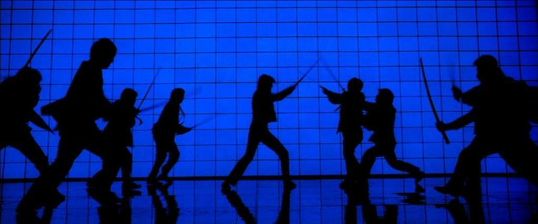
Kill Bill Volume 1 (2003, dir by Quentin Tarantino, DP: Robert Richardson)
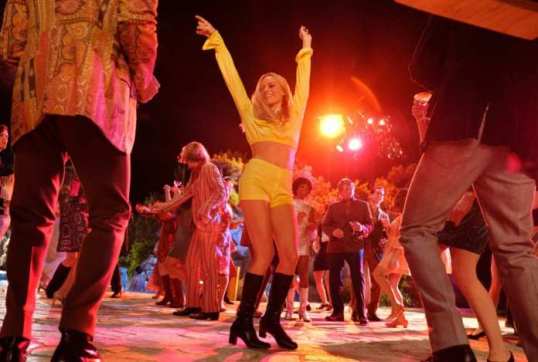
Once Upon A Time In Hollywood (2019, dir by Quentin Tarantino, DP: Robert Richardson)
4 Or More Shots From 4 Or More Films is just what it says it is, 4 shots from 4 of our favorite films. As opposed to the reviews and recaps that we usually post, 4 Shots From 4 Films lets the visuals do the talking!
Today, the Shattered Lens wishes a happy 60th birthday to director/screenwriter/cultural institution, Quentin Tarantino!
Here are….
4 Shots From 4 Quentin Tarantino Films
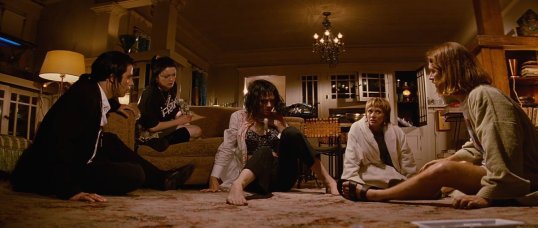
Pulp Fiction (1994, dir by Quentin Tarantino, DP: Andrzej Sekuła)
Kill Bill (2003, dir by Quentin Tarantino, DP: Robert Richardson)
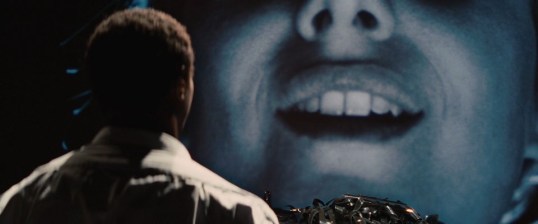
Inglourious Basterds (2009, dir by Quentin Tarantino, DP: Robert Richardson)
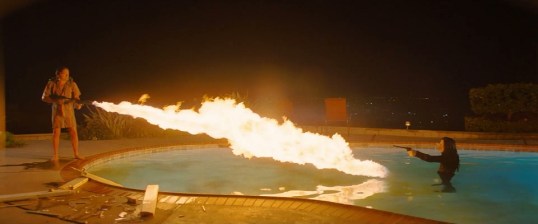
Once Upon A Time In Hollywood (2019, dir by Quentin Tarantino, DP: Robert Richardson)
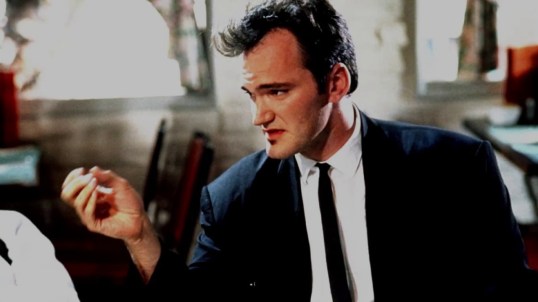
Since Today is Quentin Tarantino’s 57th birthday, I figured this would be a good time to rank the ten films that he’s directed so far!
Please note that I have not included things like Natural Born Killers, True Romance, Four Rooms, Sin City, or those episodes of CSI and ER on the list below. These are just the feature films that Tarantino has directed.
So, without further ado, for worst to best, here are the ten film of Quentin Tarantino:
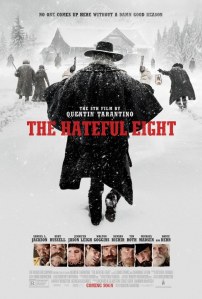
10) The Hateful Eight (2015)
The Hateful Eight is one of those films that people either seem to love or hate. I personally think that it’s the one Tarantino film in which QT truly stepped over the line and became a parody of himself. From the punishing run time to the lengthy “chapters” that went nowhere to the overwritten dialogue that read more like someone trying to write like Tarantino than Tarantino himself, The Hateful Eight is my least favorite of his films. For me, the final straw was when — after already having forced audiences to endure two and half hours of this film — Tarantino stopped the action completely for a totally unnecessary flashback that apparently only existed so Tarantino could work in a Zoe Bell cameo.
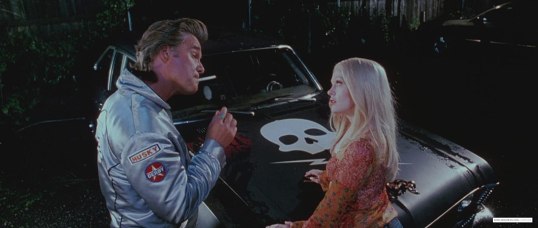
9) Death Proof (2007)
Oh, Death Proof. I really liked Death Proof the first time that I saw it but whenever I’ve tried to rewatch it, it’s been a struggle to get through it. Yes, Kurt Russell is great as Stuntman Mike and, unlike her previously mentioned cameo in The Hateful Eight, Zoe Bell is a welcome addition to Death Proof‘s ensemble. But oh my God, why doesn’t the film just start in Tennessee? Why do we have to suffer through all of that crap in Austin?
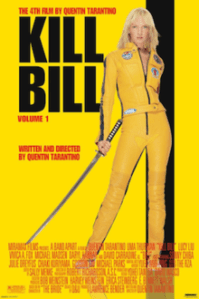
8) Kill Bill: Volume One (2003)
Now, it may seem like I’m ranking the first volume of Kill Bill fairly low on the list but you have to understand that, as far as I’m concerned, Tarantino has only made two bad films. Kill Bill: Volume One is an exciting thriller and it not only features Uma Thurman at her best but it also has some of the best and most energetic fight scenes of all time. If Kill Bill: Volume One seems ranked low, it’s just because it has some truly tough competition to deal with.
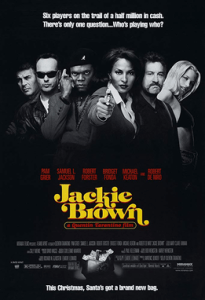
7) Jackie Brown (1997)
The first time I saw Jackie Brown, I thought it was a bit too slow and I guess I didn’t really “get” it. As I’ve gotten older, I’ve come to better appreciate this surprisingly low-key and rather sad film. Jackie Brown features Tarantino in the type of contemplative mood that he wouldn’t really return to until making Once Upon A Time In Hollywood.
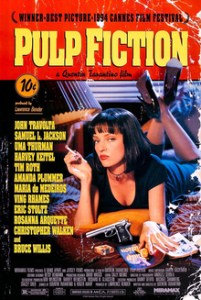
6) Pulp Fiction (1994)
One of the most influential films ever made, Pulp Fiction was not only the first of Tarantino’s first film to be nominated for an Oscar but it was also his first film to truly establish that his filmography takes place in its own separate, pop culture-centered universe. If there’s anything that’s keeping Pulp Fiction from being listed higher, it’s the painfully self-indulgent taxi cab conversation between Bruce Willis and Angela Jones and Quentin Tarantino’s own terrible cameo as Jimmy, the casually racist homeowner. That said, this is still one of the most — if not the most — essential film for the 90s. If you want to understand that decade, you have to watch Pulp Fiction.
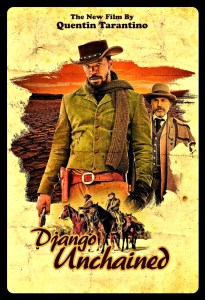
5) Django Unchained (2012)
Despite the fact that it features one of Leonardo Di Caprio’s worst performances (I know I’m the only one who thinks that), Django Unchained is still Tarantino at his most provocative and angry. After decades of Hollywood films that attempts to explain away the history and legacy of slavery or that suggested that racism could easily be overcome, Tarantino and Django stepped up to say, “Fuck that.” While the film received a lot of attention for its violence, I think it revealed that Tarantino is an artist with a conscience. When Christoph Waltz speaks against the evils of slavery, it’s obvious that he’s speaking for Tarantino as well. In much the same fashion of 12 Years A Slave (which would come out a year later), Django Unchained doesn’t flinch away from showing the horrors of slavery.
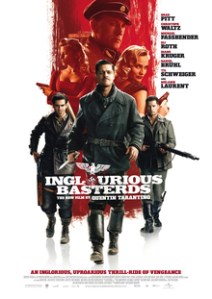
4) Inglourious Basterds (2009)
With Inglourious Basterds, Tarantino showed how art could be used to fix history’s mistakes. In reality, many of the leaders of Nazi Germany escaped justice by committing suicide. In Inglourious Basterds, they get blown away by a group of Jewish soldiers. The film itself features some of Tarantino’s best set pieces and one of his best casts. Despite the film’s length, this is also one of the few Tarantino films where there’s not a single scene that you can look at and say, “Well, that could have been cut.” For once, every minute of the run time is needed to tell the film’s story. Christoph Waltz became the first actor to win an Oscar for appearing in a Tarantino film.
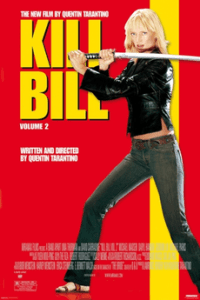
3) Kill Bill: Volume Two (2004)
The Kill Bill saga concludes in grand fashion in Kill Bill: Volume Two. For all of the fights and the violence, this film is more about accepting the consequences of your actions. Uma Thurman and David Carradine give great performances but the heart of the film belongs to poor Michael Madsen, sitting in his trailer and waiting for justice to come and get him. The scene where Thurman digs herself out of her grave is a justifiable classic and the final confrontation between Carradine and Thurman is Tarantino at his best.
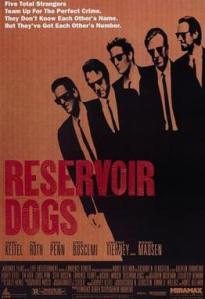
2) Reservoir Dogs (1992)
Tarantino’s debut film is still one of the most exciting and, in it’s way, funniest crime films ever made. Every line is quotable. Every performance is perfect. Every song on the soundtrack is perfectly selected. Who can forget Harvey Keitel’s incoherent scream of pain as he realizes that he’s been betrayed? Personally, I just hope Mr. Pink escaped with the diamonds.
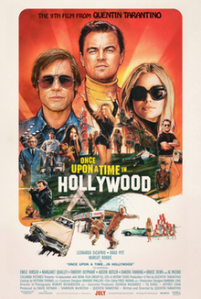
1) Once Upon A Time In Hollywood (2019)
Tarantino’s latest film is also his best, a love letter to the movies and the actors whose legacies live on in his own films. For all the criticism that the film took for Margot Robbie’s lack of dialogue, her performance as Sharon Tate is the perfect epitome of everyone’s fantasy of what Hollywood was like in the years before the Manson murders made everyone lock their doors. Leonardo Di Caprio and Brad Pitt are perfectly cast as Rick and Cliff and the film’s finale may be bloody but, at the same time, it corrected history in much the same way that Inglorious Basterds did. By the end of the film, Rick Dalton knows that he’ll probably never be as big of a star as he could have been but at least he’s made some new friends. He’s been accepted, in much the same way that a somewhat dorky former Hollywood video store clerk was eventually accepted by a film industry that, at first, wasn’t sure what to make of him.
Happy birthday, Quentin Tarantino!


This is not the first time I’ve featured the K-Pop girl group Brown Eyed Girls. Their 2008 song, “Abracadabra,” was featured as a song of the day. It was really that song that first introduced me to K-Pop. While my interest didn’t skyrocket after that song, it did simmer for a few years before I was finally fully on-board.
The latest K-Pop Song of the Day is from B.E.G. and it’s their 2013 single release from their 5th studio album, Black Box. It’s a song titled “Kill Bill” and the song and accompanying music video is a homage to the 2003 Quentin Tarantino grindhouse mash-up. Even the music video literally lifts sequences and camera shots from the film.
Some have called this a loving tribute to the film of the same name which inspired the song. Others have called it a blatant rip-off. No matter which side one is on the song showcases the group’s ability to remain relevant in a music industry that either caters to the cute, bubblegum pop scene or to the overtly sexual (at times way too sexual) aesthetic.
B.E.G. continues to show that they can still bring a more mature visual that toes the line between the two extremes of cute and sexual. This is not to say that the song is just all about the visuals. “Kill Bill” is a catchy tune that shows it’s Western-infused sound of acoustic guitars, bluesy electric guitar riffs and the ever-present whistling of past Spaghetti Western scores.
I’m still feeling a little under the weather so I decided to pick a music video for today that pretty much speaks for itself. As you can probably guess from just watching, this video for Tomoyasu Hotei’s Battle Without Honor or Humanity was released to coincide with the release of the Kill Bill soundtrack.
Though most listeners immediately associate this song with Kill Bill, it was actually originally written for and used in another film, 2000’s New Battles Without Honor or Humanity. As any quick perusal of YouTube will show you, this is not only one of Hotei’s most popular songs but also one that exists in several different version. The video above last for 3 and a half minutes. The version of the song on the Kill Bill soundtrack is a minute shorter. I’ve come across versions on YouTube that last anywhere from 6 to 15 minutes. Regardless which version you use, Battle Without Honor or Humanity is a good stripper song. Just saying.
This is also a song that’s fun to listen to while you’re driving, unless of course you live in a city with really bad traffic and are prone to road rage. If that’s the case, you might want to listen to something a little bit more calming.
Anyway, regardless of how good or bad your morning commute may be, enjoy!
 Through the Shattered Lens