Scenes That I Love: Celebrate International Polar Bear Day With A Classic Scene From Santa Claus Conquers The Martian!


According to my sister, who does a pretty good of keeping track of these things, today is International Polar Bear Day!

So, I figured that I would honor the polar bears by sharing one of my favorite scenes from Santa Claus Conquers The Martians!  Even better, this video comes with a bonus scene, involving a robot named Tor.

Lisa Reviews An Oscar Nominee: The Heiress (dir by William Wyler)


(With the Oscars scheduled to be awarded on March 4th, I have decided to review at least one Oscar-nominated film a day.  These films could be nominees or they could be winners.  They could be from this year’s Oscars or they could be a previous year’s nominee!  We’ll see how things play out.  Today, I take a look at the 1949 best picture nominee, The Heiress!)

“I have been taught by the masters.”

— Catherine Sloper (Olivia De Havilland) in The Heiress (1949)

I’m not going to spoil too much of the ending of The Heiress, beyond saying that those are the words with which Catherine ends the film.  Taken out of context, they may not seem like much.  However, after you’ve spent two hours with Catherine, her father, and the man who claims that he’s in love with her, these are perhaps seven of the most chilling words ever uttered.  When you hear them, you don’t know if you should cheer or be very, very afraid.  Myself, I had both reactions but, then again, I often do.

The Heiress, which is based on a play that’s based on a novel by Henry James, takes place in 19th century New York City.  Austin Sloper (Sir Ralph Richardson) is a widely admired and very successful physician.  He’s also a very cold man, one who has never recovered from the death of his wife.  He lives with his daughter, Catherine (Olivia de Havilland).  Catherine is shy and is continually told that she’s plain and boring.  She’s devoted to her father, though Austin is cruelly manipulative of her.  Catherine, who has never been in a relationship, has pretty much accepted that she’s destined to be alone.

Or, at least, she has until she meets Morris Townsend (Montgomery Clift).

From the first minute that Catherine meets him, Morris seems to be perfect.  He’s handsome.  He’s intelligent.  He’s witty.  He’s charming.  He’s Montgomery Clift, for God’s sake!  For Catherine, it’s love at first sight and Morris says that it’s the same for him.  Suddenly, Catherine’s life no longer revolves around her father.  Now, she dreams of marrying Morris.

Austin isn’t happy about this.  Despite showing his daughter nothing but disdain for most of her life, Austin suddenly become protective of her.  He says that Morris only wants to marry her because she stands to come into a great deal of money.  To prove his point, he announces that, if Catherine and Morris get married, he will disinherit Catherine and neither she nor her husband will ever get their hands on his money.

How will Morris respond to Austin’s threat?  Well, you’ll have to watch the movie to find out and you really should!  The Heiress is a great movie, featuring noirish direction from William Wyler and brilliant performances from by de Havilland, Richardson, and Clift.  Dr. Sloper may be a monster but Richardson plays him with so much authority that it’s hard to dismiss his worries about Morris, no matter how much you may want to.  Montgomery Clift, meanwhile, keeps you guessing about Morris’s intentions.  And, finally, the great Olivia de Havilland deservedly won an Oscar for her performance as Catherine Sloper.  Over the course of the film, Catherine goes from being a withdrawn wallflower to being a … well, I can’t tell you anymore.  I don’t want to spoil the film any more than I already have.  The ending will leave you shaken in the best possible way.

The Heiress was nominated for best picture but lost to All The King’s Men.

Update: The Lullaby movie theatrical release cities


This is an update to my The Lullaby Preview and Review.

Poster

Confirmations of cities offering the limited release for the new supernatural horror film The Lullaby from South African filmmaker Darrel James Roodt (“Sarafina!“), opens March 2, 2018 in the following theaters:

LA – Laemmle Music Hall
NY – Cinema Village
Atlanta – Plaza Theater
Cleveland – Tower City Cinemas
San Francisco – The Roxie
Miami – Cinema Paradiso
Chicago – Facets Cinema
Boston – Apple Cinemas
Dallas – AMC Grapevine 30
Phoenix – AMC Arizona Center 24

The Lullaby also will be available on the same day, March 2, 2018, on VOD.

Credits:

Uncork’d Entertainment presents a Phoenix Film with Valhalla Productions Directed by Darrell James Roodt

You can check out the trailer here:

Playing Catch Up: First Daughter, Ice Girls, Raising The Bar, Walk Like A Man


So, this year I am making a sincere effort to review every film that I see.  I know I say that every year but this time, I really mean it.  Unfortunately, over the past two weeks, real life has interfered with my movie reviewing, if not my move watching.

So, in an effort to catch up, here are four quick reviews of some of the movies that I watched over the past two weeks!

  • First Daughter
  • Released: 2004
  • Directed by Forest Whitaker
  • Starring Katie Holmes, Marc Blucas, Amerie, Michael Keaton, Margaret Colin, Lela Rochon

Michael Keaton as the President of the United States!?  Now, that’s a great idea.  Michael Keaton plays President Mackenzie.  First Daughter was made long before Birdman so Michael Keaton doesn’t really have a huge part but, whenever he does appear, he is totally believable as a world leader.  You buy the idea that this guy could win an election and that he’d probably be a good (if not necessarily a great) President.  Someone really needs to make another movie where Michael Keaton plays the President.  Maybe President Birdman.  Just don’t give it to Inarritu to direct because he’ll make it too political…

Anyway, the majority of the film is about Katie Holmes as the President’s daughter, Samantha.  Samantha has been accepted to a college in California.  She’s excited because it means that she’ll finally be able to have a life outside of the White House.  The President is concerned because he loves his daughter and he knows that, if she makes any mistakes in California, his political opponents will try to use her against him.  Samantha goes off to college and tries to have a good (but rather chaste) time.  Making that somewhat difficult is her secret service entourage.  Fortunately, Samantha meets a guy (Marc Blucas) who loves her for who she is and not because her father is the President.

It’s all pretty silly and shallow but I have to admit that I get nostalgic whenever I see this movie.  Much like From Justin To Kelly, it’s definitely a film from a more innocent and less angry time.  To date, it’s also the last film to be directed by actor Forest Whitaker.

  • Ice Girls
  • Released in 2016
  • Directed by Damian Lee
  • Starring Michaela du Toit, Lara Daans, Arcadia Kendal, Sheila McCarthy, Taylor Hunsley, Shane Harte, Elvis Stojko

Struggling financially, Kelly (Lara Daans) is forced to move back to her hometown and move in with her sister (Sheila McCarthy).  Until she got married and gave up that part of her life, Kelly was once an up-and-coming figure skater.  Fortunately, her daughter, Mattie (Michaela du Toit), has inherited her mother’s talent.  However, a serious injury shook Mattie’s confidence.  Now, she says she doesn’t want to skate anymore.  Still, she’s willing to accept a job from Mercury (Elvis Stojko) at the local rink and it’s not too long before, under Mercury’s guidance, Mattie is skating once again.  Mattie also befriends another skater, Heather (Taylor Hunsley).  Heather happens to be the daughter of Rose (Natasha Henstridge), who was once in love with Kelly’s father…

It sounds like the set-up of a melodramatic Lifetime movie but actually, Ice Girls is a sweet-natured film about two ice skaters, one who has a mother who is too protective and the other who has a mother who is too driven.  In the end, both of them end up skating for themselves and not their mothers and that’s a good message for the film’s target audience of young skate fans.  The majority of the cast is made up of actual ice skaters, so the skating footage is pretty impressive.  It’s a predictable movie but I enjoyed it when I watched it on Netflix.

  • Raising the Bar
  • Released in 2016
  • Directed by Clay Glen
  • Starring Kelli Berglund, Lili Karamalikis, Tess Fowler, Emily Morris, Peta Shannon

I also watched this one on Netflix, a day after I watched Ice Girls.  (I was in an Olympics sort of mood, even though neither film took place at the Olympics.)  Raising the Bar feels a lot like Ice Girls, except that the ice skaters were now gymnasts and instead of relocating to Toronto, the family in Raising the Bar relocates all the way to Australia.  Once in Australia, Kelly (Kelly Johnson) finds the courage to re-enter gymnastics and ends up competing against her former teammates.

Kelly Johnson gives a good performance in the lead role.  Though it may be predictable, Raising the Bar is an effective and sweet-natured family film.  Perhaps the most interesting thing about watching the film was that I quickly found myself rooting against the American team.  Australia all the way!

  • Walk Like A Man
  • Released 1987
  • Directed by Melvin Frank
  • Starring Howie Mandel, Amy Steel, Cloris Leachman, Christopher Lloyd, Colleen Camp, Stephen Elliott, George DiCenzo, John McLiam, Earl Boen

Oh, what sweet Hell is this?

Okay, I’m going to try to explain what happens in this movie.  You’re not going to believe me.  You’re going to think that I’m just making all of this up.  But I swear to a God … this is an actual movie.

When he was a baby, Boba Shand (Howie Mandel) got separated from his family.  His mother and his father assumed that he was gone forever but what they didn’t know was that Bobo was found and raised by a pack of wild dogs.  For twenty years, Bobo lives as a dog.  Then he’s discovered by Penny (Amy Steel), an animal researcher who tries to teach Bobo how to be a human.  However, as time passes, Penny comes to realize that maybe she’s making a mistake trying to change Bobo.  Bobo is innocent and child-like and obsessed with chasing fire engines.  When he has too much to drink, he runs around on all fours.  And … PENNY’S IN LOVE WITH HIM!

Seriously, she’s in love with a man who thinks he’s a dog.

However, Bobo stands to inherit a fortune and his evil brother (Christopher Lloyd) is planning on having him committed.  Penny has to prove that Bobo is human enough to manage his own affairs while also respecting his desire to continue living like a dog.

I’m serious.  This is a real movie.

Anyway, making things even worse is the performance as Howie Mandel.  Mandel has always been a rather needy performer and the role of a man who thinks he’s a dog only serves to bring out his worst instincts.  Remember when Ben Stiller played Simple Jack in Tropical Thunder?  Well, Mandel’s performance is kinda like that only worse.  At one point, Bobo walks up to a mannequin in a mall and says, “I have to go pee pee.  Come with me,” and I nearly threw a shoe at the TV.  Oh my God, it was so bad.

The main problem with Walk Like A Man is that it wants to have it both ways.  It wants to be a wild comedy about Howie Mandel chasing fire engines but it also makes us want to tear up when Penny explains why Bobo should be allowed to live as a dog.

All in all, it’s a really bad movie.  And yes, it does actually exist.

An Olympic Film Review: Blades of Glory (dir by Josh Gordon and Will Speck)


All good things must come to an end and the Winter Olympics have done just that.  Tonight, here in the States, NBC will wrap up their coverage of the Games and they’ll broadcast the Closing Ceremonies.  As NBC tends to do, they’ll pretend that they’re broadcasting live but the truth of the matter is that the Winter Games are over and now we’ll have to wait two years for the far-less exciting Summer Games.

I enjoyed the Winter Olympics this year.  I was one of those obsessive people who would watch all of the recaps at one in the morning.  Medal-wise, Norway dominated with a total of 39 medals.  The United States came in fourth with only 23 medals but that’s still 22 more medals than Latvia got!  (Just kidding, we love you, Latvia!)  Overall, though, it was a pretty good Olympics.

That said, there were a few things missing.

For instance, no one attempted to recreate JFK’s affair with Marilyn Monroe on ice.  I thought that was definitely a missed opportunity.

There weren’t any frantic chase scenes.  No mascots were injured over the course of the Olympics.  I guess we should be happy about that, all things considered.  Still, it’s hard not to feel that this break with Olympic tradition left something lacking in the games.

Finally, none of the skating routines featured the risk of decapitation.  Again, I guess this is a good thing.  I mean, we really don’t want to see anyone lose their head, especially not when the games are being broadcast across the world.  But again, it was hard not to feel that lack of the Iron Lotus was unfortunate.

In short, the Winter Olympics may have been good but they were nothing like the 2007 film, Blades of Glory. 

Blades of Glory tells the story of two very different ice skaters.  Jon Heder is Jimmy McElroy, who was adopted by a hyper-competitive, kinda creepy millionaire (William Fichtner) and practically raised to become a gold medalist.  Will Ferrell is Chazz Michael Michaels, who is a hard-drinking, hard-living, sex addict.  Jimmy is all about technical perfection.  He’s a non-threatening, almost child-like celebrity, the type who has earned himself his own obsessive stalker (Nick Swardson).  Chazz is, on the other hand, is a self-styled rock star, as well as being something of an idiot.  In 2002, when they both tie for the gold, they get into an argument that 1) leads to a mascot getting set on fire, 2) brings shame upon the “World Winter Games,” and 3) leads to them getting banned from men’s single competition.

But, as Jimmy’s stalker figures out, that doesn’t mean that they can’t compete in pair skating!  The former rivals may loathe each other but it’s either that or a future of skating in cheap ice shows and working in retail!  Under the guidance of their burned-out coach (Craig T. Nelson), Jimmy and Chazz learn to work together.  And what better way to win the gold than to do an extremely dangerous maneuver that could potentially lead to one of them losing his head?

However, not everyone is happy to see Chazz and Jimmy return to competition.  The reigning champions — Straz and Fairchild Van Waldenberg (Amy Poehler and Will Arnett, who were still married when they played creepy siblings in this film) — have no intention of allowing themselves to be upstaged.  And if that means using their younger sister (Jenna Fischer) to try to drive a wedge between Chazz and Jimmy, so be it…

So, obviously, Blades of Glory is not a serious look at the world of ice skating.  The plot is really just an excuse to highlight the absurdity of putting people who clearly don’t belong there on the ice.  This is another Will Ferrell comedy where the majority of the laughs come from the absolute dedication that Ferrell brings to playing an almost absurdly stupid human being.  Ferrell has the ability to deliver even the most nonsensical of dialogue with total sincerity and conviction.  In Blades of Glory, he’s well-matched by Jon Heder, who brings his own odd style to the role of Jimmy.  If Ferrell is all about aggressive stupidity, Jon Heder is all about impish stupidity and it becomes surprisingly compelling to see whose stupidity will ultimately win it.

While it never quite reaches the highs of Anchorman, Blades of Glory is still a funny movie.  It made me laugh and that’s always a good thing.

An Olympic Film Review: Personal Best (dir by Robert Towne)


Like all good people, I am currently obsessed with the Olympics.  I was hoping that I would be able to post an Olympic-related film review every day during the games but, unfortunately, regular life got in the way and it didn’t happen.  I’ll try to post what I can today and then, for the rest of this upcoming week, I will be concentrating on reviewing films that have been nominated for best picture.

(Interestingly enough, only one Olympic-related film has been nominated for best picture and I reviewed Chariots of Fire years ago.)

The 1982 film Personal Best is a movie that I recorded off of Cinemax last year, specifically so I could review it during the Winter Games.  That may have been a mistake on that part because Personal Best doesn’t actually deal with the Winter Games.  Though it’s a film about athletes training to compete in the Olympics, they’re all runners, swimmers, and pole vaulters.  In short, they’re all hoping to compete at the Summer Games (which, for my money, are nowhere near as much fun as the Winter Games).  On top of that, no one in Personal Best actually gets to compete at the Olympics.

Of course, that wasn’t how things were supposed to go originally.  While doing research for this review, I discovered that Personal Best had quite a long and somewhat tortured production history.  The directorial debut of the famous (and famously slow) screenwriter Robert Towne, Personal Best was originally meant to showcase athletes preparing for the 1980 Summer Olympics.  However, shortly after production began in 1980, it was announced that the United States would be boycotting the Olympic Games and the script was hastily changed to reflect that fact.  Shortly after the boycott was announced, production was put on hold when the Screen Actors Guild went on strike.  In what the New York Times described as being “a ploy to allow the movie to become an independent production and resume shooting during the strike,” Towne filed a lawsuit against Warner Bros.  The end result of that lawsuit was that David Geffen stepped in and financed the film.

This led to yet another lawsuit, this one filed by Towne against Geffen.  Towne claimed that Geffen forced him to sign a “coerced agreement” that not only lost him the rights to a script he had been working on about Tarzan but also left him dead broke.  Geffen, in that same New York Times article, is quoted as saying, “Robert Towne took a picture budgeted at $7 million – ‘Personal Best’ – and made it incompetently for $16 million,” and that he agreed to take over financing because, ‘no other studio would pick the film up because Robert Towne had spent $5 million, and there wasn’t a coherent scene in the entire movie.”

I know what you’re saying.  “That’s great, Lisa, but what’s the actual film about?”

Personal Best, for the most part, is about bodies in motion.  Oh, don’t get me wrong.  There’s a plot.  Chris Cahill (Mariel Hemingway) is a young runner who hopes to someday compete in the Olympics.  She finds herself torn between following the advice of her lover, Torry (Patrice Donnelly) and the advice of her manipulative coach (Scott Glenn)  and things get even more complicated when she enters into a heterosexual romance with a swimmer named Denny (Kenny Moore).  Both Towne and the film deserve credit for the forthright way that it portrays Chris and Torry’s relationship and also for its unapologetic portrayal of women who are just as competitive and determined to win as men.

But really, the film doesn’t seem to be that concerned with the story that it’s telling.  The film itself is far more interested in the images of professional athletes competing and training.  This is one of those films that is full of slow-motion scenes of people running down tracks and attempting to jump over hurdles.  Most of the cast was made up of actual athletes and Towne’s camera lovingly captures every single ripple of muscle as they move across the screen.  Watching the film, it was hard not to be reminded of the way Leni Reifenstahl fetishized athleticism in Olympia.  This is a film that loves, celebrates, and comes close to worshiping athletes.  That wouldn’t be a problem, except for the fact that the film lingers for so long on those bodies that it’s hard not to eventually get bored with them.  I mean, there’s only so many times you can watch someone jump over a hurdle in slow motion before you don’t care anymore.

And it turns out that, no matter how impressive the athletes may look, you do need to tell a compelling story, especially if, like Personal Best, your film is over two hours long.  As written, Chris Cahill is not particularly likable or even that interesting.  Her life revolves around competition and she really has no other interests.  That may be a realistic portrayal of what it takes to be the best but there’s a reason why most sports biopics are heavily fictionalized.  Chris spends a lot of time getting mad and crying and it gets a little bit old after a while.  Perhaps it would be different if we believed that Chris actually was one of the best runners in the world but the film never quite convinces us.  (It doesn’t help that Mariel Hemingway spends the entire film surrounded by actual track and field athletes.  Hemingway does her best with the role but it’s always easy to tell who is actually an athlete and who is just acting.)  On the other hand, the coach and Torry are far more interesting characters but both of them keep getting pushed to the side.

Personal Best is a film that will be best appreciated by people who are as obsessed with athletics as the film is.

Lisa Reviews An Oscar Nominee: Atlantic City (dir by Louis Malle)


(With the Oscars scheduled to be awarded on March 4th, I have decided to review at least one Oscar-nominated film a day.  These films could be nominees or they could be winners.  They could be from this year’s Oscars or they could be a previous year’s nominee!  We’ll see how things play out.  Today, I take a look at the 1981 best picture nominee, Atlantic City!)

Welcome to Atlantic City, New Jersey!

It’s a city with a storied past and an uncertain future.  It’s a place where old men on street corners can tell you stories about meeting Bugsy Siegel in the lobby of an old hotel that’s just been demolished.  The decrepit remains of old Atlantic City co-exists next to half-completed luxury casinos and hotels.  It’s a place where business deals are celebrated in the Frank Sinatra Suite and where a woman trying to make a very important phone call might find herself being serenaded by Robert Goulet.

It’s also the home of Lou (Burt Lancaster).  From the minute we first see Lou, it’s obvious that he’s a man past his time.  He walks up and down the worst streets of Atlantic City, dressed in a gray suit and trench coat.  With his white mustache and his coolly professional manner, he looks like he belongs in an old movie and not hanging out in his shabby apartment or drinking in the local bar.  When Lou was younger, he was acquainted with all of the big names: Siegel, Luciano, Costello, Lansky.  Of course, he wasn’t ever much of a mobster.  He used to run numbers.  If pressed, he’ll tell some interesting stories but it’s not difficult to tell that he’s lying.  (At one point, it’s mentioned that Lou’s Mafia nickname was Numbnut.)  Now, Lou is an old man.  Much like a condemned Atlantic City hotel, he’ll soon be due for demolition.  He spends most of his time taking care of Grace (Kate Reid), the widow of a mobster.  When he’s not responding to Grace’s demands, he watches his neighbor, Sally (Susan Sarandon).

Sally is originally from Canada.  She came to America looking for a better life and ended up working as a waitress.  Under the strict tutelage of Joseph (Michel Piccoli), Sally is learning how to be a blackjack dealer.  Someday, she hopes that she’ll be able to move out of her apartment and into a communal house on the beach.  Until then, she works hard every day and then returns to her apartment, little realizing that she’s being watched by Lou.

And then David shows up.

David (played by Canadian character actor Robert Joy) is Sally’s estranged husband.  Sally knows that David can’t be trusted but she reluctantly allows him and his pregnant girlfriend (Hollis McLaren) to stay with her for a few days.  David has stolen a large amount of cocaine from the Philadelphia mob.  David wants to sell it but he quickly discovers that no one in Atlantic City is willing to deal with someone who they don’t know.  Fortunately, for David, he runs into Lou.  Lou, looking for a chance to be a real gangster and also wanting a chance to get closer to Sally, agrees to help David sell the cocaine.  Unfortunately, for David, two hit men from Philadelphia have traced him to Atlantic City and are determined to not only get their cocaine back but to also kill David as well.

It may sound like the set up for a standard crime thriller but Atlantic City is actually a thoughtful meditation on getting older, falling in love, and dealing with the fact that things change.  Lou is a relic of the past, looking for one last chance to make his mark before, like the older buildings on the boardwalk, he’s demolished and forgotten about.  Sally and David are the dreamers, hoping to build a future in America.

Louis Malle directs at a leisurely pace.  Those looking for a hyperkinetic gangster film will be disappointed.  There’s only two acts of violence in Atlantic City and Malle presents both of them in a low-key, matter-of-fact fashion.  Instead, Malle focuses on exploring the lives and dreams of the film’s characters and Burt Lancaster rewards that attention with an absolutely outstanding performance as a dignified man who knows his best days are behind him but who still refuses to give in to defeat.  It’s one of Lancaster’s best performances and he was rewarded with an Oscar nomination for best actor.

Atlantic City was nominated for best picture but lost to Chariots of Fire.

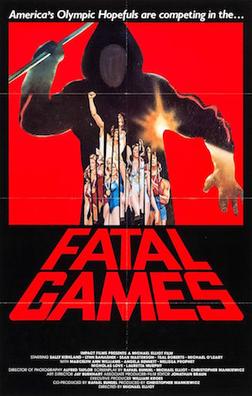
An Olympic Horror Film Review: Fatal Games (dir by Michael Elliot)


Like all good people, I am currently obsessed with the Winter Olympics!  As a result, over the past two weeks, I’ve been watching and reviewing a lot of Olympic-themed films.  Today, I watched the 1984 slasher film, Fatal Games!

If you look at the poster above, you’ll see that Fatal Games was advertised as being a film about “America’s Olympic hopefuls … competing in the Fatal Games!”  That’s kind of true.  The Olympics are frequently mentioned throughout Fatal Games but technically, no one in the movie is actually a member of the Olympic team.  At least not yet.  Instead, they’re all students at a special athletic academy.  Apparently, it’s supposed to be a high school, though we don’t ever see anyone taking a math test or attending English class or anything like that.  Instead, it appears that everyone at the school spends all day practicing gymnastics, swimming, or running.  In fact, it appears that there’s only 20 students at the school and, at most, 5 members of the faculty.  Maybe it’s meant to be like that school that all of the clones attended in Never Let Me Go.  Either that or it’s just an indication that Fatal Games was an extremely low-budget film.

Anyway, seven of the students have just won some sort of regional competition and now they’re getting ready for nationals!  And, if they win at nationals, they’ll get to go to the Olympics.  However, they might not even make it to nationals.  Someone is stalking the blandly likable athletes and using a javelin to pick them off, one-by-one.

Interestingly, it takes people a while to notice that the number of potential Olympians is steadily dwindling.  Instead, people say stuff like, “Hey, have you seen Nancy?”  “Not for a few days.”  “Hey, have you seen Sue Ellen?”  “Didn’t she got to San Francisco to see her boyfriend?”

Well, I guess it’s understandable.  It’s not like anyone in the film is going to school to develop their critical thinking skills.  They’re athletes.  Who cares about all of the people mysteriously disappearing?  They have athletic stuff to worry about!

Fatal Games is pretty much a typical mid-80s slasher.  Interestingly enough, it’s structured like a giallo.  The murderer dresses in black and we get all of the required close-ups of the killer’s gloved hands.  The film introduces several potential suspects but doesn’t reveal the killer’s identity until the final ten minutes.

Is it the overly critical track coach?

Is it the creepy doctor?

Is it the nurse who is worried that the athletes are being injected with too many hormones?  (Obviously, she’s seen Goldengirl.)

Is it the swim coach?

Or is it her girlfriend, the swimmer who didn’t qualify for nationals?

Is it the gymnast whose grades are slipping?

Could it be the other gymnast who is always telling jokes?

Or the runner who has father issues?

Or is it Joe, the token weird guy?

They’re all given a scene or two to establish that they have a potential motive for wanting the seven aspiring Olympians dead.  When the killer and the killer’s motive is finally revealed, it’s so over-the-top and stupid that you can’t help but admire the film for actually going there.  The filmmakers obviously said, “Forget trying to make sense.  WE’RE GOING FOR IT!”

Anyway, the main problem with Fatal Games is that the murderer uses a javelin and, as a result, there’s a lot of scenes of the killer running through narrow school hallways, carrying this goofy-looking javelin.  Don’t get me wrong.  Javelins are sharp and scary and I wouldn’t want one thrown at me.  But still, when someone spends more than five minutes running down a narrow hallway while carrying a javelin, it just looks silly.  Let’s not even think about the logistics of using a javelin to kill someone in broad daylight without anyone else noticing.

That said, as silly and predictable as Fatal Games may have been, there were a few moments of inspired lunacy.  I already mentioned the ending, which is so over-the-top and silly that you can’t help but admire it.  But there’s also a few shots that are genuinely effective.  A scene where the killer suddenly appears in a doorway was handled well.  There’s also an oddly dream-like sequence in which a swimmer practices in the pool, little realizing that the killer is floating underneath her.  How did the killer get in the pool, with the javelin, without anyone noticing?  Who knows?  It’s still an effective scene.

Finally, I have to mention that Fatal Games opens with a song called “Take It All The Way,” which is so generically 80s that it’s oddly brilliant.  It’s almost as good as Graduation Day‘s “The Winner.”

Fatal Games is currently available for viewing on YouTube.

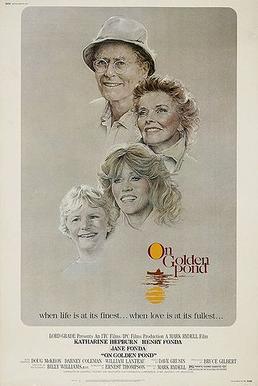
Lisa Reviews An Oscar Nominee: On Golden Pond (dir by Mark Rydell)


(With the Oscars scheduled to be awarded on March 4th, I have decided to review at least one Oscar-nominated film a day.  These films could be nominees or they could be winners.  They could be from this year’s Oscars or they could be a previous year’s nominee!  We’ll see how things play out.  Today, I take a look at the 1981 best picture nominee, On Golden Pond!)

On Golden Pond takes place in a cottage that’s located on a lake called Golden Pond.  Hence, the title.  As far as title’s go, it’s not a bad one.  It’s a film about an elderly couple who spends every summer in that cottage.  They’re in their golden years so I guess it makes sense that they would feel an affinity for Golden Pond.

That said, I think that an even better title for the film would be Everything Annoys Norman.

Norman Thayer, Jr. (Henry Fonda) is a cantankerous old man.  He’s 79 and not particularly looking forward to celebrating his 80th birthday.  He’s a retired college professor.  His wife claims that the last time Norma was really happy was when Franklin Roosevelt was elected president.  Norman likes to fish and still brags about the time he caught a legendary trout named Walter.

What Norman doesn’t like is having to deal with the world.  When he stops to get gas, he loudly complains that, “in his day,” gas only cost eighty-five cents.  When he’s told that there’s another “middle-aged” couple on the lake, he says that, unless he’s going to live to be 150, he’s not middle-aged.  He gets frustrated because his memory isn’t as good as it used to be.  When he goes out for a walk in the woods, he forgets where the path is and he has to return to the house.  Sometimes, he calls people by the wrong name.  At one point, he struggles to use a landline phone.  (I can only imagine how annoyed Norman would be if he was alive today.)  Norman doesn’t like to deal with anyone other than his wife.

Ethel (Katharine Hepburn) is Norman’s wife.  She loves him.  When she hears Norman referred to as being “a son of a bitch,” she replies, “That son of a bitch is my husband.”  Ethel is used to Norman and his ways.  As she puts it, she understands that he’s like a “lion” who has to roar just to remind himself that he still can.  Ethel is … well, basically, she’s Katharine Hepburn.

Ethel has invited their daughter, Chelsea (Jane Fonda), to celebrate Norman’s birthday with them.  Norman and Chelsea have a strained relationship.  It’s implied that Norman was an emotionally distant and overly critical father and that Chelsea has never been able to forgive him.  When she shows up with her new boyfriend, Bill Ray (Dabney Coleman) and his 13 year-old son, Billy Ray (Doug McKeon), Norman barely bothers to acknowledge her.  With Bill and Chelsea planning on vacation in Europe, they ask if Billy can stay at the cottage with Norman and Ethel.  Ethel agrees.  Norman acquiesces.

On Golden Pond is a film that I wanted to like more than I actually did.  After all, the film features two classic actors, Henry Fonda and Katharine Hepburn, appearing in their only film together.  (Both Henry Fonda and Hepburn won Oscars for their work here.)  Henry Fonda gives a good performance as a strong-willed man who is struggling to deal with his own mortality.  As for Hepburn, it’s not a great performance, largely because Ethel is a thinly written role, but she’s Katharine Hepburn so it doesn’t matter.  But almost everything about the film — from the tasteful music to the pretty but not overwhelming cinematography — feels more like something you’d expect to find in a television production instead of a feature film.  On Golden Pond was based on a play and, with almost all of the action set in that cottage, it really doesn’t escape its theatrical origins.  That said, it’s a sweet movie.  The love between Norman and Ethel feels real.  If nothing else, the film gave the great Henry Fonda his only Oscar.

On Golden Pond was nominated for Best Picture but lost to Chariots of Fire.

A Winter Game Film Review: Goon: Last of the Enforcers (dir by Jay Baruchel)


Here at the Shattered Lens, Leonard Wilson is our resident hockey expert.  He can tell you all about the in and outs of the game in general and the New York Rangers in specific.

Myself, I know very little about hockey.  Here’s what I do know:

  1. It’s played on the ice and with a puck.
  2. There are a lot of fights.
  3. All of my Canadian friends love it.
  4. It’s a sport that is mentioned many times on Degrassi.
  5. Two hockey players won the 22nd season of The Amazing Race.
  6. Back in 2011, I followed Arleigh’s suggestion and watched a hockey movie called Goon.  Surprisingly, I really, really liked it.

Six years ago, I started my review of Goon by admitting that I didn’t know anything hockey so not much has changed.  However, while I still may not know much about hockey, I am currently obsessed with the Winter Olympics.  And, of course, hockey is a big part of the Winter Games.  Since I’m currently watching movies about winter sports, today seemed like the perfect time to watch 2016’s Goon: The Last of The Enforcers and get caught up on the story of Doug Glatt.

Who is Doug Glatt?  As played by Seann William Scott, Doug Glatt is probably one of the nicest guys that you could ever hope to meet.  He’s not particularly smart.  He’s the type who responds to almost comment with a slightly confused smile.  He tend to take things literally.  But he’s a genuinely sweet guy and it’s impossible not to like him.

Except, of course, when he’s on the ice.  Doug is a semi-pro hockey player, playing for the Halifax Highlanders.  Even his biggest fans will admit that Doug isn’t the best hockey player of all time.  However, no one can throw a punch like he can.  Doug’s an enforcer.  His specialty is beating up the opposing team.  When his coach (Kim Coates) needs to intimidate the other team, he sends Doug out with orders to beat someone up.  Doug has no problem breaking someone’s nose but he usually apologizes afterward.  He’s known as The Thug.

Doug is married to Eva (Allison Pill), who loves hockey but, now that she’s pregnant, she worries about Doug getting seriously injured.  These worries come true when Doug gets into a fight with Anders Cain (Wyatt Russell), a fearsome enforcer on another team.  (Anders just happens to be the son of the owner of the Highlanders.)  Cain not only leaves Doug crumpled up on the ice but he also injures Doug’s right shoulder, making it difficult for Doug to throw a punch with his right hand.  It appears that Doug’s playing days are over.  Doug ends up working in the storage room of an insurance company while the Highlanders continue on without him.  Adding insult to injury, Anders is soon signed by the Highlanders and given Doug’s old position as team captain.

As much as Doug tries to move on, he keeps finding himself drawn back to hockey.  When he runs into a former rival, Ross Rhea (Liev Schreiber), who is now making a living as a glorified gladiator, Doug realizes that he can learn how to fight with his left fist.  But with Eva not wanting him to fight anymore, Doug is forced to decide which team he’s going to play for, the Highlanders or his family?

Especially when compared to the first Goon, Goon: Last of the Enforcers is an extremely busy film.  Beyond Doug trying to adjust to life off the ice, the film also deals with Anders Cain’s relationship with his father, the locker room shenanigans of the Highlanders, Ross Rhea’s attempt to make a comeback, and the antics of obnoxious sports reporter Chad Bailey (T.J. Miller).  That’s a lot for one film to deal with and it’s not surprising that the end result is an uneven mishmash of raunchy comedy and sports-themed melodrama.  Whereas the first Goon worked because it kept things simple and sincere, Goon: Last of the Enforcers is way too complicated for its own good.

That said, as played by Seann William Scott, Doug is just as likable as he was in the first film and Scott and Allison Pill still make for an adorable couple.  In fact, the entire cast does a pretty good job, especially Wyatt Russell and Liev Schreiber.  The film doesn’t really work but, for fans of the first film, it’s still enjoyable enough.  If nothing else, it’s nice to see how things work out for Doug Glatt.