Playing Catch-Up: Autumn in New York, Griffin & Phoenix, Harry & Son, The Life of David Gale


So, this year I am making a sincere effort to review every film that I see.  I know I say that every year but this time, I really mean it.

So, in an effort to catch up, here are four quick reviews of some of the movies that I watched over the past few weeks!

  • Autumn in New York
  • Released: 2000
  • Directed by Joan Chen
  • Starring Richard Gere, Winona Ryder, Anthony LaPaglia, Elaine Stritch, Vera Farmiga, Sherry Stringfield, Jill Hennessy, J.K. Simmons, Sam Trammell, Mary Beth Hurt

Richard Gere is Will, a fabulously wealthy New Yorker, who has had many girlfriends but who has never been able to find the one.  He owns a restaurant and appears on the cover of New York Magazine.  He loves food because, according to him, “Food is the only beautiful thing that truly nourishes.”

Winona Ryder is Charlotte, a hat designer who is always happy and cheerful and full of life.  She’s the type who dresses up like Emily Dickinson for Christmas and recites poetry to children, though you get the feeling that, if they ever somehow met in real life, Emily would probably get annoyed with Charlotte fairly quickly.  Actually, Charlotte might soon get to meet  Emily because she has one of those rare diseases that kills you in a year while still allowing you to look healthy and beautiful.

One night, Will and Charlotte meet and, together, they solve crimes!

No, actually, they fall in love.  This is one of those films where a young woman teaches an old man how to live again but then promptly dies so it’s not like he actually has to make a huge commitment or anything.  The film does, at least, acknowledge that Will is a lot older than Charlotte but it still doesn’t make it any less weird that Charlotte would want to spend her last year on Earth dealing with a self-centered, emotionally remote man who is old enough to be her father.  (To be honest, when it was revealed that Charlotte was the daughter of a woman who Will had previously dated, I was briefly worried that Autumn in New York was going to take an even stranger turn….)

On the positive side, the films features some pretty shots of New York and there is actually a pretty nice subplot, in which Will tries to connect with the daughter (Vera Farmiga) that he never knew he had.  Maybe if Farmiga and Ryder had switched roles, Autumn in New York would have worked out better.

  • Griffin & Phoenix
  • Released: 2006
  • Directed by Ed Stone
  • Starring Dermot Mulroney, Amanda Peet, Blair Brown, and Sarah Paulson

His name is Henry Griffin (Dermot Mulroney).

Her name is Sarah Phoenix (Amanda Peet).

Because they both have highly symbolic last names, we know that they’re meant to be together.

They both have cancer.  They’ve both been given a year to live.  Of course, they don’t realize that when they first meet and fall in love.  In fact, when Phoenix comes across several books that Griffin has purchased about dealing with being terminally ill, she assumes that Griffin bought them to try to fool her into falling in love with him.  Once they realize that they only have a year to be together, Griffin and Phoenix set out to make every moment count…

It’s a sweet-natured and unabashedly sentimental movie but, unfortunately, Dermot Mulroney and Amanda Peet have little romantic chemistry and the film is never quite as successful at inspiring tears as it should be.  When Mulroney finally allows himself to get mad and deals with his anger by vandalizing a bunch of cars, it’s not a cathartic moment.  Instead, you just find yourself wondering how Mulroney could so easily get away with destroying a stranger’s windshield in broad daylight.

  • Harry & Son
  • Released: 1986
  • Directed by Paul Newman
  • Starring Paul Newman, Robby Benson, Ellen Barkin, Wilford Brimley, Judith Ivey, Ossie Davis, Morgan Freeman, Katherine Borowitz, Maury Chaykin, Joanne Woodward

Morgan Freeman makes an early film appearance in Harry & Son, though his role is a tiny one.  He plays a factory foreman named Siemanowski who, in quick order, gets angry with and then fires a new employee named Howard Keach (Robby Benson).  Howard is the son in Harry & Son and he’s such an annoying character that you’re happy when Freeman shows up and starts yelling at the little twit.  As I said, Freeman’s role is a small one.  Freeman’s only on screen for a few minutes.  But, in that time, he calls Howard an idiot and it’s hard not to feel that he has a point.

Of course, the problem is that we’re not supposed to view Howard as being an idiot.  Instead, we’re supposed to be on Howard’s side.  Howard has ambitions to be the next Ernest Hemingway.  However, his blue-collar father, Harry (Paul Newman, who also directed), demands that Howard get a job.  Maybe, like us, he realizes how silly Howard looks whenever he gets hunched over his typewriter.  (Robby Benson tries to pull off these “deep thought” facial expressions that simply have to be seen to be believed.)  There’s actually two problems with Howard.  First off, we never believe that he could possibly come up with anything worth reading.  Secondly, it’s impossible to believe that Paul Newman could ever be the father of such an annoying little creep.

Harry, of course, has problems of his own.  He’s just lost his construction job.  He’s having to deal with the fact that he’s getting older.  Fortunately, his son introduces him to a nymphomaniac (Judith Ivey).  Eventually, it all ends with moments of triumph and tragedy, as these things often do.

As always, Newman is believable as a blue-collar guy who believes in hard work and cold beer.  The film actually gets off to a good start, with Newman using a wrecking ball to take down an old building.  But then Robby Benson shows up, hunched over that typewriter, and the film just becomes unbearable.  At least Morgan Freeman’s around to yell at the annoying little jerk.

  • The Life of David Gale
  • Released: 2003
  • Directed by Alan Parker
  • Starring Kevin Spacey, Kate Winslet, Laura Linney, Gabriel Mann, Rhona Mitra, Leon Rippy, Matt Craven, Jim Beaver, Melissa McCarthy

For the record, while I won’t shed any tears whenever Dzhokahr Tsarnaev is finally executed, I’m against the death penalty.  I think that once we accept the idea that the state has the right to execute people, it becomes a lot easier to accept the idea that the state has the right to do a lot of other things.  Plus, there’s always the danger of innocent people being sent to die.  The Life of David Gale also claims to be against the death penalty but it’s so obnoxious and self-righteous that I doubt it changed anyone’s mind.

David Gale (Kevin Spacey) used to the head of the philosophy department at the University of Texas.  He used to be a nationally renowned activist against the death penalty.  But then he was arrested for and convicted of the murder of another activist, Constance Harraway (Laura Linney) and now David Gale is sitting on death row himself.  With his execution approaching, journalist Bitsey Bloom (Kate Winslet) is convinced that Gale was framed and she finds herself racing against time to prevent Texas from executing an innocent man…

There’s a lot of things wrong with The Life of David Gale.  First off, it was made during the Bush administration, so the whole film is basically just a hate letter to the state of Texas.  Never have I heard so many inauthentic accents in one film.  Secondly, only in a truly bad movie, can someone have a name like Bitsey Bloom.  Third, the whole film ends with this big twist that makes absolutely no sense and which nearly inspired me to throw a shoe at the TV.

Of course, the main problem with the film is that we’re asked to sympathize with a character played by Kevin Spacey.  Even before Kevin Spacey was revealed to be a sleazy perv, he was never a particularly sympathetic or really even that versatile of an actor.  (Both American Beauty and House of Cards tried to disguise this fact by surrounding him with cartoonish caricatures.)  Spacey’s so snarky and condescending as Gale that, even if he is innocent of murder, it’s hard not to feel that maybe David Gale should be executed for crimes against likability.

Film Review: Tomb Raider (dir by Roar Uthaug)


It seems somewhat appropriate that the new Lara Croft is played by an actress best known for starring in a (very good) movie about artificial intelligence because the latest Tomb Raider film is so generic that it feels as if it could have been written by a robot.

Now, before I get too critical,I should acknowledge that the first 30 minutes of the film is actually a lot of fun.  When we first meet Lara Croft (Alicia Vikander), she’s making her living a bike courier in London.  She delivers food to the hungry, except for when she’s boxing or engaging in bicycle races.  Despite the fact that she comes from a fabulously wealthy family, Lara refuses to accept her inheritance because accepting it would mean acknowledging that her missing father, explorer Richard Croft (Dominic West), is dead.  For those 30 minutes, the film has a fun, kinetic feel to it. As I watched those scenes, I realized that I’d actually be more than happy to watch a full-length film just about people racing around London on bicycles.

(Of course, there’d have to be some dancing, too.  There always has to be dancing.)

But then Kristin Scott-Thomas shows up and informs Lara that, unless she claims her inheritance, Andrew’s estate will be sold off.  At this point, the whole film starts to go downhill.  Naturally, before signing the papers that would declare Andrew to be deceased, Lara stumbles across one final message from her father.  In the message, he asks her to destroy all of his research.  Instead, Lara decides to go to Hong Kong so that she can investigate her father’s disappearance.

(Before she can leave, she has to get money from a pawnbroker who is played, in a rather lengthy cameo, by Nick Frost.  Frost mostly seems to be there so that the audience can go, “Hey, it’s Nick Frost!”)

You can probably already guess everything that happens once Lara arrives in Hong Kong.  It’s hardly a spoiler to inform you that Richard’s not dead and that he’s spent the last few years on an isolated island, trying to prevent the bad guys from tracking down an ancient tomb, one that Richard believes will destroy the world if it’s discovered.  It’s also not a spoiler to tell you that Lara spends a lot of time running through the jungle and trying to escape from collapsing caves.  That’s pretty much what you would expect from a movie called Tomb Raider but, even though the film is presumably giving the audience what they want, it just falls flat.

The problem is that, with the exception of those opening scenes in London, this version of Tomb Raider just isn’t much fun.  As good an actress as she is, Alicia Vikander never really seems comfortable in the role of being an action girl.  Vikander’s great when she’s racing around London and refusing her inheritance but, once she finds herself in the jungle, she just seems lost.  In fact, the only person who seems to be more lost than Alicia Vikander is Walton Goggins, who goes through the motion’s as the film’s villain but who never seems to be that invested in the character one way or the other.  Among the main cast, only Dominic West appears to be enjoying himself.  There’s nothing subtle about West’s performance but that’s exactly what a film like this needs.  Director Roar Uthaug is obviously comfortable with directing action scenes but there’s little of the wit or attention to detail necessary for this film to truly make an impression.

It’s not a terrible movie, don’t get me wrong.  Though it seems like it takes forever for Lara to actually reach it, the tomb is nicely realized and the film features a great score from Junkie XL.  But, ultimately, the most memorable thing about this new Tomb Raider is how forgettable it is.

Spring Break Scenes That I Love: Plane vs Shark from Mega Shark vs. Giant Octopus


Hopefully this doesn’t happen to anyone on their way home from Spring Break.

Or me, on my way home from my vacation.

Travel safely!

From 2009’s Mega Shark vs. Giant Octopus:

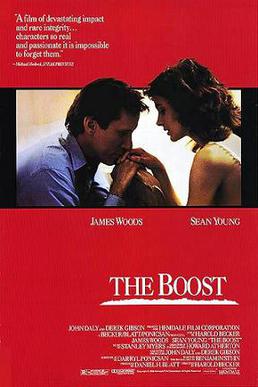
Embracing The Melodrama Part III #8: The Boost (dir by Harold Becker)


Seven days ago, we started embracing the melodrama with my review of No Down Payment, a look at lies and betrayal in suburbia.  Today, we conclude things with 1988’s The Boost, a look at lies, betrayal, and cocaine in California, with the emphasis on cocaine.

From the first minute we meet Lenny Brown (James Woods, at his nerviest best), we assume that he has to be high on something.  He’s a real estate broker and he’s one of those guys who always looks a little bit sleazy no matter how hard he tries otherwise.  His smile is just a little too quick.  He laughs a little bit too eagerly at his own jokes.  He talks constantly, an endless patter of self-serving compliments, nervous jokes, and self-affirming platitudes.  He’s a bundle of nerves but he’s also a brilliant salesman.  We may assume that he’s on coke when we first see him but actually, he doesn’t touch the stuff.  He barely drinks.

Of course, that changes when he’s hired by Max Sherman (Steven Hill).  Max is a philosophical businessman, the type who makes sure that everyone who works for him gets a nice house, a nice car, and several lectures about what’s important in life.  When Max first shows up, it’s tempting to dismiss him as just a self-important businessman but he actually turns out to be a nice guy.  He gives Lenny a ton of good advice.  Unfortunately, Lenny ignores almost all of it.

At first, life is good for Lenny and his wife, Linda (Sean Young).  Lenny is making tons of money, selling houses that can used as a tax shelter or something like that.  (I never understand how any of that stuff works.)  Lenny is making all sorts of new friends, like Joel Miller (John Kapelos) and his wife, Rochelle (Kelle Kerr).  Joel owns four car washes and he’s made a fortune off of them.  All of that money means that he can throw extravagant parties and take nice trips.  It also means that Joel has a never-ending supply of cocaine.  At first, Lenny turns down Joel’s offer of cocaine but eventually he gives in.  At the time, he says that he just needs a little boost.  Soon both Lenny and Linda are addicts.

Of course, nothing goes on forever.  The tax laws change and Max suddenly finds himself out-of-business.  Lenny and Linda lose their house.  They lose their expensive car.  They even lose their private plane.  They end up staying in a tiny apartment.  Lenny says that he can still sell anything and that they’ll be back on top in just a few months.  Of course, even while Lenny is saying this, his main concern is getting more cocaine…

Though dated, The Boost is an effective anti-drug film.  The scene where Lenny overdoses is absolutely harrowing.  Wisely, the film doesn’t deny the fact that cocaine is a lot of fun before you end up losing all of your money and having to move into a cheap apartment with shag carpeting.  It’s a bit like a coke-fueled Days of Wine and Roses, right down to an ending that finds one partner clean and one partner still in the throes of addiction.  James Woods gives a great performance as the self-destructive Lenny, as does Sean Young as his wife and partner in addiction.  And then there’s Steven Hill, providing the voice of gruff wisdom as Max Sherman.  When Max says that he feels that he’s been betrayed, Hill makes you feel as if the entire world has ended.

Speaking of endings, that’s it for this latest installment of Embracing the Melodrama.  I hope you enjoyed this mini-series of reviews and that you will always be willing to embrace the … well, you know.


Embracing The Melodrama Part III #7: True Confessions (dir by Ulu Grosbard)


The 1981 film True Confessions tells many different stories.

It’s a story about Los Angeles.  It’s not necessarily a story about Los Angeles as it exists.  Instead, it’s a story about Los Angeles as we always imagine it.  It’s the late 40s and, having vanquished the Nazis in Europe, men are returning to California and looking for a new life.  Meanwhile, aspiring starlets from across the country flood into Hollywood, looking for stardom.  It’s a city where glitz and ruin exist right next to each other.  It’s the mean streets that were made famous by Raymond Chandler and, decades later, James Ellroy.

It’s a murder mystery, one that is based on one of the most notorious unsolved homicides of all time.  The bisected body of woman named Lois Fazenda has been found in a vacant lot.  When the newspapers discover that Lois was both a prostitute and a Catholic, she becomes known as “the Virgin Tramp.”  One need not have an encyclopedic knowledge of unsolved crimes to recognize that Lois Fazneda is meant to be a stand-in for Elizabeth Short, the tragic and infamous Black Dahlia.

It’s a story about corruption.  Crooked cops.  Rich perverts.  Greedy politicians.  Sinful clergy.  They’re all present and accounted for in True Confessions.  As quickly becomes apparent, Los Angeles is a city where you can do anything as long as you have the money to pay the right people off.

And finally, it’s a film about two brothers.  Tom and Des Spellacy grew up in a strong Irish Catholic family but, as they got older, their lives went in different directions.  Tom (Robert Duvall) became a detective, the type who is willing to cut corners but who, in the end, takes his job seriously.  Des (Robert De Niro) entered the priesthood and is now a monsignor in the Los Angeles diocese.  Des is ambitious and he has a powerful mentor, Cardinal Danaher (Cyril Cusack).

Though Tom and Des have gone their separate ways, they are still linked by Jack Amsterdam (Charles During).  To the public, Jack is a wealthy and respected businessman.  However, Tom and Des both know the truth.  When Tom first joined the department, he worked as a bagman for Jack and he knows that Jack made most of his money through a prostitution ring.  Des know that Jack donates to the Church as way to cover up his own corruption but Des looks the other way.  The Cardinal, after all, wants Jack’s money.

When Tom starts to investigate Lois’s death, it doesn’t take him long to figure out that Jack is probably the one responsible.  Meanwhile, Jack and his lawyer (Ed Flanders) start to pressure Des to convince his brother to let the case go.  Finding justice for Lois Fazneda could mean the end of both Tom and Des’s career.

Based on a novel by John Gregory Dunne, which was adapted into a screenplay by Dunne and Joan Didion, True Confessions is an imperfect but intriguing film.  This is one of Robert Duvall’s best performances and he brings a manic edge to the role that keeps the audience off-balance.  In the role of Jack Amsterdam, Charles Durning is the epitome of casual corruption and Burgess Meredith does a good job as an aging priest.  On the other hand, Robert De Niro seems strangely uncomfortable in the role of Des and you never quite believe that he and Duvall are actually brothers.  Director Ulu Grosbard does a good job of creating a proper noir atmosphere but, at the same time, he denies the audience the dramatic climax to which the film appears to be building up to.

That said, for whatever flaws True Confessions may have, it’s an always watchable and thought-provoking film.

4 Shots From 4 Irish Films: In The Name of the Father, The Butcher Boy, Six Shooter, Calvary


Happy St. Patrick’s Day!

4 Shots From 4 Films

In The Name of the Father (1993, dir by Jim Sheridan)

The Butcher Boy (1997, dir by Neil Jordan)

Six Shooter (2004, dir by Martin McDonagh)

Calvary (2014, dir by John Michael McDonagh)

Lisa’s Way, Way Too Early Oscar Predictions for March


The Oscar (1966, dir by Russell Rouse)

Right now, when it comes to predicting the Oscars, there are two big questions to consider.

First off, will Burden ever find a distributor?  From the reviews in Sundance, it sounds like the type of film that could be embraced by the Academy but, if it can’t get in theaters, it’s not going to get any nominations.

Secondly, will Martin Scorsese’s The Irishman came out in 2019 or 2018?  Right now, Netflix says that The Irishman will be released in 2019 but we all remember what happened with The Wolf of Wall Street.

As of now, I’m going to choose to believe that Burden will get a 2018 release date and that The Irishman will come out in 2019.

I’m also going to chose to believe that Black Panther will be the first “comic book” movie to be nominated for best picture.

Also be sure to check out my predictions for January and February!

Best Picture

At Eternity’s Gate

Black Panther

Boy Erased

Burden

First Man

If Beale Street Could Talk

Mary, Queen of Scots

A Star is Born

Where’d You Go, Bernadette?

Widows

Best Director

Damien Chazelle for First Man

Ryan Coogler for Black Panther

Andrew Heckler for Burden

Barry Jenkins for If Beale Street Could Talk

Josie Rourke for Mary, Queen of Scots

Best Actor

Christian Bale in Backseat

Willem DaFoe in At Eternity’s Gate

Lucas Hedges in Boy Erased

Ryan Gosling in First Man

Garrett Hedlund in Burden

Best Actress

Cate Blanchett in Where’d You Go, Bernadette?

Melissa McCarthy in Can You Ever Forgive Me?

Chloe Grace Moretz in The Miseducation of Cameron Post

Saoirse Ronan in Mary, Queen of Scots

Kristen Stewart in JT LeRoy

Best Supporting Actor

Jeff Bridges in Bad Times at the El Royale

Colman Domingo in If Beale Street Could Talk

Robert Duvall in Widows

Michael B. Jordan in Black Panther

Forest Whiteaker in Burden

Best Supporting Actress

Amy Adams in Backseat

Claire Foy in First Man

Nicole Kidman in Boy Erased

Regina King in If Beale Street Could Talk

Margot Robie in Mary, Queen of Scots

Olivia De Havilland and Friends

Love, Simon – A Review. This Film is a MUST SEE!!!! Rating – A+!


fullsizeoutput_1483-e1516894794929-787x559

“Love, Simon” sometimes films make you exhilarated, cry, and hope because the hero is in physical peril; “Love, Simon” makes you feel those emotions through the agonizingly painful awkwardness of being a teenager and on top of that being gay.   The film has importance as having the first gay lead protagonist in a rom-com.  It’s directed by Greg Berlanti who created the best show I love to watch with dudes getting killed with arrows.

However, without a great story, you’ve got nothing. Simon, luckily, is all of us.  He’s handsome, but is painfully awkward.  This is evident in the first five-minutes when he approaches a handsome landscaper and fumbles all over himself.  These cringeworthy teenage moments happen over and over- just like high school terrible moments.

He’s young, but with a very adult secret and he doesn’t know if his friends today would be his friends tomorrow, if they knew he were gay.  That just sucks.  I don’t normally do this, but I want any readers out there to know that it’s okay to be gay.  You have a right to safety, love, and all of the wonderful things that the world has to offer.  If anyone says differently or uses their religion as a shield or sword for their bigotry against you, you can tell them fuck you right from me!

Back to Simon, he’s struggling with coming out and sees on a blog that someone else is too.  They begin an online correspondence and I prayed that it wasn’t a forty-five year old creepo writing him.  It wasn’t.  Unfortunately, his correspondence is found out by Martin, a fellow student, who threatens to out him, unless he helps set him up with one of his friends.  Martin is a horrible garbage person and is horribly awkward  as well and blunders through his terrible terrible life in the film.

Simon, fearing being outed, complies to Martin’s demand as he tries to discover the identity of his online paramour.  I don’t want to give to much away, BUT in the trailer we learn that Simon either comes out or gets outed.   Yes, he eventually gets outed, but that is as unimportant to the protagonist’s journey as being gay is in real life. It’s just you.  Simon- deals with it and if you’re a small-minded dipshit, you’ll deal with it too! The film proceeds to have many cringeworthy -oh my god,  I’m having teen flashbacks- moments and I’m so glad I’m no longer a teen.

Furthermore, the film could seem hokey or corny to a lot of cynical people that are terrible, homophobic or both.  Honestly, I have to write if you don’t like this film you are per se terrible. I’m not saying that if you gave the movie a C+ you would refuse to make a gay couple a wedding cake, but I bet you would tell there are “Two Sides” bullshit.

The film really goes beyond gay identity just as Simon does.  It is coming of age story where we grow up with simon and realize this is just who he is, but he’s still a kid.  I can tell you that 17 and 18 is still a kid.  My first assignment in the Army I was a lieutenant and had many 18 year olds in my platoon and they had childish interests, were desperate for guidance, and tried many awkward times to get acceptance.  In short, Love, Simon portrays youth accurately and we, like Simon, have to deal.

The film was making a point that these were kids struggling with being grownups and they just weren’t ready.  Adulthood is forced upon us, we don’t get to choose it on our own terms. For me, that’s what Berlanti was trying to say: we have to become adults and deal with our identity because life will force us to do so no matter what.  We don’t choose to be smart, dumb, gay, or straight- it’s just who we are and we have to face it every day because we have to do so.  The film forces us to live through Simon’s awkwardness as he becomes a Man.  Being a grown up sucks, but it doesn’t suck as much as being a teenager.

The film leaves us with uncertainty because that’s what being an adult is.  We have to be ourselves or we can never be free, or as Jennifer Gardner put it heart wrenchingly- you’ll always be holding your breath.

I would recommend that you see this film and then see it again!

Spring Breaks Scenes That I Love: You Are Not A Summer Love From Horror Of Party Beach


The beach is so much fun that even mom and dad can’t stay away!

Actually, the two beachgoers in this film may look like they’re in their 40s but they were only supposed to be teenagers.  That’s just the type of film that 1964’s Horror Of Party Beach is.

Anyway, in this one, the Del-Aires return and perform You Are Not A Summer Love.  It’s meant to be romantic, though you’ll probably laugh before you swoon.  One thing’s for sure.  It’s all very 1964.