Shepard’s Last Dance


Mara_Brooks

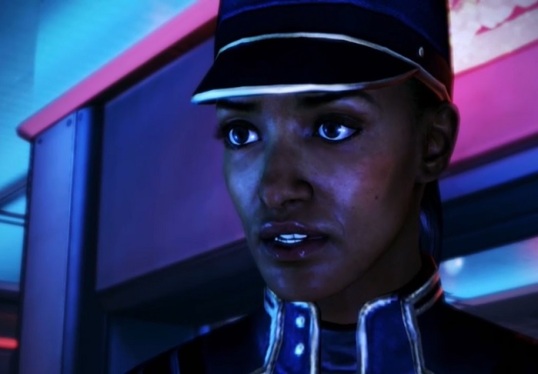
Well, it’s been quite a journey, hasn’t it? We’ve followed Commander Shepard across the years, and across the galaxy, battling against nothing less than our complete annihilation. But there’s one last shot in the chamber, it seems, as a sinister conspiracy seems aimed at killing off the legendary Commander Shepard. Such is the plot of the new Mass Effect 3 “Citadel” DLC, now available for 1200 MS Points.

Note that this review openly discusses details from the original Mass EFfect 3 game. So if you somehow still haven’t played it and still want to, come back and read us later. It’s alright, I won’t be offended.

I know that people have mixed feelings about content DLCs for Mass Effect 3, the ending of which is very definitive. Even with the “best” ending and the added fluff of the “Extended Cut” DLC released last summer, there isn’t anywhere else for Shepard’s story to go after the credits roll. While the “best” ending leaves Shepard’s ultimate fate ambiguous, Bioware has told us that Shepard’s story is over. So what is there to add to the gameplay of Mass Effect 3? I actually think Bioware has done a decent job of addressing this; I enjoyed the “Leviathan” DLC if only for its interesting story reveal. “Return to Omega” is cutting room floor stuff; the conclusion of Aria’s plot arc belonged in the original game, but at least its spot in the Mass Effect story makes sense. But “Citadel”… “Citadel” is one fine DLC. I would have said that the gold standard for Bioware’s DLC before this one was probably “Lair of the Shadow Broker”, which added substantially to my Mass Effect 2 experience, had an interesting plot, and some interesting combats interwoven with some great moments for Liara and Shepard.

“Citadel” is better, and it is better because it honours what has been Mass Effect’s biggest strength all along: the characters. The party interaction. The dialogue. The combat system in Mass Effect 3 is very polished, and it functions very well for what it needs to do, but I would not play Mass Effect 3’s campaign for just the combat sequences. Instead of just fighting through waves of mooks, Shepard finds himself blending into a gala at a casino, blending in at the roulette table and socializing with the who’s who of the Citadel… in between casually shutting down cameras and bypassing security while a companion distracts nettlesome guards. Meanwhile, another companion is sneaking through the ventilation system, all so you can get one single crack at someone who may or may not have answers Shepard wants. It is probably worth noting that this DLC is simply not self-serious in the way that the rest of Mass Effect 3 is. If you feel a shift in tone is dramatically inappropriate, this DLC could rub you the wrong way I suppose.

Things open with orders to put the Normandy in to the Citadel for refits and repairs, where our old friend Admiral Anderson has given over his (ridiculously) swanky Citadel apartment for your use. Anderson does not anticipate ever leaving Earth again; even if he survives the final confrontation with the Reapers, the effort to rebuild Earth is something he knows he can’t walk away from. Once there, you end up meeting Joker for sushi in a highly exclusive restaurant on the Citadel. Things go south soon after, and Shepard is forced to deal with yet another problem dragging him away from the master situation of the Reapers. Things culminate in what could possibly be the most difficult combat in the game (about which I will reveal nothing at all; better that way). I found that I didn’t mind.

The thing about “Citadel” is that it’s genuinely lighthearted and funny, with razor-sharp writing. It’s a remarkably refreshing detour from the otherwise dour tone of Mass Effect 3. The game’s tone is, largely, completely warranted… but this DLC provides a break from the agonizing struggle of the war that the original game really, for the most part, lacked. Combat sequences breezed by in a frenzy of faced-paced action and constant party banter, making me think fondly on the constant party interactions from Dragon Age II. The respites between the action sequences are more of the same. Granted, just shoving characters into the setting of Shepard’s ultra-unbelievably-luxurious-swanky Citadel apartment doesn’t feel as organic as another scenario might… but gathering party members on the Normandy is a bit of a contrivance as well, isn’t it? Let’s give Bioware a pass here. They try hard to get your old squad members involved. Tons of characters return from the previous games, offering them more screen time than they otherwise received in Mass Effect 3… including the opportunity to once again use fan-favourite Wrex as a squad member (really, what’s a squad without a Krogan?)

If you’re still angry about Mass Effect 3’s ending, after all of the time, discussion, and the “Extended Cut” DLC (and, if you are, I certainly don’t blame you – it was a travesty) then you may not find the send-off this DLC gives to the characters and the scenario any more satisfying… but, on the other hand, you might. I thought it was a nice fan-service sort of addition to the Mass Effect canon, and a fun adventure besides. Incidentally, this DLC occupied me for at least three hours so far, and I haven’t gone through everything it offers. You should make your own decisions on whether it is priced fairly based on this.
What I Played Today: Mass Effect 3: Leviathan!


Technically, I played it yesterday.

So, remember how everyone hated the ending to that highly anticipated, trilogy-culminating, pre-order bonanza of a FPS RPG called Mass Effect 3? I do. Later, when Bioware got around to releasing an expanded and updated ending, it seems like only about half of the original ME3 crowd came back to see it. Part of it might have just been exhaustion over the whole ME3 ending saga – it was mostly fatigue that kept me from running to my XBox to plunge into the depths of the new ending. I suspect others are sticking to their guns; they heard that the “new” ending isn’t really new at all, just an expansion on existing events and themes. So they’re not interested. The Indoctrination crowd didn’t find much to love in the new ending, so diehards of that theory or whatever… probably didn’t need to rush back to see things unfold.

Others I suspect are in a third camp. They want an excuse to play the game again, but they don’t really feel like doing Chronos Station and Earth. At least, not as a standalone. It’s not like those missions were some glowing paragon of what ME3 could be. All of the heavy stuff happens earlier, and Earth doesn’t have the fun factor that the final assault on the Collector Base did. It’s kind of a long slog, when you get right down to it. In fact, the whole game is pretty heavy, and I’m not sure it bears back-to-back play-throughs with as much grace as the previous installments did. I, at least, noted Mass Effect lover and apologist, have completed Mass Effect and Mass Effect 2 probably a dozen times each. I have completed Mass Effect 3 once. Just once. I continued to play the multiplayer occasionally, keep that readiness nice and blue, and waited patiently for a time when I would feel the urge to play the game once again.

It turns out that the urge returned when BioWare finally dropped their first single player content DLC: Leviathan.

Leviathan starts with the story of a man named Dr. Bryson, a scientist on the Citadel who is investigating celestial phenomenae. Specifically, he is rooting around through old monster legends and other such seeming nonsense for any kind of clues that might have survived from a previous cycle about the Reapers. In the course of this research he discovered something that is – potentially – even more interesting… an artifact that is linked to a space monster they’ve dubbed ‘Leviathan’. A creature so powerful that it was capable of downing a Reaper in single combat. Something that seems impossible. But, Bryson does have this weird glowy artifact, and he seems pretty sure… and, since we’re completely desperate for even the tiniest possible edges at this point in our seemingly unwinnable battle against extermination… I eventually acceded that it was probably worth tracking down Bryson’s assistant, who went to an asteroid mining facility in order to follow up on a possible second artifact. Needless to say, hilarity ensues, and Shepard embarks on several missions, broken up by return visits to the lab for analysis, before the climactic scene on an eerie ocean planet about which the less I say, the better.

In terms of DLC, Leviathan is no Lair of the Shadow Broker. While it does appreciably expand on some story elements of Mass Effect 3 (specifically, you gain some fun information about the Reapers. This DLC answered one of my most irritatingly nagging questions about the background of the Reapers. Fun!) and it provides a handful of fun missions – the ocean planet, it’s worth stating, is a gorgeous backdrop for the mission that takes place there – it lacks the character driven tension of Lair. I would put it more on par with the “Arrival” DLC for ME2. You don’t have much reason to get invested in the new characters you meet, and so they feel disposable in a way the core cast never would have. That having been said, I don’t know how many of you returned to ME2 to complete Arrival, but I felt it was a well-spent $10, and I feel the same way about Leviathan. It has a good atmosphere, a couple of cool weapons and new modifications for your gun toting pleasure, and a very impactful revelation at the end.

Incidentally, if you have any interest in ME3 single player DLC at all, there’s extra incentive to acquire Leviathan. Fan interest has seemed much less driven for ME3 DLC than in previous titles… presumably because the ending to the game is as final as it is. Shepard’s story can’t continue, it can only expand.

On Special: 4 DLCs


Micro-transactions… are the future. In the future, the principle game will be less important than it even now is. We’ve already learned to expect from pioneers in the DLC field like BioWare that a retail game may be half of what it ends up being… and not through the antiquated idea of a full expansion (although those are still nice and profitable too, I’m sure) but rather through add-ons. DLC. Updates. Extras. Once we’re paying for little tidbits to enhance the game we’ve already paid full retail for, we are just walking, talking wallets for the developer.

In a way? This is actually a good thing. We can expect more content to be established over time and to bridge the gap from release to release. Does this seem lazier, and a way to push retail titles out faster? Unquestionably. However, even with full eyes-wide-open knowledge that I’m being exploited somehow… I’d earnestly rather be able to download and play a few new scenarios over the course of a year that eventually complete the game I had purchased… rather than finishing a more-complete-at-retail-launch game… and having nothing to play for a year.

Unfortunately, I think the developers realized this even before I did… and it led them to release games that weren’t even ready to go, reasoning that they could be completed later. Still, the idea of rushed production isn’t new. Let’s take the example that I’m sure some of us are still angry about… Knights of the Old Republic II. Obsidian’s sequel offering to the critically acclaimed original threatened to be better than BioWare’s classic original in literally every way. We had more characters, more sophisticated interactions, a more diversified playing field in terms of character customization as well as available items. We threatened to go to more places, more diverse locales, and places not quite so stubbornly grounded in the Star Wars trilogy canon. In short, the game threatened to be an all-time great. Oh, except that a third of the content was cut before release. It was released with roughly ten trillion bugs. It was released, in short, because the producers wanted to make money for Christmas… rather than put out a game that would endure even through 2011.

But if Knights of the Old Republic II were released in 2011… we would have gotten the HK factory. It would have been a $5 (U.S.) add-on, but we would have gotten it. We would have gotten patches and updates to make the game stable and play-able so that we could have gotten the HK factory. So that we could have gotten the Sith Academy. Or whatever else cut content we found ourselves to be lacking.

Given that I was going to buy Knights of the Old Republic II either way… and given that I’m going to buy incomplete DLC-driven money-grubbing games today… I guess I’ve just accepted, at this point, the inevitability of DLC and micro-transactions in general. If I can spend $5 at a time for some cool add-on, I do it almost without thinking. At least, for my favourite games. If the retail release is garbage, I’ll never think about it again. So I suppose that’s the line that developers have to walk in this brave new world. Make it good enough that I’m willing to play it on-and-off for a year. This will keep the game always in my head, so I’m already thinking about the sequel… and it will keep me happy, so that I don’t write scathing reviews about your product.

Phew. Rant over. Alright, here’s something that might potentially become a regular feature for me. Four (or more, but this time, four) DLCs or add-ons I played recently. My impressions, whether they were worth the money I shelled out, and what they did to the overall game. These are, in this case, in no particular order, but I did include the launch DLC for Dragon Age II… just because.

Jill Valentine / Shuma Gorath – Additional Characters for Marvel vs. Capcom 3 – It’s been two weeks (or more?) and I still earnestly can’t believe what I paid for these characters. As anyone could have guessed (and, really, since these two at least were in the game files anyway, it didn’t take a savant to anticipate) the first ‘major’ DLC for MvC3 is the addition of fan-favourites from MvC2. Unfortunately for my wallet, the idea of being able to use Jill Valentine and Shuma Gorath again somehow justified the cost. Given that these add-ons were basically unlocks (costing me roughly 100 KB of space on my XBox 360’s hard drive) and not new content at all, I’m extremely unimpressed with their addition. Couldn’t I have gotten this as a bonus for pre-ordering? I already forgave developers for adding cut content on later as DLC packs, but I feel like this reaches a point where content is deliberately cut in order to make a few extra dollars. Are video games not enough of a growth industry? I’ve got an idea – make a better game. Sell me a half dozen characters as an add-on, not two individual ones each of which cost me a few bucks. As much as it pains me, I really can’t discourage this DLC enough. What a disappointment!

The Golems of Amgarrak – Add-on Scenario to Dragon Age: Origins – I reviewed this just today, so I won’t spend a ton of time on it. Considering its cost, and how much I enjoyed the original game, I can’t say that I regretted this purchase. After playing it, I’m sternly disapproving of the marketing of this DLC as some kind of super ultimate difficult challenge. I thought the Emerald and Ruby Weapons in Final Fantasy VII were harder… and they were literally just a matter of patience in game-play. And fine, say what you will, that in a game that allows tactical thinking you can’t make a challenge that is difficult for everyone yet also possible for everyone… but don’t try to tell people who really enjoyed the tactical combat of Origins and were hoping for more just how hard Golems would be. Because it wasn’t.

Arrival – Add-on Scenario to Mass Effect 2 – Very much following in the vein of the Overlord DLC, we are treated to what is ultimately an elongated single mission. For this scenario, we have Commander Shepard rolling solo, and the scenario is quite a bit more challenging than normal – mostly as a result of this solo-Shepard format. However, I can’t argue with the scenario design, which is fun to play through. The DLC is about the average BioWare-single-scenario-add-on length… but yet again, the marketing let me to expect something that I don’t feel like I got. Arrival didn’t do much to bridge ME2 and ME3 for me. Now, of course, I’ve envisioned scenarios in which it stands as a direct bridge, but the DLC still felt a little lazy to me… and not something that profoundly changes the way I felt about the setting. I was earnestly disappointed after the DLC that we’d received from the ME2 team in the past, with Shadow Broker, Kasumi’s Stolen Memory, and Project Overlord all head-and-shoulders above this offering. Still, it was fun, and if you’re hungry for a re-visit to ME2, Arrival isn’t a terrible choice.

The Black Emporium / The Exiled Prince – Launch DLC for Dragon Age IIAs a pleased pre-order customer of this game, I received both of these DLC packs via the usual unwieldy 4957 digit prize code entry which gave me permission to spend twenty minutes downloading add-on content for my launch copy of Dragon Age II. My fundamental issues with the format aside, I’m reasonably happy with the fact that I got these add-ons for free. The Black Emporium is little more than a curiousity, despite its potential. Its existence provides a solid jump to your Hawke in the early stages of the game, but you earnestly may never visit the in-game Emporium more than once… maybe twice.

As for the Exiled Prince… it was actually a very strong DLC. I may not have liked Sebastian Vael as much as I liked the game’s stock companions, but he has a very complete role in the story. He’s interwoven with elements of the plot, with events from the previous game, and with the most important underlying themes of Dragon Age II. He feels like an integral part of the story if you take the time to do each of his plot scenarios and speak with him when the opportunity is given. Of course, as is common with this game, the overall sheen of Exiled Prince is marred by the bugs it launched with. Most notable amongst them? Not being able to earn achievements from the DLC. I don’t mean to sound overly critical… but this is just unacceptable, particularly for customers who would have purchased this add-on after market, not received it for free with a pre-ordered copy.