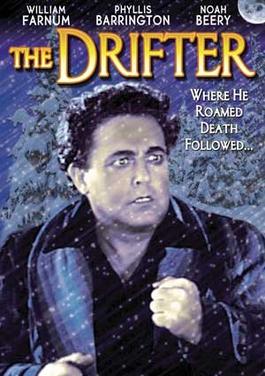
The Drifter (1932, directed by William A. O’Connor)


“This town ain’t big enough for the both of us.”

This line, which has been recycled in so many western parodies, is actually used seriously in The Drifter, a forgotten western from the pre-code era.  The line is delivered by Montana (Russell Hopton) and he’s speaking to a mysterious character known only as The Drifter (William Farnum).

The Drifter is a French-Canadian who has spent decades searching for his lost-lost brother but who is now ready to go into town, get work as a logger, and hopefully find a woman to marry.  Along with a mysterious man who is named Whitey and who is played by Charles Sellon, The Drifter is hired to work for local lumber magnate, John McNary (Noah Beery).  The Drifter impresses everyone with his good hearted ways and he falls in love with McNary’s daughter, Bonnie (Phyllis Barrington).  Unfortunately, Phyllis is already dating Paul LaTour (Bruce Warren), who is her father’s main business rival.  But before The Drifter can concentrate on winning Phyllis away from LaTour and also solving the mystery of his own missing family, he has to deal with the most dangerous man in town, Montana.  As Montana puts it, the town’s not big enough for both him and The Drifter.

The Drifter‘s story is potentially interesting but the low-budget, the shoddy production values, and a slow pace all conspire to do the film in.  This was one of the countless western programmers that was produced in the early 30s.  Like many of the other poverty row productions of the era, it starred an actor who had been huge during the silent era but who struggled to find work during the early years of the sound era.  William Farnum started as a stage actor and as a protegee to Edwin Booth, who was largely considered to be America’s finest stage actor even if he was forever tainted by being the brother of presidential assassin John Wilkes Booth.  Farnum’s very theatrical style of acting made him perfect for both Broadway and for the silent film era, a time when actors had to use big movements and dramatic facial expressions in order to convey their emotions.  When the sound era came along, Farnum’s style was suddenly no longer in vogue and, unfortunately, it took him a while to adjust to working with sound.  Even in a sound film like The Drifter where he had dialogue, Farnum gives the type of overly theatrical performance that was more common during the silent era.  What’s interesting is that Farnum’s performance actually works for the character of The Drifter, who is meant to be an outsider who struggles to communicate with other people.  Despite some implausible twists at the end, the rest of The Drifter isn’t as interesting.

Farnum eventually did adjust to the sound era and he became a respected character actor, playing many captains and many judges.  In 1953, when he died at the age of 76, Hollywood turned out to pay their respects.  Cecil B. DeMille and Paramount Picture co-founder Jesse B. Lasky served as pallbearers.
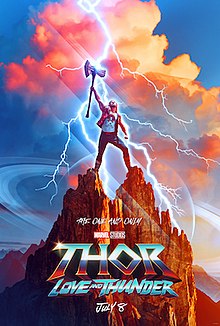
Here’s The Teaser For Thor: Love and Thunder


Thor is one of the more remarkable success stories of the MCU.

He started out as the kind of boring super hero whose origin didn’t make much sense and who felt a bit out-of-place with the other Avengers.  (It was always funny to him how quickly they all were to accept the fact that Norse mythology was based on reality.)  But, thanks to director Taika Waititi and actor Chris Hemsworth, he’s been transformed into one of the most beloved characters in the MCU.  Waititi and Hemsworth both realized Thor was a ludicrous character and the best way to handle that would be to embrace the silliness of it all.

That was the approach that they took with Thor: Ragnarok and it appears to be the same approach they’ll be taking with Thor: Love and Thunder.  And, of course, Chris Pratt and the Guardians of the Galaxy are the perfect people to help them do that!

Here’s the teaser for Thor: Love and Thunder!

Hell-Fire Austin (1932, directed by Forrest Sheldon)


Having just gotten out of the army after serving in World War I, Bouncer (Nat Pendleton) and his friend, “Hell-Fire” Austin (Ken Maynard), head out to find their fortune in the west.  Austin claims that he’s an old west legend but, despite his claims, he still can’t get away with not paying his bill at a local café.  Austin and Bouncer are arrested and sentenced to work on a chain gang.

Times are tough but they start to look up when businessman Mark Edmonds (Alan Roscoe) arranges for them to be set free, on the condition that they train his horse and then ride it to victory in an upcoming race.  Edmonds wants the ranch that’s owned by Judy Brooks (Ivy Merton) and, in order to get it, he has to make sure that her horse, Tarzan, doesn’t win the race and the prize money that comes with it.  The only problem with the plan is that Austin likes Tarzan and he’s a little partial to Judy as well.

Hell-Fire Austin is an amusing film.  Like many of  the early western stars, Ken Maynard was a former rodeo star who turned to the movies and he looked authentic jumping on and riding a horse.  In Hell-Fire Austin, he and Nat Pendleton are a good comedy team, playing off of each other as only two friends who have been through both war and prison could.  The comedy comes less from what they say and more from their attitude towards each other.  They’re stuck with each other, no matter how much they might wish differently.  Hell-Fire Austin is an extremely simple movie but fans of the genre should enjoy it.  It’s post-World War I setting adds an extra element of meaning to the story, with Austin and Bouncer standing in for all the soldiers who, having seen terrible fighting in Europe, were now back in America and wondering what to do with their rest of their lives.  Austin and Bouncer had west, hoping to find a life like the one they’ve seen in the movies.  They find it but, of course, they have to go to prison first.

Ken Maynard was an actor who probably could have been nicknamed “Hell Fire” himself.  He was a big star in the early days of Hollywood but his reputation for drinking too much and being egotistical and temperamental sabotaged his career and he ended up back where he began, doing rodeo tricks for Ringling Bros.  He spent his last years living in a trailer, nearly forgotten and selling “memorabilia” that later turned out to be fake, a sad ending for an authentic cowboy.

Law of the Rio Grande (1931, directed by Forrest Sheldon)


I nearly didn’t review Law of the Rio Grande.

First, the only copies I could find were at the Internet Archive and on YouTube.  The available copies run 48 minutes but according to the IMDb, Law of the Rio Grande originally had a 57-minute run time.  If that number is correct, that means that the versions on the Internet Archive and YouTube are missing 9 minutes.  Since there doesn’t appear to have been anything objectionable in the film (this is a 1931 b-western, after all), I’m going to guess that the 9-minutes were probably cut when the movie started playing on television in the 50s.  That is something that happened to a lot of the old western programmers.  Television was quick to buy them because they were cheap and they made for appropriate children’s programming but the movies were always edited for time and often, the original versions were lost.

Secondly, edited or not, Law of the Rio Grande is not very good.  It was made, for a very low-budget, by Syndicate Pictures, a poverty row studio.  The majority of the cast was made up of actors who had found success in the silent era but who never made the adjustment to the sound era.  Though the actors have the right look to play cowboys, none of them know how to actually make dialogue sound convincing.  There’s also a persistent sound of crackling static in the background of most of the scenes.  I don’t know if that’s the fault of the film or if it’s just a bad upload but it’s obvious that the cast and crew of Law of the Rio Grande were not used to working with sound.

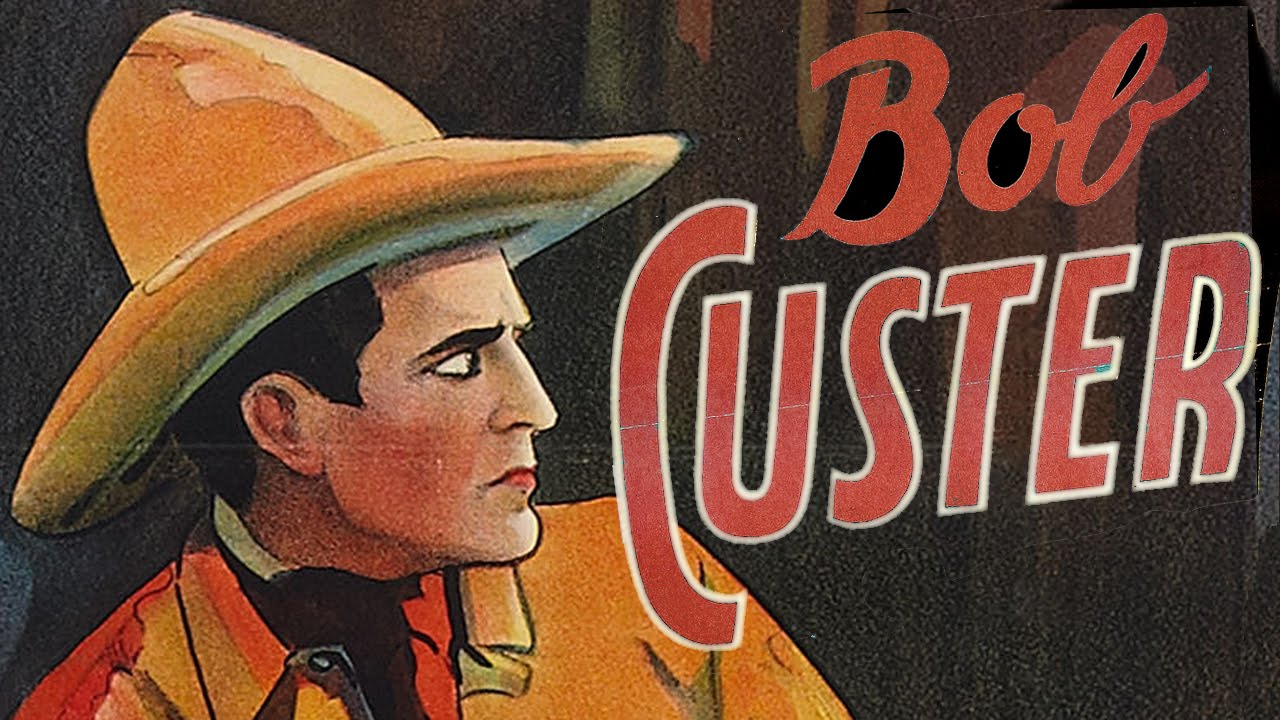
Despite the film’s title, the Rio Grande was nowhere to be seen in the version that I saw.  Instead, the film is about two outlaws, Jim (Bob Custer) and Cookie (Harry Todd), who are determined to go straight.  Jim and Cookie end up working for Colonel Lanning (Carlton S. King) and his daughter, Judy (Betty Mack).  But then a former acquaintance known as the Blanco Kid (Edmund Cobb) shows up and threatens to reveal the truth about Jim’s background.  It’s a typical western programmer, with the main message being you can’t escape your past but you can beat it up in a fair fight.

The kids probably loved it in 1931.  Today, it’s mostly interesting as an example of one of Bob Custer’s final films.  Custer was a legitimate rodeo star who went to Hollywood during the silent era and who had a lot of success because he looked authentic jumping on a horse.  Like many silent era stars, he didn’t have to actually recite or even know his lines.  He just had to be himself.  Unfortunately, the sound era destroyed his career because, while he may have looked like a character from the old west, he didn’t sound like one.  Unable to find work at the major studios, Custer ended up making movies like this one for studios like Syndicate Pictures.  He retired from acting in 1936 and went on to become a building inspector for city of Los Angeles.  It turned out that he was a better engineer than he wan actor and eventually, he named Chief Building Inspector for the city of Newport Beach, California.  He passed away in 1974, nearly forty years after starring in his final film.  He was 76 years old.

The Hard Hombre (1931, directed by Otto Brower)


In this short and comedic western, Hoot Gibson plays a cowboy who is so mild-mannered that his nickname is Peaceful.  William “Peaceful” Patton is such a pacifist that he’s even named after the first Quaker, William Penn.  When the movie starts, a group of cowboys are shooting at each other from opposite sides of a ravine.  Patton rides into the middle of the fight and tells them to put down their guns and settle things peacefully.  Everyone ignores him.

Patton has gotten a job in a neighboring town, working on the ranch of Senora Martini (Lina Basquette).  Leaving behind his beloved mother (Jessie Arnold), Patton heads to the Martini ranch and he discovers that everyone is scared to death of him.  That’s because Patton looks just like a notorious outlaw known as The Hard Hombre.  The Hard Hombre has killed a man for every year that he’s been alive.  Realizing that he can use this to bring peace to the town and to help Senora Martini get her cattle back from rival rancher Joe Barlowe (G. Raymond Nye), Patton pretends to be the Hard Hombre.

Soon, everyone in town is getting along and Senora Martini has fallen in love with the man that she thinks is the Hard Hombre.  But then, the Hard Hombre actually does show up in town!  Even worse, Peaceful’s mother also shows up and wants to know why everyone thinks her son is a killer!

With a 64 minute running time, this low-budget programmer isn’t bad.  It pokes fun at every western cliché, showing that even in the early days of Hollywood, the conventions of the western were already set in stone.  The film gets a surprising amount of comedic mileage from people acting scared of the mild-looking and acting Hoot Gibson.  Gibson was one of the earliest western stars, playing heroes who used their wits and who rarely carried a gun.  Appearing in a film for a poverty row studio was a step down for Gibson but his casting still pays off in That Hard Hombre and he gives a good performance as a cowboy who just wants everyone to get along and to make his mother proud.

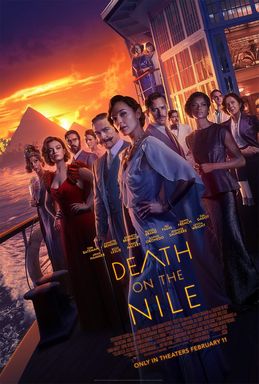
Film Review: Death on the Nile (dir by Kenneth Branagh)


The main mystery at the heart of Kenneth Branagh’s adaption of Agatha Christie’s Death on the Nile is not who committed the film’s murders but just how seriously we, the audience, are meant to take what we’re watching.

In this much-delayed (by COVID and a cast full of actors who could not escape personal scandal) follow-up to 2017’s Murder on the Orient Express, Kenneth Branagh again plays the eccentric detective Hercule Poirot.  Poirot is again in an exotic land, this time Egypt.  And again, circumstances have conspired to isolate him and a group of wealthy and glamorous suspects from the rest of the world.  In Murder on the Orient Express, everyone was stuck on a train.  Here, they are stuck on a boat.  Admittedly, the boat provides a nice view of the pyramids but, eventually, even those testaments to engineering seem to be mocking the people stuck on the boat.  The pyramids, after all, have survived for centuries.  The same cannot be said for the people who have come to see them.  Over the course of the film, there are several murders.  (Indeed, Death on the Nile is significantly bloodier than Murder on the Orient Express and, unlike what happened on the Orient Express, the majority of the victims have done nothing to deserve their grisly fate.)  Like Murder on the Orient Express, Death on the Nile is based on a novel by Agatha Christie.  Branagh changes a few details from Christie’s novel, which is understandable since it’s important to keep the audience guessing.  For instance, Bouc (Tom Bateman), who was Poirot’s assistant in Murder on the Orient Express, returns in Branagh’s film version and provides some continuity between the two films.  It also provides a nice side-mystery as the audience tries to figure out how Poirot and Bouc could just happen to run into each other in Egypt.  Fear not, the film offers up a solution.

As is to be expected, the victims and the suspects are brought to life by a cast of stars and familiar character actors, all of whom act up a storm.  Some, of course, do a better job of embracing the melodrama than others.  Armie Hammer and Gal Gadot play a glamorous couple and, regardless of how we feel about Hammer as a human being, it works because Gadot and Hammer both look they could have stepped out of a sophisticated, 1930s RKO comedy.  (Hammer’s stiff line readings, which are totally appropriate for his character, would actually be a highlight of the film if he wasn’t Armie Hammer.)  Russell Brand is oddly subdued as the doctor with the secret while Dawn French and Jennifer Saunders show up to keep all of the British comedy fanatics happy.  Sophie Okonedo plays a jazz singer and how you react to her character will depend on how much patience you have for anachronistic musical numbers.  (There’s a surprisingly large amount of them.)  Annettte Bening plays Bouc’s mother and there’s really not a subtle moment to be found in her performance but again, it works because Death on the Nile is not a particularly subtle film.  It’s a film that demands a certain amount of calculated overacting and Bening is enough of a veteran performer to deliver exactly what the film needs.

No, there’s nothing particularly subtle about Death on the Nile but then again, that’s always been a part of Kenneth Branagh’s appeal.  Branagh’s endless (and often justified) faith in his own abilities as a director and an actor means that Branagh is willing to do things that others would avoid, whether that means making a 4-hour version of Hamlet or a black-and-white film about growing up in Belfast or, for that matter, a gaudy Agatha Christie adaptation in which he plays the lead detective.  Death on the Nile is a celebration of melodrama, beautiful people, and nice clothes.  Even the fact that the Egyptian backdrops are obviously phony works to the film’s advantage, giving the proceedings a bit of a retro, Hollywood studio system feel.  At its best, Death on the Nile is an homage to old-fashioned camp..

And yet, there are hints that Branagh means for the film to be something more.  The films opens with a prologue, one that is not included in Christie’s book or in anything else that Christie wrote about Poirot.  The prologue, which is filmed in black-and-white, features Poirot getting terribly wounded during World War I and growing his famous mustache to cover his scars.  We also discover that the great love of Poirot’s life was a nurse who died during the war.  Later, while solving the murder, Poirot often talks about how he has shut himself away from the world, never wanting to risk falling in love again.  There’s even a hint that Poirot has fallen for one of the suspects.  Branagh’s a good actor and can obviously pull off Poirot’s inner turmoil but those little serious asides still feel out of place in a film that features Armie Hammer and Russell Brand as romantic rivals.  It’s hard not to wonder if Branagh is in on the joke or if he’s seriously attempting to use Poirot as a symbol for an alienated and traumatized society.

One could argue that Poirot uses his mustache to hide from the world in much the same way that many people have spent the past two years using their masks to hide from COVID.  Except, of course, Death on the Nile was actually filmed three years ago, before anyone had even heard of COVID-19.  The film was first delayed by the theaters shutting down.  It was delayed a second time by the scandals surrounded Armie Hammer.  (Indeed, this film will probably be the last major studio release to feature Armie Hammer.)  It was finally released in February of this year and, within a month, it was on Hulu and HBOMax.  It didn’t exactly kill at the box office but I think Death on the Nile will be rediscovered over the years.  It’s a minor entry in Branagh’s filmography but it’s still enjoyably silly, regardless of whether that was Branagh’s intention or not.

4 Shots From 4 Films: Special Uli Edel Edition


4 Or More Shots From 4 Or More Films is just what it says it is, 4 shots from 4 of our favorite films. As opposed to the reviews and recaps that we usually post, 4 Shots From 4 Films lets the visuals do the talking!

Today, the Shattered Lens wishes a happy 75th birthday to German director, Uli Edel!  It’s time for….

4 Shots from 4 Uli Edel Films

Christiane F. (1981, dir b Uli Edel, DP: Justus Pankau and Jürgen Jürges)

Last Exit to Brooklyn (1989, dir by Uli Edel, DP: Stefan Czapsky)

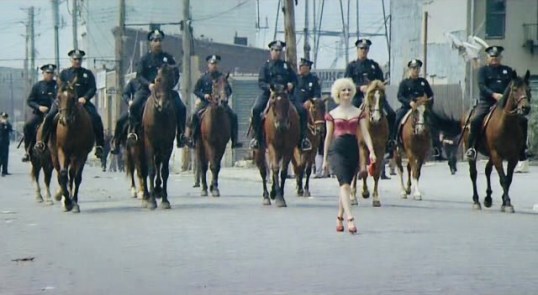
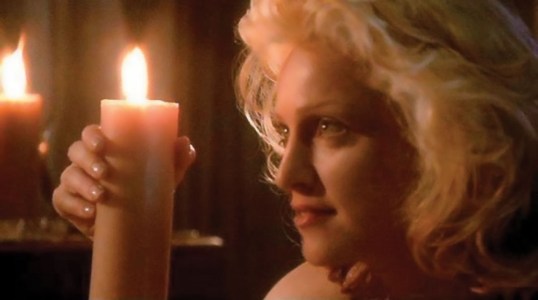
Body of Evidence (1993, dir by Uli Edel, DP: Douglas Milsome)

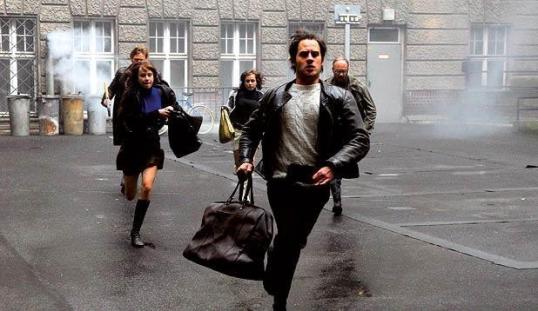
The Baader Meinhof Complex (2008, dir by Uli Edel, DP: Rainer Klausmann)

Scenes That I Love: “I Love The Smell of Napalm in the Morning” from Apocalypse Now (Happy birthday, John Milius!)


Today, the Shattered Lens celebrates the 78th birthday of the iconic screenwriter and director, John Milius!

While director Francis Ford Coppola definitely put his own stamp on 1979’s Apocalypse Now, the film started life as a script written by John Milius and the film itself is full of dialogue that could only have been written by Milius.  The most famous example is Robert Duvall’s monologue about the smell of napalm in the morning.  Actually, the entire helicopter attack feels like pure Milius.  Reportedly, Duvall’s character was originally named Colonel Kharnage but, by the time the movie was made, his name had become Kilgore.  It’s still not exactly a subtle name but it’s not quite as obvious as Kharnage.

(When James Caan read the script, he loved the role so much that he was offended to not be offered it and, as a result, he turned down offers to play not only Willard but also Kurtz.)

Happy birthday, John Milius!

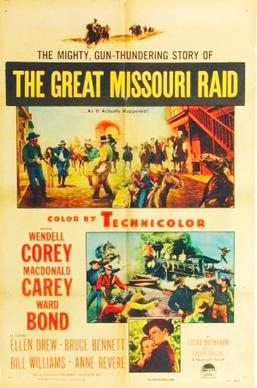
The Great Missouri Raid (1951, directed by Gordon Douglas)


During the Civil War, brothers Frank (Wendell Corey) and Jesse James (Macdonald Carey) leave the family farm and fight as Confederate guerillas under the leadership of the infamous William Quantrill.  When the war ends with the Confederacy’s defeat, Frank, Jesse, and their friend Cole Younger (Bruce Bennett) return home to Missouri and discover that their town is being ruled over the tyrannical Major Towbridge (Ward Bond).  With their farms in ruin and having little opportunity to make honest money, the James Brothers and the Younger Brothers soon resort to robbing banks and trains.  It’s their revenge against not only the soldier occupying their land but also the bankers and land barons who have been taking advantage of their friends and family members.  The James-Younger Gang become heroes to economically oppressed people everywhere.

From the minute that they arrive home, Towbridge is determined to imprison the James brothers.  Not only does he distrust them because of their past with Quantrill but he also blames them for the death of his own brother.  Towbridge becomes so obsessed that he even leaves the army so that he can pursue Frank and Jesse as a private detective.  Even as it appears that Jesse might be on the verge of settling down and abandoning his criminal life, he still has to deal with unexpected visitors like the Ford brothers.

The story of Frank and Jesse James inspired several films, some of which were better than others.  Directed with a good eye for detail by Gordon Douglas, The Great Missouri Raid tells the familiar story with enough skill to be watchable but it never reaches the classic status of Walter Hill’s The Long Riders. 

The main problem is that both Wendell Corey and Macdonald Carey come across as being almost too civilized as the James brothers.  The film is obviously sympathetic to the James brothers and, as westerns tended to do in the 50s, it ignores some of the less heroic details of their lives of outlaws.  (The film, for instance, doesn’t mention that the James brothers were probably already outlaws before the Civil War started and it’s doubtful that a modern film would be as sympathetic to two men who left home to fight for the Confederacy.)  Usually, though, even the most sympathetic film portrayals of the James brothers still portray them as being the type of people who you wouldn’t necessarily want to meet while riding the trail.  Wendell Corey and Macdonald Carey play Frank and Jesse as being so nice that it’s hard to believe that they could have even rode with Quantrill, let along the Younger brothers.  They’re the most reasonable outlaws this side of the Mississippi.  Bruce Bennett and Bill Williams are more believable as the rough and tough Cole and Jim Younger.

Not surprisingly, the film is stolen by Ward Bond.  Bond usually played reasonable authority figures for John Ford and Frank Capra.  As Major Towbridge, though, he’s cast as a martinet who allows his obsession with James brothers to turn him into a fanatic.  For those who are used to only seeing Bond cast as a fair cop or a tough-but-fair military officer, his performance in The Great Missouri Raid is a revelation.

The Long Riders is the best movie about the James Gang but, for western fans, The Great Missouri Raid should be entertaining if not definitive.

The Fighting Marshal (1931, directed by D. Ross Lederman)


The town of Silver City has a new marshal. He’s tough, no-nonsense, and an expert marksman. He is exactly what it needed to clean up the town and he is also a complete fraud. The marshal is actually Tim Benton (played by Tim McCoy), an escaped convict who was doing time after being framed for the murder of his father. Seeking revenge on the men who framed him and who stole his family’s silver mine, Tim escaped from prison with the help of Red Larkin (Matthew Betz), who actually was guilty of the crimes for which he was imprisoned. After Red kills the man who was actually appointed to serve as Silver City’s new marshal, Tim took the man’s identity.

Despite the years that he spent wrongly imprisoned, Tim really isn’t an outlaw at heart. He’s one of the good guys and he soon starts to settle into his role as town marshal. He even falls in love with Alice Wheeler (Dorothy Gulliver). However, Tim still has to get revenge for his father’s death and he is also going to have to deal with Red Larkin, who has no interest in going straight. Ironically, what Tim doesn’t know, is that he was only a day or two away from receiving a full pardon when he broke out of prison and went on the run.

The Fighting Marshal is an above average western programmer. Though the low-budget and rushed quality of the production is obvious (just check out the opening title card, which misspells Marshal), Tim McCoy is a credible western hero, looking credible on a horse and handling a gun with the skill of someone who started his career as a sharp shooter. The film’s mistaken identity plot is an interesting wrinkle on all of the usual western action and McCoy is convincing as he goes from being an escaped convict to being a man who truly cares about maintaining law and order in Silver City.

Of course, like many of the early western stars, McCoy was himself an authentic cowboy. He looked convincing with a gun because, in real life, McCoy was an expert marksman who was considered to be the best shooter in Hollywood. When he wasn’t making movies, McCoy served in the U.S. Army and he was also one of the first Hollywood actors to try to make the leap over to politics, running unsuccessfully for the U.S. Senate in Wyoming. Later, when his film career waned, McCoy hosted a children’s show where he would show his movies and discuss the history of the old west. He was nominated for a daytime Emmy but refused to attend the ceremony when he discovered he would be competing against a show featuring a talking duck. His exact words, when turning down the invitation to the ceremony, are often quoted as being; “I’ll be damned if I’m going to sit there and get beaten by a talking duck!”

One final note: According the IMDb, The Fighting Marashal was filmed over the course of a week in October in 1931. Less than a month later, it was released on November 25th. That’s the old Hollywood system for you. They didn’t waste anytime getting their movies into the theaters.