The Movie That Nearly Killed The Godfather: The Brotherhood (1968, directed by Martin Ritt)


Brotherhood_1968Once upon a time, Paramount Pictures released a movie about an Italian-American organized crime family.

It was a self-styled epic that used the Mafia as a metaphor for both business and politics.  The movie mixed scenes of violent death with family and community ceremonies.   The main mafioso was played by a famous actor who was a big box office draw in the 1950s and another character, a war hero who was initially reluctant to get involved in the family business, was played by an up-and-coming young actor.   The majority of the movie took place in New York but there were several scenes that were set in Sicily.

It may sound like The Godfather but actually, it was The Brotherhood, a film that flopped so badly that Paramount executives nearly passed on the chance to make a movie out of Mario Puzo’s bestselling novel.  According to Peter Biskind’s The Godfather Companion, Francis Ford Coppola frequently cited The Brotherhood as being exactly the type of movie that he did not want to make while he was directing The Godfather.

Kirk Douglas, who both produced and starred, plays Frank Ginetta.  Frank, an old-fashioned and honorable mobster, is hiding out in Sicily with his wife, Ida (Irene Pappas).  Frank knows that a rival gangster, Jim Egan (Murray Hamilton), has put a price on his head.  When Frank’s brother, Vinnie (Alex Cord), shows up in Palermo, Frank is overjoyed at first.  But Ida reminds him, “They’re going to send someone.”

Most of the film is taken up with flashback to Frank and Vinnie’s old life in New York.  When Vinnie returns from serving in the army, he marries Emma Bertolo (Susan Strasberg), the daughter of Don Bertolo (Luther Adler who, as a stage actor and director, served as an early mentor to the future Don Corleone, Marlon Brando).  Frank grew up idolizing their Sicilian father and, at first, he is happy when Vinnie announces that he wants to enter the “family business.”  But then Vinnie starts to side with non-Sicilian gangsters like Egan and Sol Levin (Alan Hewitt).

The scenes in Sicily work the best, with Frank unsure as to whether or not Vinnie has arrived to visit or to murder him.  But the scenes in New York are such a mess that it took me a while to realize that they were even supposed to be flashbacks.  It is hard to keep track of how much time has passed from scene to scene and Alex Cord and Kirk Douglas are two of the most unlikely brothers imaginable.

The main problem with The Brotherhood is that it is impossible to watch it without thinking about The Godfather.  The Brotherhood has much in common with The Godfather but it has none of its authenticity and does not come close to matching its epic scale.  Kirk Douglas tries his best and puts a lot of effort into talking with his hands but he is miscast from the moment he first appears.  Robert Evans once said that he chose Coppola to direct The Godfather because he wanted to “smell the pasta.”  The Brotherhood was directed by Martin Ritt and you never smell the pasta.

The Brotherhood is an interesting footnote in the history of The Godfather but ultimately, it’s an offer you can refuse.

1374000145_4

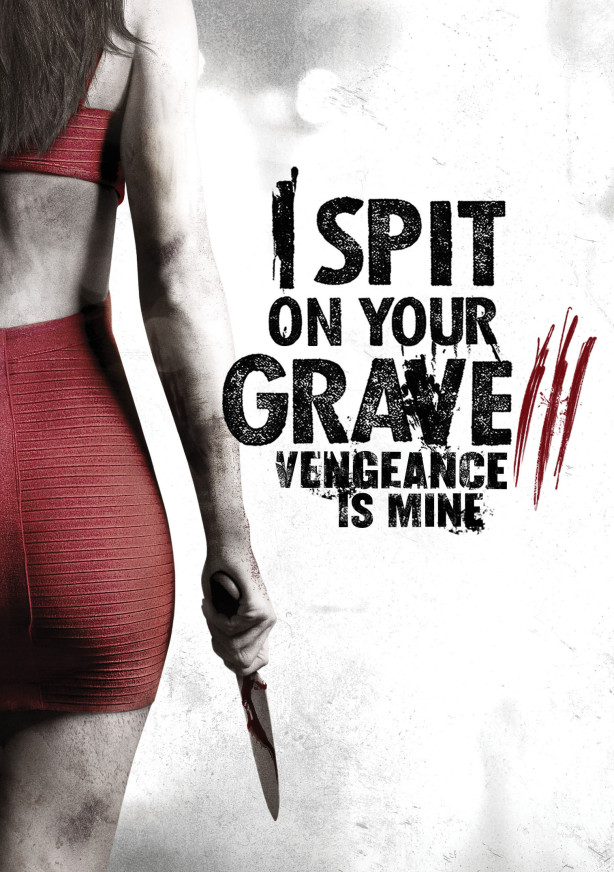
I Spit On “I Spit On Your Grave 3 : Vengeance Is Mine”


Ryan C. (fourcolorapocalypse)'s avatarTrash Film Guru

Sarah-Butler-Returns-to-I-Spit-on-Your-Grave-3-as-Sequel-Receives-Official-Release-Date

Who’da thunk it? Meir Zarchi’s lurid-but-staggeringly-effective 1978 rape-revenge thriller I Spit On Your Grave (or Day Of The Woman, if you prefer) was panned as being prurient and offensive trash at the time of its release, but is now widely considered (and rightly, in my view) to be quite possibly the most overtly feminist horror film ever made. Time makes fools of us all, I suppose, and the critics who trashed Zarchi’s flick back in the day are definitely a prime example of this old adage. But the wholesale reconsideration of the original isn’t the surprising wrinkle I’m talking about here.

No, the reason I said “who’da thunk it?” is because nearly 40 years later, I Spit On Your Grave has become a veritable straight-to-video franchise. The 2010 remake had its flaws, to be sure, and the 2013 “thematic” sequel had even more of them (how, exactly…

View original post 1,018 more words

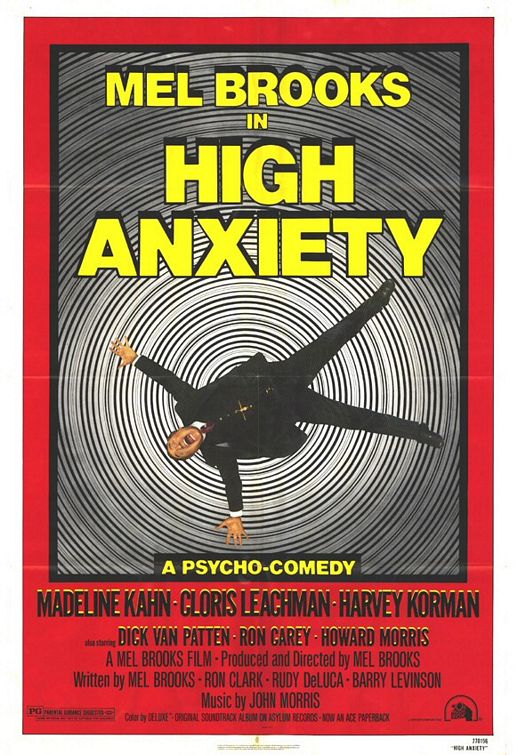
Egging The McGufffin: HIGH ANXIETY (20th Century Fox 1977)


gary loggins's avatarcracked rear viewer

higha1

Mel Brooks loves films as much as the rest of us do. After skewering Westerns in BLAZING SADDLES and horror movies in YOUNG FRANKENSTEIN, Mel set his satirical sights on Alfred Hitchcock in HIGH ANXIETY. The result is a film biff’s dream, with the gags coming fast and furious as Mel and his band of merry pranksters pay a loving but hysterical homage to the films of the Master of Suspense.

05_high_anxiety_bluray

Mel takes the lead here as Dr. Richard Thorndyke, the new head of the Psycho Neurotic Institute for the Very, Very Nervous. Thorndyke’s aide, the inept Brophy, thinks the former director was “a victim of foul play”. At the Institute, he meets oily Dr. Montague and starched Nurse Diesel, whose S&M/B&D relationship isn’t their only secret. Thorndyke has an ally in his mentor, Prof. Lilloman (say it slowly). The professor works as a consultant, and tries to help Thorndyke conquer his own…

View original post 447 more words

The Big Friendly Giant Is All Over This Trailer For Steven Spielberg’s The BFG!


Despite getting mixed reviews at Cannes, Steven Spielberg’s The BFG is still one of the most anticipated films of the summer.  I have to admit that, for the longest time, I assumed that the title was an acronym for Big F*cking German but no, apparently BFG stands for Big Friendly Giant.

And the just released second trailer for the film features a good deal of the Big Friendly Giant!  The Big Friendly Giant is played by Mark Rylance.  Mark Rylance is a good actor but I still think Sylvester Stallone should have won that Oscar.

Anyway, here’s the trailer!  I always want to be skeptical of Spielberg because he’s such a mainstream filmmaker and my natural tendency is always to embrace outsiders.  But dammit, The BFG looks like it might, at the very least, be a very enjoyable and very big film.

—–

* It’s family film, hence the asterisk.

4 Shots From 4 Films: An American Hippie in Israel, Ciao! Manhattan, David Holzman’s Diary, Eggshells


4 Shots From 4 Films is just what it says it is, 4 shots from 4 of our favorite films. As opposed to the reviews and recaps that we usually post, 4 Shots From 4 Films is all about letting the visuals do the talking.

Let’s hop in the cinematic time machine and take a trip to the distant past with these 4 shots from 4 independent films!

4 Shots From 4 Films

David Holzman's Diary (1967, dir by Jim McBride)

David Holzman’s Diary (1967, dir by Jim McBride)

Eggshells (1969, dir by Tobe Hooper)

Eggshells (1969, dir by Tobe Hooper)

Scene That I Love: Rougned Odor Punches Jose Bautista


This scene isn’t from a movie but it is one that I love and that I’ve watched a dozen times today.

Here’s what those of us watching the Rangers/Blue Jays game saw yesterday.

I’m usually against violence and I don’t like it when grown men act like children but I’m also a Rangers fan and Jose “Bat Flip” Bautista got what he deserved.  After Bautista’s hard slide into 2nd base, Odor is lucky he didn’t end up with a broken leg and Bautista’s lucky that Adrian Beltre was there to carry him to safety.

Here it is again:

For the record, that game was the last time that the Rangers and Blue Jays are scheduled to play during the regular season.  With a final score of 6-5, the Rangers not only won the game but also swept the series!

Artist Profile: Jules Aarons (1921 — 2008)


11

Jules Aarons was born in New York City and served during World War II.  After studying physics at Boston University, he won a Fulbright scholarship and earned his Ph.D. at the University of Paris.  As a physicist, Aarons worked as the senior scientist at the Air Force Geophysics Research Lab and was one of the pioneers in the study of radio-wave propagation.   Over the course of his long and distinguished scientific career, Aarons published over a hundred scientific papers.

However, Aarons was not just a scientist.  He was also a photographer who was widely acclaimed for the pictures of Boston street life that he captured in the late 1940s and the 1950s.  Aarons photography was spontaneous, with the subjects often but not always unaware that they were being photographed.  As a street photographer, Aarons focused on capturing the day-to-day life of people of all classes and backgrounds.

A small sampling of his work can be found below:

12345678910